
The complete guide
How to Choose a Contoured Silk Sleep Mask
The problem with most sleep masks
You buy a sleep mask because the streetlight outside your window is too bright, or because your shift finishes at 7am and you need to sleep through the morning. Then you put it on and run into the same two issues almost everyone hits.
The first is pressure. A flat mask lies directly on your eyelids. Every time you blink, you feel fabric. Some people get used to it. Plenty of people take the mask off at 3am without really waking up and find it on the floor in the morning.
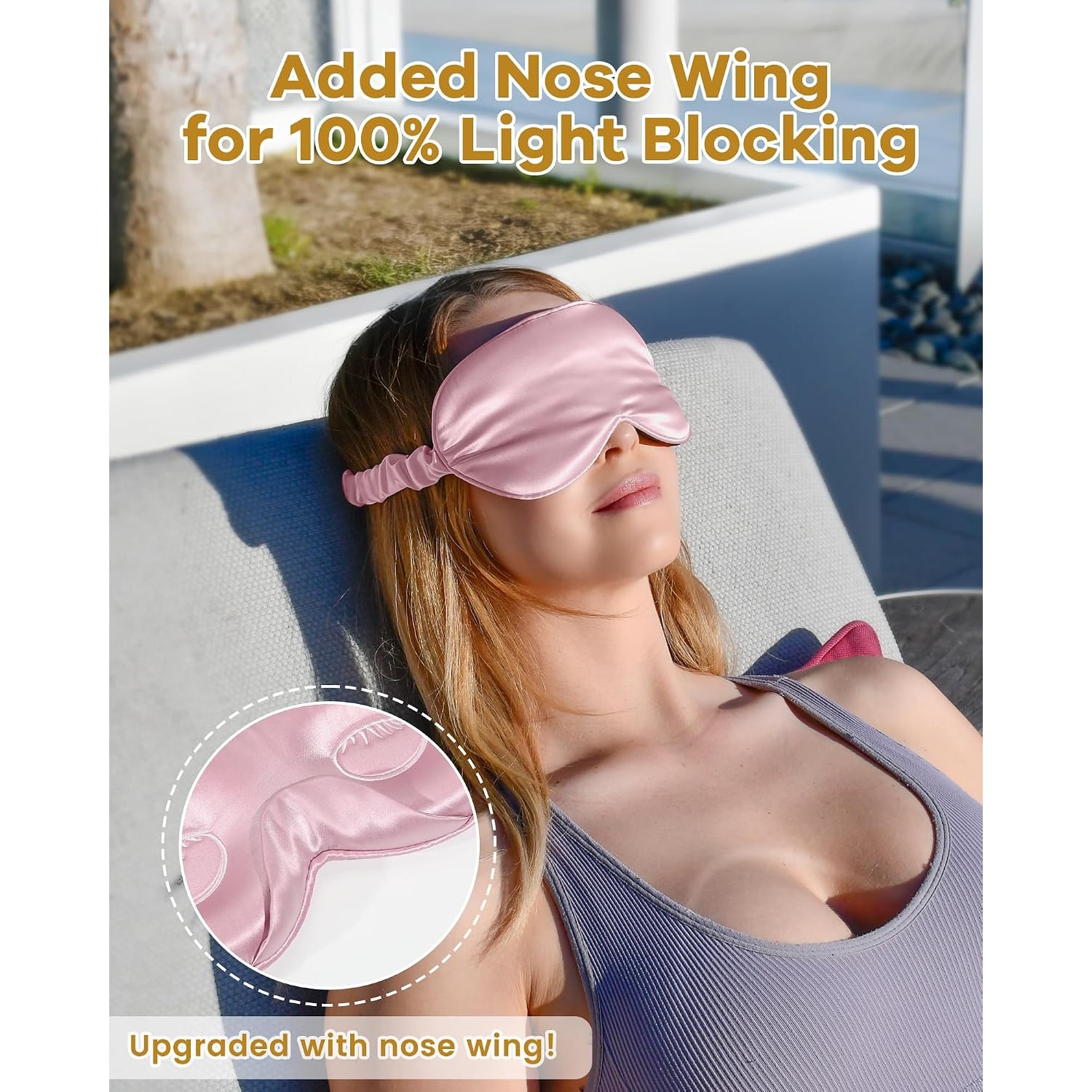
The second is leakage. Faces are not flat. There is a gap on either side of the bridge of your nose, and a flat band of fabric cannot close it. That is where the light gets in, which is why a lot of masks feel dim rather than dark. At night you might get away with it. In daylight you will not.
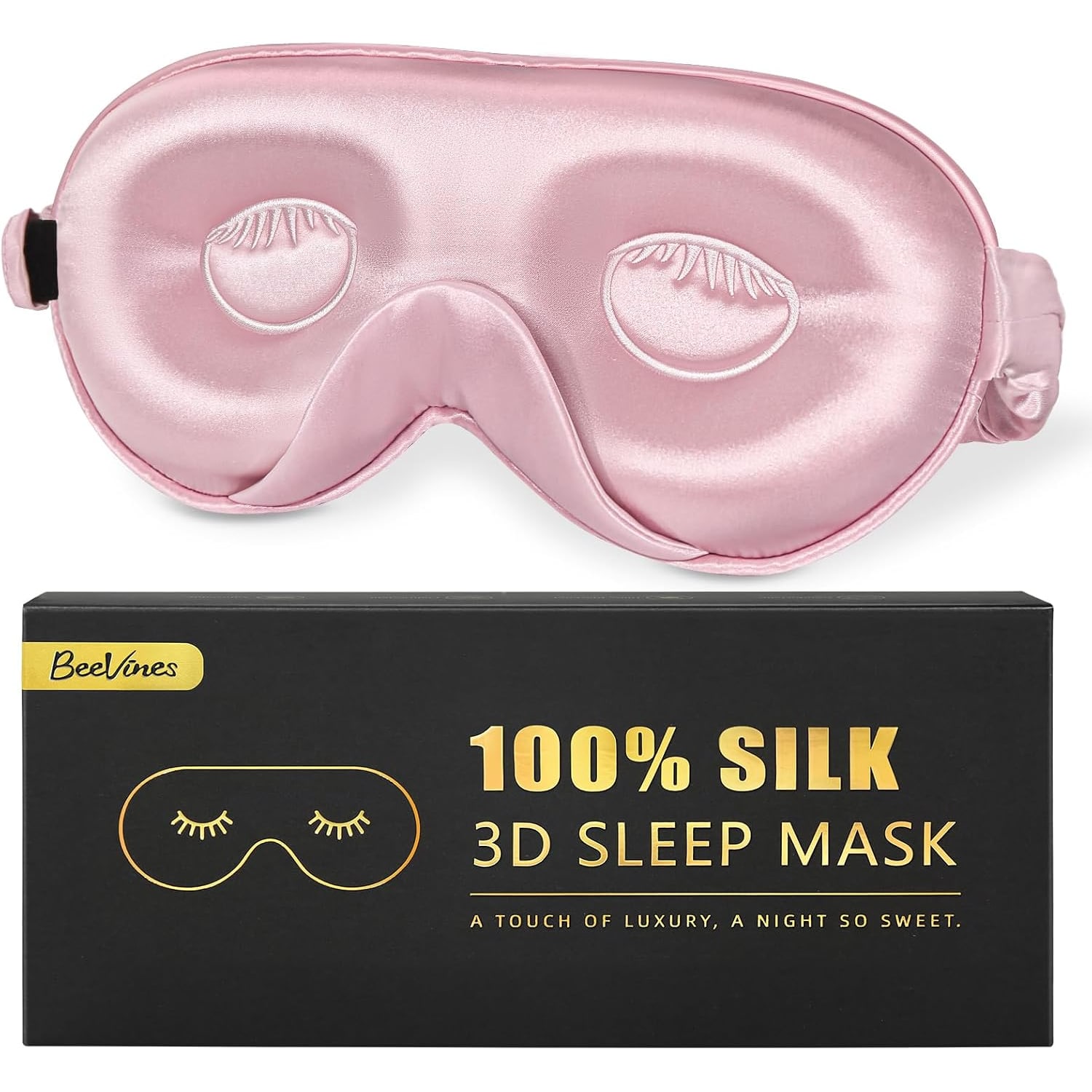
A contoured mask is the answer to both. The moulded cups lift the fabric off your eyes, and a padded nose panel fills the gap. Add silk instead of synthetic lining and you have something you can wear for eight hours without thinking about it.
What 22 momme silk actually gives you
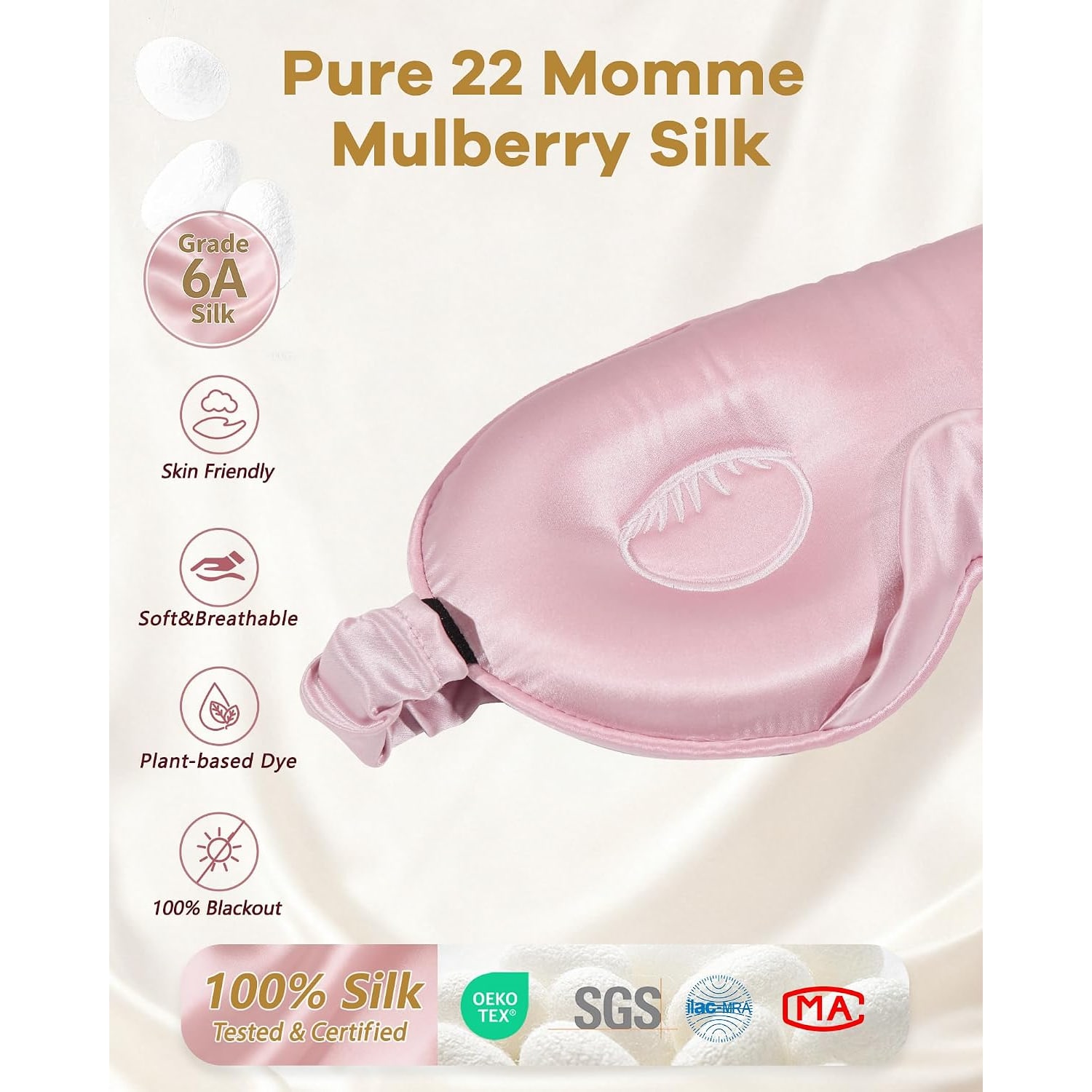
Momme is the silk world's version of thread count. It measures weight rather than thread density, and the number tells you how much silk is in the fabric. Thin silk sits around 12 to 16 momme. Bedding silk usually lands between 19 and 25. At 22 momme this mask is firmly in the bedding range.
Two things come from that weight. The fabric blocks light better than a flimsy weave, and it drapes rather than crinkles. Lightweight silk can feel papery. Heavier silk feels like fabric.
The other thing silk gives you is low friction. Your face and hair slide across it instead of dragging, which is why silk pillowcases took off for the same reasons. A cotton mask can crease the skin around your eyes by morning. Silk is far less likely to.
Both faces here are silk, which is worth checking when you shop. A good number of masks look like silk on the outside and use polyester against your skin. The side that touches you is the side that matters.
How the contoured shape works
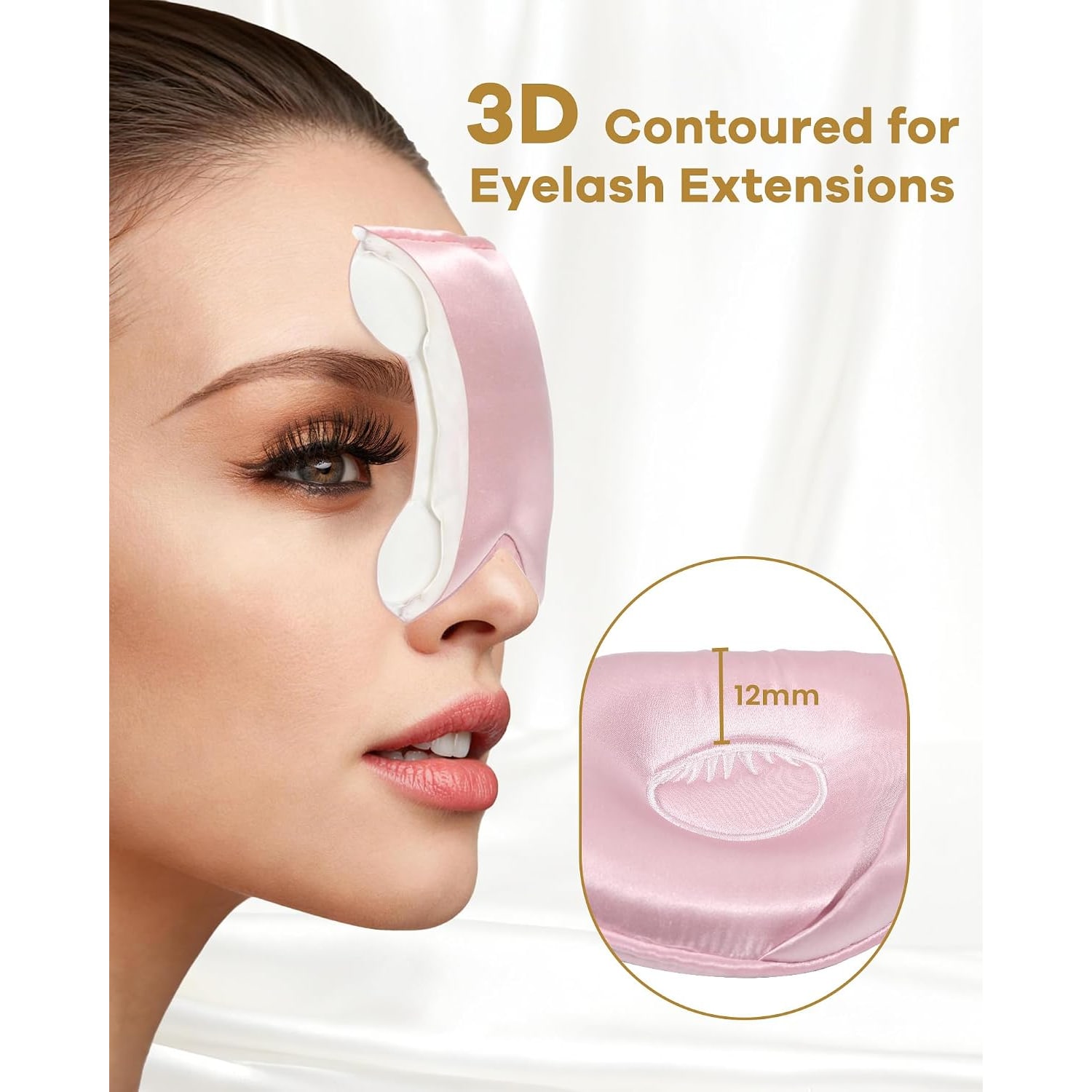
Look at the mask side on and you will see two domes. Those are the eye cups, and they are deeper on this design than on a lot of budget contoured masks. Deeper cups mean more clearance between the lining and your lashes.
That clearance does three jobs. It stops the sensation of fabric on your lids, it lets you open your eyes inside the mask if you wake, and it leaves lash extensions alone. If you spend money on extensions, flattening them under a mask for eight hours a night is an expensive habit. The best contoured sleep mask designs give you room to spare.
There is a comfort benefit too. Air sits in that space, so the area around your eyes stays cooler than it would under a flat pad. People who find masks stuffy are often reacting to trapped heat rather than the mask itself.
The nose panel is the quiet hero
If you only compare one feature between masks, make it the nose. The padded panel on this one is shaped to follow the bridge of the nose and seal the triangle of space beside it.
You can test it yourself once it arrives. Put the mask on in a bright room, settle the panel against your nose, and look down. If you can see your cheeks, the panel is not seated. Nudge the mask up a few millimetres and ease the strap. Most people get a proper seal within a minute of fiddling.
This is also the part of a mask that varies most between faces. A shallow nose bridge seals easily. A high one needs the mask positioned slightly lower. Neither is a fault in the mask, it is just fit.
The strap, and why silk-wrapping matters
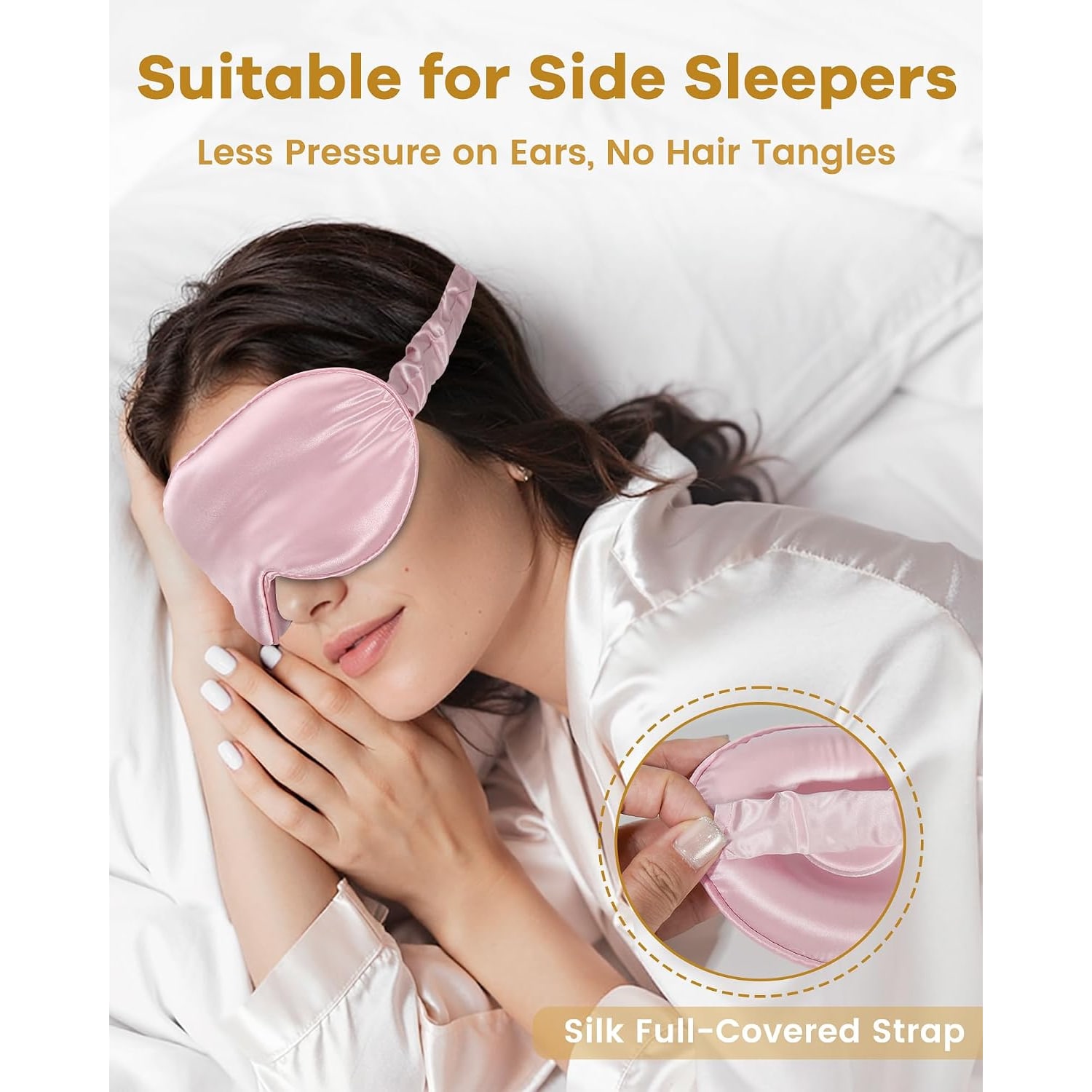
An adjustable elastic strap sounds like a small detail until you sleep on your side. Then the buckle ends up pinned between your skull and the pillow, and that is what wakes you.
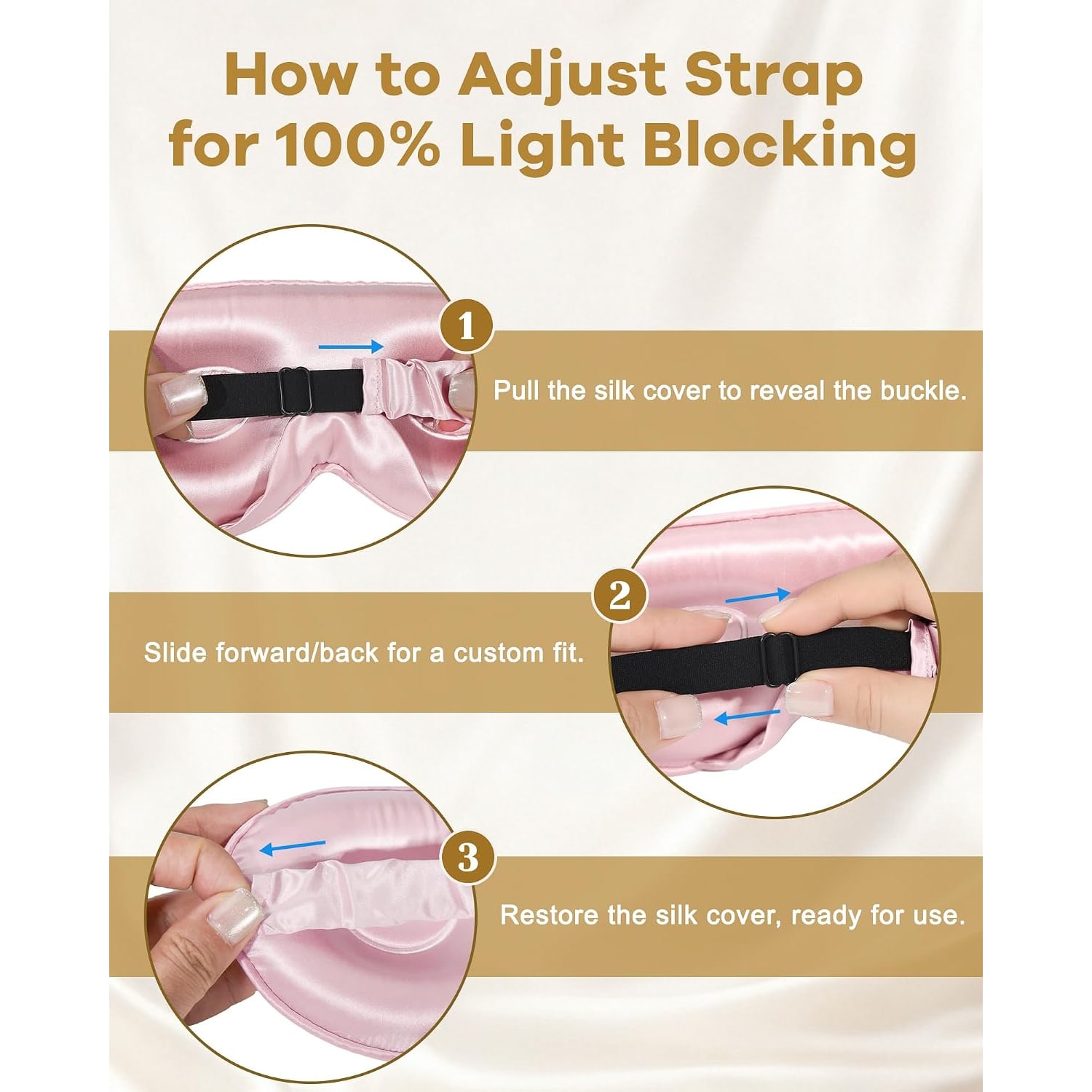
Here the elastic is wrapped in silk along its run, so the hardware is cushioned and the band itself glides over hair rather than grabbing it. Set the tension with the slider. Snug enough that the nose panel stays sealed, loose enough that you do not feel a line across your temples.
A common mistake is overtightening. People assume a tight mask is a dark mask. It is not. Light comes in at the nose, not around the strap, so once the panel is seated you can back the tension right off.
Who this suits
Shift workers get the most obvious benefit, because daylight sleeping is the hardest kind. So do people in apartments with thin curtains, anyone who shares a room with a partner on a different schedule, and frequent flyers dealing with cabin lighting.
It also suits two groups that usually struggle with masks. People with lash extensions, for the clearance. And people who simply cannot stand pressure on their eyes, which is more common than you might think.
A lightweight eye mask for naps is a different purchase from a full-night mask, and this one does both reasonably well. At around 220 grams packaged, it goes in a bag without you noticing.
Choosing between masks
A few things worth weighing up before you commit.
Depth of the cups is the main one. Shallow contoured masks exist and they are not much better than flat. If the photos show a barely raised profile, keep looking.
Fabric on the inside face. Silk against the skin, not a synthetic lining pretending to be silk.
Strap style. Adjustable beats fixed, and a covered buckle beats a bare one if you sleep anywhere other than flat on your back.
Then there is the practical question of care. Silk needs hand washing, and if you know you will not do that, a washable cotton mask might actually serve you better. Be honest with yourself about it.
Looking after it
Hand wash in cool water with a mild detergent made for delicates. Swirl it, do not scrub. Rinse, then press the water out between a folded towel rather than wringing, which can distort the cups.
Dry flat and out of direct sun. Heat and UV both dull silk over time. Do not tumble dry and do not bleach.
Every week or two is a sensible washing rhythm. Push it longer if you go to bed with a clean face, shorten it if you use night creams or serums, since oils collect on the lining. Air it out during the day between washes and it stays fresher.
Store it in its box or a soft pouch. The cups hold their shape better when they are not squashed under other things in a drawer.
The short version
A good sleep mask is one you forget you are wearing. This one gets there by keeping fabric off your eyes with deep moulded cups, closing the light gap at your nose with a padded panel, and using 22 momme mulberry silk on both faces so the surface against your skin stays smooth and light.
The strap adjusts and is wrapped in silk, which solves the buckle problem that ruins most masks for side sleepers. It packs flat for travel and comes in a gift box, so it works as a present as easily as it does for yourself.
Spend the first night adjusting the fit rather than judging it. Get the nose panel seated, ease the strap off, and see how dark it goes.