
The complete guide
How to Choose a Silk Sleep Mask That Actually Stays On
The problem with most sleep masks
Almost everyone has owned a cheap eye mask at some point. It came free with a flight, or in a hamper, or off a shop shelf for a few dollars. And almost everyone has the same story about it. It worked for about twenty minutes, then it slid up your forehead, or the elastic cut into the skin above your ear, or you woke at 5am because the sun found that little gap beside your nose.
The failure is not usually the fabric. It is the geometry. Budget masks are cut small to save material, the nose edge is a straight line, and the strap is a thin cord that concentrates all the holding force into a band of skin about four millimetres wide. Lie on your side and that cord becomes a ridge between your head and the pillow. Move in your sleep and the mask shifts off the eye socket. Then light gets in and the whole point of wearing it disappears.
A better mask fixes three things at once. It covers more area, it follows the shape of the nose, and it holds on with a band wide enough that you forget it is there.
How a wide band mask works
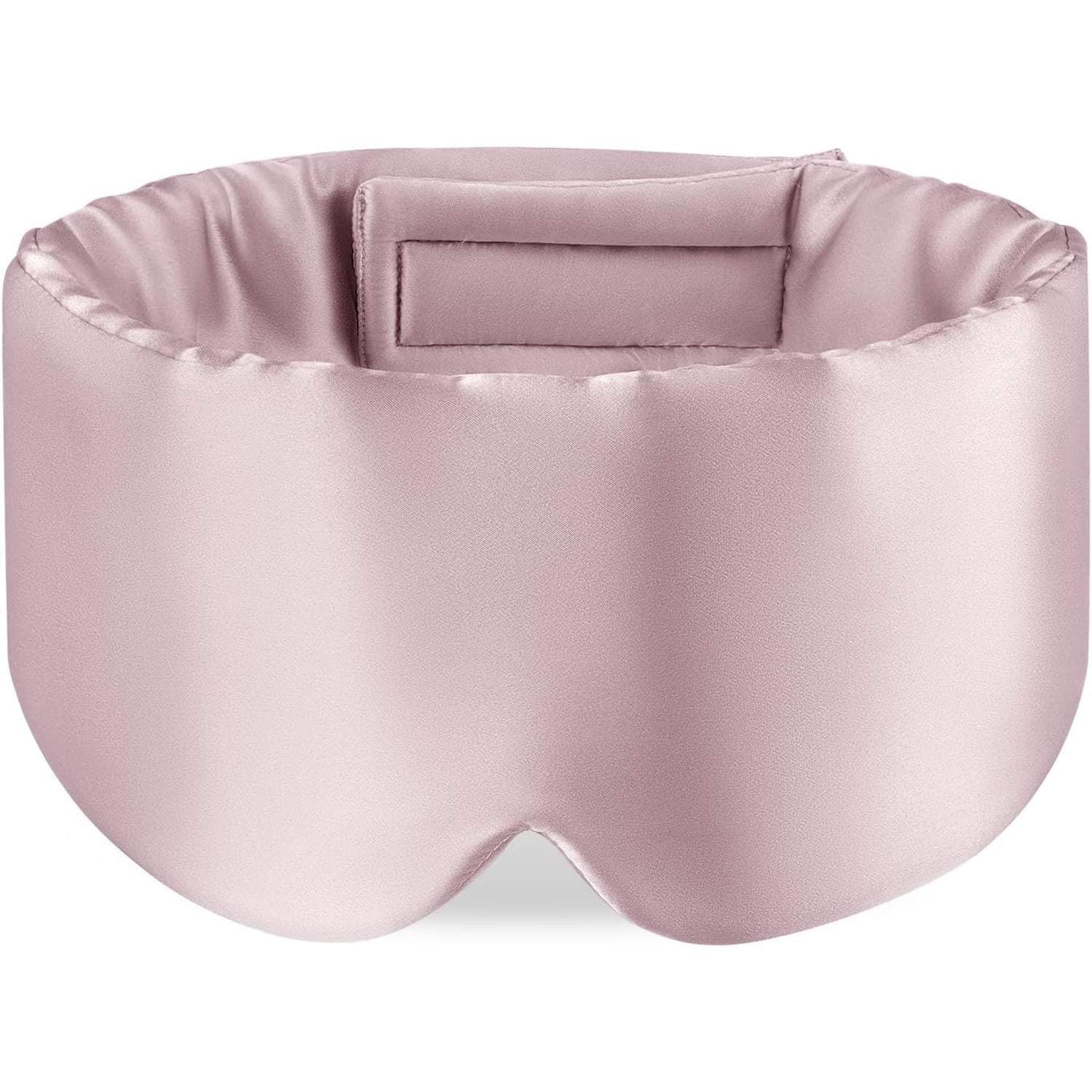
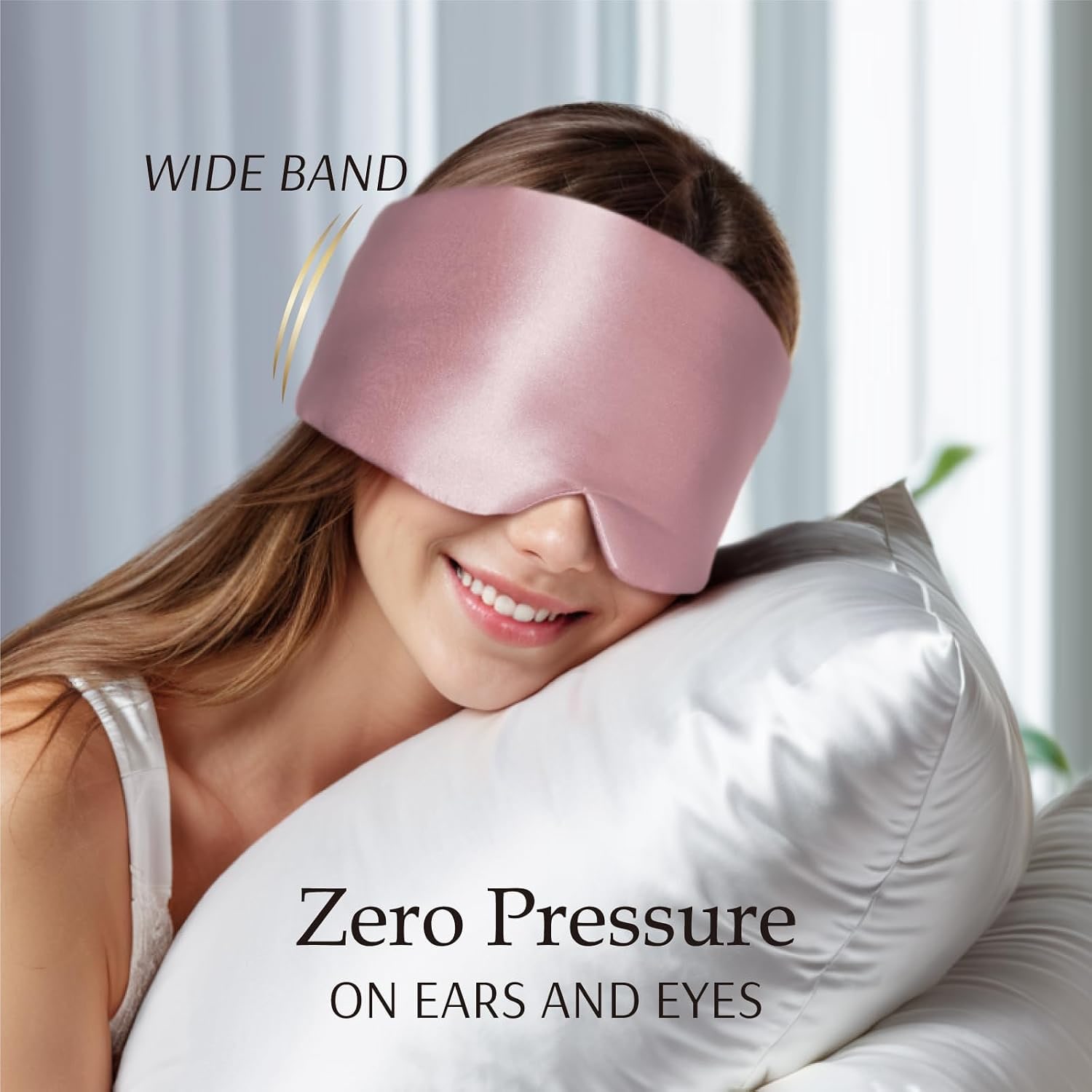
This mask extends the band outward from the sides of the eye panel so that it runs across the side of the head rather than pinching over the ear. Think of the difference between carrying a heavy bag on a thin string handle versus a broad fabric strap. The weight is the same. The way it feels on your skin is not.
There are a few knock-on benefits. The first is that nothing rubs the top of the ear, which is where most people get the red crease mark. The second is that side sleeping becomes comfortable, because a broad band flattens against the pillow instead of forming a lump. The third is that if you wear earplugs, the band sits over and around the ear area rather than slicing across it, so plugs are less likely to get nudged out during the night. For light sleepers who use both, that combination is the real draw.
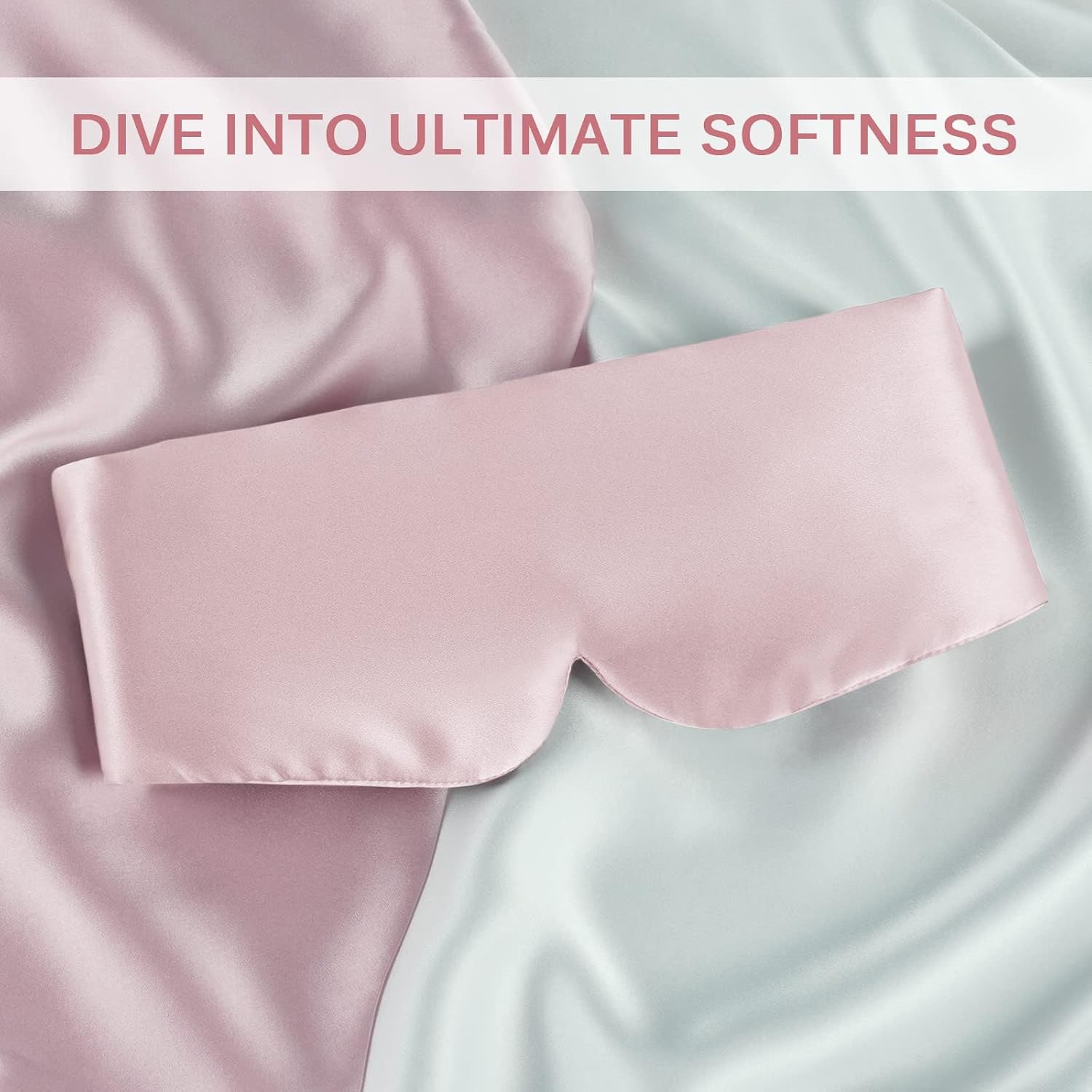
The eye panel itself is cut larger than the usual template. More surface area means more margin for error. If the mask shifts half a centimetre while you turn over, a generous panel still covers the eye. A small one does not.
Then there is the nose. A shaped, contoured edge follows the slope either side of the bridge instead of bridging straight across it. That one detail is the difference between a mask that goes dark and a mask that leaks two thin wedges of light right into your field of vision at sunrise.
Why silk
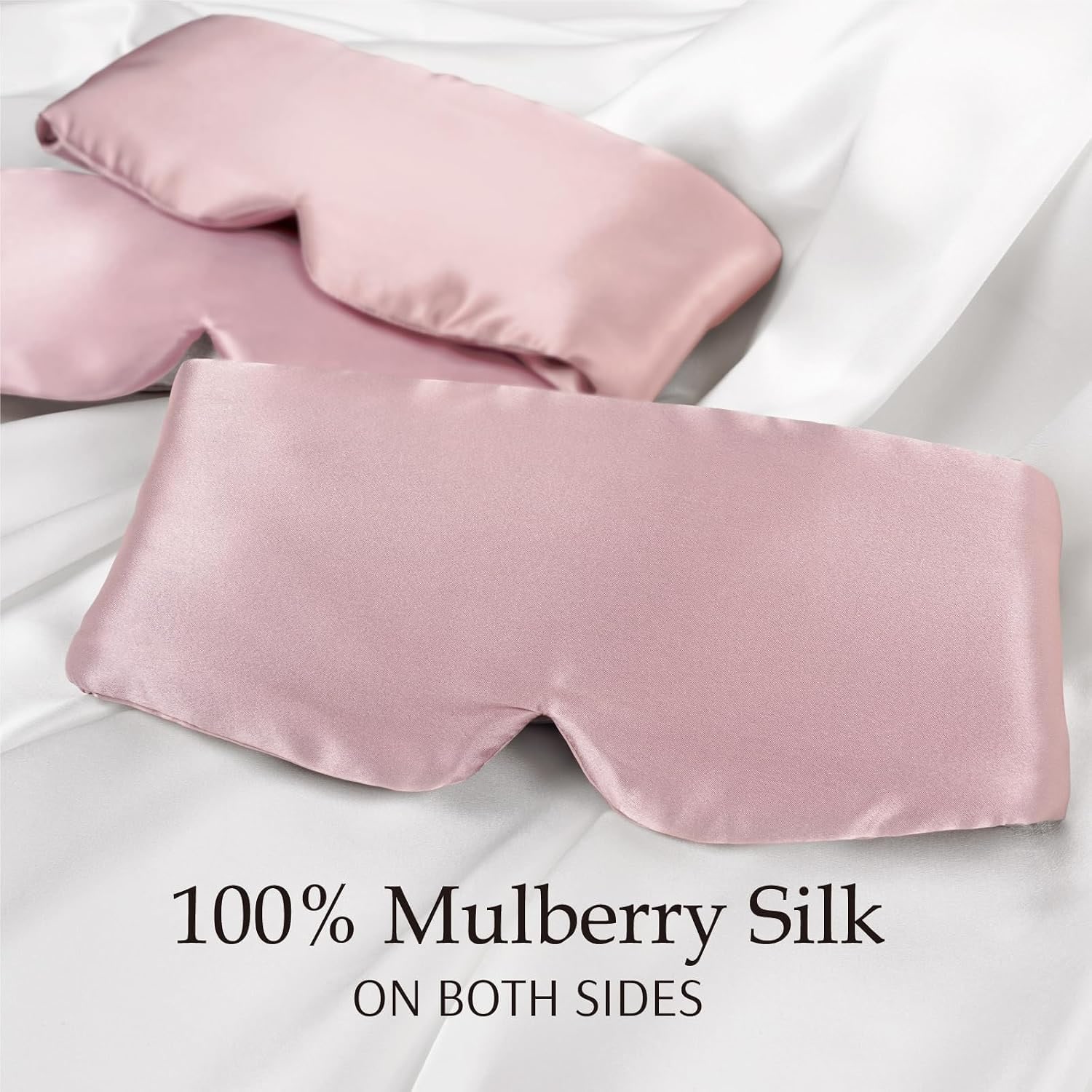
Silk is used for sleep masks for practical reasons, not just because it sounds nice. It is smooth, so skin and eyelashes slide across it rather than catching. It feels cool on contact, which matters when the fabric is sitting directly on the thin skin around the eyes for seven or eight hours. And it is light. This whole mask weighs 68 grams in its packaging, which tells you how little there is to it.
Compare that with a padded polyester mask. Padding adds blackout, but it also adds bulk and holds warmth, and the outer fabric is often a synthetic that feels slightly grippy against the face. Some people get on fine with that. Others find it hot and heavy by 2am.
We will not tell you a silk mask will change your skin or your hair. What we will say is that it is a smoother surface with less friction than cotton, and that is simply how the fibre behaves.
Who this suits
Shift workers are the obvious group. If you finish at 7am and need to sleep through a bright morning, a small mask will not cut it. Neither will blackout curtains alone, because light bounces around a room. A larger panel with a sealed nose edge is the practical answer, and it travels with you between bedrooms.
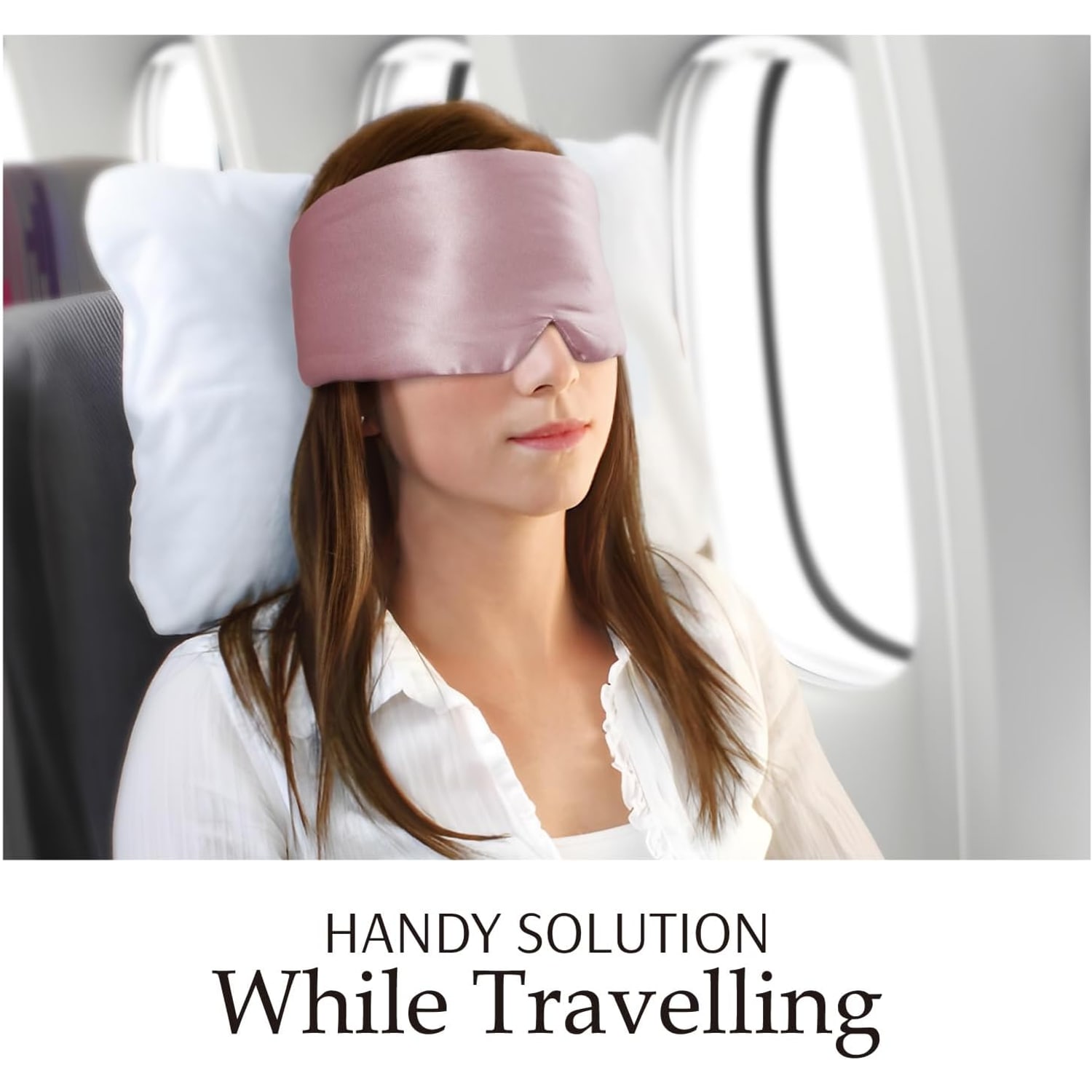
Frequent flyers are the second group. Cabin lighting on a long-haul flight is unpredictable, your neighbour will open the window shade at exactly the wrong moment, and you are usually trying to sleep upright. A packable mask that holds its position is worth more than most of the other gear people buy for flights. People searching for the best eye mask for long flights are usually searching because the last one slid off.
New parents, hospital patients, people sharing a room with someone on a different schedule, and anyone whose bedroom faces east all land in the same camp. So do people who simply find they sleep deeper in full darkness, which is a lot of us.
Side sleepers deserve a specific mention. If you sleep on your side and have given up on eye masks entirely, the strap design is usually the reason, and it is worth one more try with a wide band version.
How to choose and how to fit it
Start with coverage. Hold a mask up to your face and look for whether it reaches past the outer corner of your eye and up over the brow. If it stops short on either, light will find a way in.
Next, check the nose. Run a finger along the bottom edge. A straight edge is a warning sign. A shaped one is doing the hard work.
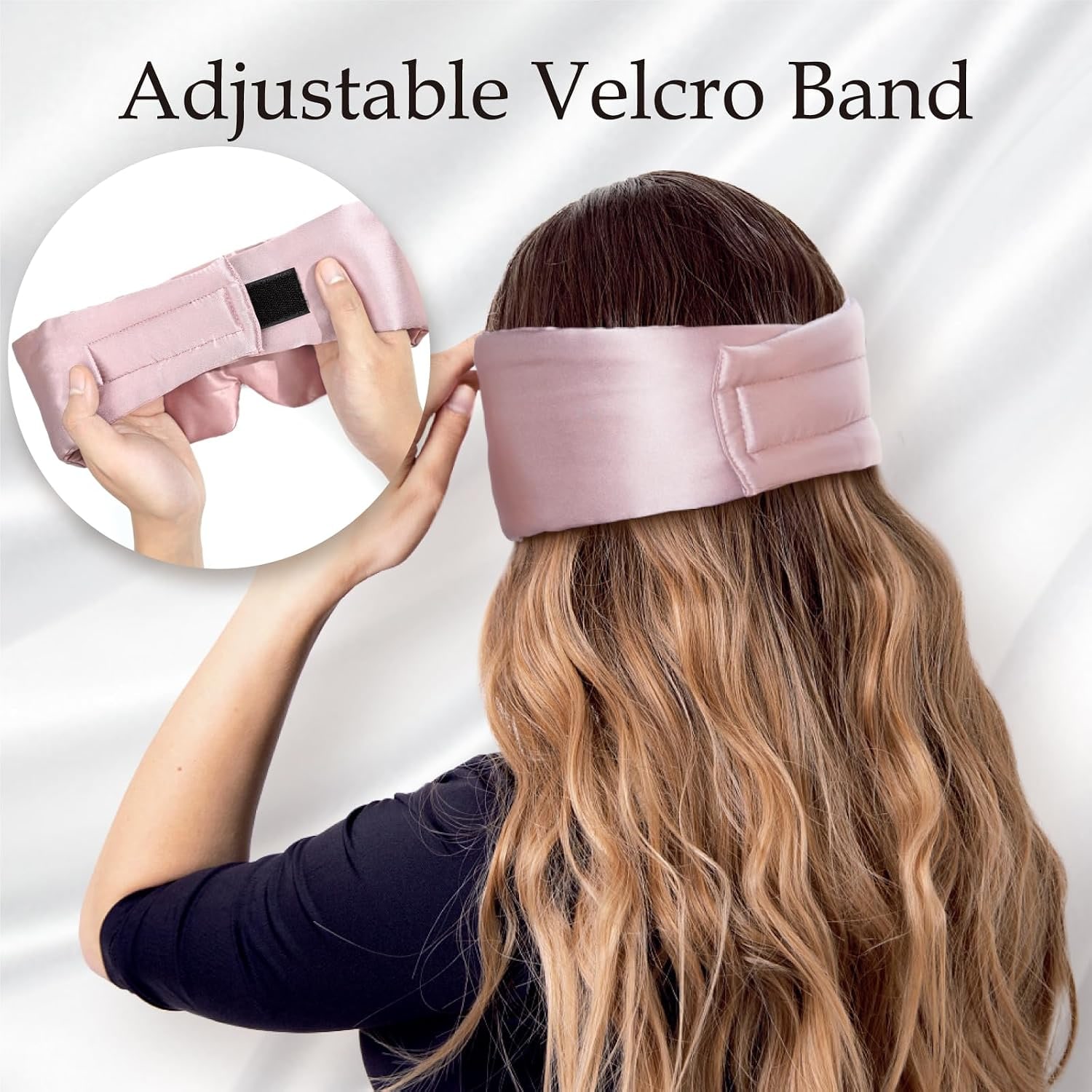
Then the strap. Adjustable beats fixed every time, because heads vary more than manufacturers assume. This mask uses a long adjustable elastic closure, which means you can set it once and leave it. The common mistake is setting it too tight. People assume a tighter mask blocks more light, but over-tightening presses the panel into the eyelids, which is uncomfortable and can make the mask feel worse than nothing. Aim for firm enough that it stays put when you turn your head side to side, and no firmer. If light still gets in at the nose, adjust the position of the panel rather than cranking the strap.
Finally, think about weight. A heavy mask feels reassuring for the first ten minutes and tiresome by morning. Light and well-shaped beats thick and padded for most sleepers.
Looking after it
Hand wash only. That is the care instruction for this mask and it is worth following. Use cool water and a small amount of detergent made for delicates, swirl it gently, and rinse. Do not bleach it, do not leave it soaking, and do not wring it out. Twisting is what damages silk fibres and stretches seams.
To dry, lay the mask on a towel, roll the towel to press out the water, then reshape the mask and dry it flat. Keep it away from direct sun, radiators and clothes dryers. Heat is hard on both the silk and the elastic in the strap.
Wash it every week or two if you wear it nightly, and more often if you use heavy night creams. Letting products absorb for a few minutes before you put the mask on will keep it cleaner for longer. Store it flat or loosely folded in a drawer or a soft pouch rather than crammed into the bottom of a bag with keys and chargers.
Delivery and returns
Orders go out by tracked courier from Australian warehouses, and most arrive within 5 to 10 working days. Delivery is free nationwide on orders over NZ$175. Returns are accepted within 14 days of delivery as long as the mask is unused and unwashed, which is the standard rule for anything worn against the face.
The short version
If you have written off sleep masks because the last one dug in, slid off or let the morning in, the problem was almost certainly the shape and the strap. This one is cut larger than standard, has a contoured nose edge to close the usual light gap, and uses a wide band across the side of the head instead of a thin cord over the ear. It is silk, it is light at 68 grams packaged, and it adjusts to fit. Hand wash it, dry it flat, and it will keep earning its place on your bedside table.