
The complete guide
The Small Square Silk Scarf Buyer's Guide
The problem with most scarves
Most scarves are a commitment. A big woollen one takes up half a bag. A long printed oblong needs a particular kind of outfit to look right. And a lot of what gets sold as a "silk feel" scarf is polyester, which looks fine on a hanger and then sits warm and slightly sticky against your neck by midday.
A small square of real silk solves a different problem. It is the accessory you reach for when an outfit is fine but flat. A plain navy coat, a white shirt, a black dress. These all work, and they all become more interesting with 53 centimetres of patterned silk at the throat or around a ponytail. The scarf does not try to be the outfit. It just lifts it.
That is the job this printed square silk scarf is built for.
What you are actually buying
The fibre is mulberry silk. That name refers to silk from silkworms raised on mulberry leaves, which produces long, even filaments. Long filaments matter because they are what give silk its particular combination of strength, sheen and smoothness. Short, broken fibres produce a fuzzier, duller cloth.
The weave is crepe satin. Think of weave and fibre as two separate decisions. The fibre decides how the fabric feels and behaves. The weave decides how it looks and how it moves. Crepe satin gives you a satin face with a soft shine and a finer, drier reverse. The practical upside is that the print shows clearly without looking like plastic, and the fabric has just enough texture to hold a knot rather than sliding loose by lunchtime.
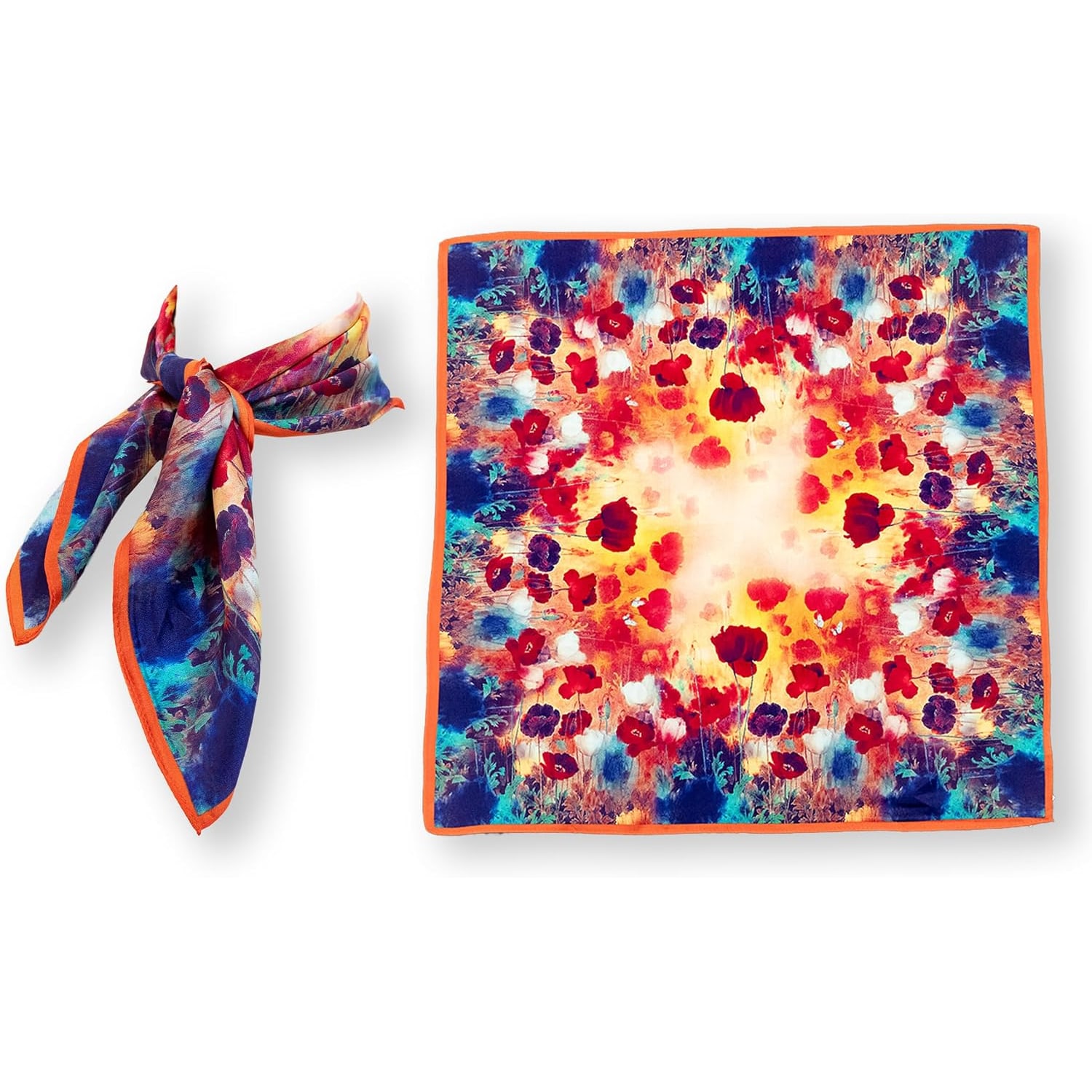
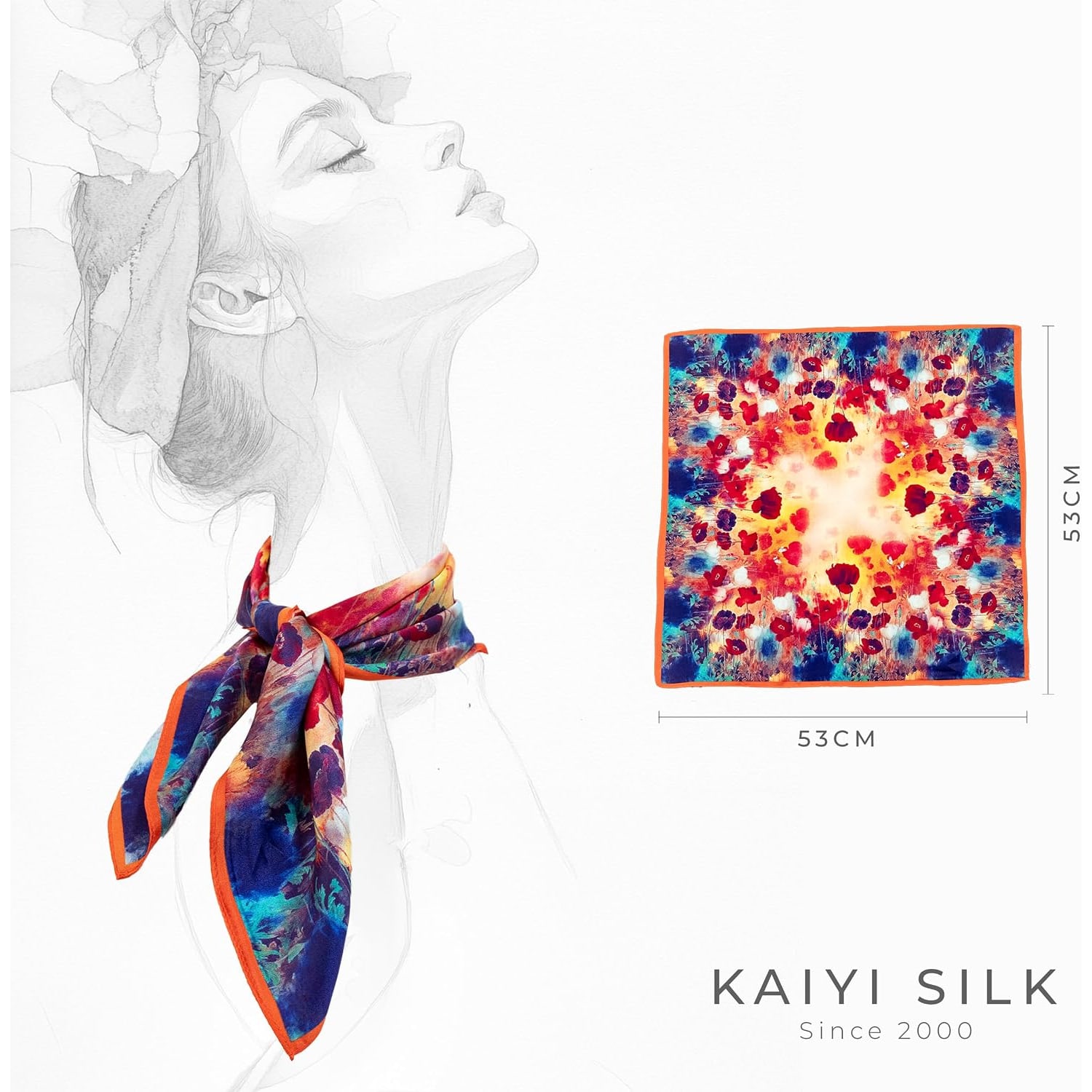
The square measures 53 by 53 centimetres. That is the standard small square dimension. It is the same footprint as a traditional pocket square, which tells you something about how versatile it is.
The whole thing weighs 22 grams. A single sheet of A4 paper is about 5 grams, so you are wearing roughly four sheets of paper. That is the point. You put it on and stop noticing it.
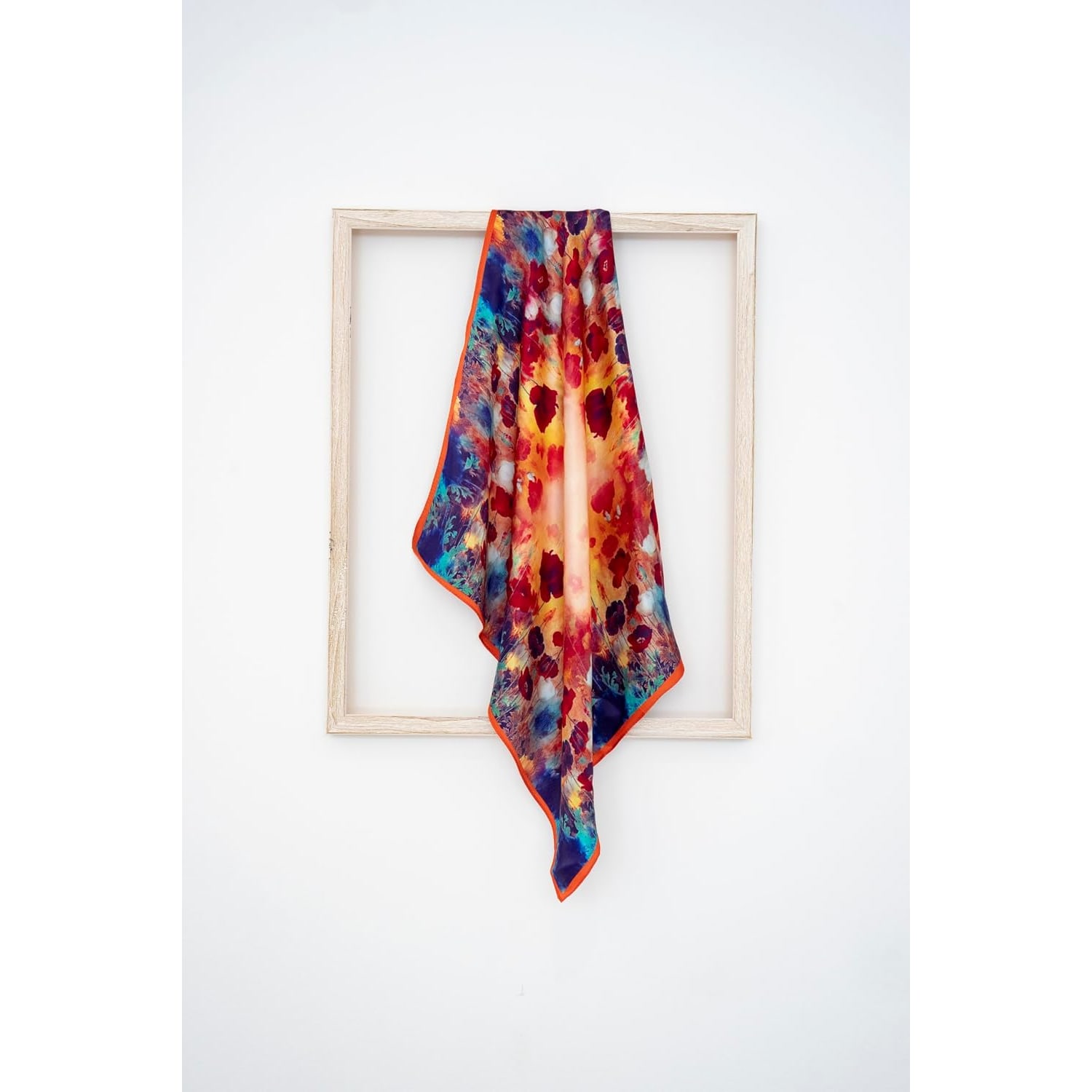
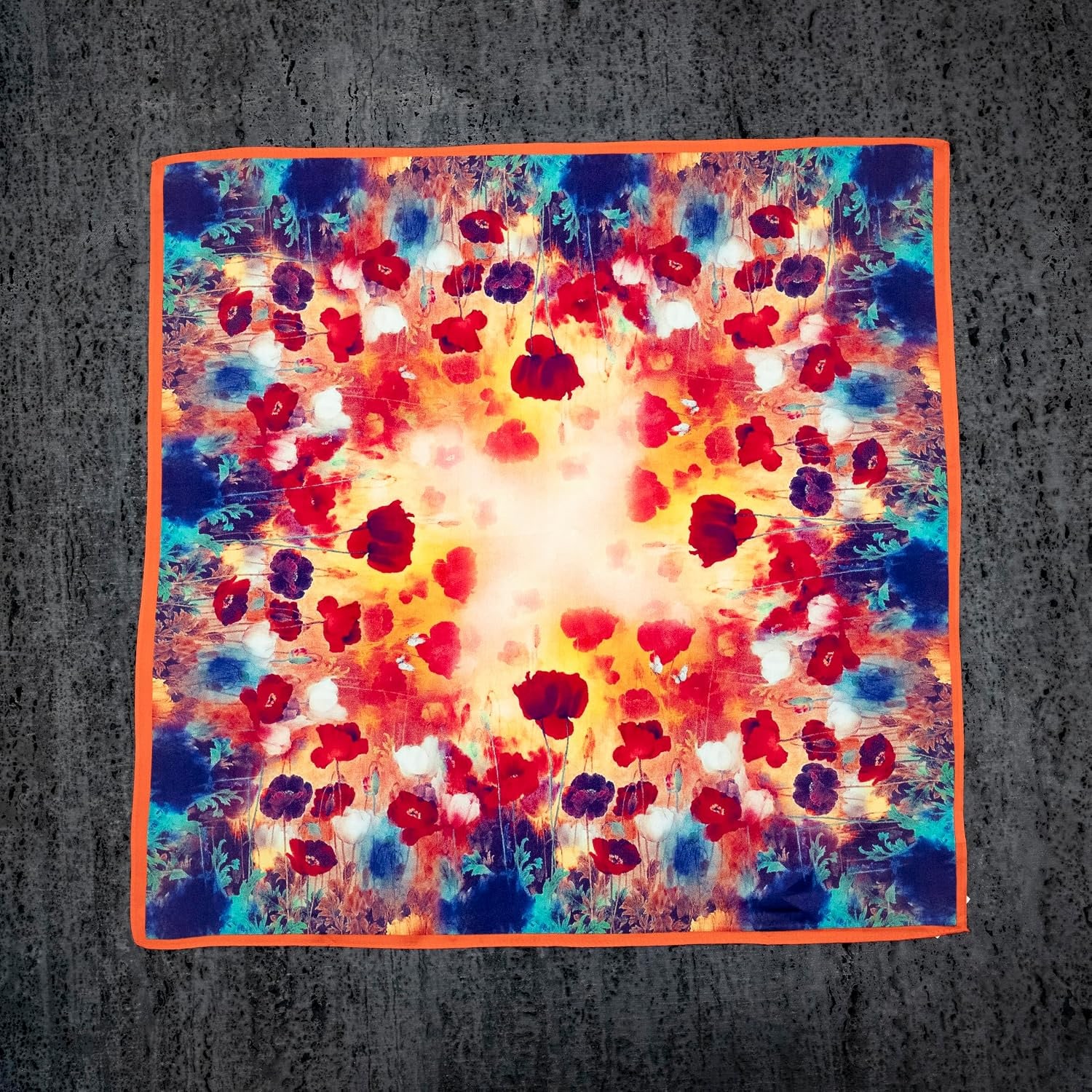
The print is a cat motif. It is a bit of character rather than a plain colour block, which makes it read as a deliberate choice rather than a safe one.
Why silk and not something cheaper
There are three honest reasons to pay for real silk over a synthetic lookalike.
The first is how it handles temperature. Silk is a natural protein fibre and it breathes. In warm weather it sits cool on the skin instead of trapping heat the way a polyester scarf does. In cold weather the same scarf tucked under a coat collar blocks the draught at your neck. One square, two seasons.
The second is friction. Silk has an unusually smooth surface, so hair and skin slide over it rather than dragging. If you have ever pulled a cotton bandana off a ponytail and found it had roughed up the ends, you know the difference. This is the main reason silk is the default choice for hair scarves and ponytail wraps.
The third is drape. Real silk falls. Polyester tends to stand away from the body in stiff folds, which is why cheap scarves look bulky at the neck no matter how carefully you tie them. A silk square of this weight collapses into a neat knot and the tails hang instead of poking out.
If you have been looking for the best mulberry silk scarf at a sensible price, those three things are what you are paying for.
Who it suits
This scarf suits anyone who likes the idea of accessories but does not want to think too hard about them. There is no sizing, no fit, no matching to a body shape. It either goes with what you are wearing or it does not, and a printed square goes with more than people expect.
It works well for commuters, because it lives in a coat pocket and weighs nothing. It works for anyone who ties their hair up, because a silk band is kinder to the ends than an elastic or a cotton scarf. It works for people building a capsule wardrobe, since a few plain pieces plus a patterned square covers a lot of ground. And it works as a gift, which is the quiet reason small silk squares sell so steadily. You do not need to know anyone's size.
It is not the right choice if you want warmth. A 22 gram silk square is a layer, not insulation. For real cold you want wool or cashmere, and the silk square goes underneath it.
How to choose a square scarf
Start with size, because size decides what you can do with the scarf.
A small square around 50 to 55 centimetres is the all-rounder. It is the right size for neckerchiefs, hair, wrists and bag handles. This scarf sits in that range. A mid square around 70 centimetres gives you more neck wrap options and can be worn as a small head covering. A large square at 90 centimetres and up is really a shoulder piece, and most people find it too much fabric for daily neck wear.
Next, think about weight. Scarf silk is measured in momme, and lighter weights drape softly while heavier weights feel more substantial and hold their shape. For a small square used at the neck and in hair, lighter is generally better, because you want the fabric to fold down small and knot cleanly.
Then consider the weave. Satin finishes are shiny, twill is matte with diagonal texture, chiffon is sheer and floaty, and crepe satin sits between satin and matte. If you want something that reads as elegant without being glossy, crepe satin is a sensible middle ground.
Last, think about print. Busy multi-colour prints give you more outfits to match with, because there is almost always one colour in the scarf that picks up something you own. A single-colour square is cleaner but less flexible. A motif print like this one lands in between, with enough pattern to be noticed and enough restraint to work with plain clothing.
Five ways to wear it
Fold it on the bias into a band, wrap it once around your neck and tie a knot at the side. This is the default look and it takes about ten seconds.
Tie the same band around the base of a ponytail, with the knot on top and the ends left to hang.
Use it as a headband over loose hair, knotted at the nape or in a small bow on top.
Thread it through a handbag handle and knot it so the tails fall down the side of the bag.
Fold it into a flat rectangle and tuck it into a jacket breast pocket as a pocket square.
None of these need practice. If a knot looks wrong, untie it and start again. Silk forgives.
Looking after it
Silk is not fragile, but it is particular. The care instruction for this scarf is dry clean or hand wash only, and that is worth following.
If you hand wash, use cool water and a small amount of detergent made for silk or wool. Swirl it through for under a minute. Do not soak, do not wring, do not scrub. Rinse in cool water, press the moisture out inside a clean towel, then lay it flat or hang it somewhere shaded. Direct sun fades printed silk faster than almost anything else.
If it needs pressing, use the lowest setting with a cloth between the iron and the fabric, and press while slightly damp.
Two habits make the biggest difference over the years. Put perfume and hairspray on first and let them dry before the scarf goes near your skin, since alcohol marks silk. And store the scarf folded loosely in a drawer rather than hanging it on a hook, because hanging puts all the weight on one small area of fabric.
The short version
A 53 centimetre printed square of pure mulberry silk in a crepe satin weave, weighing 22 grams, with a cat print and dry clean or hand wash care. It knots at the neck, ties in hair, loops through a bag handle and folds into a pocket square. It breathes in summer and blocks a draught in winter. It costs less than most people assume real silk costs, and it needs nothing more than cool water and a bit of common sense to keep looking good.
If you want one scarf that works with most of your wardrobe and takes up no space, a small printed silk square is the one to own.