
The complete guide
How to Choose a Silk Bonnet That Actually Stays On
The problem with cotton and a pillow
Most of us never think about what happens to our hair between lights out and the alarm. It is eight hours of your head pressing into a woven cotton surface and dragging across it every time you roll over. Cotton has a rough, thirsty surface. Hair catches on it, frizzes up, and loses the shape you gave it the day before.
You notice the result rather than the cause. Curls flattened on one side. A blow dry that has gone soft and puffy. Braids that look a week older than they are. Tangles at the back of the neck that take five minutes to work out.
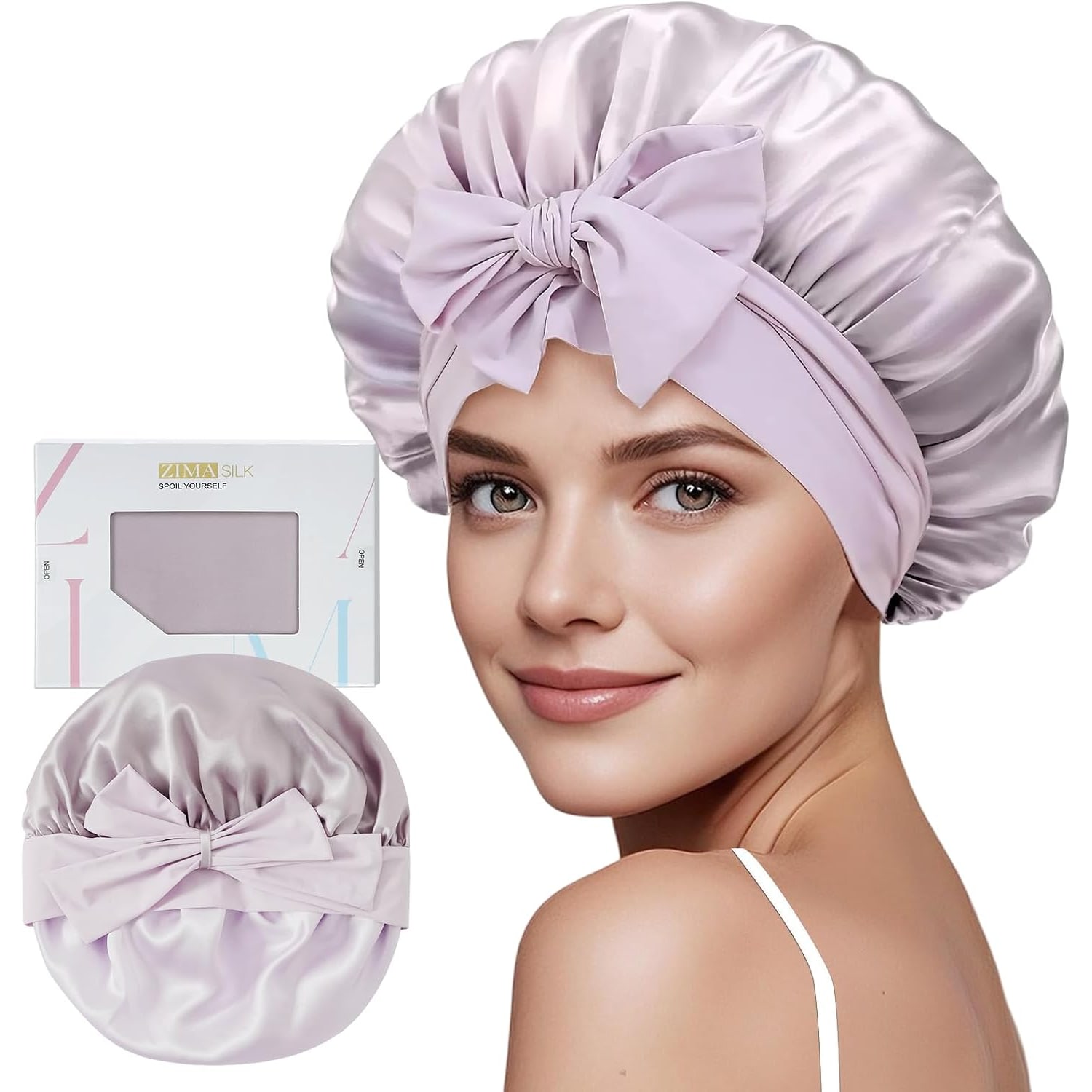
A silk bonnet solves it by changing the surface. Instead of your hair sitting on cotton, it sits inside a smooth silk pocket that moves with your head. That is the whole mechanism. No treatment, no product, just less friction.
What mulberry silk brings to it
Mulberry silk is the long fibre silk used in most quality bedding and accessories. The fibres are fine and consistent, which lets them be woven tightly into a smooth, even surface. That smoothness is what matters for hair. There are no little hooks and loops in the weave for a strand to snag on.
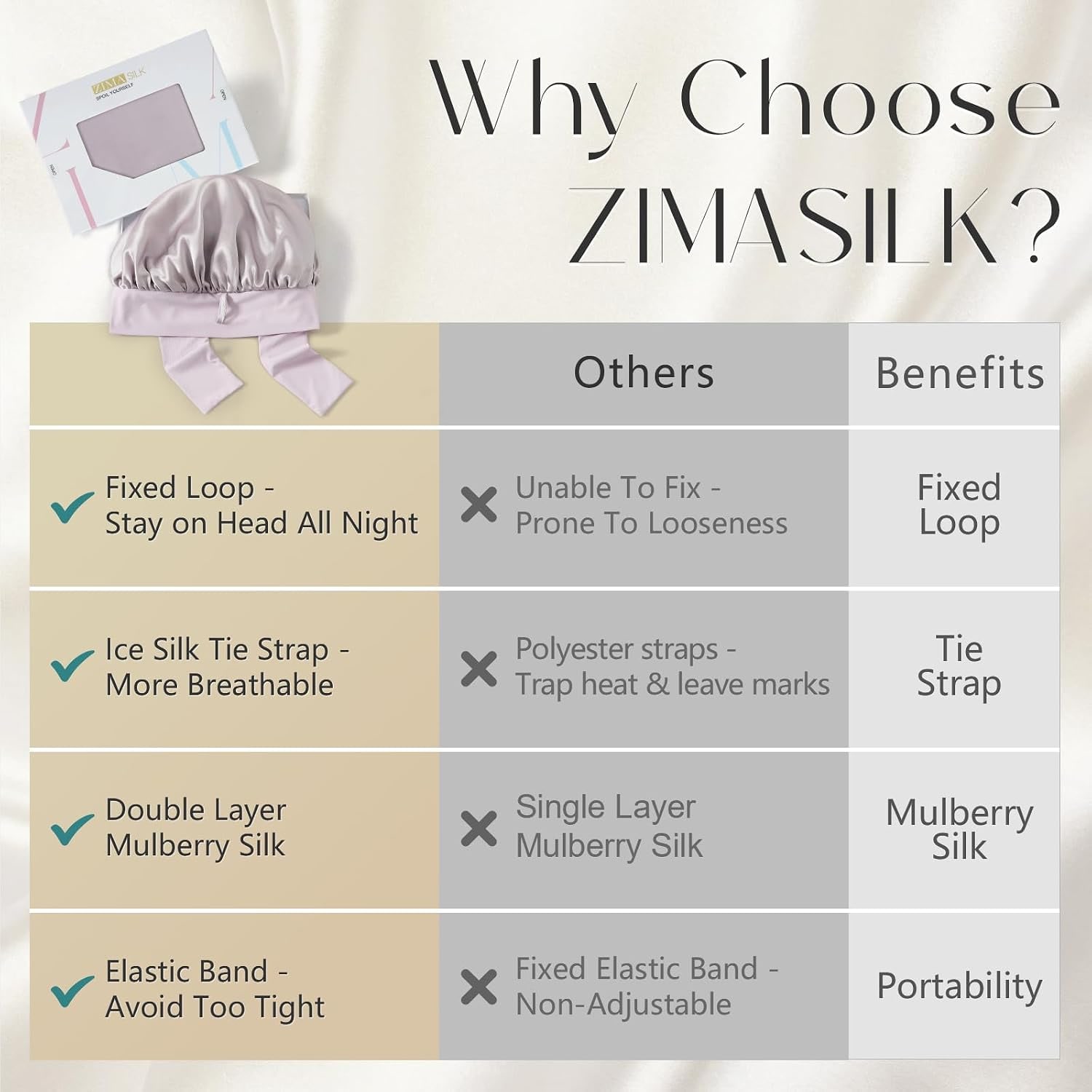
This bonnet is built as a double layer. Two layers of silk rather than one gives the cap a bit of weight and structure. A single layer bonnet can feel flimsy and tends to collapse flat on the head, which defeats the purpose if you are trying to keep volume or a set style. Two layers hold their shape better and feel softer in the hand.
The model reference on this item is Au-19MM bs-Cap, which points to a 19 momme silk. Momme is the weight unit used for silk, a bit like thread count for cotton. Higher numbers mean a denser, more substantial fabric. Nineteen sits in the range commonly used for good quality silk pillowcases and sleepwear, which is to say it is proper fabric and not a flyaway lining weight.
The fit question, which is where most bonnets fail
Here is the honest truth about silk bonnets. Lots of people buy one, wear it twice, find it on the floor at 3am, and never put it on again. Fit is the reason.
Two things go wrong. Either the elastic band is too tight, in which case you get a red line across your forehead and a headache, or it is too loose and the whole thing slides off. Fixed elastic cannot be right for every head.
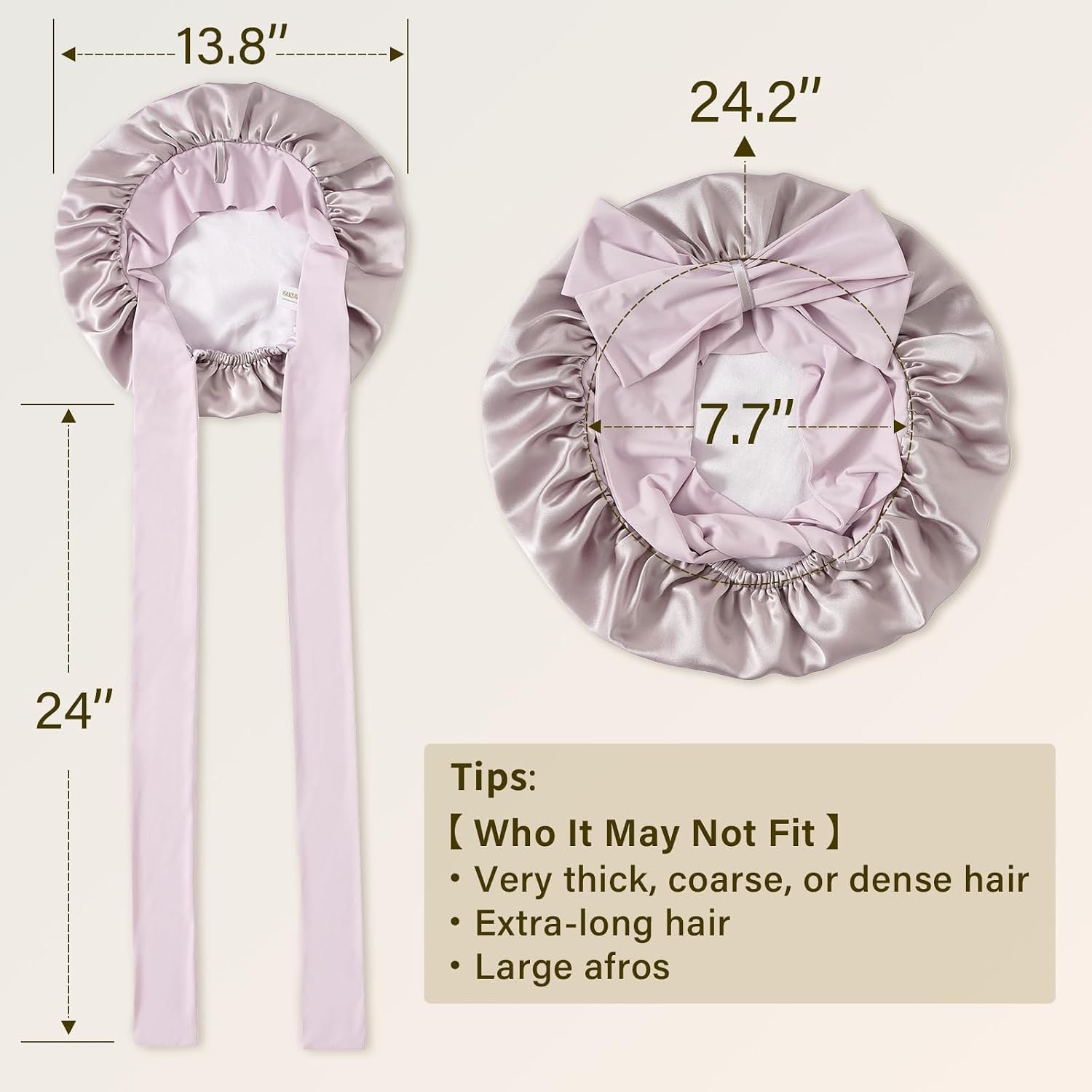
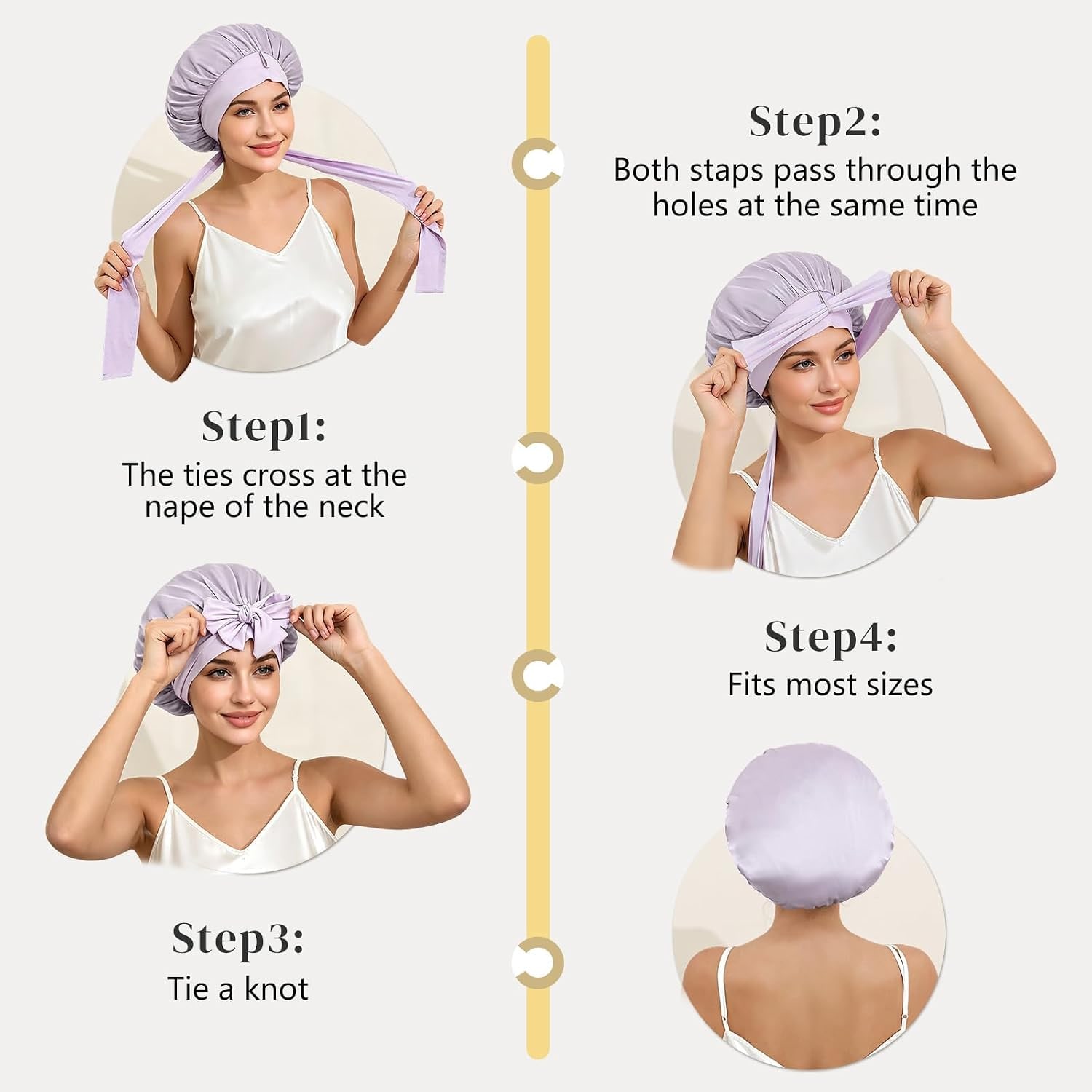
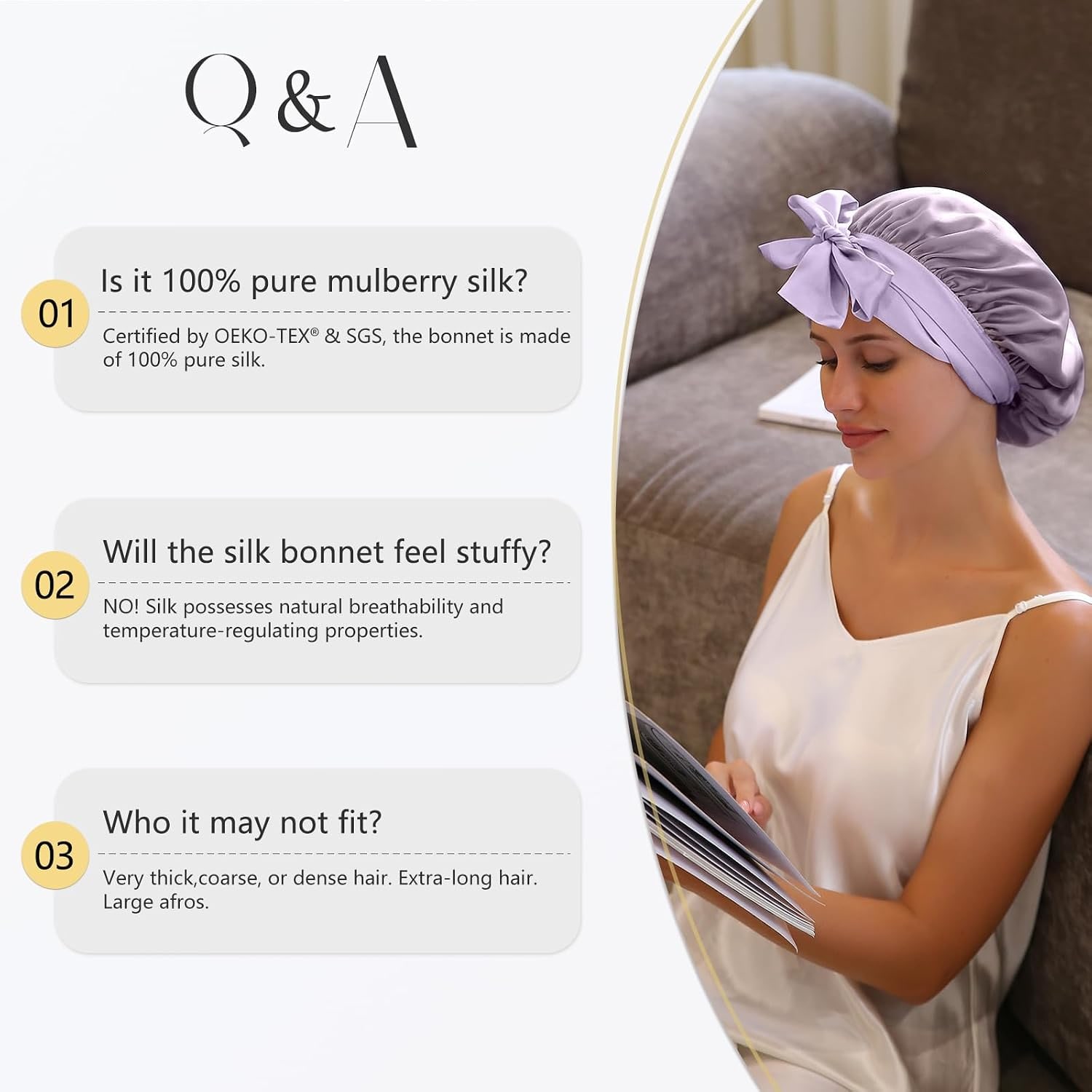
This bonnet uses a drawstring instead. You pull the string to the exact width that suits you and tie it off. That gives you control over two separate things. You can leave plenty of room at the crown so a big volume of hair or a set of curls is not compressed, while still pulling the opening in snug enough at the nape that the cap does not travel.
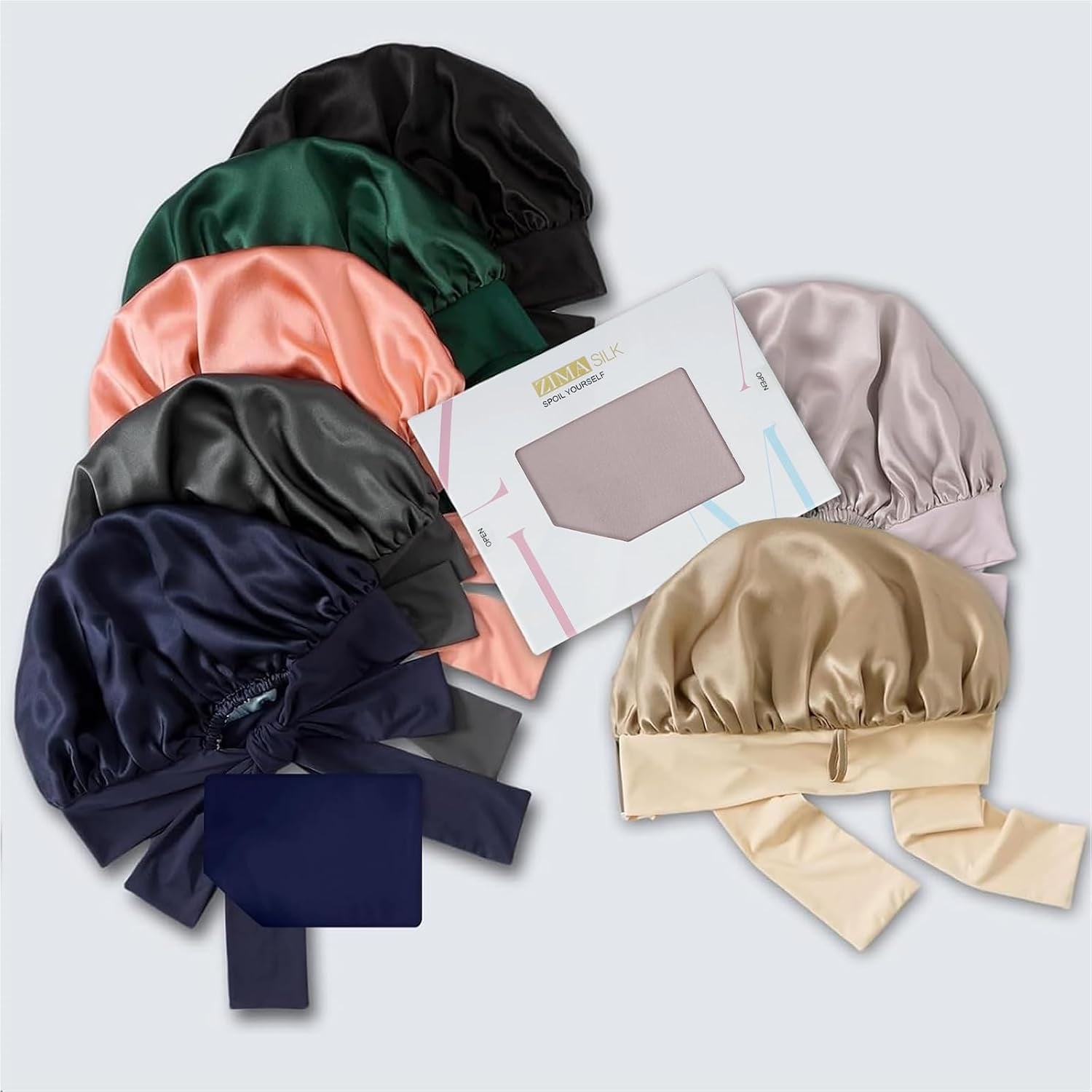
The ties are long and made from ice silk, which is a smooth, lightweight fabric. Long ties mean you can bring them round and tie them under your hair rather than having everything held by a band pressing on the hairline. Anyone who has given up on caps because of pressure marks should pay attention to this bit, because it is the difference between wearing it every night and wearing it never.
Who it suits
Curly and coily hair gets the biggest visible benefit, because those hair types lose the most definition to a pillow. Tucking curls up into a roomy bonnet keeps them in their shape until you take it off.
Protective styles are the second big group. Braids, twists and locs all last longer when they are not being rubbed at the roots every night. You get more days out of a style, which means fewer takedowns.
Long hair is an easy one. Coil the length, tuck it up, pull the string. You stop waking up to a knot at the nape.
Fine or fragile hair is worth mentioning too. Fine strands tangle fastest and are the ones most likely to snap when you brush out a knot. Reducing the friction that creates the knot in the first place is a sensible step.
And then there is the practical group. People who sleep next to someone who steals the pillow. People who travel and cannot rely on hotel bedding. People who have invested in a salon blow dry and would like it to survive the night.
How to choose between the options
A few things to weigh up.
Single layer or double. Single layer is lighter and cooler but less structured. Double layer, like this one, holds its shape, feels more substantial and tends to last longer through washes. If you have volume to protect, double layer is usually the better pick.
Elastic or drawstring. Elastic is faster to put on. Drawstring is adjustable, which means it can be made to fit your head properly rather than approximately. If you have ever taken a cap off because of a pressure line, the drawstring is the answer.
Capacity. Think about how much hair you are putting inside. A bonnet that works for a bob will feel cramped on waist length hair. Erring towards roomy is safer, since the drawstring pulls in the opening but does not shrink the crown.
Momme weight. Heavier silk is more durable and feels better. Very light silk is cheaper but tends to look tired after a handful of washes.
Looking after it
Silk is a protein fibre, closer to hair than to cotton, and it wants similar treatment. Keep it away from heat, bleach and aggressive detergents and it will last for years.
The care instruction on this bonnet is hand wash only. Use cool water and a small amount of mild detergent made for delicates. Swish it gently rather than scrubbing, rinse until the water runs clear, then press the water out between your palms or in a towel. Do not wring it or twist it, as that distorts the weave.
Reshape the cap and dry it flat, somewhere out of direct sun and away from heat sources. Sunlight fades dyed silk and heat makes fibres brittle. If it needs smoothing afterwards, a cool iron on the reverse side will do it, though most creases fall out once it is worn.
Wash it every week or two in normal use, more often if you apply oils or heavy leave-in products before bed. Those build up on the inside surface and eventually make the fabric feel tacky rather than slick.
One small habit worth forming. Take hairpins, clips and anything with a rough edge out before you put the bonnet on. Fine silk is smooth, and smooth fabric snags on sharp things.
The short version
A silk bonnet does one job well, which is to stop your hair rubbing on rough fabric for eight hours. This one is mulberry silk in a double layer, with an adjustable drawstring and long ice silk ties instead of a tight elastic band.
If you have curls, braids, long hair or anything you would rather not wake up to in a tangle, it is a small change that you notice the first morning. Set the drawstring properly, hand wash it in cool water, dry it flat, and it will keep doing that job night after night.