
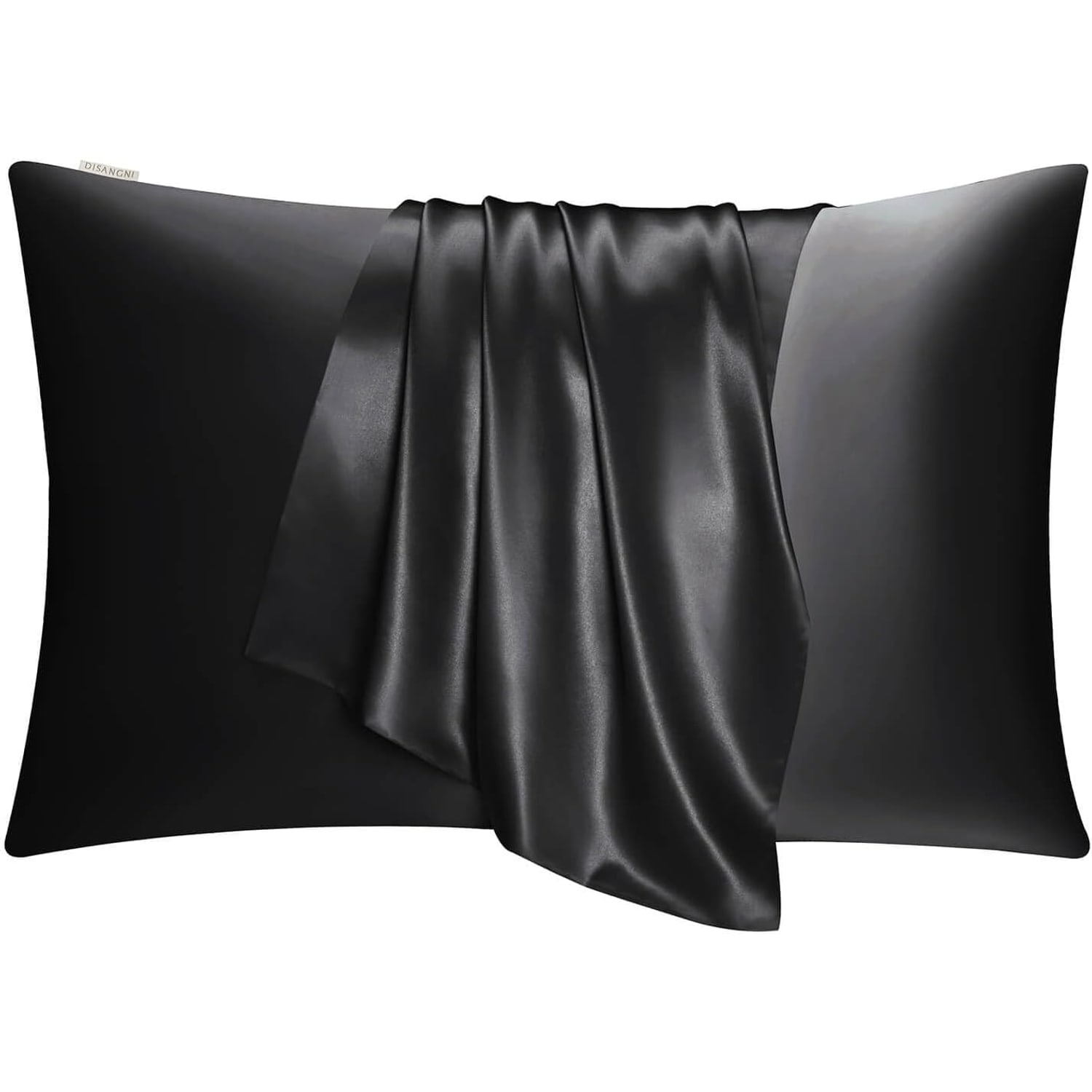
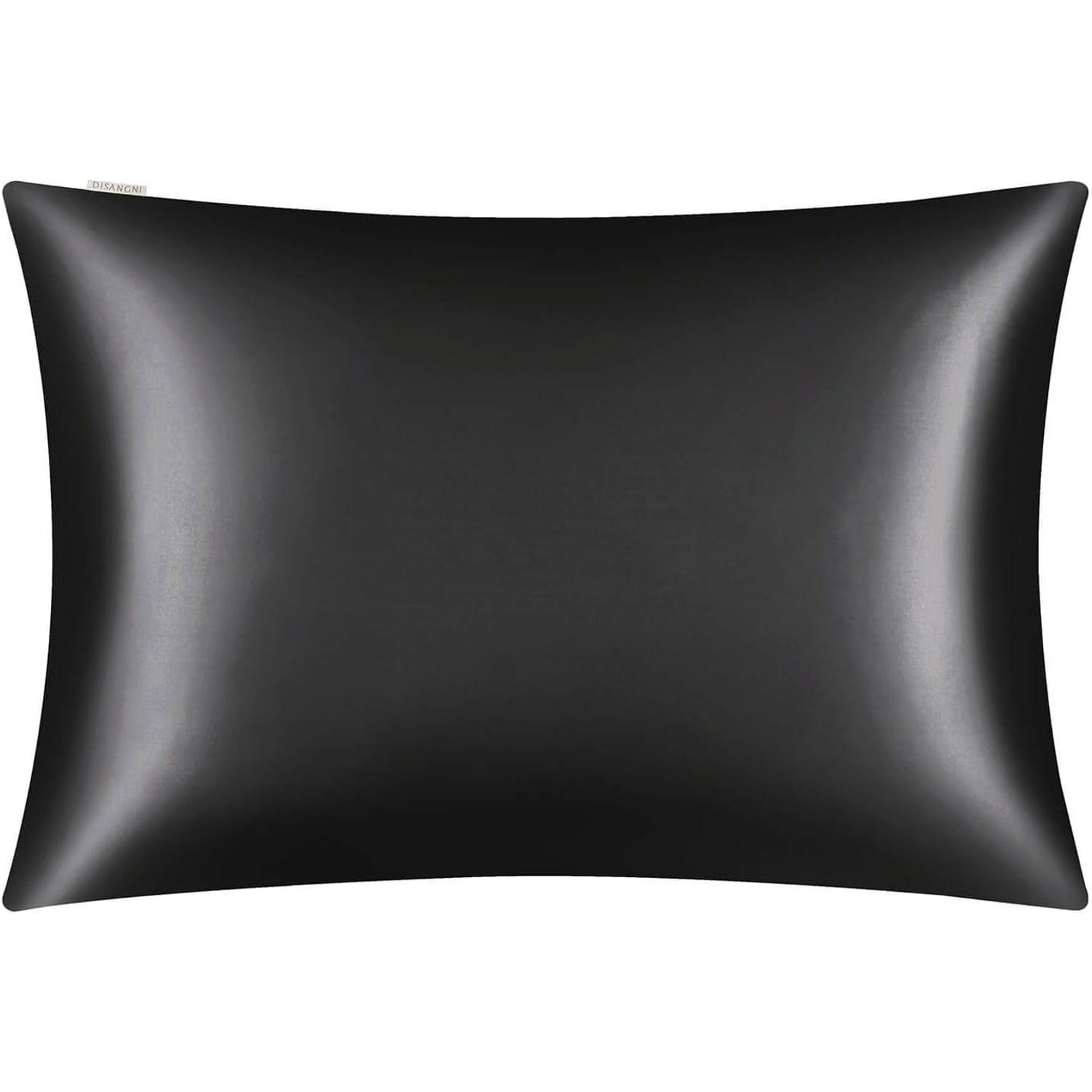
The complete guide
Choosing Black Silk Pillowcases, A Straightforward Buyer's Guide
The problem with ordinary pillowcases
Nobody buys a pillowcase because they are excited about pillowcases. You buy one because something is bugging you. Hair that looks slept-on no matter what you did to it the night before. A cheek that wakes up with creases pressed into it. A case that bunches up and slides off the pillow by 3am, so you spend half the night pushing it back on.
Cotton is a fine fabric in a lot of ways, but it has a textured surface. Under a microscope it looks like a rough field. Your hair and the side of your face spend seven or eight hours being dragged across that field every single night. Most of the time you do not notice. The result shows up in the mirror instead.
Silk is a different kind of surface. The fibre is long and smooth and it does not grip. That is the whole mechanism, and it is why silk pillowcases have gone from a luxury-shop curiosity to something you find in ordinary linen cupboards.
What 22 momme actually tells you
If you have shopped for silk at all you will have hit the word momme and quietly skipped past it. It is worth two minutes.
Momme is a weight measure, specific to silk, roughly the same job that GSM does for cotton or thread count does for sheets. The higher the number, the denser and heavier the cloth. Thin silk used for scarf linings might be 12 or 16 momme. Bedding silk generally starts around 19 and climbs to 25 or so. Past that it gets heavy and stiff and the price climbs faster than the benefit.
22 momme sits in the comfortable middle. Dense enough to feel substantial in your hand and to hold up to regular use, not so heavy that it loses the drape people buy silk for. If you are comparing cases and one quotes momme and the other does not, that absence usually tells you something.
The 600 thread count here describes how tightly the threads are packed in the weave. Thread count on its own can be gamed, which is why momme is the figure to lead with for silk. Seeing both quoted is a good sign.
Double-sided, and why it matters more than it sounds
Here is a trick that turns up a lot in cheaper silk bedding. The front of the case is silk. The back is something else, often polyester, sometimes a cotton blend. From the outside of the packet, and in the photographs, you cannot tell.
You find out the first night you flip your pillow over.
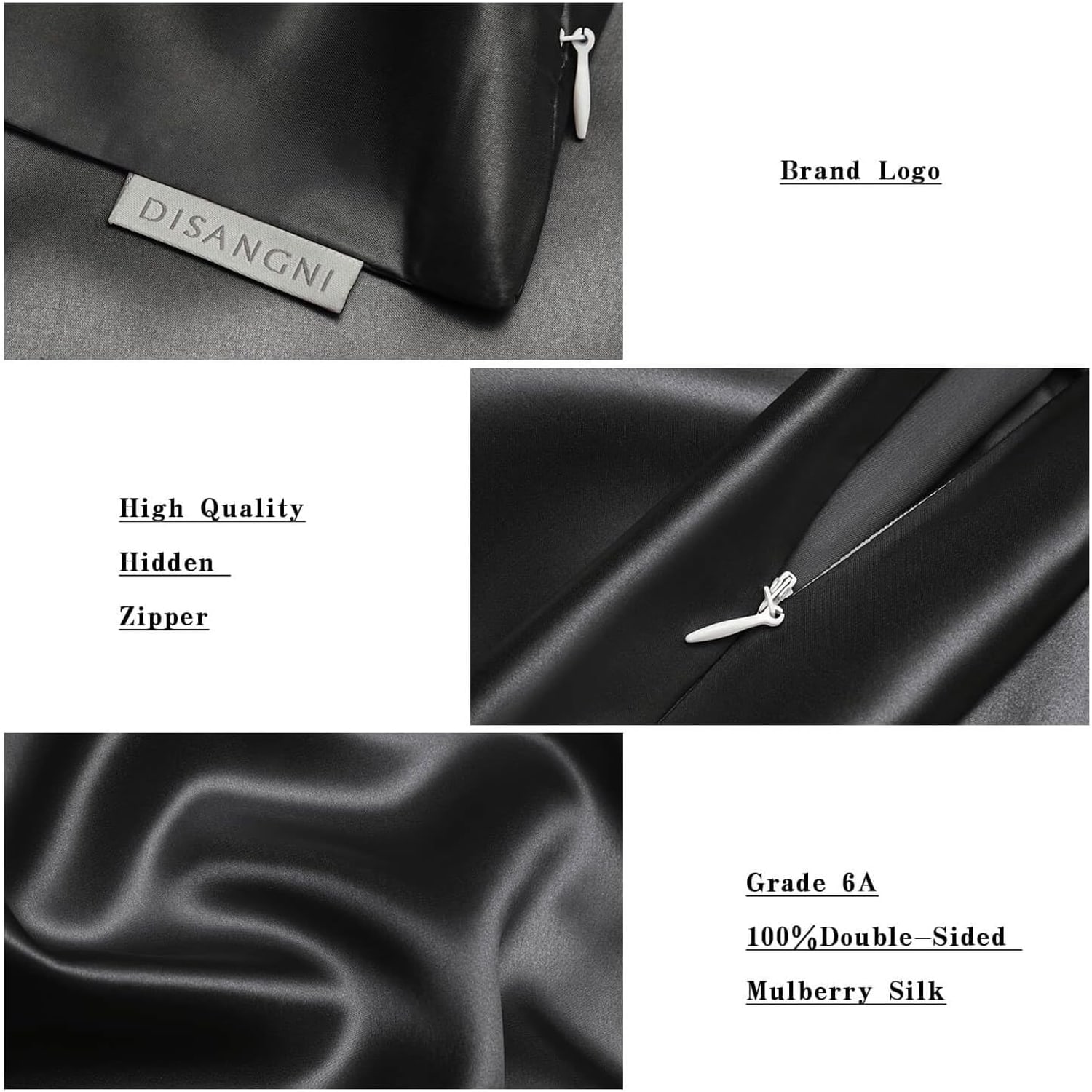
This pack is double-sided mulberry silk, meaning both faces are the same fabric. It sounds like a small detail until you think about how many times you turn a pillow in a night. Anyone shopping for the best mulberry silk pillowcase should check for that word specifically, because it is the single easiest corner to cut.
Mulberry silk, for the record, just means the silk came from silkworms fed on mulberry leaves. Their diet produces long, even filaments, which is what gives the finished cloth its uniform smoothness. Other silks exist and have their uses, but mulberry is the standard for bedding.
The zipper question
Silk pillowcases come with one of three closures. An open envelope end, a flap, or a zip.
Open ends are the cheapest and the most annoying. The pillow creeps out. Flaps are a middle ground and work reasonably well, though the extra layer can sit under your ear. A hidden zipper, like the one on these, holds the pillow fully enclosed and vanishes into the seam when the bed is made.
The only thing to remember with a zip is to close it before the case goes anywhere near cleaning. An open slider catching on silk is the most common way these get damaged, and it is entirely avoidable.
Why two, and why black
Buying a single silk pillowcase is a classic first mistake. You put it on, it is lovely, and then you have one lovely pillow and one ordinary one on the same bed. If you share the bed, that goes down badly. If you sleep alone, you still have nothing to swap in on cleaning day.
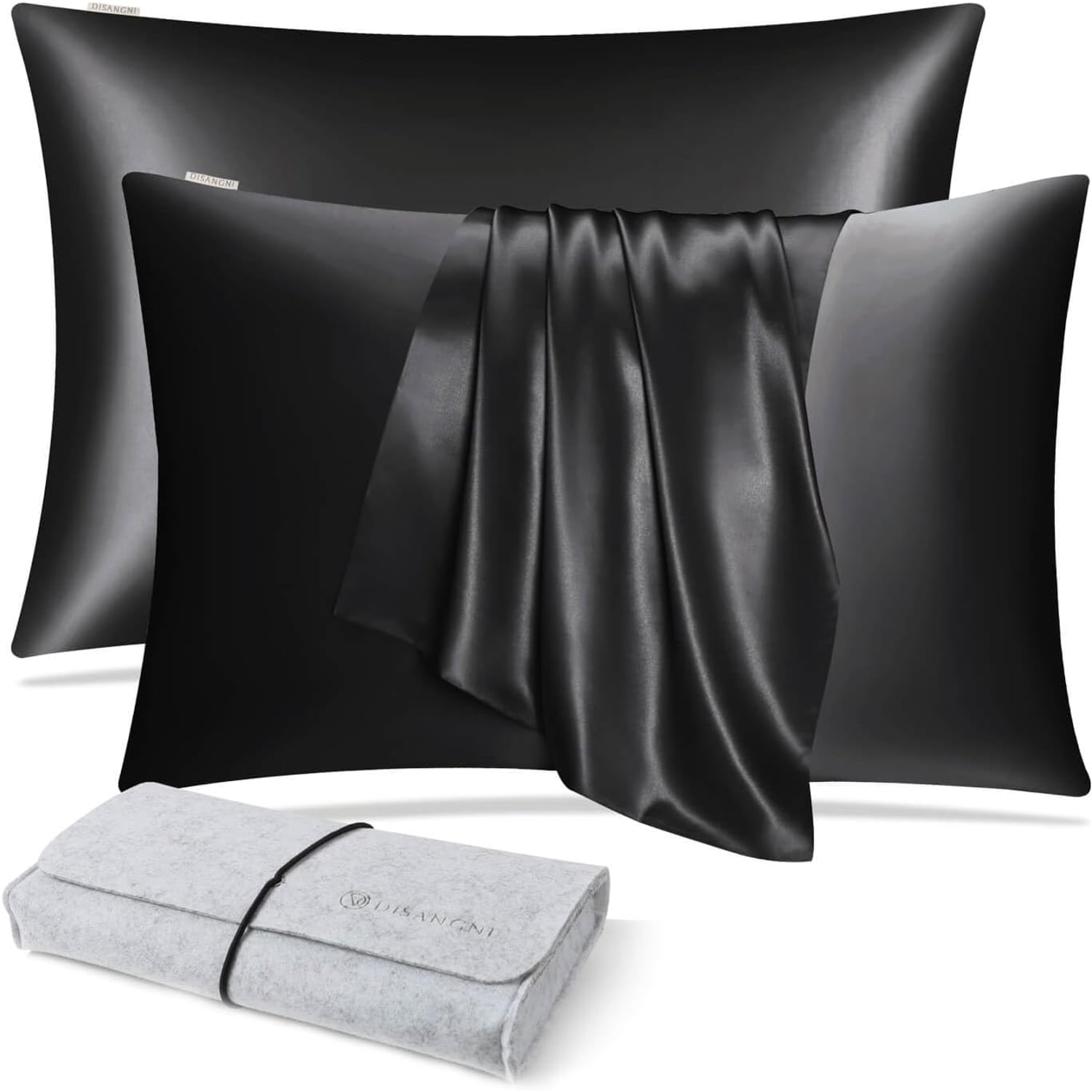
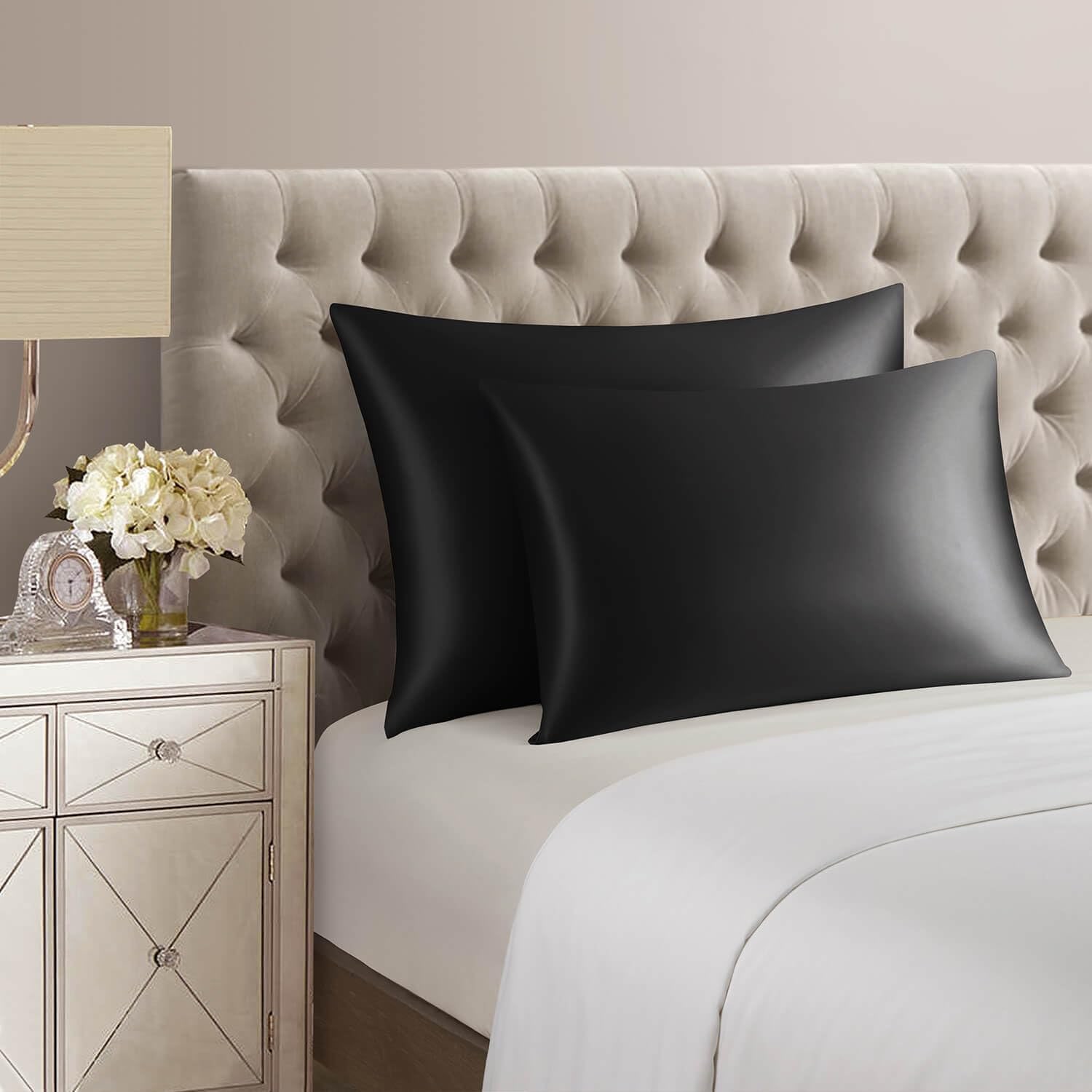
Two cases in a pack solves both. One set dresses a double bed properly, or gives a solo sleeper a working rotation. That is a big part of why the best silk pillowcase pair beats the single as a purchase, and why it makes a better gift too.
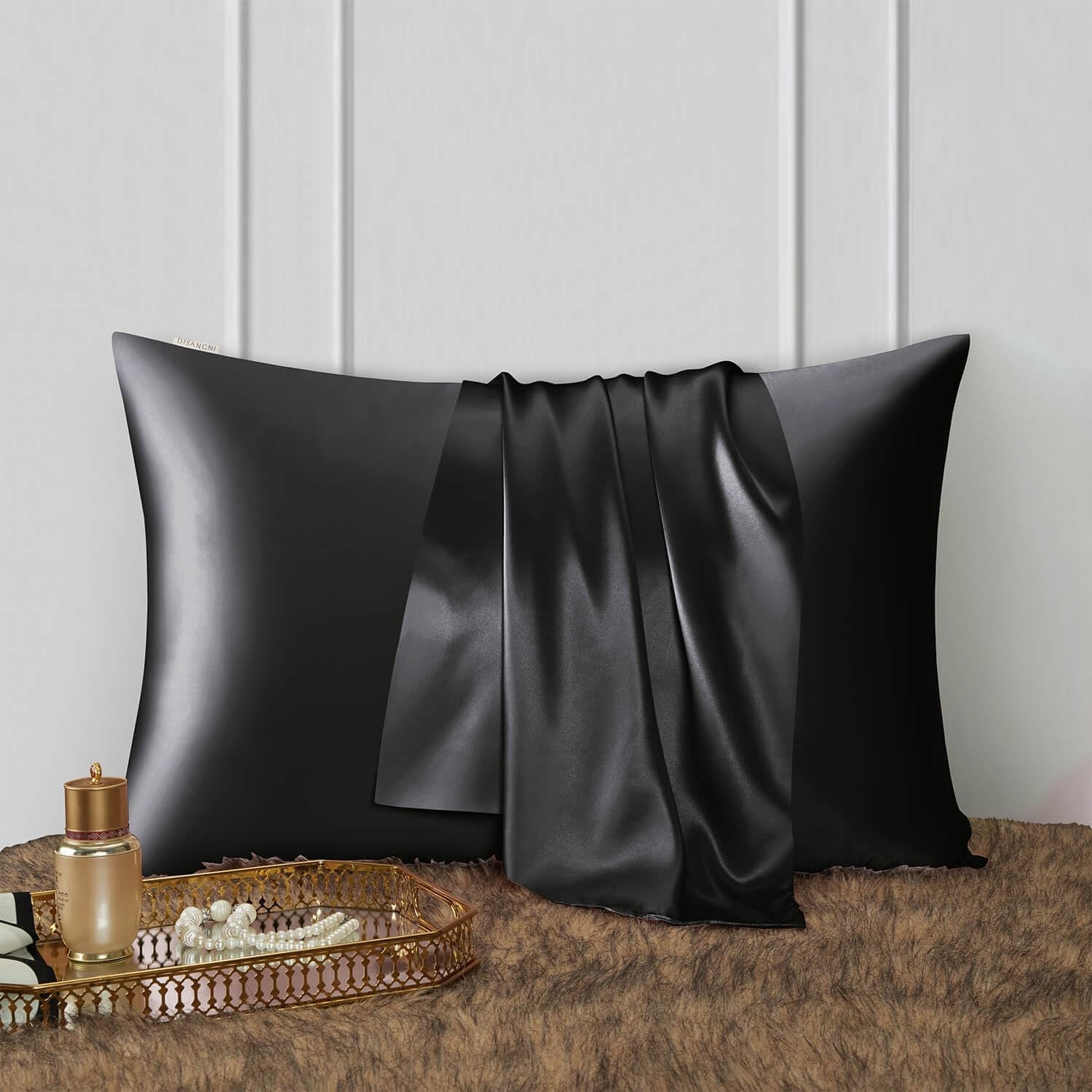
Black is the practical colour choice. Pale bedding shows everything: makeup you thought you had removed, hair products, the faint shadow where your face sits. Black does not. It also sits well against almost any sheet set you already own, white, grey, charcoal, navy or a deep green. It is a plain solid with no pattern, so it will not look dated in three years. If you want a bedroom that feels calm rather than busy, the best dark silk pillowcase does a lot of quiet work.
Getting the size right
These are standard size, 66 cm long by 50.8 cm wide, listed in inches as 20 by 26. That is the most common bed pillow size sold in New Zealand, but it is not the only one.
Take two minutes before ordering. Lay your pillow flat, press it down gently, and measure the long edge. If it comes in at or under 66 cm you are fine. If it measures closer to 75 cm you have a queen pillow and this case will not fit. King pillows are longer again.
Depth matters too. A very deep, overstuffed pillow can fill a standard case so tightly that the silk is under constant tension, which is not good for any fabric. A normal-profile pillow of any fill, latex, memory foam, feather or polyester, will be fine.
Looking after them
The care instruction for this product is dry clean only. That is what the manufacturer specifies and we are passing it on as stated.
A few practical notes. Close the zip before the case goes to the cleaner, and tell them it is silk so it goes into the right process. Avoid bleach entirely. When you store the spare case, fold it into a drawer or a breathable cotton bag rather than a sealed plastic tub, and keep it out of direct sunlight. Sun is hard on dark dyes and hard on silk generally.
If you want something you can throw in the machine every Sunday, look for a case specifically labelled washable instead. Dry clean only is a real commitment and it is better to know that going in than to find out after the first wash.
Who these suit
People with long hair, who are tired of waking up to a nest. Anyone who gets sleep creases and would rather not. Side sleepers, who press one cheek into the pillow for hours at a stretch. Anyone kitting out a guest room and wanting it to look considered without much effort.
They also make a straightforward gift. The size is the common one, the colour goes with everything, and two cases read as a proper present rather than an afterthought.
The short version
Two black pillowcases, standard size at 66 by 50.8 cm, made from double-sided 22 momme mulberry silk with a 600 thread count and a hidden zip. The silk is smooth, both sides are the same fabric, the zip holds the pillow in, and black hides the daily marks that pale bedding does not.
Measure your pillow first, keep to the dry clean instruction, and store the spare out of the sun. That is genuinely all there is to it.