
The complete guide
How to Choose a 30 Momme Silk Pillowcase, Without Overthinking It
The problem with most pillowcases
Cotton is a good fabric. It is breathable, it washes well, and it is cheap. What it is not is smooth. Run your hand across a cotton pillowcase and you can feel the texture of the weave. At night, with the weight of your head pressing down and your face turning every hour or two, that texture drags. Hair catches. Skin shifts. By morning you have a crease down one cheek and a tangle on one side of your head.
Silk behaves differently. The fibre is finer, the surface sits flatter, and your face and hair slide across it rather than gripping it. That is the whole pitch, and it is a mechanical one, not a magical one. Silk reduces friction. Everything else people claim about it gets harder to prove.
The trouble is that once you decide to try silk, you hit a wall of numbers. Momme, thread count, grade, weave, charmeuse, mulberry. Most of it sounds like marketing. Some of it genuinely matters. This guide is about sorting one from the other so you can buy once and be done with it.
What momme actually tells you
Momme is the number worth learning. It measures the weight of silk fabric, and the higher it goes, the more silk you are getting in the same square of cloth. Think of it the way you might think of the weight of a woollen coat. A heavier one is not automatically better for every purpose, but it tells you something real about how much material is there.
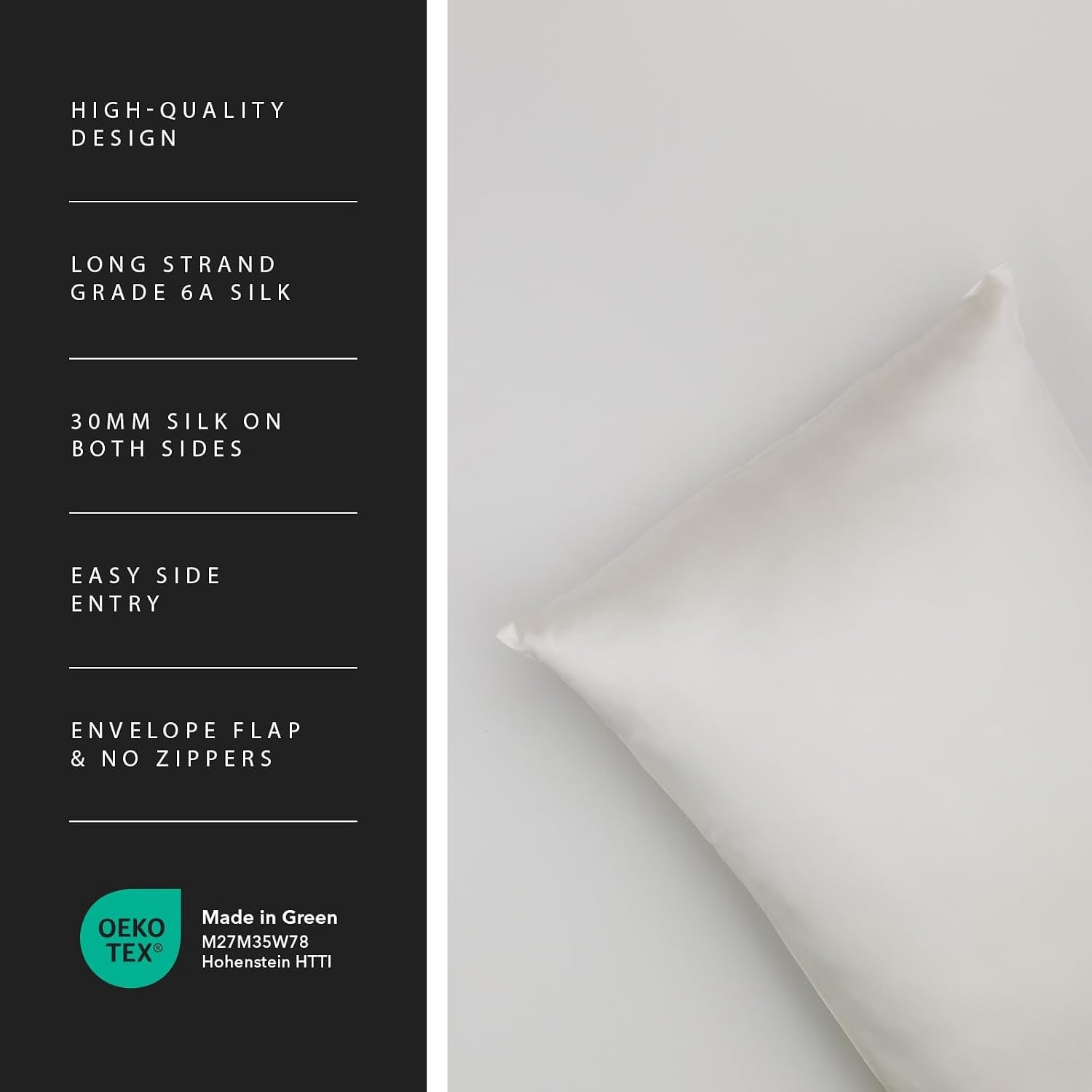
Lightweight silk starts around 12 to 16 momme. Those fabrics are used for scarves and linings where you want the cloth to float. Most silk pillowcases sold today land at 19 or 22 momme, which is a sensible middle ground. This pillowcase is 30 momme, which is well above that.
The practical difference shows up in three ways. It feels heavier in the hand. It drapes over the pillow instead of lifting and shifting as you move. And denser fabric generally holds up better to regular washing, because there is simply more material taking the strain. If you have tried a thin silk case before and found it felt flimsy or snagged easily, the weight is usually the reason.
Thread count is listed here at 300, and it is worth saying plainly that it matters less for silk than it does for cotton. Silk threads vary in thickness, so the count on its own does not tell you much. Read it alongside the momme figure rather than instead of it.
Mulberry silk and why people specify it
Mulberry silk comes from silkworms raised on a diet of mulberry leaves in controlled conditions. The result is a long, even, uniform filament. Wild silks produce shorter, more irregular fibres, which makes a fabric with more character and more texture. For bedding, uniform is what you want, because uniform means smooth.
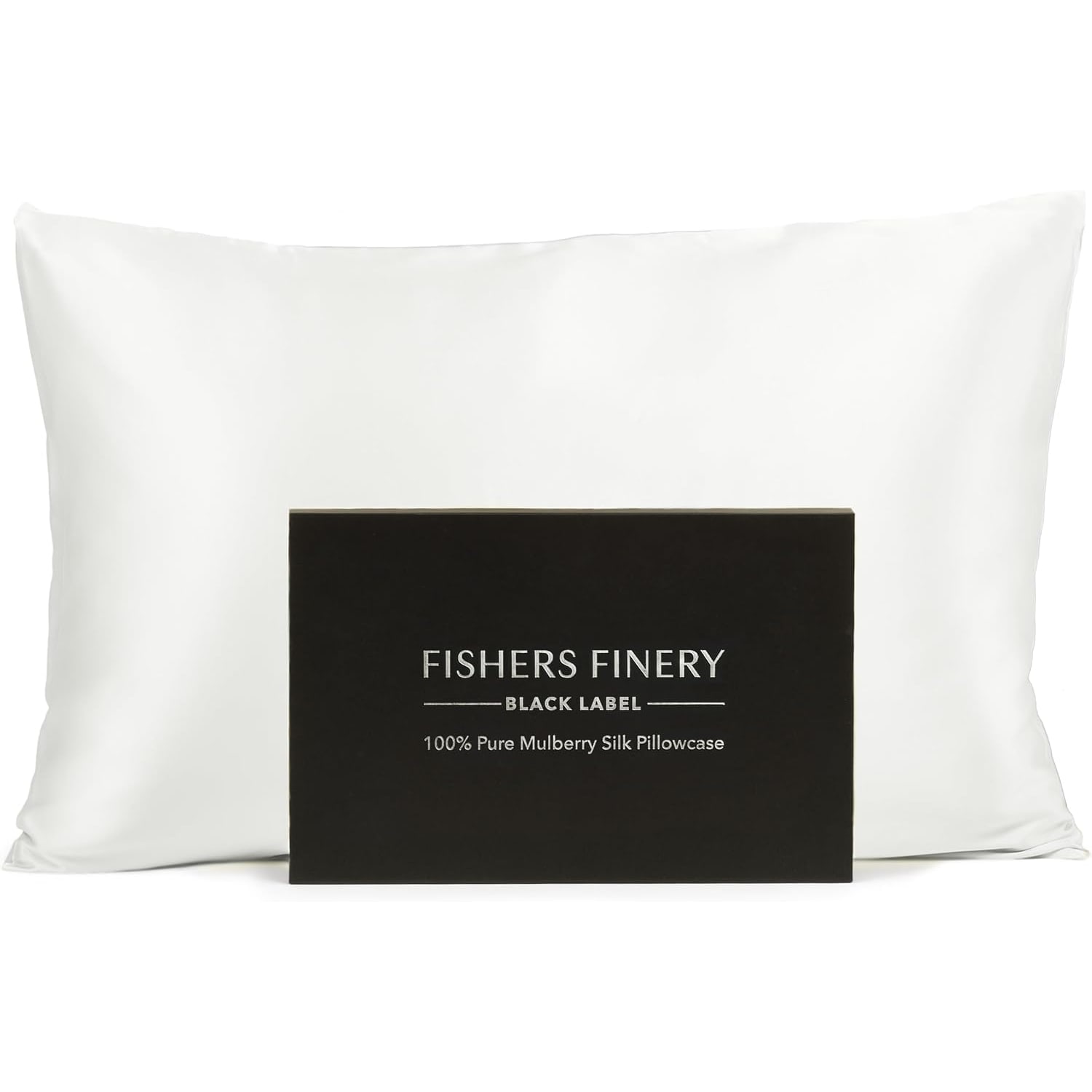
This pillowcase is 100% mulberry silk, woven as charmeuse. Charmeuse is the weave that gives silk its glossy face and slightly softer reverse. It is the standard for bedding for good reason.
One detail that gets glossed over in a lot of listings is whether the silk is on both sides. Plenty of cheaper cases use silk on the face you sleep on and a cotton or polyester backing underneath. It saves money and most buyers never notice until the pillow flips in the night and they wake up on the wrong surface. This case is silk front and back, so the orientation does not matter.
The undyed option
The colour here is natural white, and it is undyed. That means the fabric has not been through a colour process, so it keeps the soft off-white tone silk has naturally.
Two things follow from that. First, it will not match a bright optical white sheet exactly. It reads slightly warmer, closer to cream than to printer paper. Most people find that easier to live with in a bedroom, but it is worth knowing if you have very white bedding and a sharp eye. Second, there is no dye to fade, which simplifies the care a little.
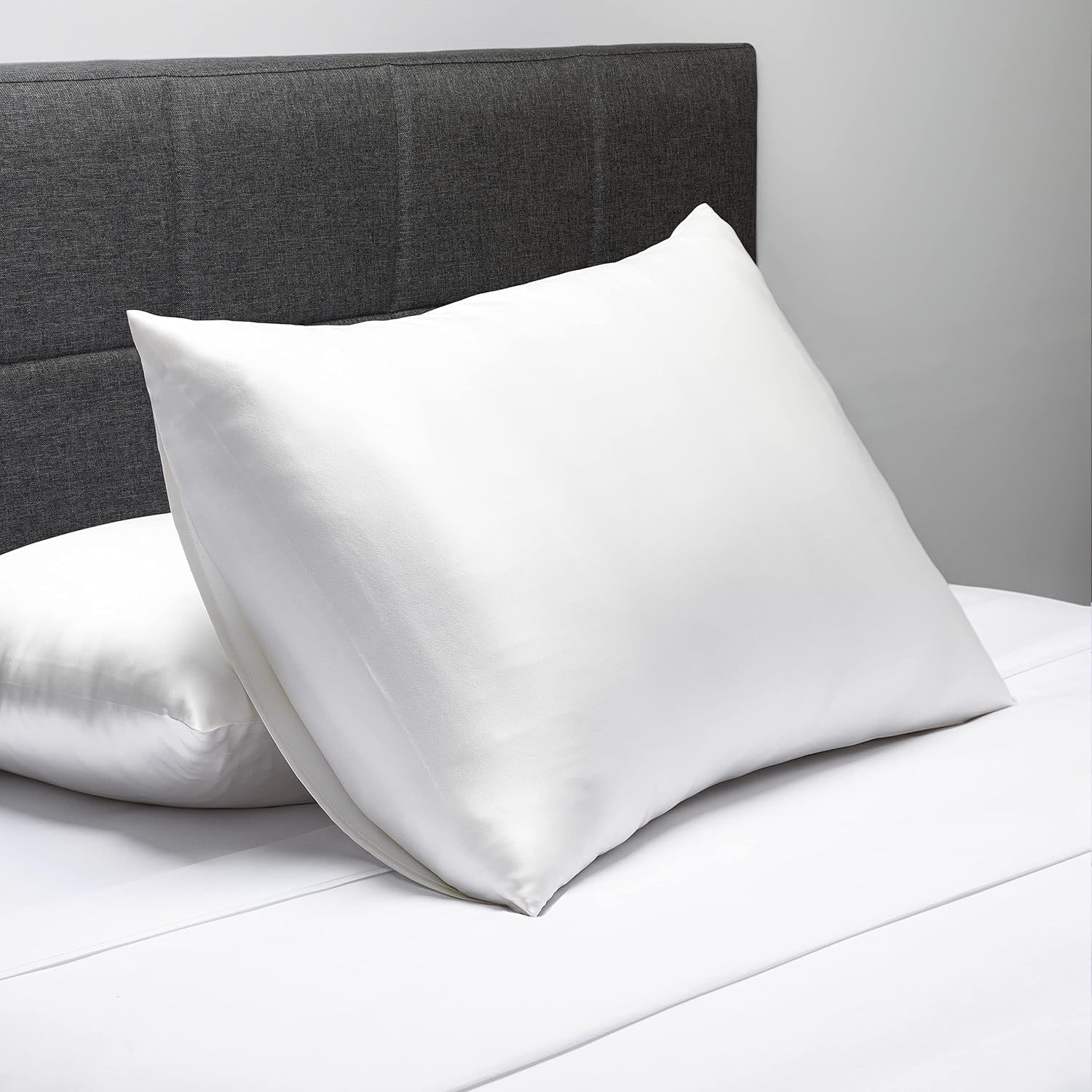
If you want your bedding to fade into the background rather than announce itself, undyed natural white is an easy choice. It sits comfortably with linen, oatmeal, grey and most timber bed frames.
Closure: more important than it sounds
A pillowcase closure is one of those details nobody thinks about until it annoys them. Zips catch hair. Buttons leave marks on your cheek. Ties come undone and leave a corner of pillow poking out.
This one uses an envelope closure with a side entry that sits slightly off centre. The pillow goes in through the side, and the overlapping flap keeps it contained. Nothing hard, nothing fiddly, nothing to break in the wash.
The offset position does something useful too. Because the opening is not centred on the back, the case looks neat from the front when the bed is made. That lets it work as a sham as well as a sleeping case, which is handy if you like a tidy bed during the day.
Who this suits, and who it does not
A 30 momme case makes sense if you have tried lighter silk and wanted something more substantial, if you share a bed with someone who rearranges the pillows constantly, or if you simply want to buy a good one and stop thinking about it.
It makes less sense if you are testing the waters on a tight budget. A heavier weight costs more, and a 22 momme case will still give you the smooth surface. Weight is a refinement, not a requirement.
It also will not suit you if you are after a specific colour match. This is natural white only, undyed. If your bedroom scheme needs charcoal or blush, look elsewhere.
Size matters as well. This is a standard case at 71.1 cm by 50.8 cm. Pillows sold in New Zealand vary more than you would expect, so measure yours before ordering. A pillow slightly smaller than the case is fine. One that is noticeably bigger will stretch the fabric and strain the seams.
Looking after it
Silk is not fragile, but it does not like being treated like a tea towel. The basics are easy.
Wash it in cool water with a detergent made for delicates. Hand washing is kindest, dry cleaning is fine, and a gentle machine cycle inside a mesh laundry bag works well for most people. The mesh bag matters more than the cycle setting, because it stops the case tangling around zips and buttons in the drum.
Skip fabric softener entirely. It coats the fibres and takes away the slip you paid for. Skip bleach as well, including oxygen boosters, since it weakens silk and can yellow a natural white fabric.
Dry it flat or on a line in the shade. Direct sun is hard on silk fibres. If it needs pressing, use the lowest silk setting while the fabric is still a little damp, and keep the iron moving.
Washing every week or two suits most households. If you use heavy night creams or hair oils, go more often. Buying a second case so you can rotate makes this far less of a chore, and it means one is always clean when you strip the bed.
The short version
Momme is the number that matters in silk bedding, and 30 is heavy. You are getting a dense, substantial fabric rather than a thin one, made of 100% mulberry silk with silk on both faces so it does not matter which way the pillow lands. The colour is natural white and undyed, which reads slightly warm against bright white sheets and sits easily with most bedrooms.
The closure is an offset side-entry envelope, so no zips and no buttons, and it doubles as a sham on a made bed. The size is standard at 71.1 cm by 50.8 cm, supplied as one pillowcase.
Measure your pillow, wash it gently in cool water, keep it out of the dryer, and it will stay the way it arrived for a long time.