
The complete guide
How To Choose A Silk Sleep Mask That You Will Actually Wear
The problem with most sleep masks
Almost everyone has owned a bad sleep mask. It usually came free on a plane, it was made of thin foam with a strip of flat elastic, and within twenty minutes it had slid up your forehead or pressed a dent into your nose. You woke up with it around your neck and decided masks were not for you.
That is a shame, because the idea is sound. Your body reads darkness as a cue to wind down. Street lights, a phone charger LED, a partner reading late, early summer sunrises at five in the morning: all of it adds up. A mask is the cheapest way to take light out of the equation without rewiring your bedroom or buying new curtains.
The reason the cheap ones fail is not the concept. It is the build. Flat elastic digs in. Foam traps heat. Hard stitching sits right where your lashes are. Fix those three things and the mask stops being something you tolerate and starts being something you reach for.
What silk actually does
Silk gets talked about in a lot of flowery language, so it helps to be plain about it. Silk fibre is very smooth. Under magnification it looks like a long, even rod rather than the scaly, twisted structure you get with cotton or wool. That smoothness is why fabric made from it feels slippery and why skin and hair slide across it with less friction than they do over a cotton weave.
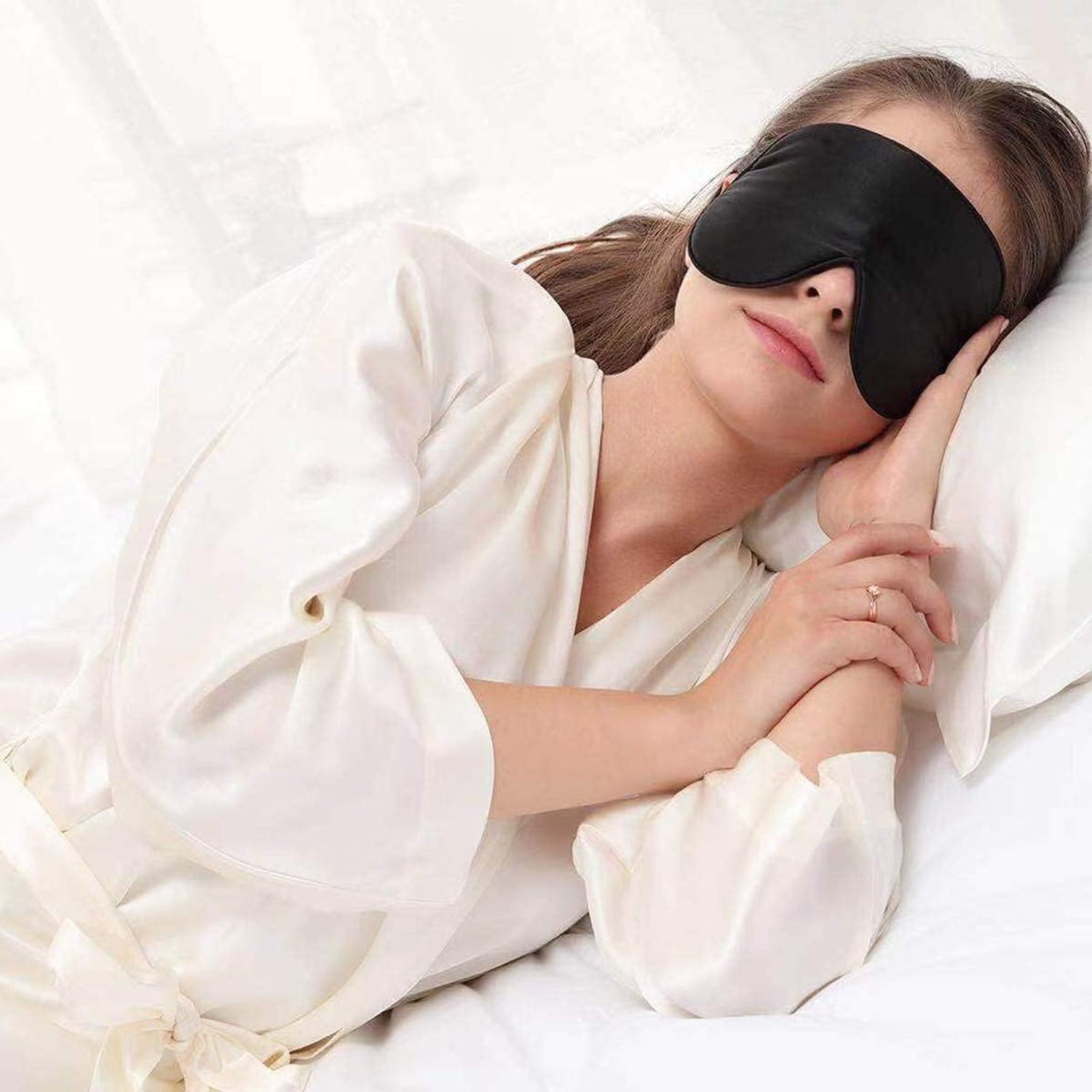
For a sleep mask, that matters in a practical way. You move at night. You roll onto your side, you push your face into the pillow, you shift the mask slightly without waking. On a rough fabric, every one of those movements drags. On silk, your skin moves and the fabric mostly stays put. You notice it less, and noticing it less is the entire point.
Silk also feels cool on first contact and breathes reasonably well. If you run warm or sleep in a room that stays stuffy overnight, that is a real advantage over a padded foam mask that holds heat against your face.
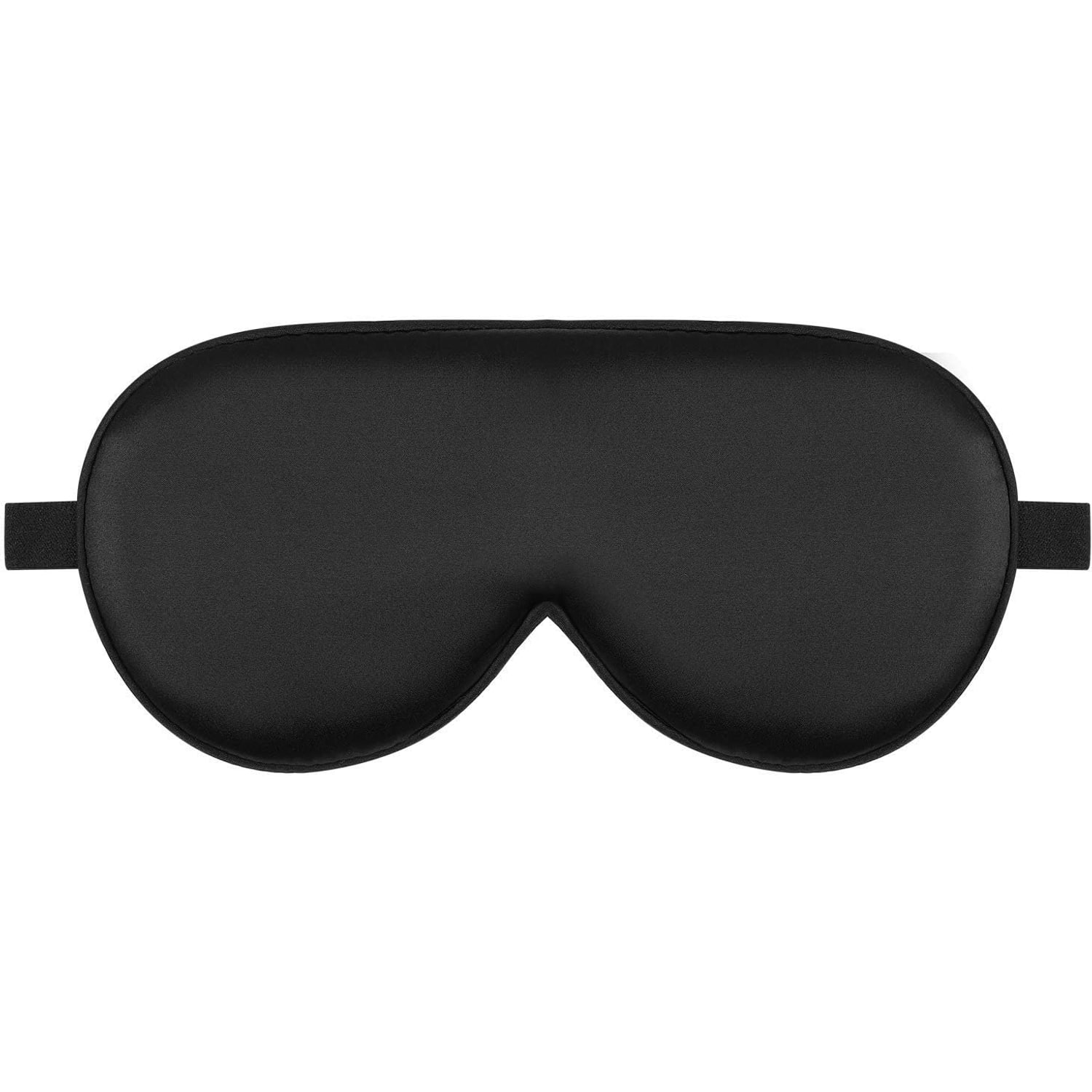
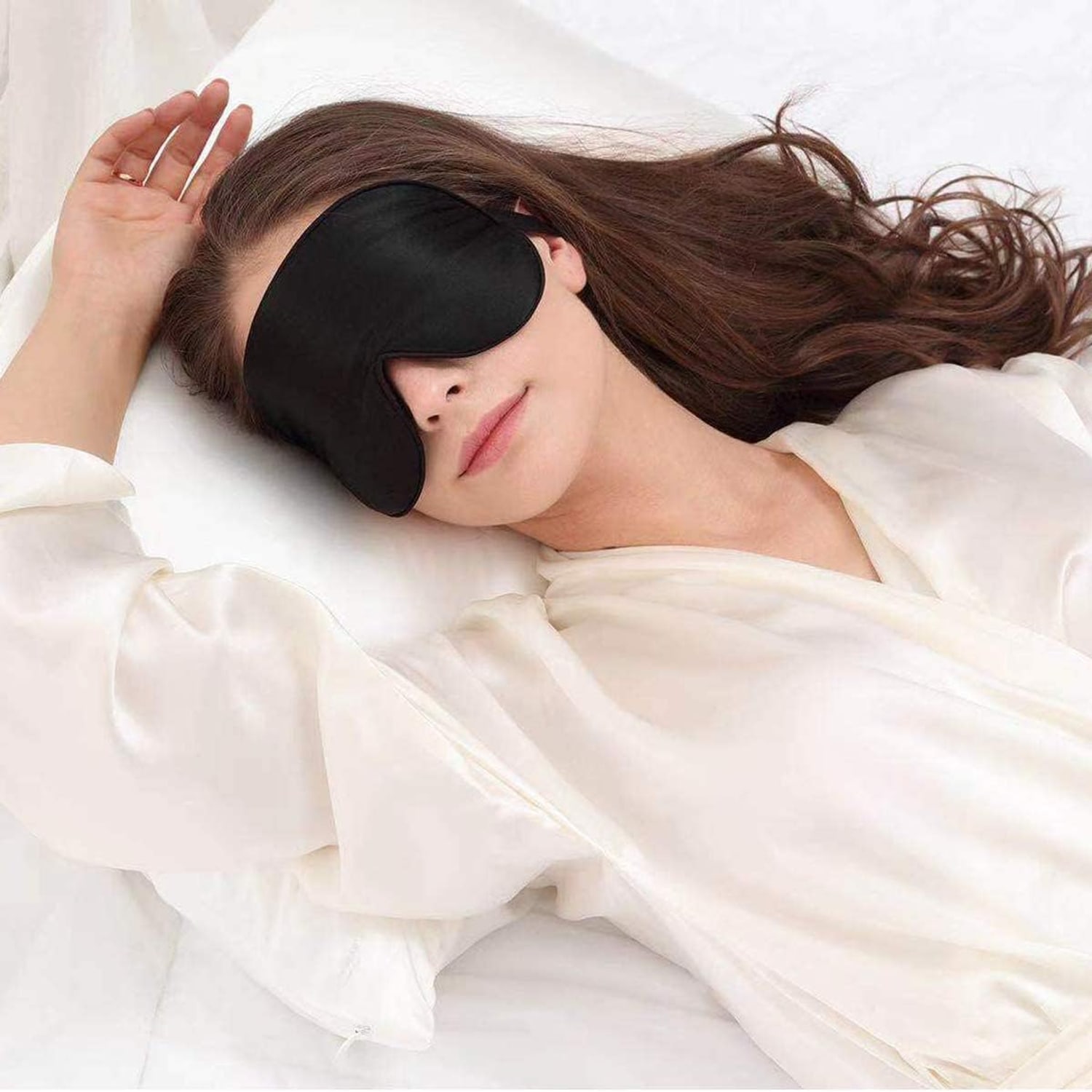
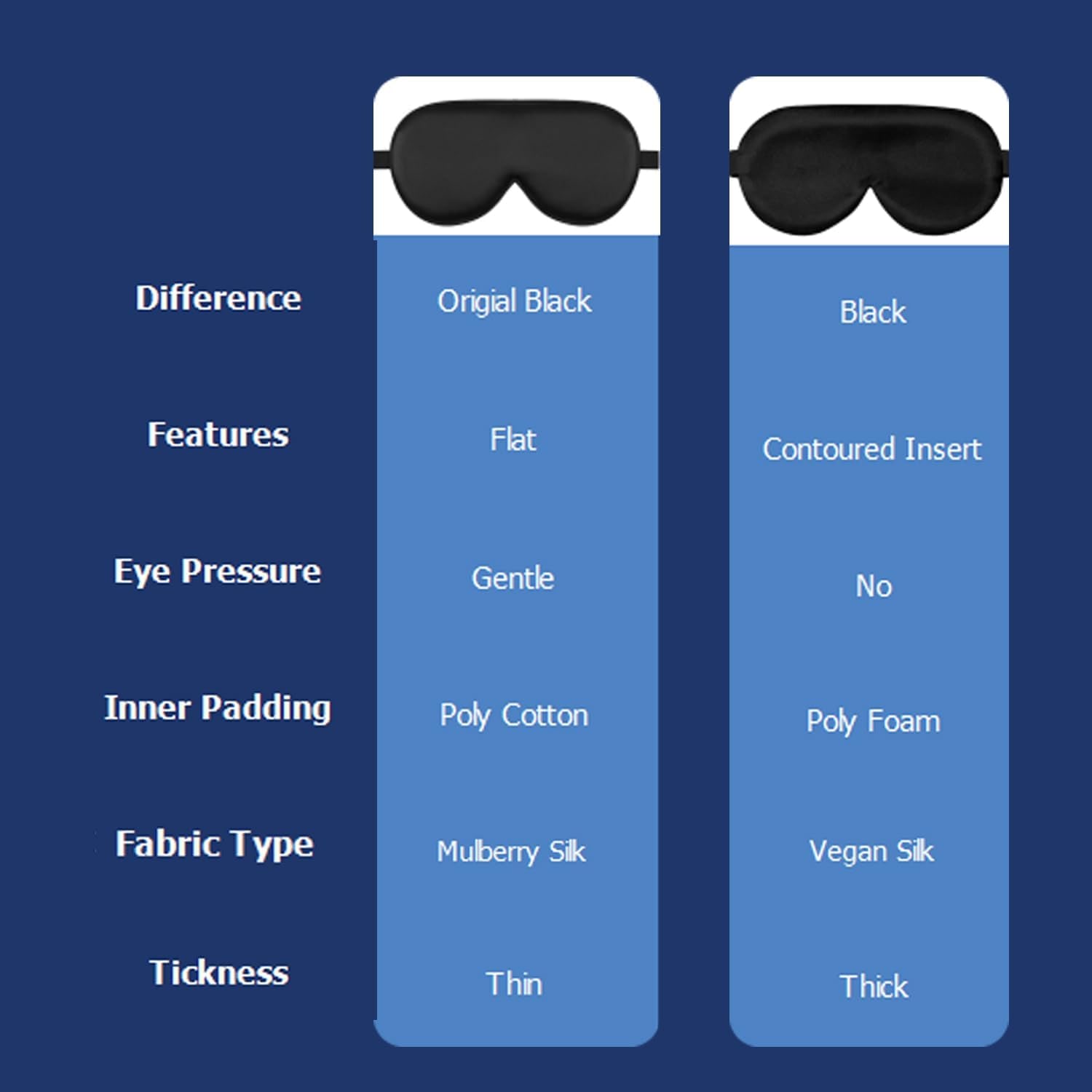
This particular mask pairs a mulberry silk outer with a cotton inner. The silk is what meets your skin from the outside and gives the mask its hand feel. The cotton inner adds a bit of body so the mask holds its shape rather than collapsing flat.
The strap is more important than people think
If you only check one thing before buying, check the strap.
A thin band of flat elastic is the usual culprit behind a mask that migrates in the night. It has one tension, that tension is rarely right for your head, and over time it stretches out and gets worse. Elastic also tends to tangle hair, which is its own small annoyance in the morning.
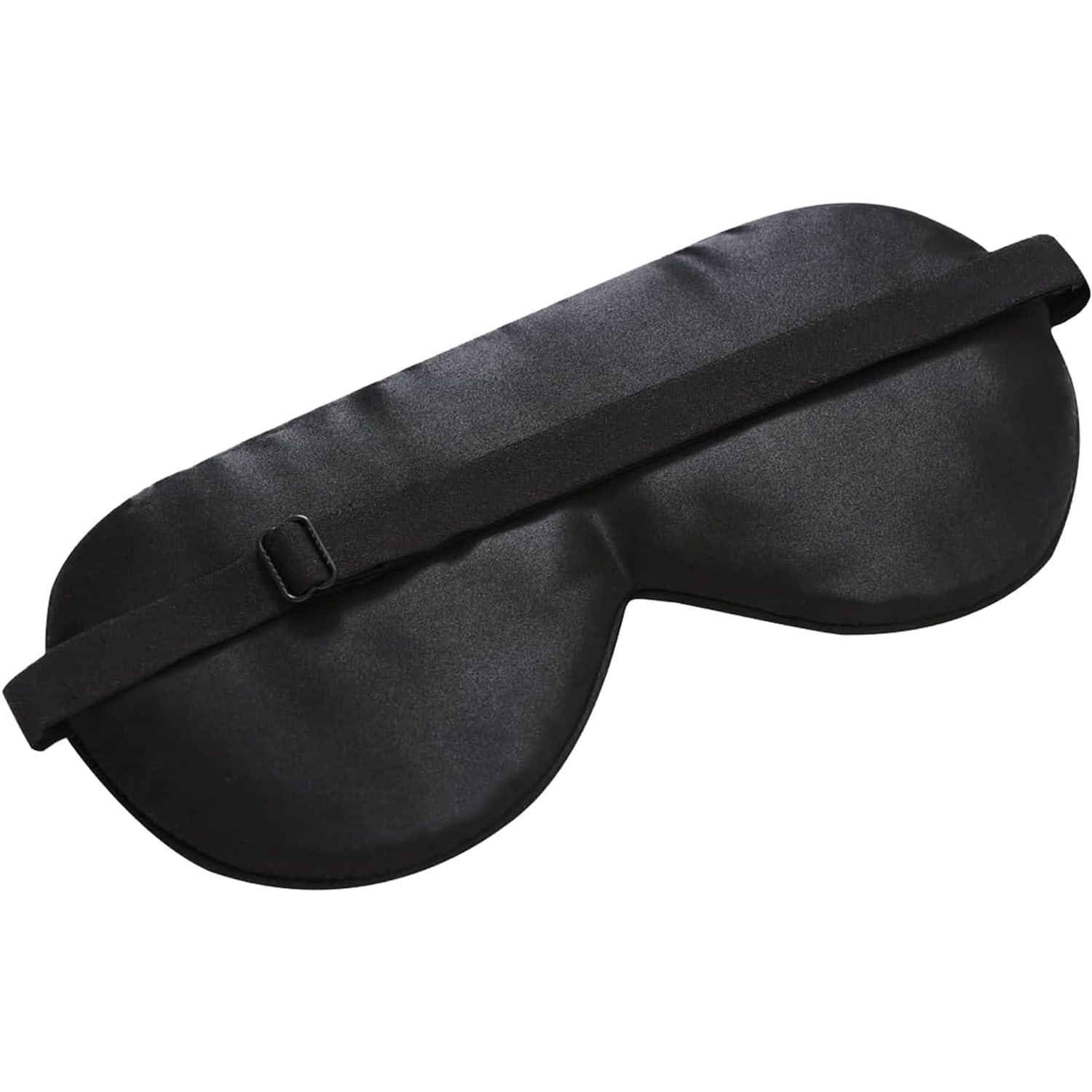
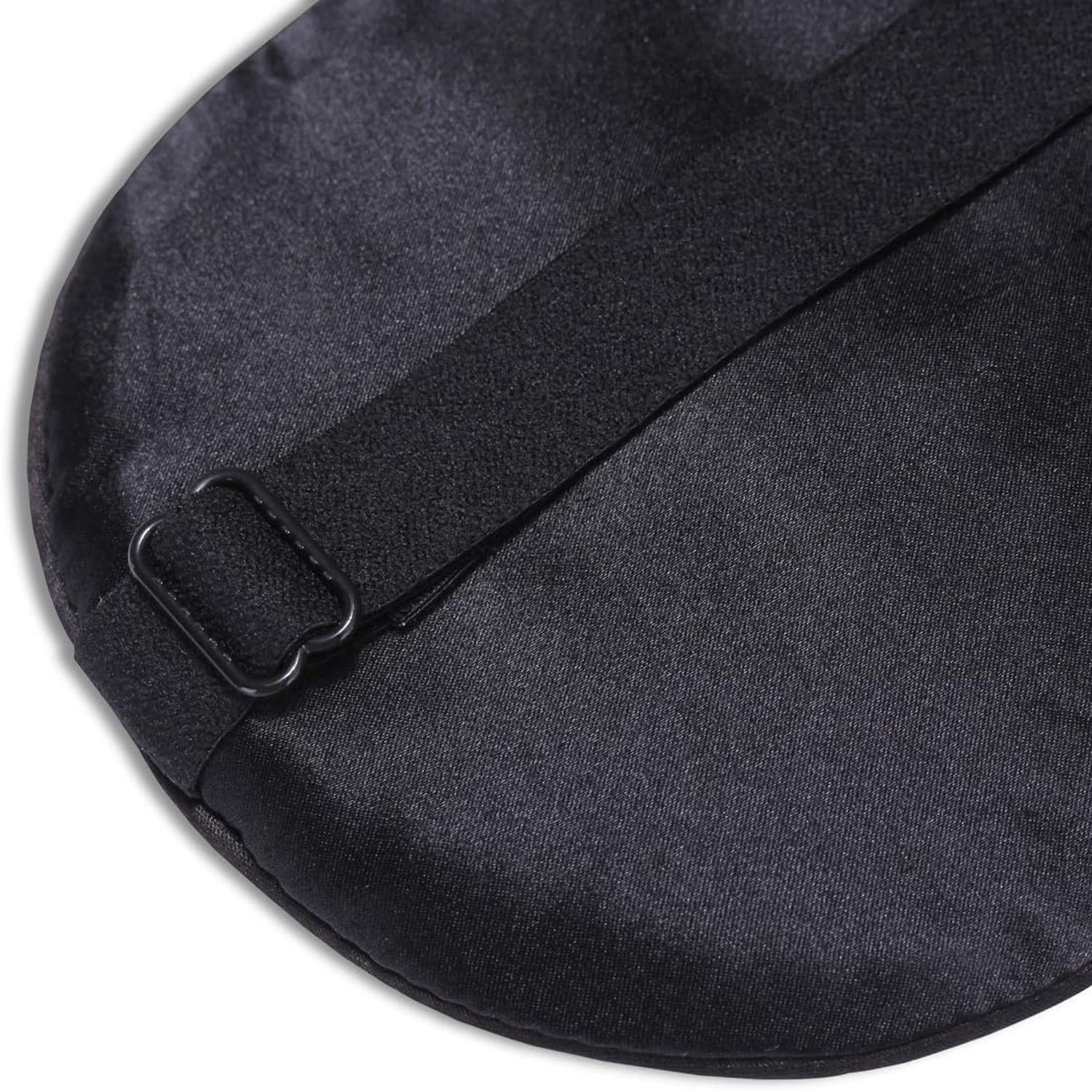
This mask uses a buckle closure instead. You set the length once to the tension you like, and that is where it stays. There is no nightly guessing and no slow loosening over the months. Just as importantly, the buckle sits at the back of the head rather than off to one side. If you sleep on your side, that detail is the difference between a comfortable mask and a small piece of hardware pressing into your ear for six hours.
Set the tension so the mask sits flush around the nose and cheeks but does not pinch. Too tight and you will feel it on the bridge of your nose by morning. Too loose and light sneaks in along the bottom edge.
Who this suits
Light sleepers are the obvious group. If you wake at the first hint of dawn, a mask buys you the extra hour or two you keep missing.
Shift workers are the next. Sleeping during the day is hard work, and a mask handles the part of the problem that blackout blinds often miss, like the gap at the edge of the curtain or the hall light someone leaves on.
Travellers get a lot out of it too. Planes, trains, hotels with thin curtains and a bright exit sign across the hall. A light, flat, plain black mask packs into any pocket and does not care which time zone you are in.
Then there are people who simply share a room with someone on a different schedule. If your partner reads late or gets up at four, a mask is a lot easier than negotiating over the bedside lamp.
How to choose between masks
Start with material. Silk is the smoothest common option and the one most people describe as the most comfortable. Cotton is breathable but duller against the skin. Polyester satin looks similar to silk and costs less, but it does not breathe the same way and tends to feel warmer after an hour.
Next, look at the closure. Buckle, slider or hook closures let you set the fit and keep it. Plain elastic does not. A rear position for the hardware is better than a side position for anyone who sleeps on their side.
Then weight. A heavy mask feels substantial in your hand and wrong on your face. Lighter is nearly always better for sleep. This one is listed at 32 grams including packaging, which tells you it is on the very light end.
Finally, think about shape and coverage. A mask that sits too high leaves a light gap at the cheekbone. One that sits too low presses on the lashes. The finished worn measurements are not specified in this record, so if coverage is a specific concern for you, use the returns window to check it against your own face rather than guessing from a photo.
Caring for silk without overthinking it
The care instruction on this product is dry clean only, and that is worth taking at face value. Silk does not like hot water, bleach or fabric softener, and a machine cycle can rough up the surface that made you want silk in the first place.
Beyond cleaning, most of the care is just storage. Keep the mask somewhere it will not snag. A soft pouch, a bedside drawer, the inside pocket of a travel bag. The enemies are zips, velcro, hooks and anything with a rough edge. Direct sunlight over long periods is not kind to silk either, so do not leave it sitting on a sunny windowsill.
Airing it out between uses helps more than people expect. Give it a few hours flat on a cool surface rather than stuffing it straight back into a bag.
A few honest limitations
No mask gives everyone identical results. Faces are different shapes, noses sit at different heights, and the amount of light that creeps in along the bottom edge varies from person to person. If you have a very deep-set eye line or a particularly high nose bridge, you may need to play with the strap tension for a night or two before it settles.
The mask is also a single item in a single colour. If you want a spare for travel plus one for home, you would order two.
And a note on claims: we are not going to tell you a piece of fabric will do anything to your skin, your hair or your health. What we will say is that silk is smooth, light and cool to the touch, that the strap adjusts and holds, and that a darker room is easier to sleep in. The rest is up to your own experience.
The short version
This is a plain black sleep mask with a mulberry silk outer, a cotton inner and an adjustable buckle strap that sits at the back of your head. It weighs almost nothing, packs flat, and is dry clean only. There is no pattern, no branding and nothing complicated about it.
If you have written off sleep masks because of a bad foam one, this is a reasonable second attempt. And if it does not suit you, send it back unused and unwashed within 14 days of delivery.