

The complete guide
How to Choose a Silk Pillowcase, in Plain English
The small annoyance nobody talks about
You make the bed, you buy decent sheets, you get the room dark and cool. Then you wake up with a line pressed across your cheek and hair that has somehow tangled itself while you were doing nothing but lying still. That is friction. Cotton, even good cotton, has a slightly grabby surface. Every time you roll over, your face and hair drag across it.
Silk behaves differently. The filaments are long and smooth, so the woven surface has very little grip. Your head moves and the fabric lets it go. That is the whole idea, and it is the reason silk pillowcases have gone from a luxury nobody could justify to something plenty of ordinary households now keep on the bed year round.
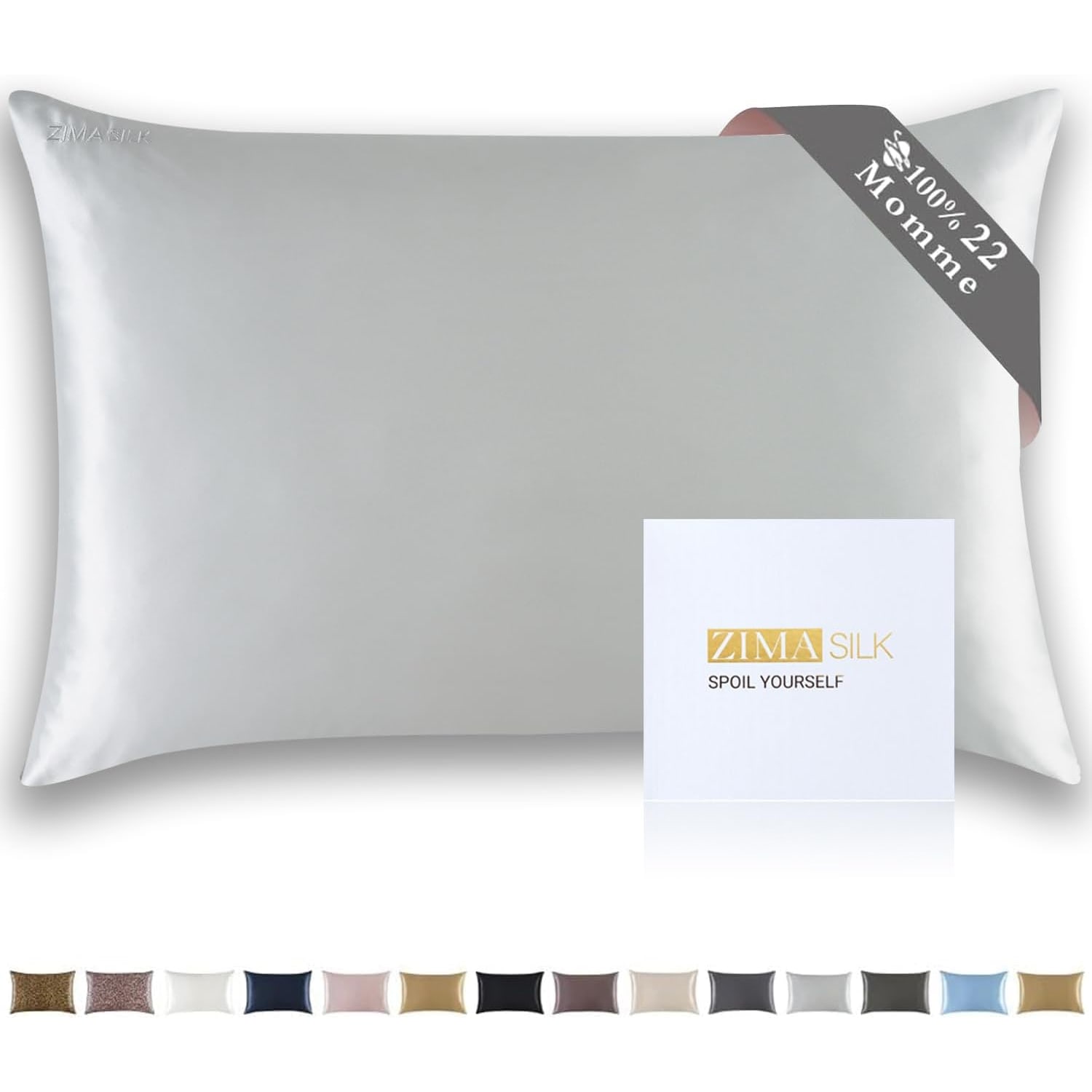
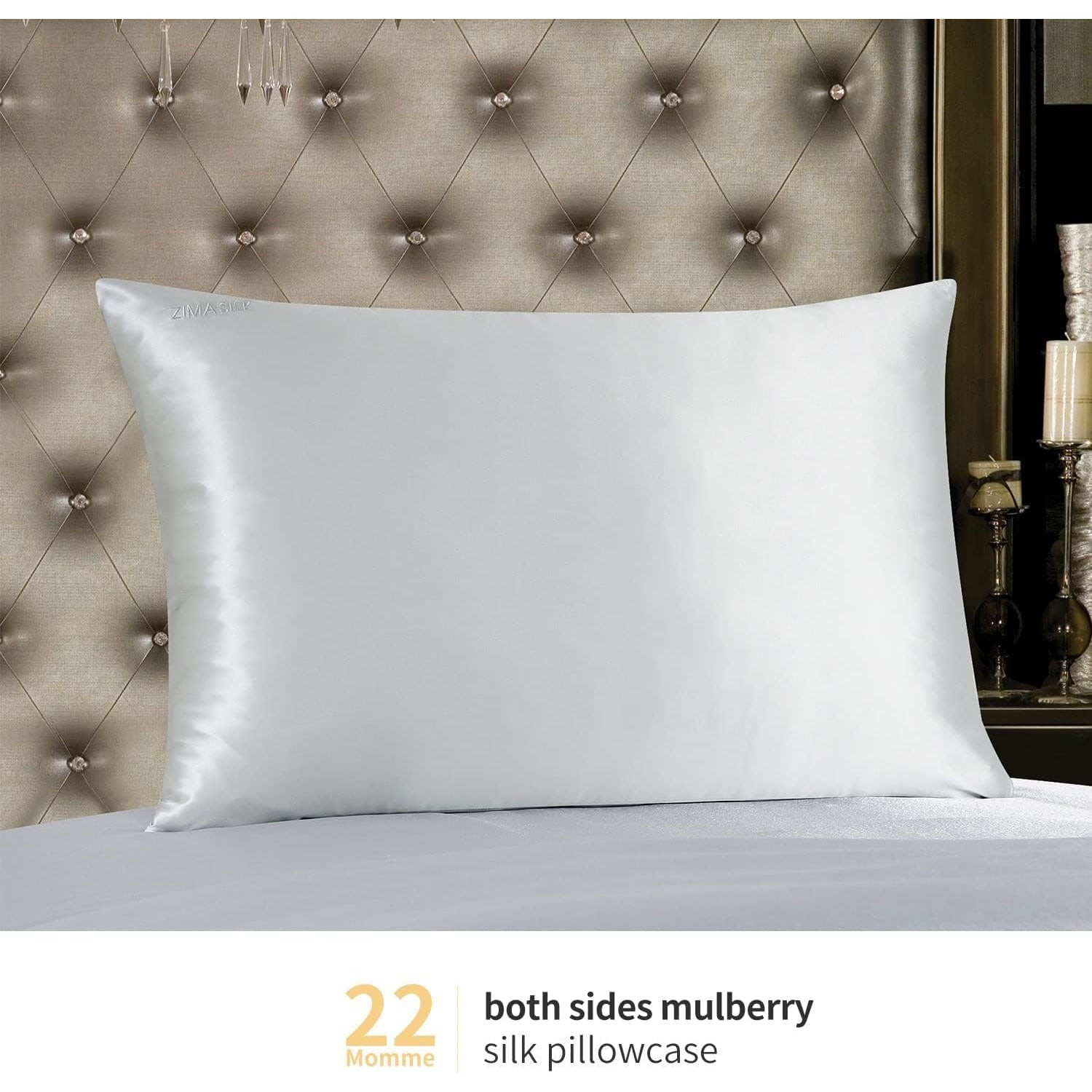
This page is about one specific case, a light grey 22 momme mulberry silk pillowcase in queen size. But the thinking below applies to any silk case you are considering.
What momme actually tells you
If you have shopped for silk bedding, you will have run into momme. It is a weight measure, used the way GSM is used for cotton and towels. One momme is roughly 4.3 grams per square metre. Bedding silk usually sits somewhere between 16 and 25 momme.
Here is the practical version. Sixteen momme is thin. It feels slippery and light, it is cheaper, and the edges tend to give out first. Nineteen momme is the common middle ground. Twenty-two momme, which is what this case uses, has noticeable weight in the hand and a fluid drape rather than a flutter. Past 25 momme the fabric starts behaving more like a furnishing textile than something you want under your ear.
Twenty-two is where most people land once they have handled a few. It is substantial enough to last and smooth enough to be worth buying in the first place. When people ask what makes the best mulberry silk pillowcase, momme weight is usually the honest answer, ahead of thread count or branding.
Thread count, and why it matters less here
This case lists an 800 thread count. That is a high number, and it does tell you the weave is fine and tightly packed. But with silk, thread count is a secondary detail. The filament quality and the momme weight do most of the work. A high thread count on a low momme silk can still feel thin.
Take thread count as supporting evidence rather than the headline. If a listing leads with thread count and never mentions momme, that is worth noticing.
Grade 6A and what the grading means
Mulberry silk gets graded by the length and consistency of the filaments drawn from the cocoon. Grade 6A is the top of the common grading scale, meaning long, even, uniform threads. Shorter or more irregular filaments produce fabric with a slightly rougher hand and more tendency to pill.
This case is 6A mulberry silk on both sides. That last part matters. A fair number of cases on the market use silk on the sleeping face and a cheaper cotton or synthetic on the underside. It cuts the cost, but it also means half the case does not do what you bought it for. If you turn your pillow over in the night, you will feel the difference immediately.
Closures, and why the zip placement matters
There are three usual ways to close a pillowcase. An envelope flap, an exposed zip, or a hidden zip.
Envelope closures look neat and cost less to make. The problem shows up after a few weeks, when the pillow starts working its way out of the opening and you find a bare corner poking out at breakfast. Exposed zips hold the pillow fine but put metal or moulded teeth somewhere near your face.
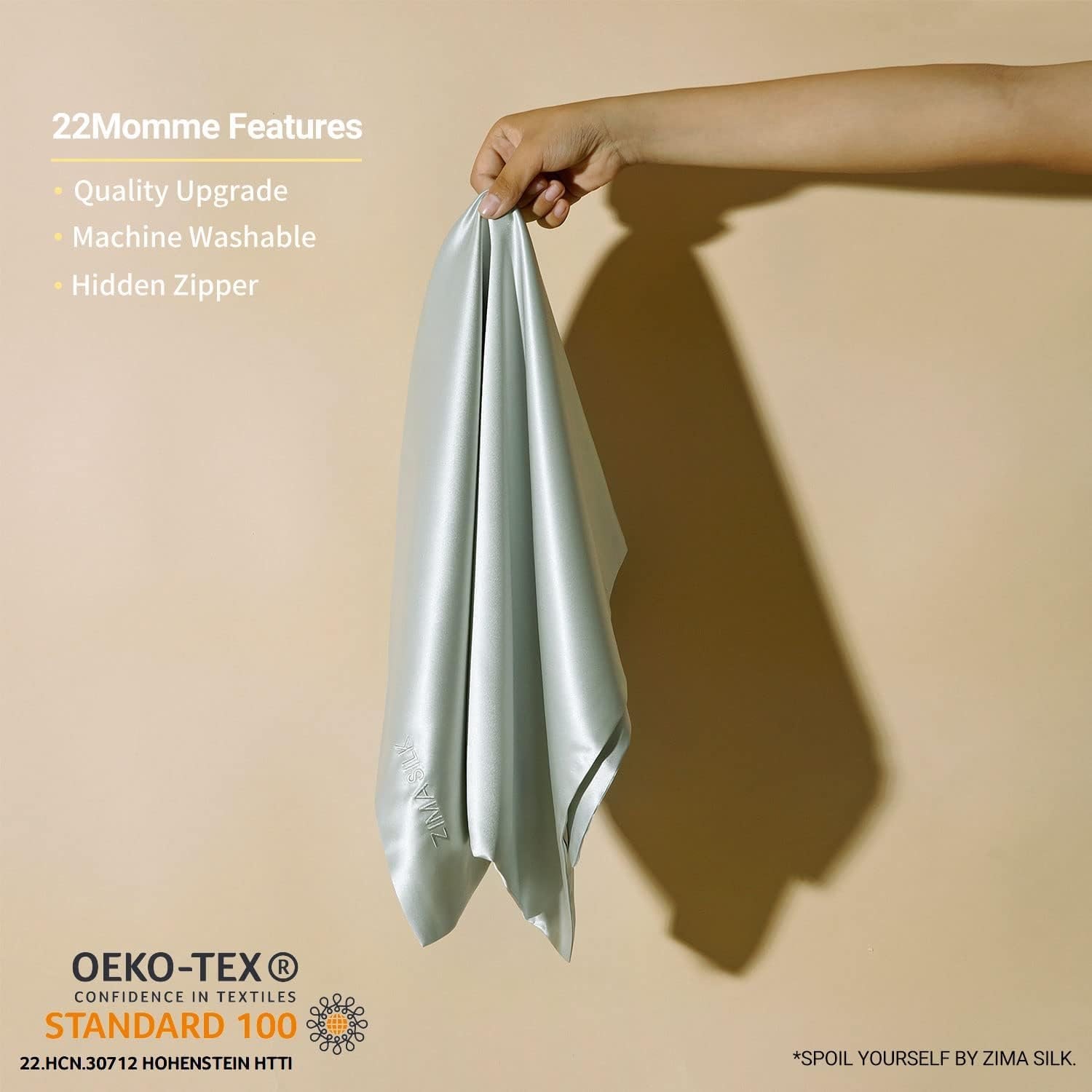
This case uses a hidden zipper sewn into the seam. The pillow stays in, the top surface stays as uninterrupted silk, and nothing hard sits against your skin. It also makes removal easier on wash day, which counts for something with a hand wash item. People searching for the best silk pillowcase with zipper are almost always looking for this exact construction.
Getting the size right
The case measures 75 cm long by 50 cm wide, sized for a standard queen pillow. Pillow sizing is not perfectly standardised, so the safest move is to measure your own pillow flat, edge to edge, before ordering.
If your pillow is shorter, the case will bag at one end. Not a disaster, but the surface will wrinkle more and you lose some of the smoothness you paid for. If your pillow is a deep or extra-firm type, check the width as well as the length, since a thick pillow effectively shortens the case once it is stuffed in.
One case covers one pillow. If you sleep with two, or you share the bed, order a pair.
Living with light grey
Colour on silk reads differently to colour on cotton, because silk reflects light rather than absorbing it. A plain light grey will look cooler and paler in daylight and warmer under a lamp. That shifting quality is part of why grey works so well on a bed. It does not fight with white sheets, it sits nicely against charcoal or navy, and it is calm next to linen in natural tones.
It is also a sensible choice if you are buying as a gift. Guessing someone's colour scheme is risky. Grey rarely goes wrong, which is why the best grey silk pillowcase tends to be the one people reach for when they are shopping for someone else.
How to care for it without stress
Silk is not fragile, but it is particular. The care instruction here is hand wash only, and it is worth following.
Use cool water and a detergent made for delicates or wool. Swirl the case gently, do not scrub it, and do not leave it soaking. Rinse in cool water until the water runs clear. Then lay the case on a towel, roll the towel up and press to push the water out. Do not wring it. Wringing distorts the weave and that distortion does not come back out.
Dry it flat on a fresh towel, or hang it somewhere shaded and airy. Direct sun is the main cause of fading and it also weakens the fibres over time. No tumble dryer. No hot water. No bleach, ever.
If you want it crisp, iron on the lowest silk setting, on the reverse, while it is still a bit damp. Store it folded in a drawer rather than hanging, since hangers leave marks in silk.
Wash every week or two. If you use rich night creams or leave-in hair products, wash more often. Oils sitting in the fabric dull the surface faster than washing does.
Who this suits
People with long hair, people who move around a lot in their sleep, and people who have simply had enough of waking up with their face printed with pillow seams. It also suits anyone who wants one small, genuinely noticeable upgrade to their bed without replacing the whole set.
It is less suited to households that want everything through a hot machine wash. If hand washing a pillowcase sounds like too much effort, be honest with yourself about that before ordering, because a silk case put through a hot cycle will not be the same case afterwards.
Delivery and returns
Orders go out by tracked courier from Australian warehouses, and most reach New Zealand addresses in 5 to 10 working days. Delivery is free NZ-wide on orders over NZ$175. Returns are accepted within 14 days of delivery as long as the case is unused and unwashed, so check the fit against your pillow before you take it out of the box.
The short version
Twenty-two momme is a sensible weight for a silk pillowcase, heavy enough to last and smooth enough to be worth it. Silk on both sides beats a cotton backing. A hidden zip beats an envelope flap. Measure your pillow, match the size, and wash it by hand in cool water.
Get those four things right and a silk case stops being a fussy luxury and starts being the part of the bed you look forward to at the end of the day.