
The complete guide
How to Choose a Silk Sleep Mask That Actually Blocks the Light
The light you stopped noticing
Most people adjust to the light in their bedroom without realising it. The standby LED on the television. The streetlight that finds the inch of gap between the curtain and the wall. The hallway light someone leaves on. None of it feels like a problem while you are awake. It becomes a problem at two in the morning when you surface, see the glow, and your brain decides that counts as information.
A sleep mask is a small, cheap, low-effort fix for a very specific thing. It does not help with noise, a hot room, or a racing mind. It does one job, and if light is what is waking you, it does that job better than almost anything else you can buy for the price of a takeaway dinner.
The catch is that masks vary enormously. A free airline mask is a rectangle of thin polyester on an elastic string. It slides, it leaks light at the nose, and it sticks to your face by the end of the night. A properly made silk mask is a different object, and the differences are worth understanding before you spend money.
What momme means, in plain terms
Silk is sold by momme. It is a weight measure, roughly the number of pounds a specific bolt size would weigh, and the practical takeaway is simple. Low momme means thin and light. High momme means dense and substantial.
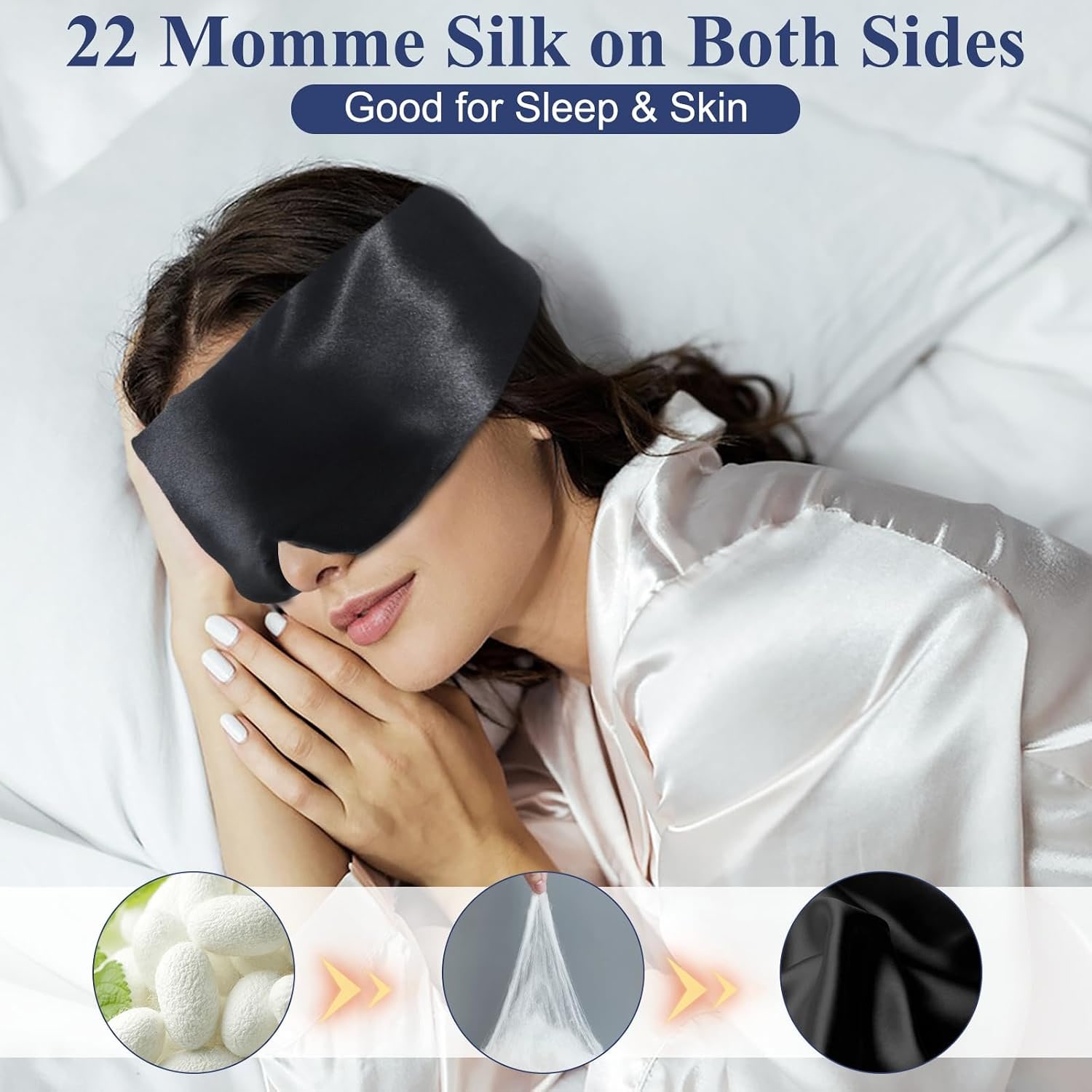
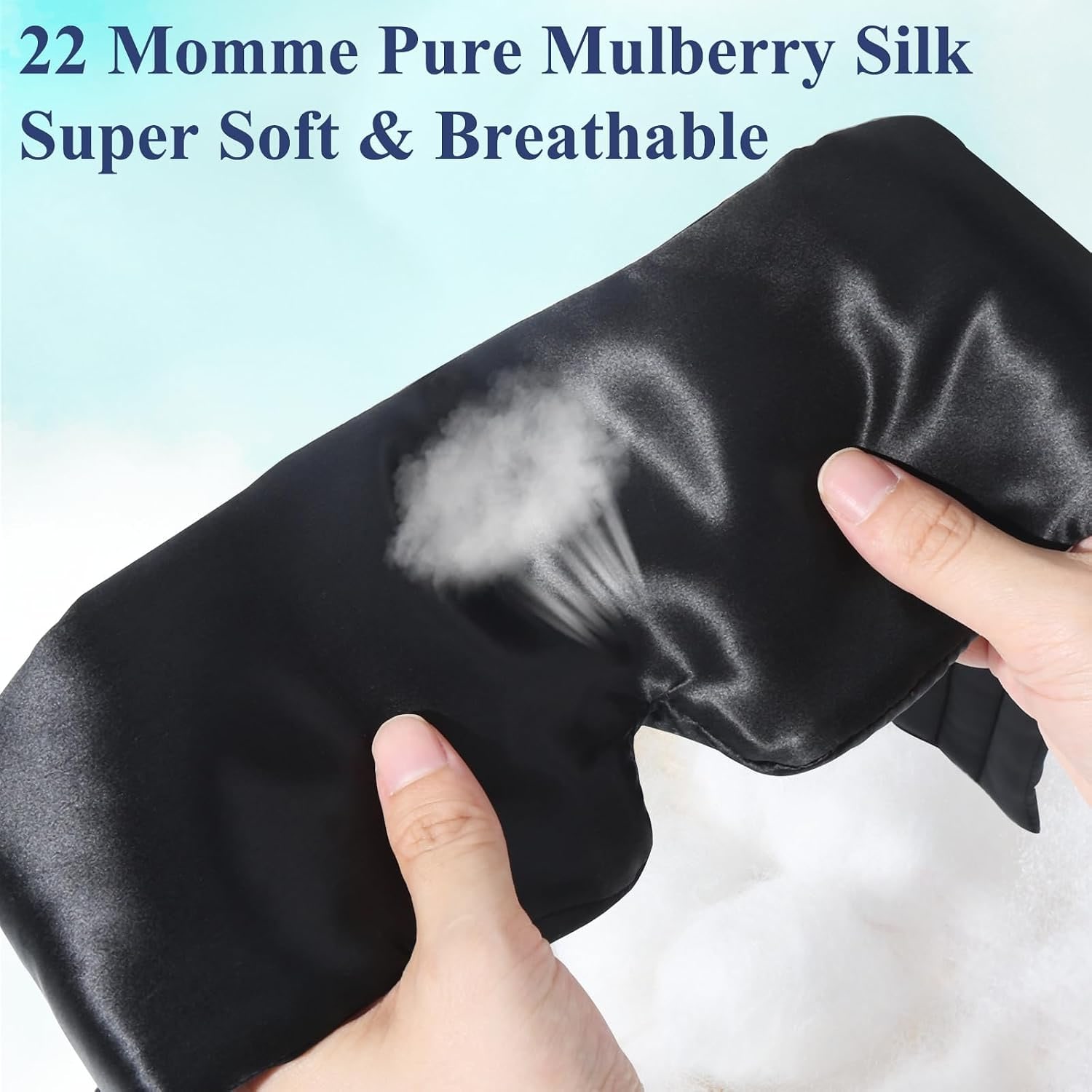
Silk used for scarves and linings often sits around 12 to 16 momme. Quality silk bedding tends to land between 19 and 25. This mask is 22 momme, which puts it in that bedding range rather than the scarf range. You can feel the difference immediately. Lower momme silk has a slight papery quality and lets more light through when you hold it to a lamp. At 22 momme the fabric has body, blocks more on its own, and holds up better to being washed and squashed into a suitcase.
Both faces of this mask are mulberry silk, and the filling inside is silk as well. That matters more than it sounds. Plenty of masks use a nice fabric on the outside and a cheap synthetic wadding in the middle, which is the part that actually touches you once the outer layer compresses. Here the whole sandwich is the same fibre.
The nose gap is the whole game
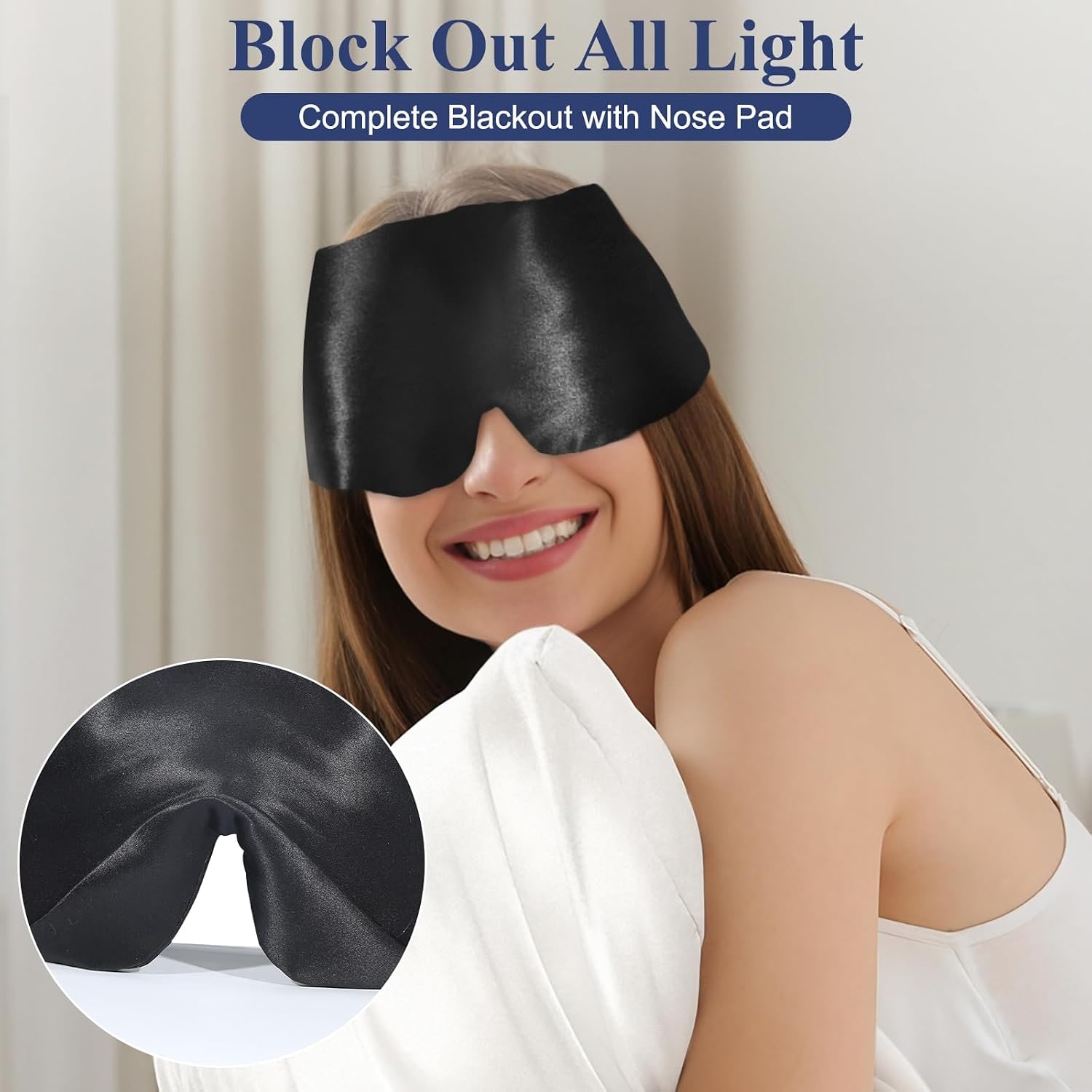
If you have ever worn a mask and still seen a wedge of light at the bottom of your vision, you have met the nose gap. A flat piece of fabric cannot sit against both the bridge of your nose and your cheeks at the same time. It bridges across, and daylight walks straight in underneath.
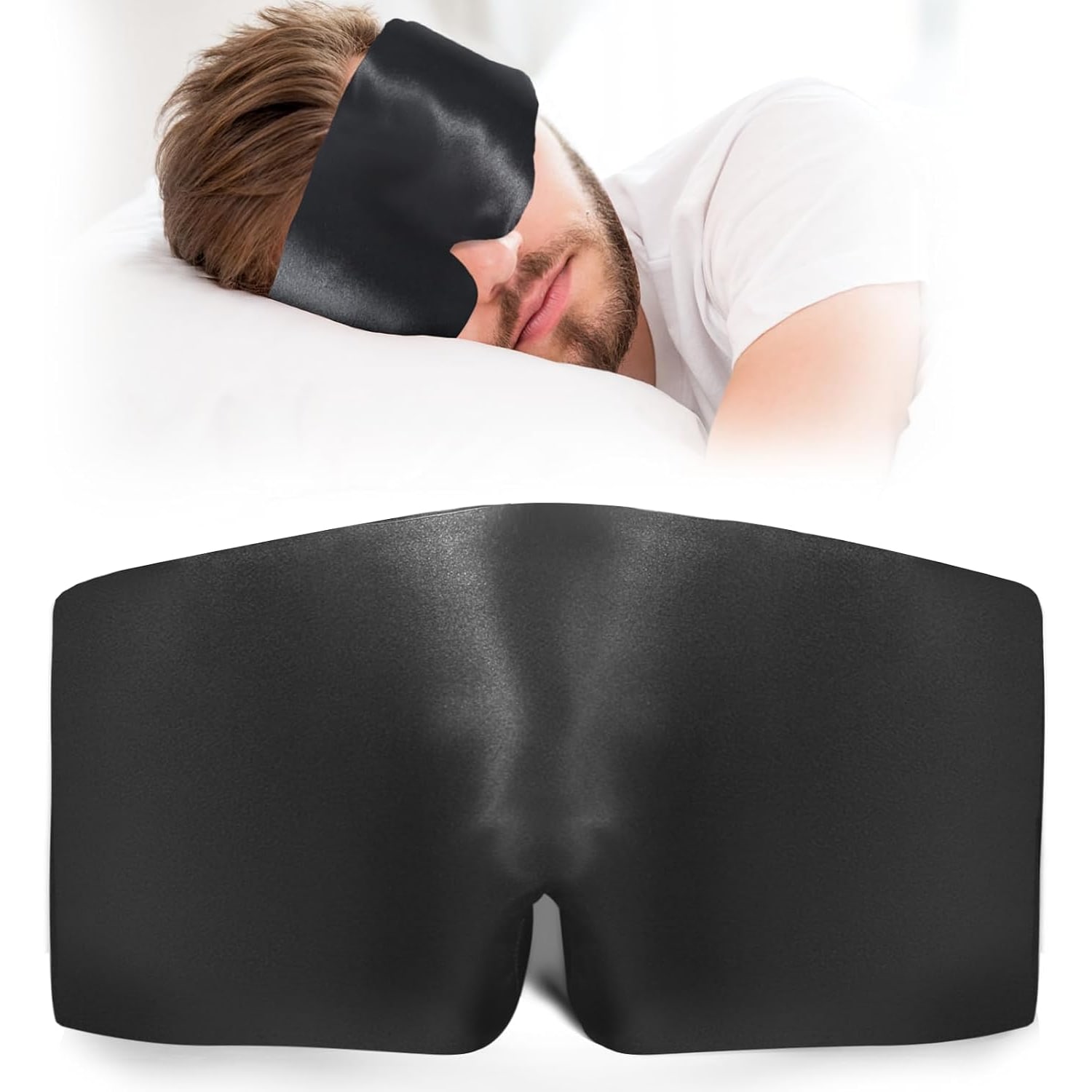
This mask is shaped at the nose to close that gap. That is the single feature that separates a mask that works from a mask you give up on. When you first put it on, spend thirty seconds getting it right. Settle the nose section down against the bridge, then tighten the strap. You should be looking at black rather than a grey strip at the bottom.
How complete the blackout feels will vary a little with face shape, because faces vary a lot. Most people find they get a genuinely dark field once the strap is set properly. If you can still see light, loosen the strap, reseat the nose area, and re-tighten rather than just pulling harder.
Why the strap matters more than people expect
Masks fail on fit far more often than they fail on fabric. Three common problems come up.
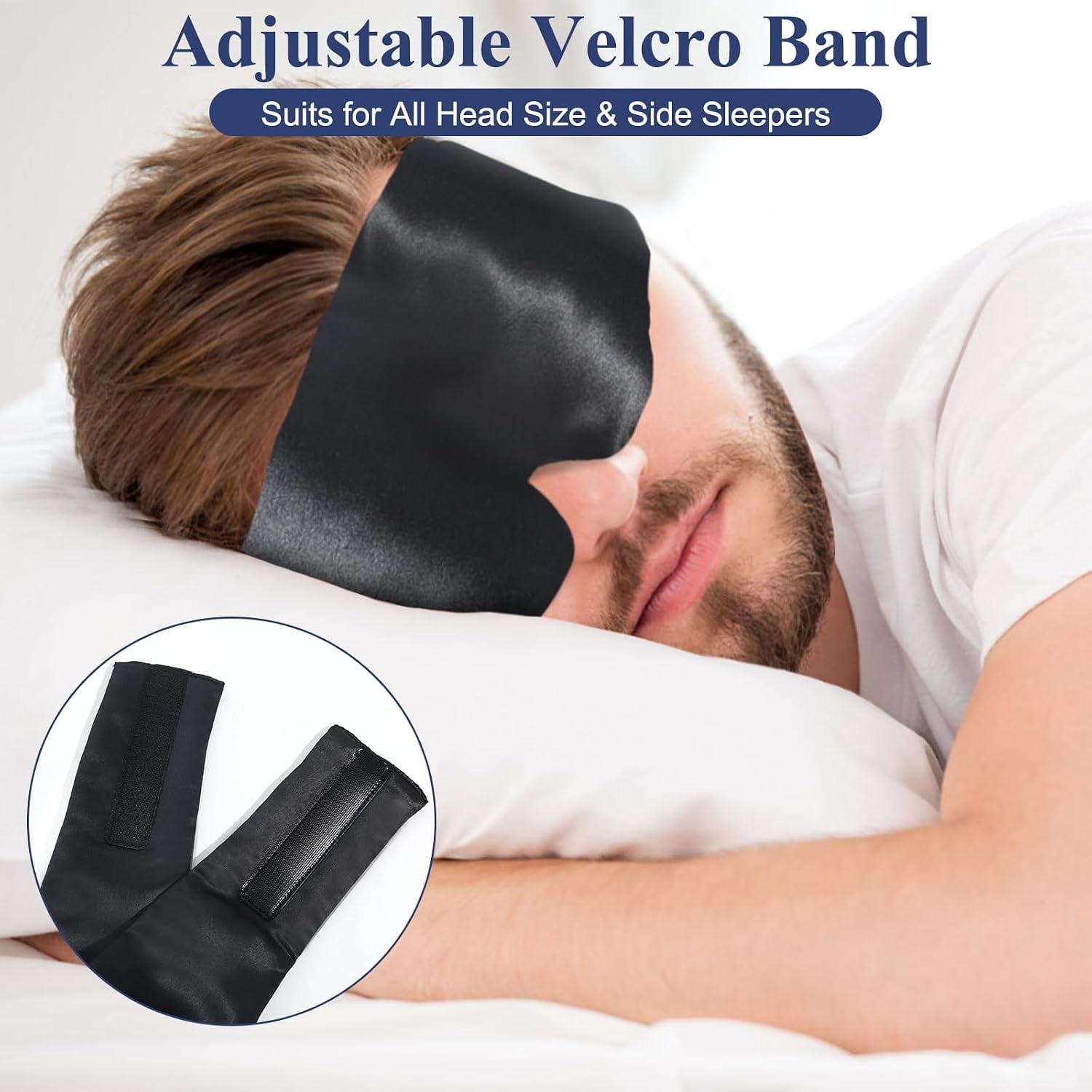
Elastic that is too tight gives you a headache and leaves a line across your face. Elastic that is too loose rides up over your forehead by morning. And a buckle or plastic slider on the back of the strap becomes a small hard lump that you lie on all night if you sleep on your side.
This mask uses a hook and loop strap with no buckle. You set the length once, press it closed, and that is that. The back of your head meets a flat band and nothing else. If you are hunting for the best silk eye mask for side sleepers, that absence of hardware is the specification to look for, more than any fabric claim.
It also means one mask can suit different people. A partner with a larger or smaller head can reset it in a second, which is handy if you share a travel kit.
Who this suits
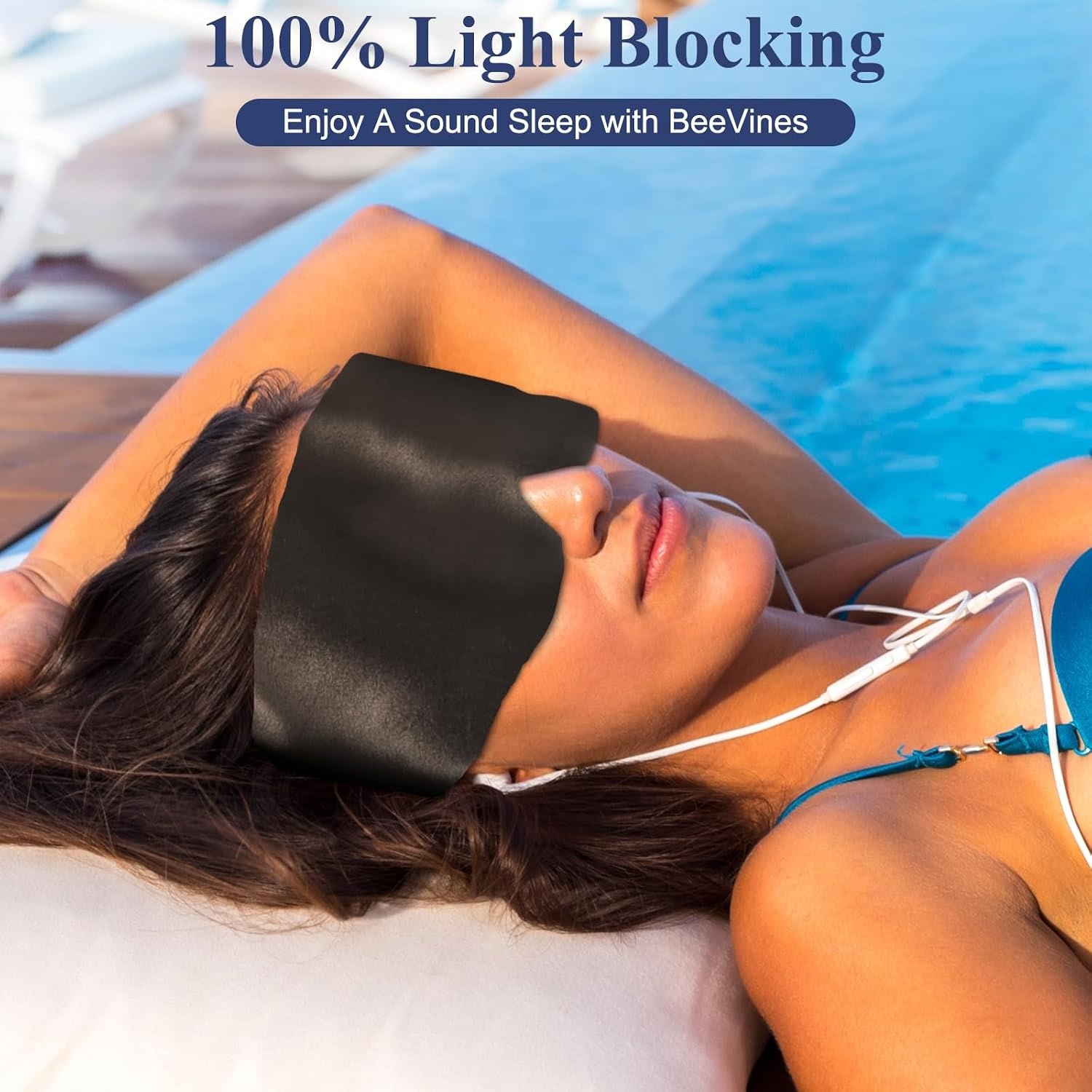
Travellers are the obvious group. At around 60 grams packed, the mask vanishes into a carry-on. Cabin lights come on at odd hours, window shades get opened by the person in 32A, and a mask gives you back some control. The best travel eye mask is simply the one you actually have with you, and something this light clears that bar.
Shift workers are the other big group. Sleeping through daylight is hard, and curtains alone rarely finish the job. Pairing blockout curtains with a proper blackout mask gets you much closer to real darkness than either on its own.
Then there are people in ordinary bedrooms with ordinary light problems. Apartment living, a partner who reads later than you, summer mornings that start at half five. A mask is a lot cheaper than new window treatments.
It also works for naps and quiet time. Twenty minutes of dark in the middle of a bright afternoon is a reasonable reason to own one.
How to choose between masks
A few practical points to compare when you are looking at options.
Check the silk content on both sides, not just the front. A mask advertised as silk sometimes means one printed silk face and a polyester back. Check the fill too.
Look at the momme number. If it is not stated, the fabric is usually on the lighter side. A stated 22 momme tells you what you are getting.
Look for a shaped nose. Flat rectangles are cheaper for a reason.
Check the closure style against your sleeping position. Buckles are fine for back sleepers and irritating for side sleepers.
And think about colour honestly. Black hides makeup residue and skincare marks better than a pale shade, which is one of the quiet reasons it stays the most popular choice.
Looking after it
Silk is not fragile, but it is not indestructible either. The routine is short.
Hand wash in cool water with a detergent made for delicates. Hot water and ordinary laundry powder are the two things that age silk fastest. Do not bleach, do not soak it for an hour, and do not wring it out. Squeeze the water through it gently, then roll it in a towel and press.
Dry it flat, out of direct sun. Sun fades and weakens silk over time, and a windowsill is the worst place to leave it. If it needs a press, use the coolest iron setting with a cloth in between.
One small habit makes a real difference. Close the hook and loop strap before washing. The hook side will grab at silk if it is left open and tumbling around in water.
Washed every week or two and dried properly, a mask like this stays in good shape for a long run of nights.
The short version
If light is interrupting your sleep, a mask is the cheapest fix available. The things that make one worth owning are a dense fabric, silk on both faces and in the filling, a shaped nose section that closes the light gap, and a strap you can adjust with nothing hard on the back of your head. This one has all four, in plain black, at about 60 grams packed.
Set the fit properly the first night, hand wash it when it needs it, and keep it in the bedside drawer or the travel bag. That is genuinely all there is to it.