
The complete guide
How to Choose a Silk Eye Mask That Actually Blocks the Light
The problem with most eye masks
You buy one, you try it for a week, and then it ends up in a drawer. That is the standard life cycle of a cheap sleep mask. There are usually three reasons it fails.
The first is light leak. Thin fabric glows when the sun hits it, and almost every flat mask leaves a gap beside the nose where a thin wedge of daylight gets in. Once you notice that wedge, you cannot unnotice it.
The second is pressure. A padded mask that sits directly on your eyelids feels fine for ten minutes and uncomfortable by hour three. If you sleep on your side, the pillow pushes the mask harder into your face, which makes it worse.
The third is friction. Cotton and polyester masks grip your skin. When you roll over, the mask does not roll with you, it bunches and pulls and eventually slides up your forehead.
A contoured silk mask answers all three. It is worth understanding how, so you can judge whether this one suits your sleep.
What momme actually tells you
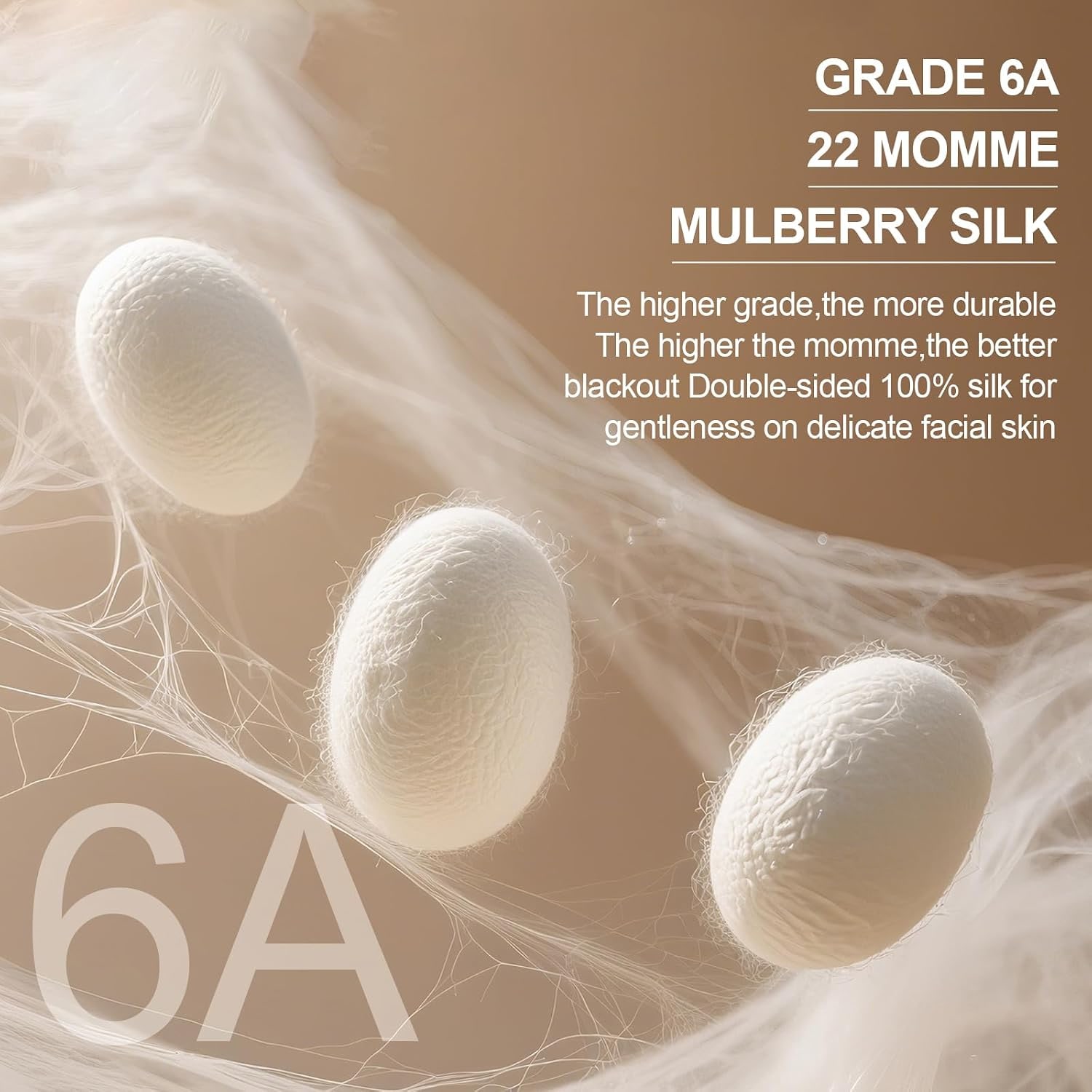
Silk is sold by momme, written as mm in some listings. It is a weight measure, not a quality grade exactly, but weight correlates closely with how a silk behaves. Low momme silks, say 12 or 13, are light and translucent. They drape beautifully and they are cheaper, but held up to a window they let a surprising amount of light through.
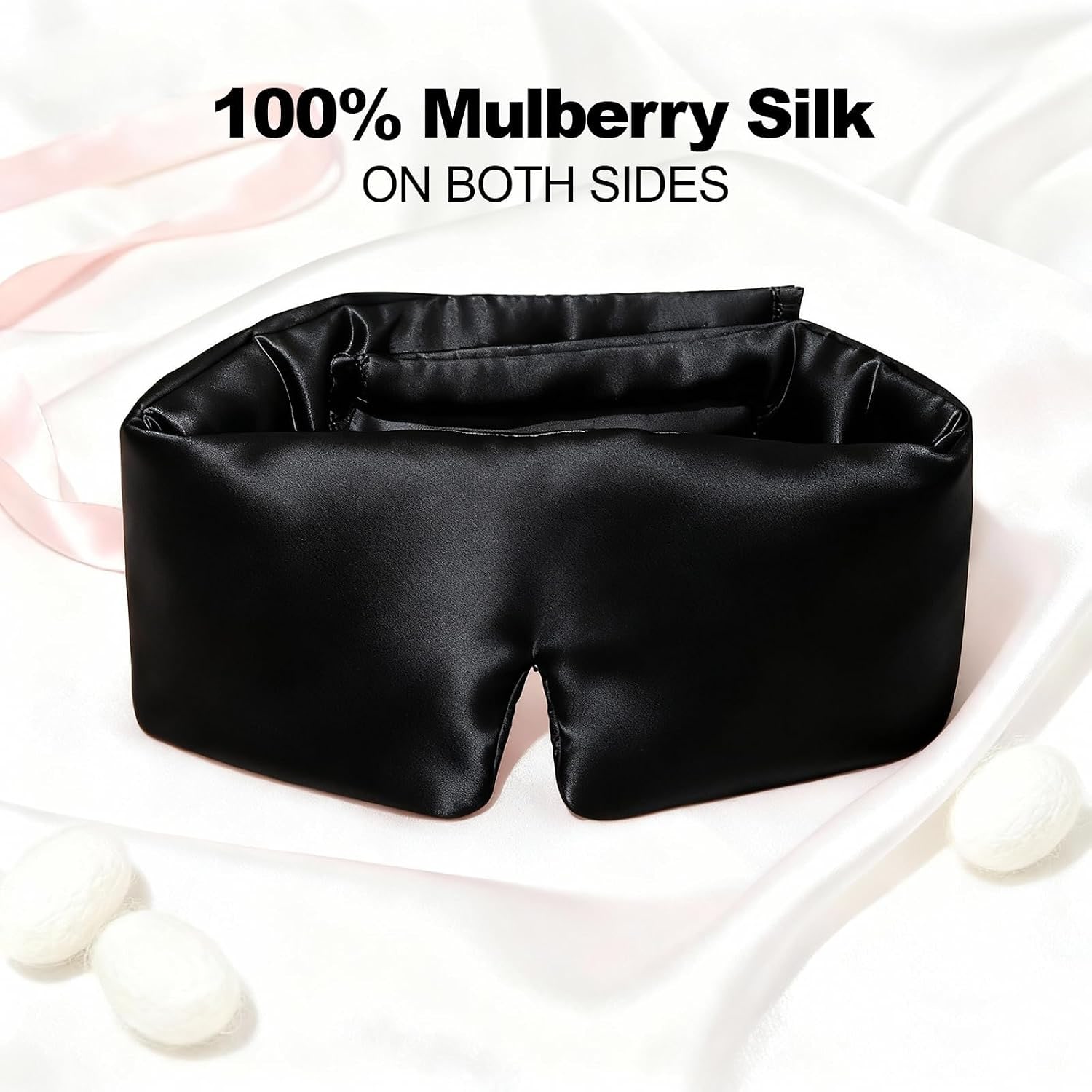
At 19 momme you are into the range used for good pillowcases and sleepwear. The fabric has body. It holds a shape. Light does not pass through a single layer the way it does with thin silk. For an eye mask, where the whole point is darkness, that weight does real work.
The other quality of silk that matters here is the surface. Silk fibre is smooth at a microscopic level, so fabric made from it has low friction against skin. When this mask shifts a few millimetres as you turn, it slides rather than catching. That is the difference between a mask you forget you are wearing and one that keeps waking you.
Silk is also listed here as breathable and moisture-wicking. If you run warm at night, a synthetic mask can feel clammy against the face within an hour. Silk moves moisture away instead of holding it.
Why the contoured shape matters for side sleepers
A flat mask is a rectangle of fabric sitting directly on your face. It touches your eyelids, your lashes, everything. It works well enough on your back. Turn onto your side and the pillow becomes the problem, because now there is a load pressing the mask into your eye socket.
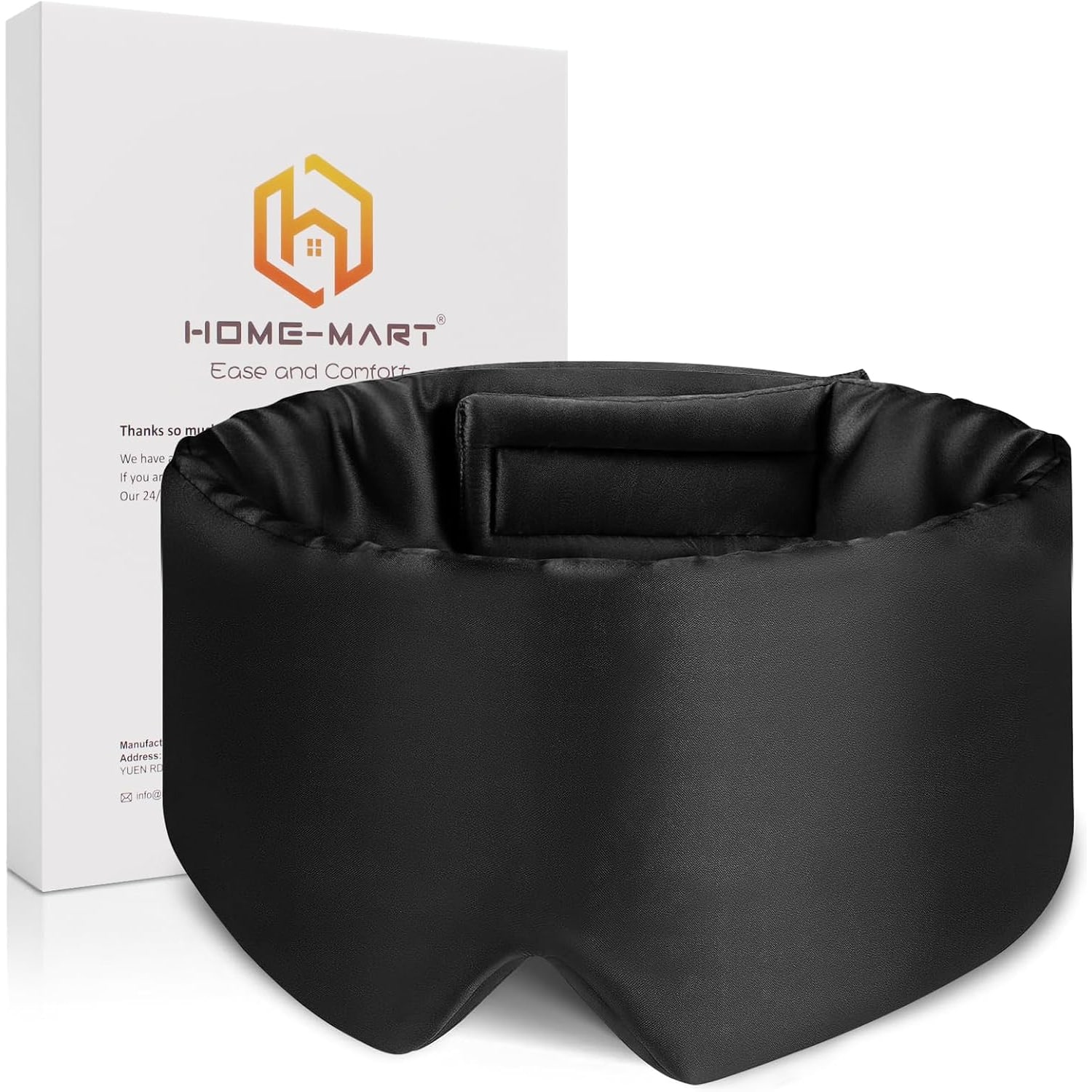
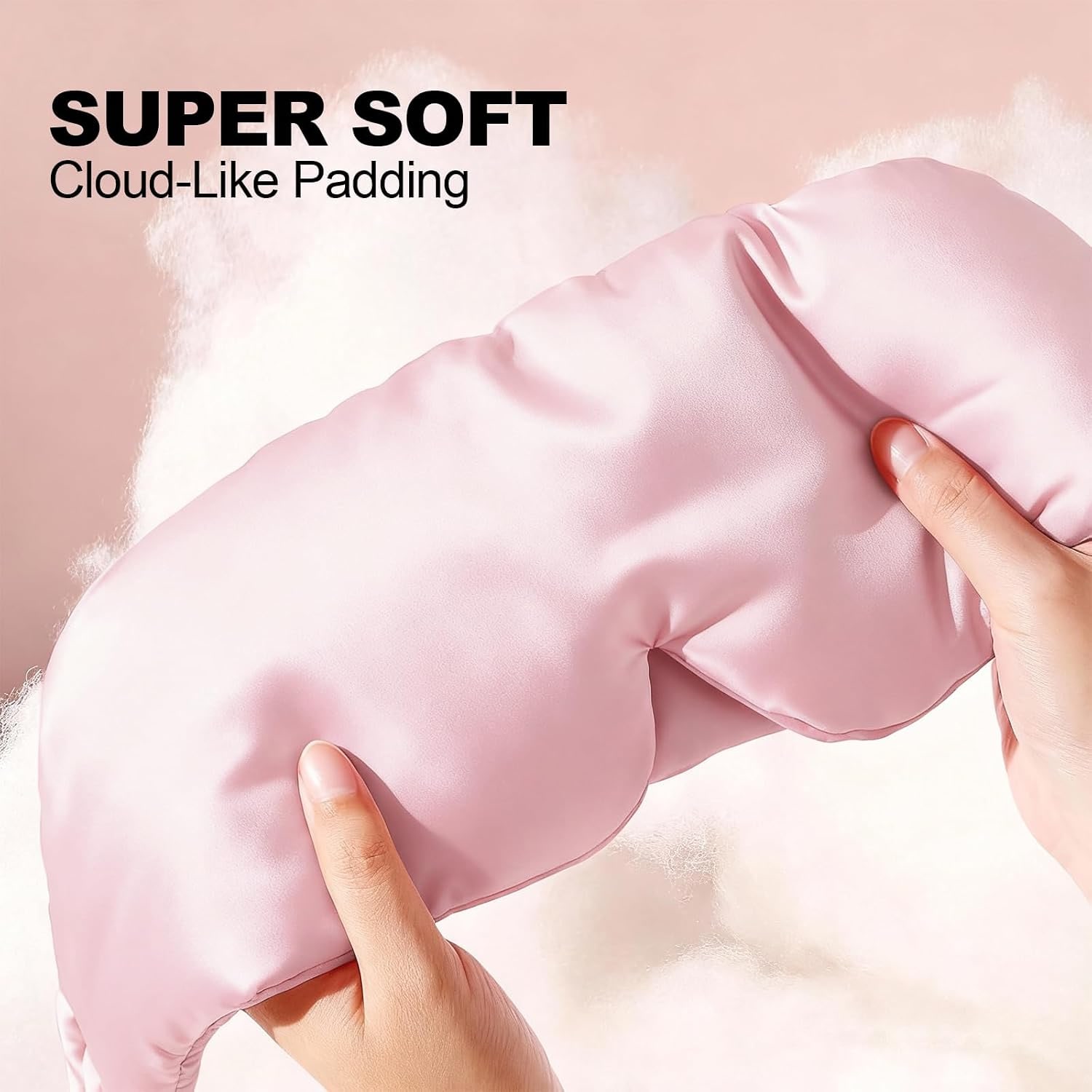
A 3D contoured mask is moulded into two shallow cups. Those cups create a pocket of air over each eye. You can open your eyes inside the mask and feel nothing touching them. When you roll onto your side, the structure takes the pressure rather than passing it to your eyelid.
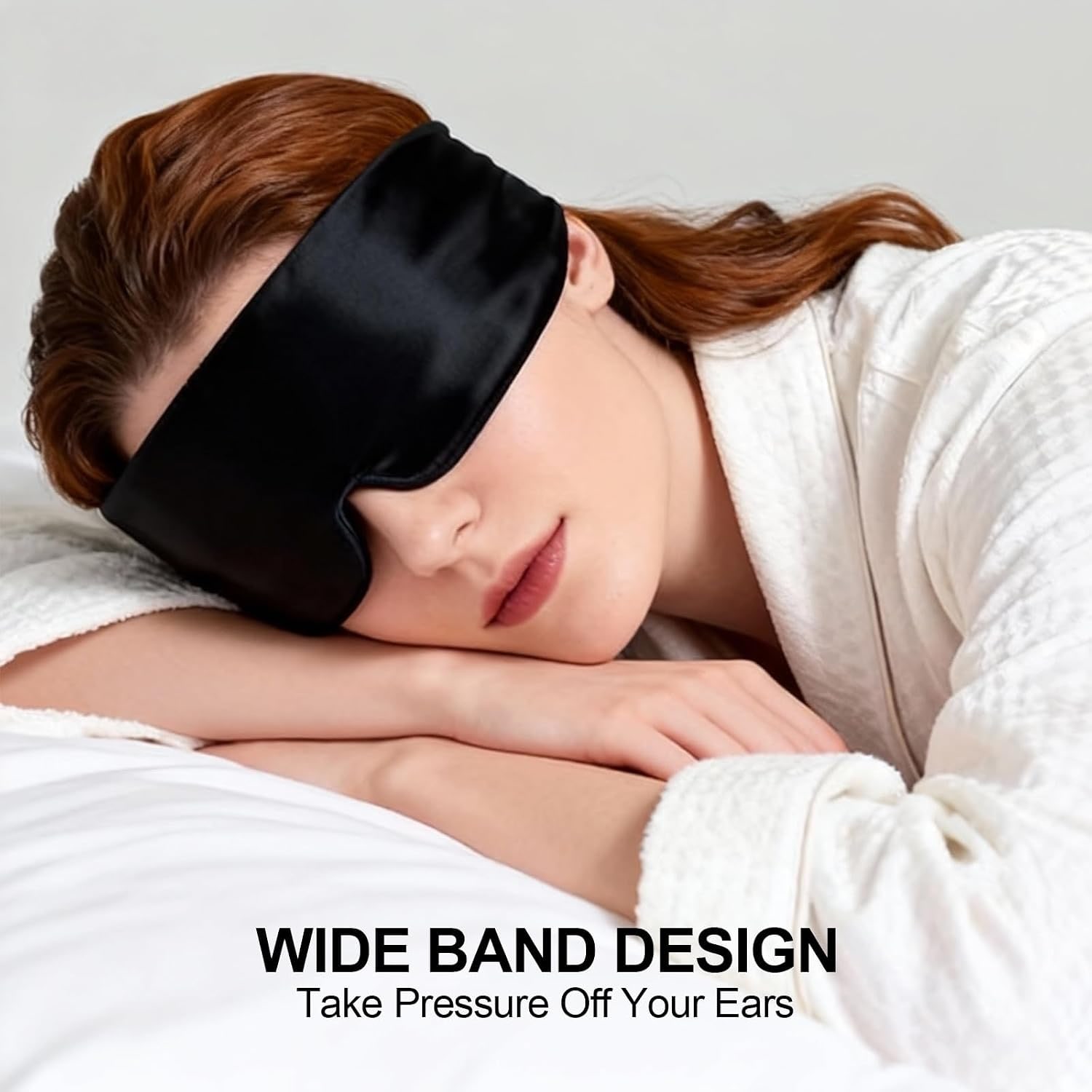
That structure is also what gives this mask its seal. The nose panel is shaped to follow the bridge of the nose, pressing into the curve rather than bridging over it. The side panels run wide, out towards the ears, so there is no gap at the temples. The result is a mask that keeps the dark in from every angle, not just straight on.
Anyone shopping for the best contoured sleep mask is really shopping for this combination: structure that resists pressure, plus coverage that follows the shape of a face.
Who it suits
Side and stomach sleepers. This is the group a flat mask lets down most. If you have tried masks before and given up because of eye pressure, the contoured build is the thing to try next.
Shift workers. Sleeping at two in the afternoon is a different challenge from sleeping at midnight. Blackout curtains help, but they rarely seal completely. A mask with a good nose contour finishes the job.
Travellers. At 100 grams packaged, it goes in the carry-on without thought. Daytime flights and bright cabins are exactly where a blackout mask earns its place, and the soft ear panels take a little of the engine drone out of the picture.
Anyone sensitive around the eyes. If you wear lash extensions, or you simply dislike fabric touching your eyelids, the contour keeps everything clear.
Light sleepers in shared rooms. A partner reading, a hallway light, a phone screen. The wide coverage handles all of it.
How to choose and set it up
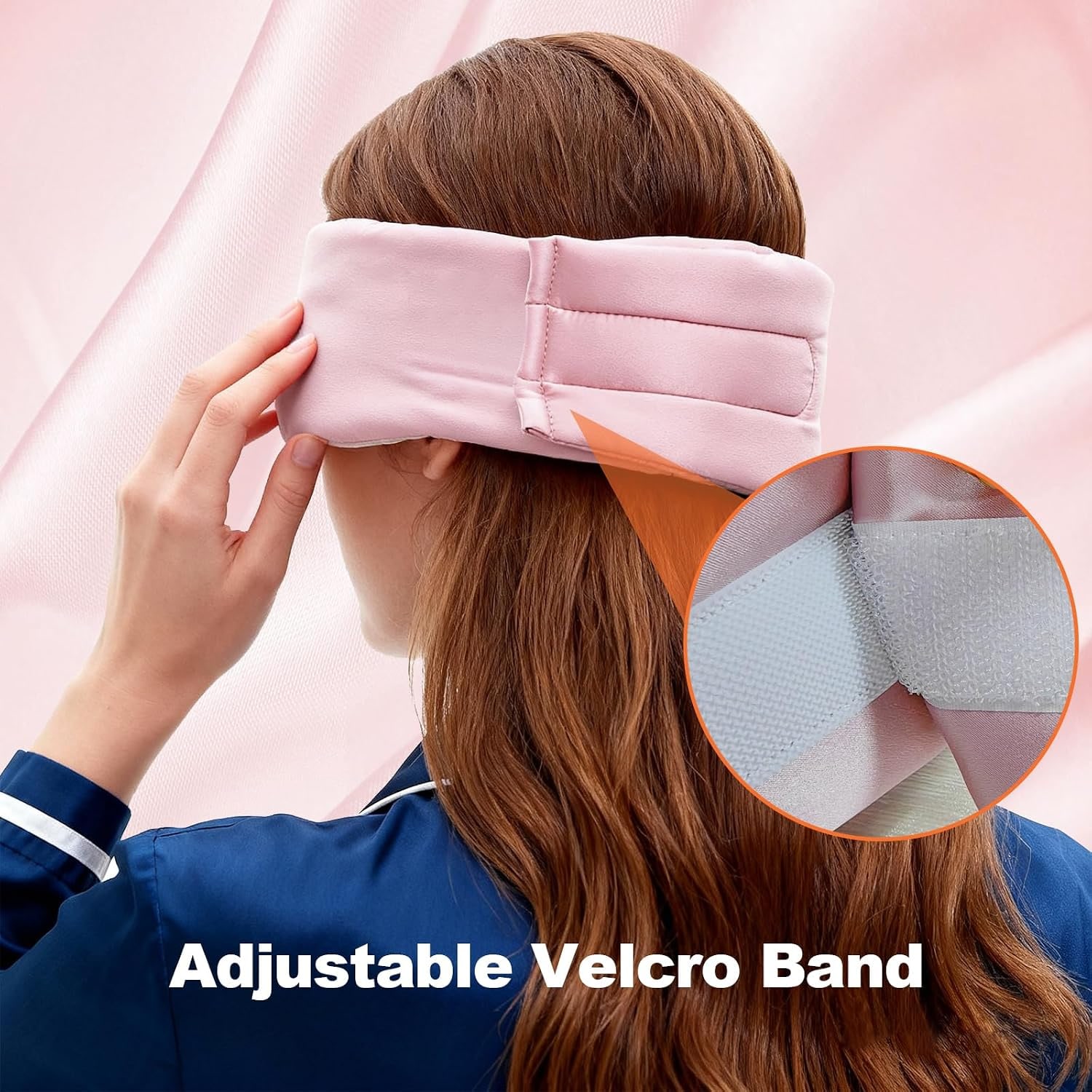
Start with the fit of the strap. This is where most people go wrong. The instinct is to pull it tight so the mask cannot move, but a tight strap creates pressure points at the temples and a crease across the forehead. Set it so the mask holds its position when you turn your head side to side, and no tighter. The long adjustable strap on this mask gives you plenty of range to find that point.
Next, seat the nose panel properly. Settle the contour into the bridge of your nose before you lie down, rather than pulling the mask on and hoping. Ten seconds of adjustment here removes almost all the light leak people complain about.
Then give it a few nights. Any new sleep accessory feels odd at first, and a mask is no exception. Most people adapt within three or four nights, and after that they notice its absence more than its presence.
If you share a bed and your partner wants one too, note that this pack contains a single mask. Order accordingly.
Looking after it
Silk is not difficult, it just does not like heat and harsh chemicals.
Wash it in cool water, either by hand or on a gentle machine cycle with the mask inside a mesh laundry bag. Use a detergent made for delicates. Skip the bleach and do not leave it soaking.
To dry, squeeze the water out gently between your palms or in a towel. Do not wring it, which twists the fibres and can distort a moulded shape. Lay it flat somewhere out of the sun and away from any heater, and leave it to dry naturally. This usually takes a few hours.
Avoid the tumble dryer entirely. Heat is what shortens the life of silk faster than anything else, and a dryer will also fight the contour that makes this mask work.
Once a fortnight is a sensible washing rhythm for most people. Wash more often in summer or if you use rich night creams, since oils build up on the fabric over time. Store it flat rather than crushed in a bag, so the cups keep their shape.
With that routine, a 19 momme silk mask stays smooth and dark for a long time.
The short version
If you sleep on your side and you want genuine darkness, the two things to look for are a contoured shape and a shaped nose panel. The contour keeps pressure off your eyes when the pillow pushes back. The nose panel closes the gap that every flat mask leaves open.
This one is black, 19 momme mulberry silk, with soft panels running out towards the ears and a long adjustable strap. It weighs 100 grams packaged, so it travels easily. Set the strap just snug, seat the nose contour properly, wash it cool and dry it flat.
Get those small things right and you have a mask that works night after night, rather than one that lives in the drawer.