
The complete guide
How to Choose a Silk Sleep Mask That Actually Blocks the Light
The problem with most sleep masks
You buy a mask because the room is not dark enough. Then you discover a new set of problems. The elastic cuts a line into your head. The fabric presses on your eyelids until you can feel your own pulse. Light still creeps in beside your nose. By four in the morning the thing has slid up onto your forehead and you are no better off than you were before.
None of that is inevitable. It comes down to three things: what the mask is made of, what shape it is, and how it holds on. Get those right and you stop noticing the mask, which is the entire point.
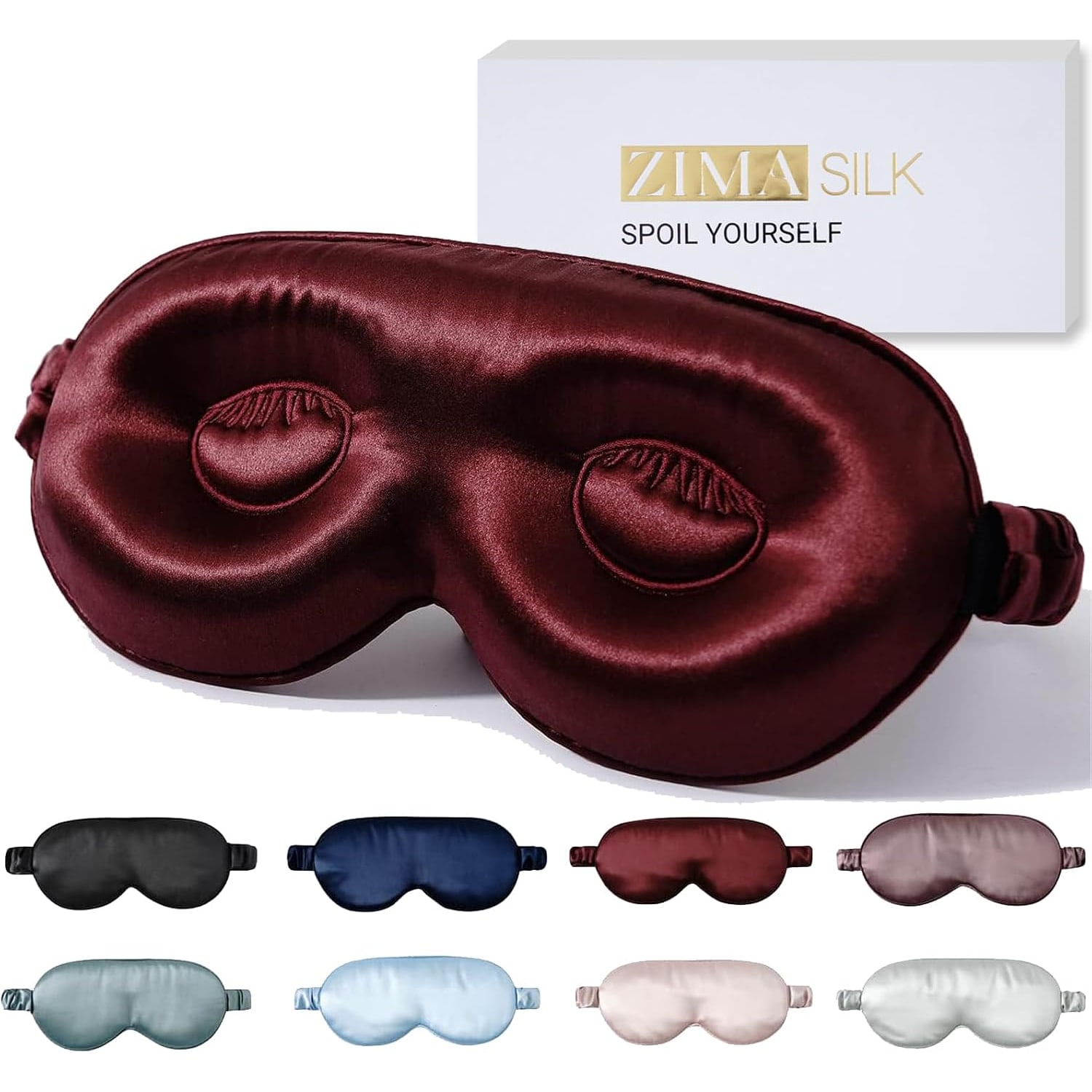
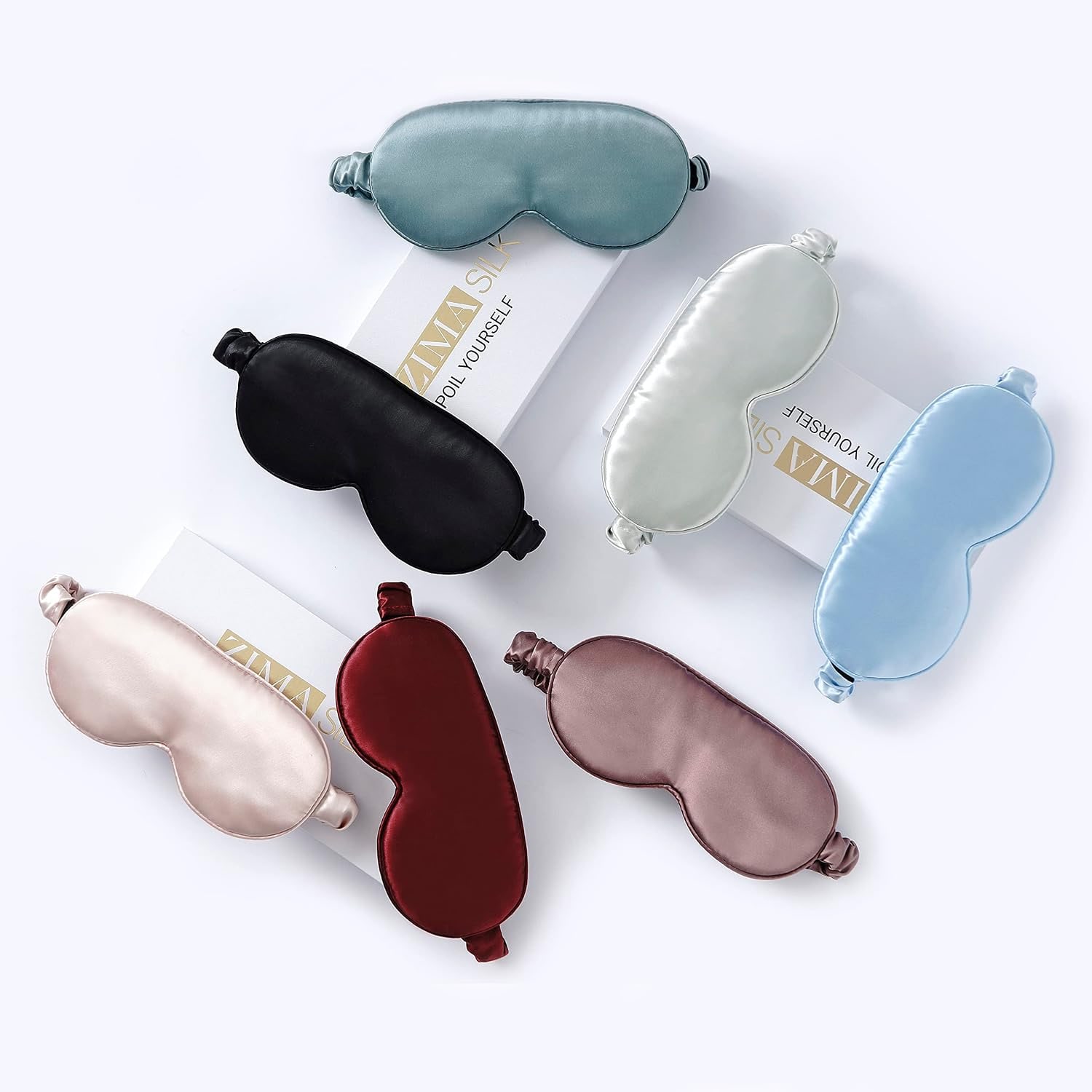
This guide walks through each one, using a 22 momme mulberry silk mask in burgundy as the example. The same thinking applies whatever you end up buying.
What momme actually tells you
Silk is sold by momme, written as "mm" but pronounced "mummy". It is a weight measure. One momme is roughly 4.3 grams per square metre of fabric. So a higher number means more silk in the same area, which means a denser, heavier cloth.
Cheap silk masks often sit around 16 momme or lower. They feel fine in the shop and thin out quickly in the wash. Very heavy silk, up in the 30s, is lovely for bedding but starts to feel stiff when it has to curve around a face.
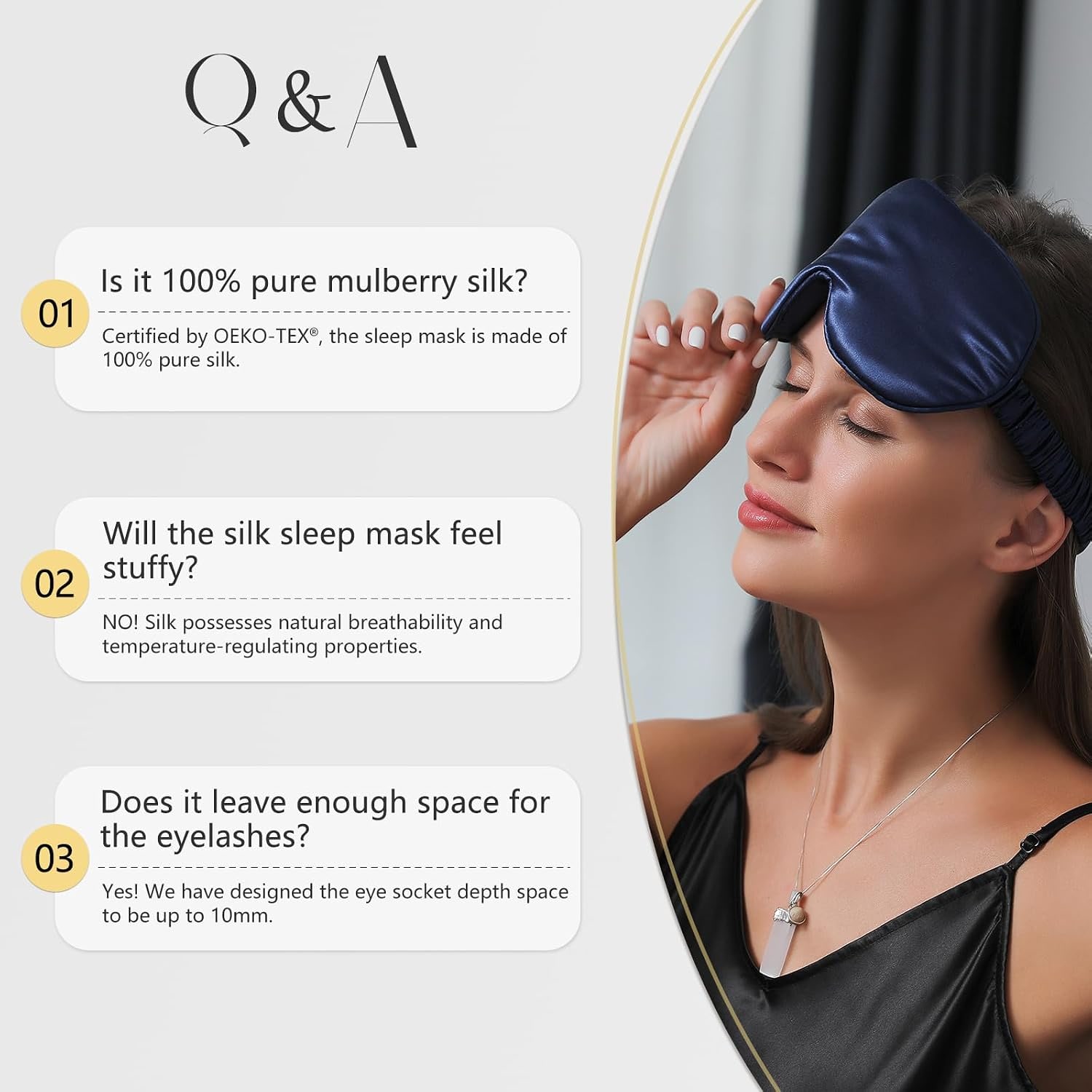
Twenty-two momme is where most people land. It has enough body to drape properly and hold its shape, and it is still soft enough to sit lightly on skin. If you are comparing the best 22 momme silk sleep mask options, you are already shopping in the right band.
The grade matters too. Mulberry silk is graded by filament quality, topping out at 6A. A 6A fabric comes from long, even filaments, which is why it feels uniformly smooth rather than slightly nubby in patches.
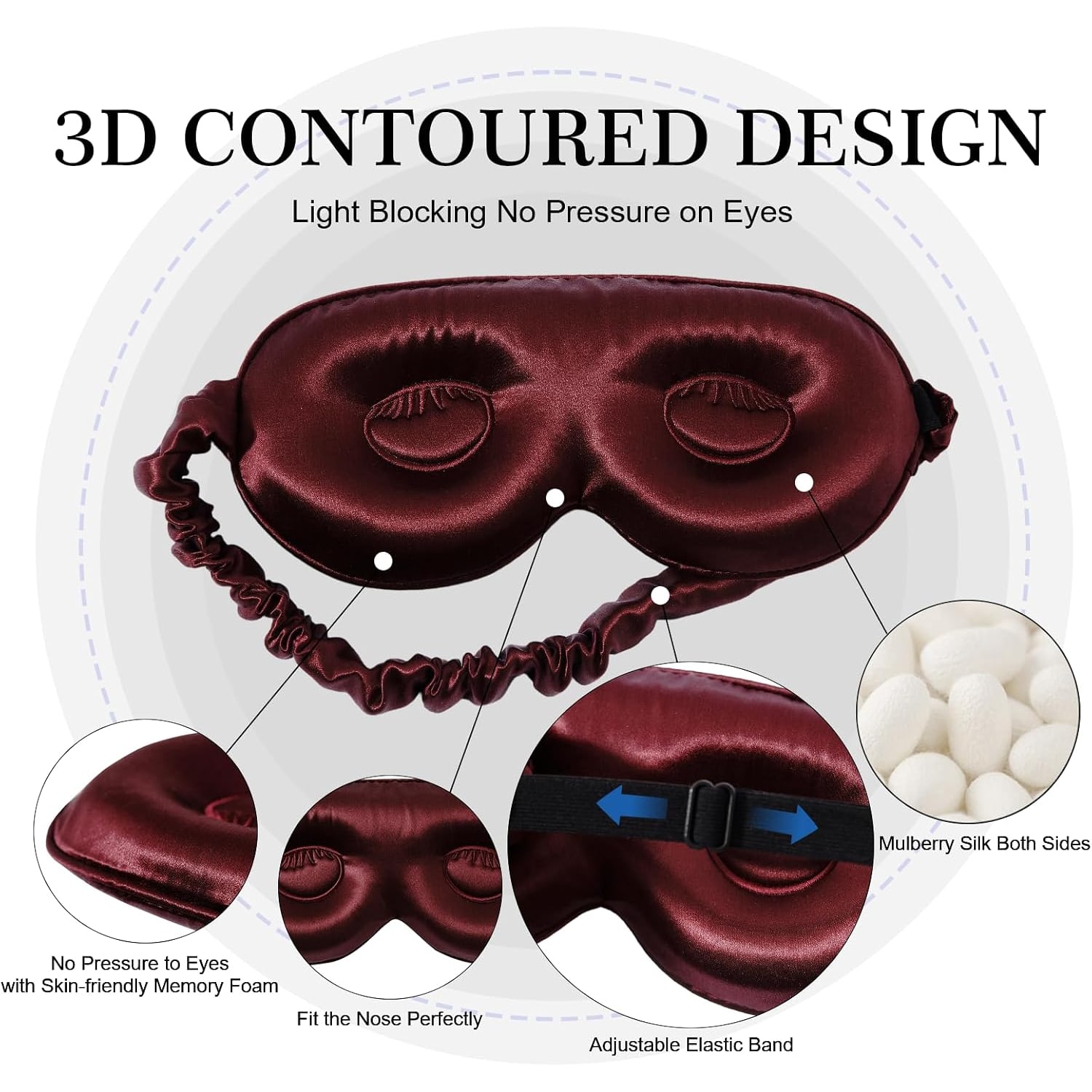
One more thing worth checking on any listing. Is the silk on both sides? Plenty of masks use silk on the outer face and a synthetic lining underneath, where you cannot see it but your skin certainly can. The mask described here uses 6A mulberry silk on both faces.
Flat versus contoured
This is the biggest single difference between masks, and it changes how the thing feels more than the fabric does.
A flat mask is a panel of fabric on a strap. It lies directly on your eyelids. Some people genuinely like that gentle weight. Many do not, and if you wear lash extensions a flat mask will press them against your lids all night.
A contoured mask has moulded cups that arch over each eye socket. The fabric never touches your lashes. You can open your eyes inside it and blink freely. The cups also create a deeper seal around the brow bone and the bridge of the nose, which is exactly where flat masks leak light.
That nose gap is the thing most people complain about. Lie on your back in a lit room wearing a flat mask and you will see a soft triangle of light down by your cheekbones. A contoured edge is shaped to close that off.
The trade-off is bulk. Contoured masks have depth, so they take up a bit more room in a bag and side sleepers sometimes feel the edge against the pillow at first. In practice most people stop noticing within a few nights.
If you are after the best contoured sleep mask for genuine darkness rather than just a bit of shade, the shape is doing most of the work.
How it holds on
Straps fall into two camps. Plain elastic, or an adjustable strap with a buckle or slider.
Plain elastic is cheaper to make and it is fine until it is not. New elastic is often too tight, which is where forehead marks come from. Old elastic is too loose, which is why the mask ends up around your neck by morning. You have no say either way.
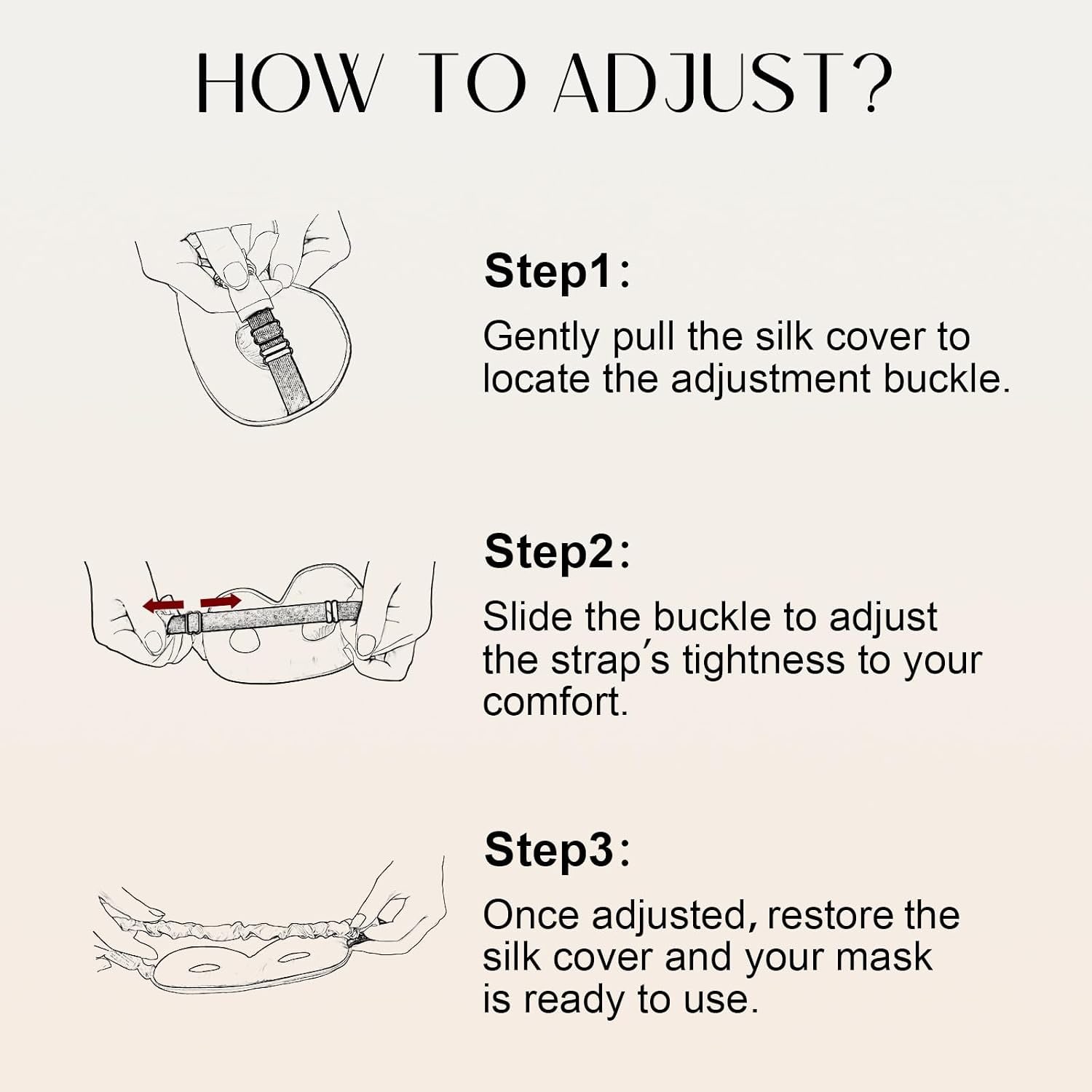
An adjustable strap lets you set the tension once and forget it. You want it snug enough that it does not shift when you roll over, loose enough that you cannot feel pressure. There is a surprisingly wide gap between those two points, and finding it is the difference between a mask you wear and a mask that lives in a drawer.
A silk-wrapped strap is worth having if you sleep on your side, because you will be lying on it. Bare elastic against the ear or temple gets uncomfortable in a way that a soft covering does not.
The mask here uses a buckle on a silk-wrapped strap, adjustable across adult head sizes. Set it in good light the first time rather than fumbling with it at bedtime.
Who it suits
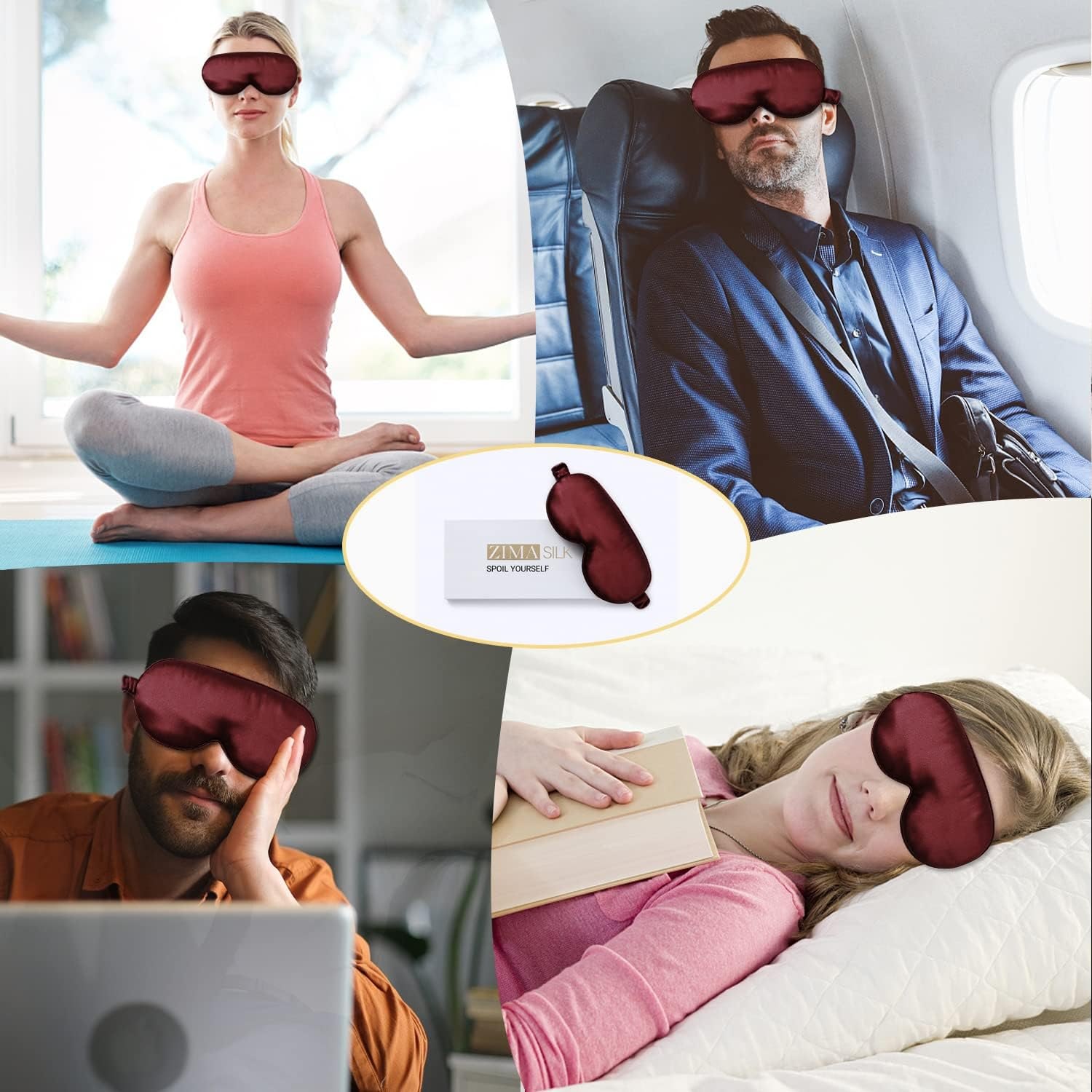
Light sleepers are the obvious group. If a streetlight through a gap in the curtains is enough to wake you, a proper blackout mask is a cheaper fix than new curtains.
Shift workers have the hardest version of the problem, because daylight is far brighter than anything indoors. A contoured mask helps a great deal, though pairing it with a blind helps more. Anyone hunting for the best blackout eye mask for day sleeping should plan on using both.
Travellers benefit for a different reason. Cabin lighting, airport lounges and unfamiliar hotel rooms are all out of your control, and a mask you can fold into a pouch gives you back a small piece of that control. Keep it in the carry-on, not the checked bag.
People with lash extensions, or anyone who just hates pressure on their eyes, should go contoured without much further thought.
And it is a practical gift. There is no sizing to guess at with an adjustable strap, and a mask that comes boxed with its own pouch does not need wrapping.
Looking after silk
Silk is not fragile, but it is particular. The rules are short.
Hand wash only, in cool water, with a detergent made for delicates. Wool wash works. Regular laundry powder does not, because the enzymes in it break down protein fibres, and silk is a protein fibre.
Do not wring it. Lay the mask on a clean towel, roll the towel up and press. That gets most of the water out without stressing the fabric or the seams around the cups.
Dry flat, at room temperature, out of direct sun. Sunlight fades dyes and weakens silk. Heat does the same thing faster, so skip the dryer and the radiator.
Wash it about once a week, more if you use oils or heavy night creams. Residue builds up and dulls the surface, and once a mask feels grubby you stop reaching for it.
Between uses, put it in its pouch. A bedside drawer has more grit in it than you would think, and a bag definitely does.
The short version
Look for 22 momme or thereabouts, mulberry silk on both faces, and a decent grade. Choose a contoured shape if you want real darkness or you wear lash extensions. Insist on an adjustable strap, and pick a soft covered one if you sleep on your side. Wash it by hand in cool water and dry it flat.
Do that and the mask disappears. You put it on, the room goes dark, and you stop thinking about it, which is the only review a sleep mask ever really needs.