
The complete guide
Choosing a 70cm Square Silk Scarf, A Practical Buyer's Guide
The problem with most scarves
Most scarves are either too big or too committed. A long wool knit is lovely in July and useless the rest of the year. A tiny neckerchief disappears under a collar. And the cheap synthetic squares in the bargain bin slide off, crease into permanent wrinkles, and get hot around the throat within ten minutes.
A 70 x 70 cm silk square sits in the gap. It is the size that has been standard for printed scarves for decades, and there is a reason for that. It folds small enough to knot cleanly at the neck, and opens wide enough to wrap a head of hair or drape loosely over a shoulder. One piece of fabric, five or six genuinely different looks, and it weighs almost nothing in a bag.
What mulberry silk actually gives you
Mulberry silk comes from silkworms fed on mulberry leaves, and the fibre they produce is a long, continuous filament. That length matters. Short staple fibres have to be spun together, which leaves tiny ends poking out of the yarn, and those ends are what you feel as fuzz or scratch. A long filament has far fewer ends, so the surface stays smooth.
That smoothness is the practical point. Hair slides across silk with less friction than across a dry cotton weave, which is why so many people use a silk square as an overnight hair wrap. It is also why a silk scarf does not cling and pill against the collar of a coat.
Silk is also breathable. It holds a little warmth when it is cool and lets heat escape when it is not, which is how one scarf manages to feel right in both May and January. It is never going to replace a thick wool scarf in a southerly, but for everyday layering it earns its spot.
Reading the size
70 x 70 cm is about 27 inches each way. Here is what that means in practice.
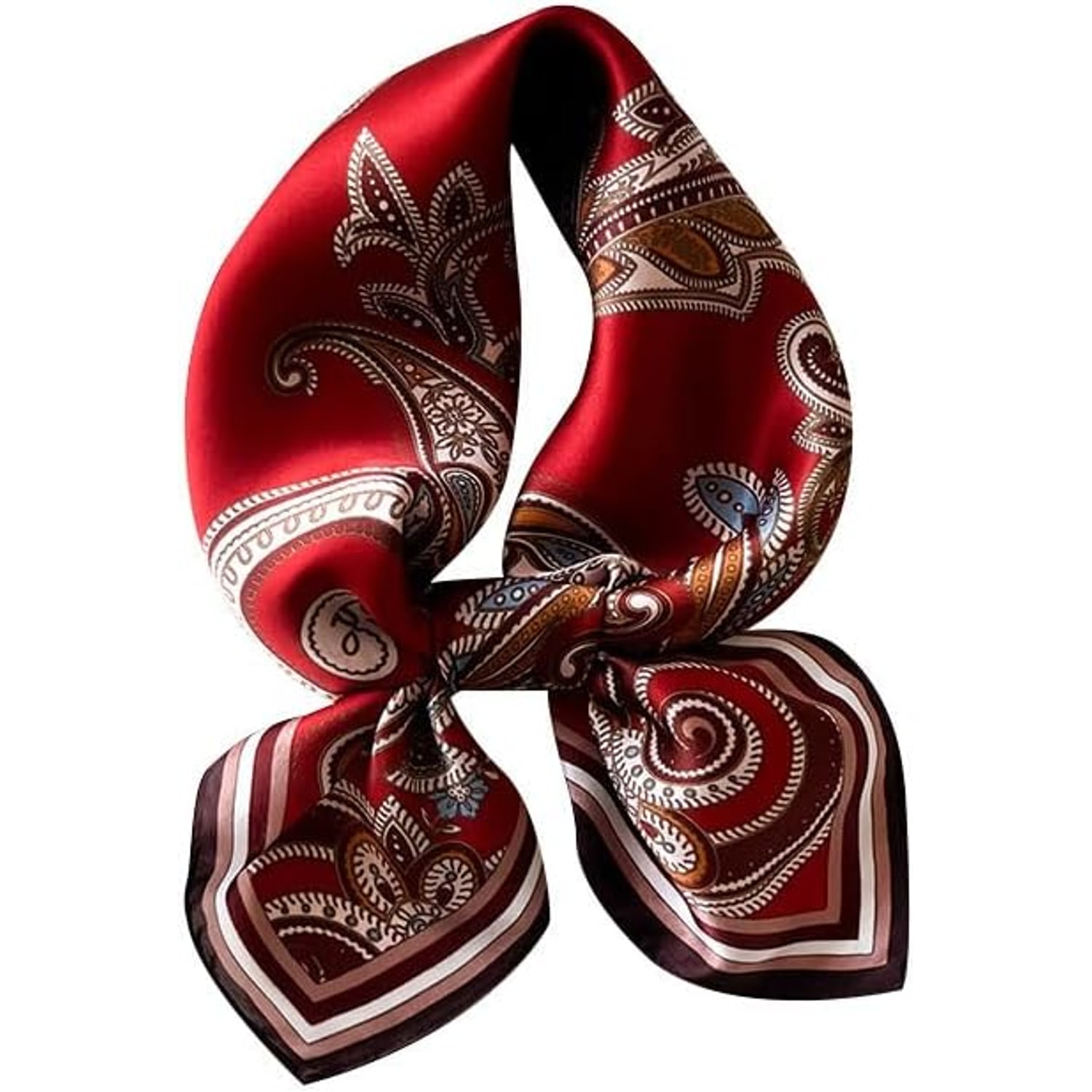
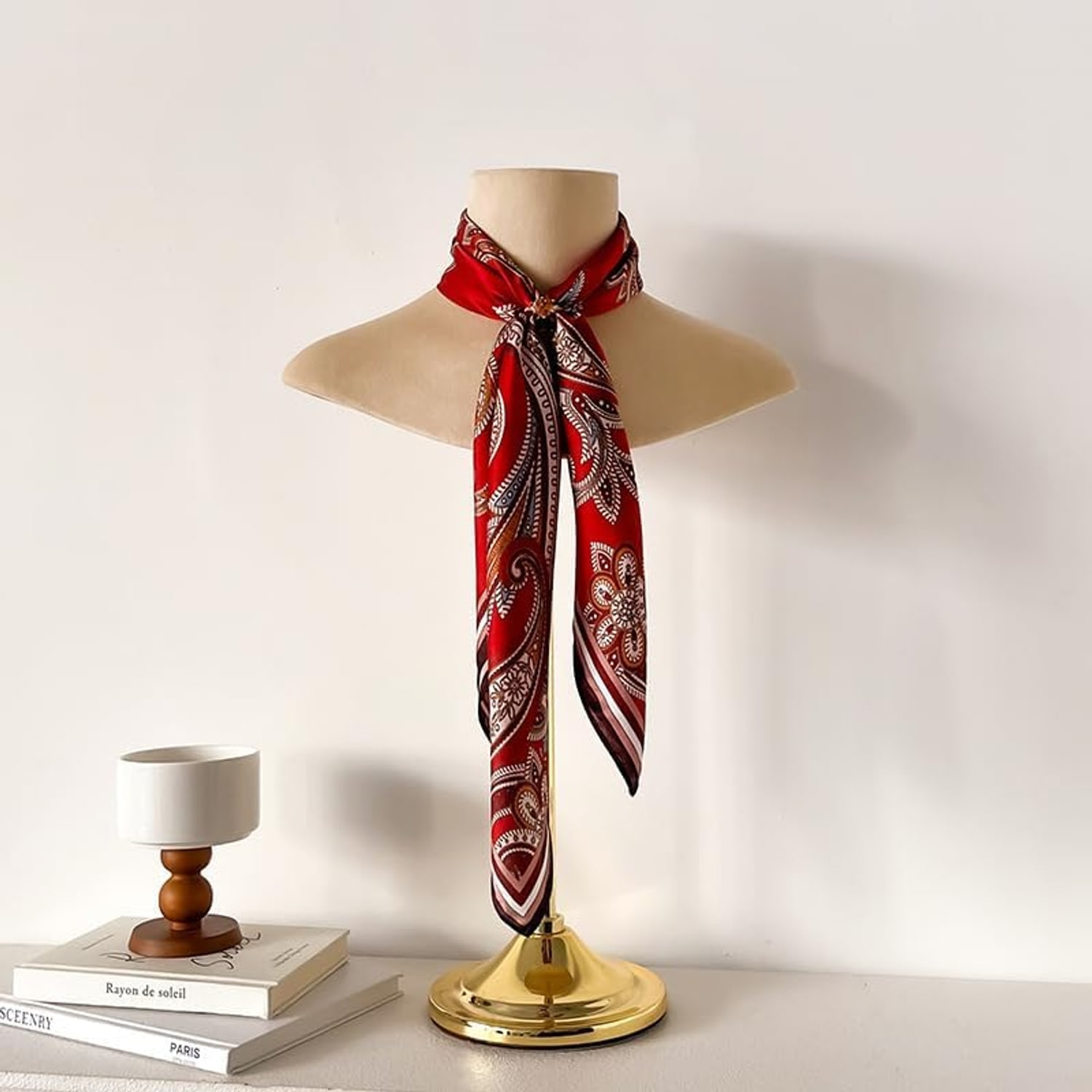
Folded on the diagonal, you get a triangle with a long edge of roughly 99 cm. That covers the front of the neck and chest, and the points can be tied behind or tucked into a jacket.
Folded repeatedly into a bias band, you end up with a strip roughly five to eight centimetres wide and long enough to wrap most heads with room to knot. That is your headband, your bun wrap, your bag tie.
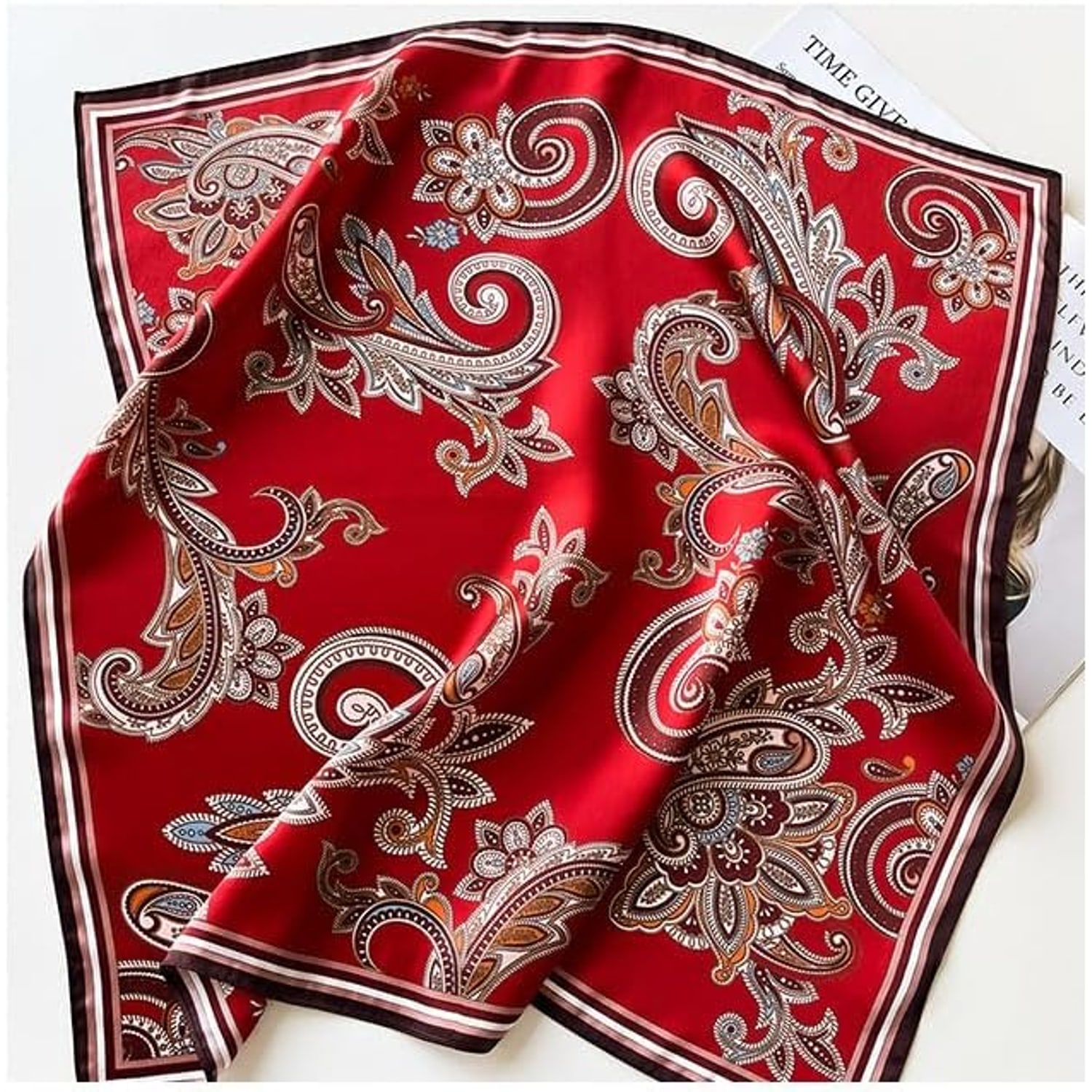
Left open, it will cover the hair completely with a knot under the chin, in the old-fashioned style that keeps coming back.
Note that individual pieces vary by one to two centimetres. Silk is cut and hemmed by hand at the edges, and a little variation is normal rather than a defect.
Why single-sided printing is fine
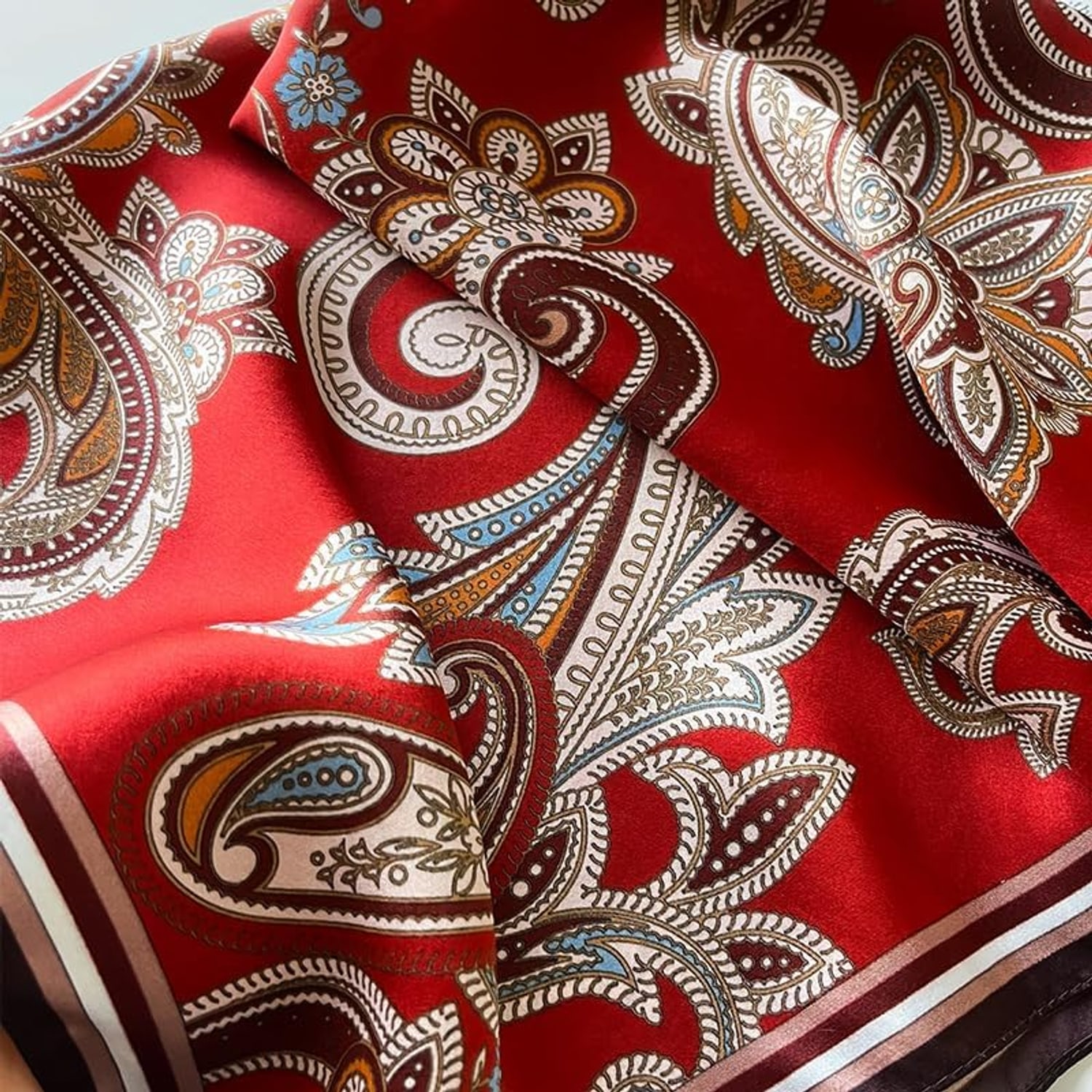
Some shoppers see "printed on one side" and assume the back will be blank. It will not be. Dye penetrates silk enough that the reverse shows a softer, slightly faded version of the same design. When you knot a square, both faces show no matter how you fold it, and that contrast between a crisp front and a quieter back is part of what makes a printed scarf look layered instead of flat.
Double-sided printing exists, but it usually means a heavier fabric or a bonded construction, and that costs you the drape. For a scarf you want to knot and tuck, single-sided print on a single layer of silk is the better trade.
Who this suits
If you wear a lot of plain clothes, a printed square is the easiest way to add something without changing your whole wardrobe. A navy coat and a printed scarf reads as deliberate. A navy coat alone reads as a navy coat.
If you have longer hair and you are tired of waking up with it knotted, this works as a sleep wrap. Silk is smoother than most cotton pillowcases, so there is less drag overnight.
If you travel, it packs completely flat, weighs next to nothing and comes out of a suitcase ready to use after a few minutes hanging up.
If you want a gift with no sizing risk, this is near the top of the list. Nobody has to try on a scarf.
Who it does not suit: anyone looking for serious winter warmth, and anyone who wants something they can throw in the washing machine and forget about. Silk needs a gentle hand.
How to choose a print
Two honest rules here.
First, match the scale of the print to how you will wear it. Big bold patterns look great open or loosely draped, but when you fold them into a narrow band you often lose the motif completely and end up with a stripe of one colour. Smaller repeating prints survive folding much better.
Second, pick a colour that already lives in your wardrobe. The most-worn scarf in anyone's drawer is almost always the one that happens to work with their everyday coat. A spectacular print in a colour you never wear will sit unused and look lovely doing it.
If you are buying as a gift and you are unsure, something with several colours in the print gives the recipient more to work with than a single strong shade.
Care, in plain terms
Hand wash alone, cool water below 30 degrees, mild detergent made for delicates. No machine, no bleach, ever. Those two are the rules that actually matter.
Do not wring it. Lay it on a clean towel, roll the towel up, press gently, then unroll and dry the scarf flat or over a rail. Keep it out of direct sun and away from heaters, because heat and UV both fade dye faster than washing does.
If it needs smoothing, iron on low with a cloth between the iron and the silk. If that all sounds like effort, dry cleaning is perfectly suitable and is the sensible choice when there is makeup or perfume on the fabric.
Store it folded loosely or rolled, in a drawer, away from zips and hooks that can snag the weave. Silk does not need a hanger.
Getting more wear out of it
A few things people do not always think of. Thread it through belt loops instead of a belt. Knot it around the handle of a plain handbag to make the bag look more expensive than it is. Band it around a straw hat in summer. Use it as an oversized pocket square on a blazer. Tie it over a bun to keep hair off your face while cooking.
The point is that a square scarf is not one product with one use. Treat it as a piece of fabric you know how to fold and it stops being an occasional accessory.
Delivery and returns in New Zealand
Orders go out by tracked courier from Australian warehouses, and most reach New Zealand addresses in 5 to 10 working days. Delivery is free NZ-wide on orders over NZ$175. If the scarf is not right, you have 14 days from delivery to return it unused and unwashed, so take it out of the packaging and have a look before you wear it.
The short version
This is a 70 x 70 cm square made from 100% pure mulberry silk, printed on one side, sized to the classic standard with a tolerance of a centimetre or two. It is smooth, light and breathable, and it will do duty as a neck scarf, a hair wrap, a headband, a hat band or a bag tie depending on how you fold it.
Wash it by hand in cool water or send it to the dry cleaner, dry it flat, iron it low if it needs it, and it will keep looking like a good scarf for years. Choose the print to match something you already wear, and it will leave the drawer far more often than you expect.