
The complete guide
How to Choose a Mulberry Silk Pillowcase, Momme, Size and Care Explained
The problem with a pillowcase you never think about
Most people buy pillowcases as an afterthought. They come in a set with the sheets, they get washed, they get put back on, and nobody gives them another moment of attention. Then one morning you catch your reflection and your hair has gone sideways, or you notice the same crease in the same cheek again, and you start wondering whether the thing your face spends a third of its life pressed against might actually matter.
Woven cotton, even good cotton, has a surface with grip. Run your hand across a percale case and you feel it catch slightly. Multiply that by seven or eight hours of turning over and it adds up to a lot of small tugs on hair and small folds pressed into skin. Silk works differently. The fibre is smooth, the weave is tight, and things slide across it rather than dragging. That is the whole argument for a mulberry silk pillowcase, and it is a fabric argument, not a wellness one.
What mulberry silk actually is
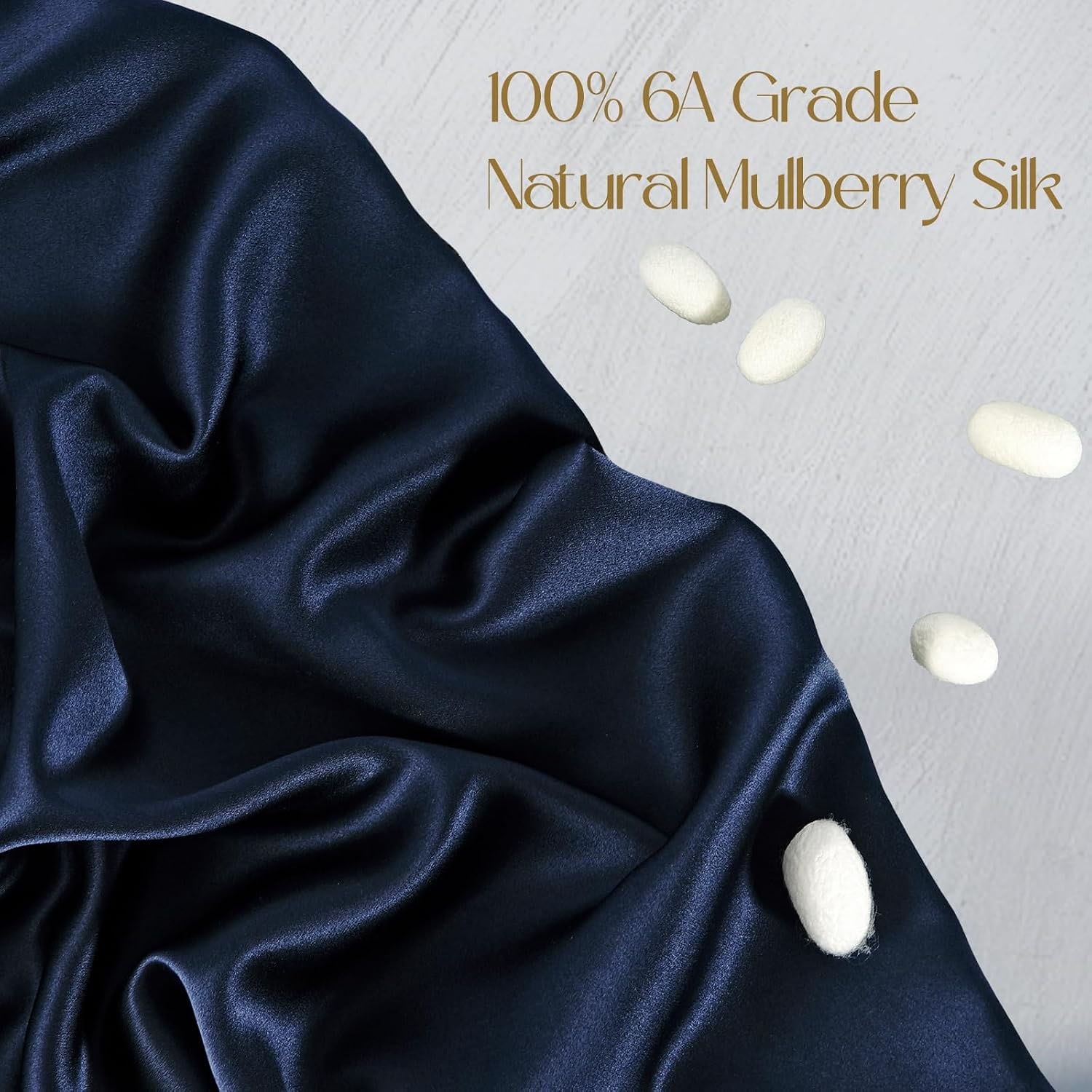
Mulberry silk comes from silkworms raised on a single diet of mulberry leaves. The controlled feeding produces long, even filaments, which spin into a smoother and stronger yarn than wild silk varieties. It is the standard for bedding silk for that reason.
Within mulberry silk there is a grading scale, and 6A sits at the top of the range you will see quoted. The grade reflects fibre length, evenness and colour consistency. A higher grade means fewer short fibres and fewer irregularities in the yarn, which shows up as a more uniform surface and better durability. The pillowcases here are listed as Grade 6A, woven to 19 momme with a 600 thread count.
Understanding momme, the number that matters most
If you learn one silk term, make it momme. It is a weight measure, written as mm, and it tells you how much silk is actually in the fabric. Think of it the way you would think of GSM on a towel.
Silk bedding generally runs from about 16 momme to 25 momme. Below 16 the fabric starts to feel thin and sheer, and it will not survive repeated washing as well. Above about 22 it gets heavier and stiffer, which some people like for the drape and others find less cosy. Nineteen momme is the middle of the road and the most commonly recommended weight for a pillowcase. It has enough body to sit nicely on a pillow, enough weight to feel substantial in the hand, and it stays cool rather than warm.
Thread count is the other number on the label, listed here as 600. With cotton, thread count is the main quality signal. With silk it is secondary, because the yarns are so fine that high counts come easily. Use momme as your primary guide and read thread count as supporting information about how tightly the fabric is woven.
Double-sided silk versus silk-faced
This is worth checking on any listing. Some cheaper pillowcases use silk on the side you sleep on and a cotton or polyester backing underneath. It saves the maker money and it is not always obvious from the photos.
These cases are described as double-sided pure silk. In practice that means you can flip the pillow over in the middle of the night and get the same cool, smooth surface. It also means the case behaves consistently in the wash, with no two fabrics shrinking at different rates and pulling the seams out of shape over time.
Sizing, and why the closure matters
Each case measures 75 cm long by 50 cm wide, which is the standard queen pillow size in New Zealand. Before you order, pull a case off your current pillow and measure the pillow itself rather than guessing. Pillows labelled standard are shorter, usually around 70 cm, and they will fit but leave a bit of slack at one end. Anything deeply overfilled or European square will not work.
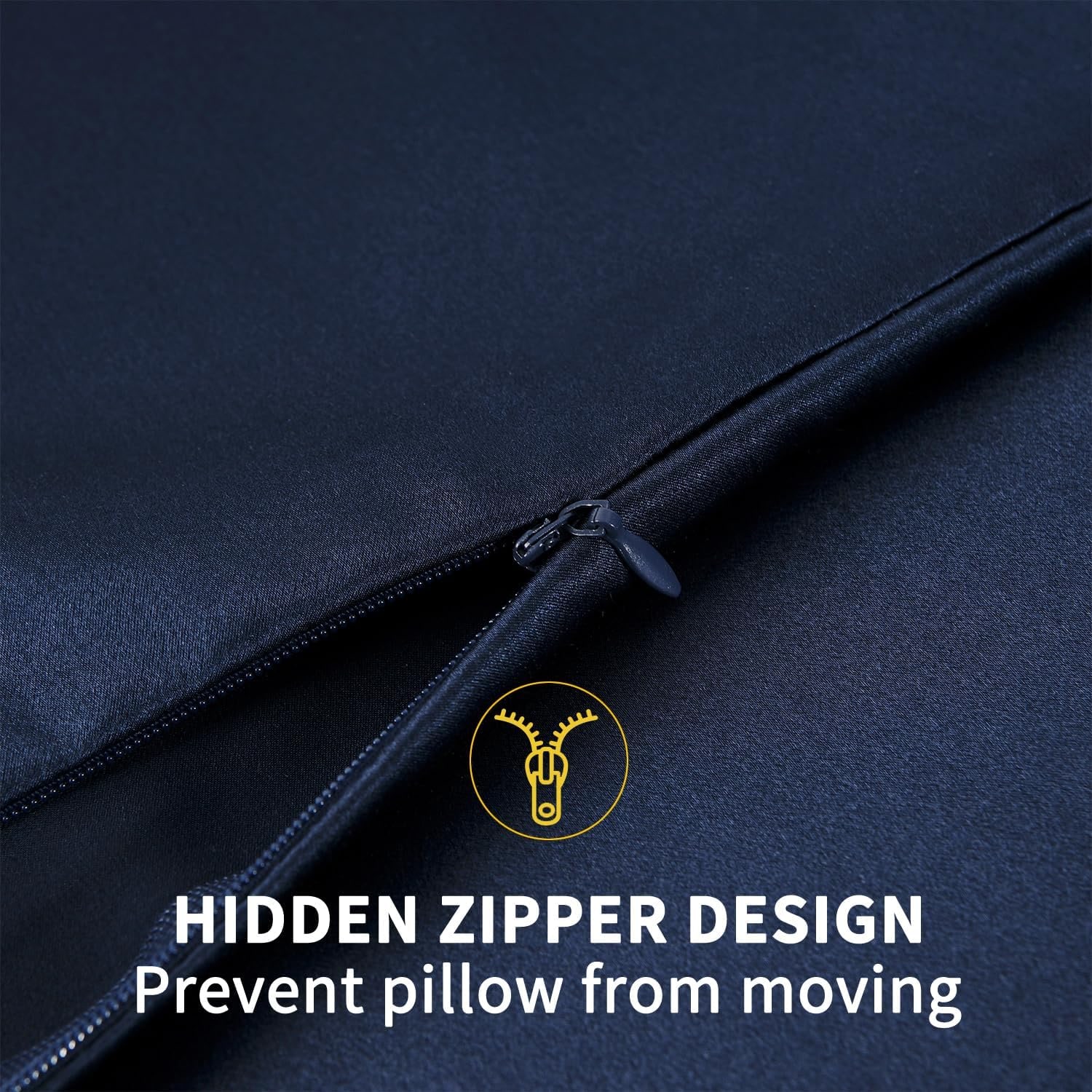
The closure here is a hidden zipper set into the seam. There are three common options on pillowcases and they are not equal. An open-ended case is the cheapest and the pillow works its way out. An envelope flap keeps the pillow in but adds a double layer of fabric at one end, which can sit under your face. A hidden zip holds everything in place, keeps the finished look clean, and keeps hardware away from where you lie. It is the choice most people prefer once they have tried all three.
Who this suits
If you sleep hot, silk is worth trying. It moves heat and moisture rather than holding them, so it does not build up the clammy feeling some synthetics do. The cool-to-touch quality when you first lie down is noticeable.
If you have long hair, the low friction surface is where you will feel the biggest difference, simply because there is more hair moving across the pillow all night. People with curly hair often reach for silk for the same reason.
If you are shopping for a gift, a silk pillowcase set is one of the safer options going. There is no size to guess beyond matching a standard queen pillow, and navy is a colour almost any bedroom can absorb. A two pack also feels more generous than a single case and means the recipient can keep one on the bed while the other dries.
Choosing a colour you will not get sick of
Navy is a quiet choice and that is its strength. In daylight it reads as a deep blue with a bit of warmth. Under a bedside lamp it goes almost black. It sits easily against white, oatmeal, grey, charcoal and natural timber, which covers most of the bedrooms in the country.
Dark colours do ask for a bit more care in the wash, mainly because you want to protect the dye. Cool water, no bleach, no long soaking and no drying in direct sun will keep the depth of colour intact. Those are good rules for silk anyway, so it is not extra work.
Living with silk, the honest version
Silk needs a gentler routine than cotton and there is no point pretending otherwise. These are hand wash only.
The routine is short. Fill a basin with cool water and a small amount of detergent made for silk or delicates. Put the case in, swish it about for a minute or two, then leave it for a few minutes. Rinse until the water runs clear. Press the water out with your palms rather than wringing, then lay the case in a towel, roll the towel up and press. Hang or lay it flat somewhere shaded with air moving.
Drying takes a couple of hours in a warm room. If you want it crisp, iron on the lowest setting on the reverse while it is still slightly damp, though most people find the creases fall out once the case is back on the pillow.
Three things to avoid. Hot water, which dulls the finish. Bleach and anything containing it, including some stain removers. Direct sun, which fades dye and weakens the fibre over months.
Wash weekly, more often if you use hair oils or heavy night creams. Having two cases makes this painless because there is always one ready to go.
How long should it last
A well-made 19 momme silk pillowcase, hand washed and dried out of the sun, will give you years of use. Silk is a protein fibre and it is stronger than it looks, which is why it was used for parachutes. What kills it is heat, harsh chemicals and abrasion against zips and velcro in a machine load. Avoid those and the fabric holds up.
You will notice the surface stays smooth rather than pilling, which is a function of the long fibres in higher grade mulberry silk. The weave is tight enough at 600 thread count that it resists snagging from rings and fingernails better than a looser cloth would.
The short version
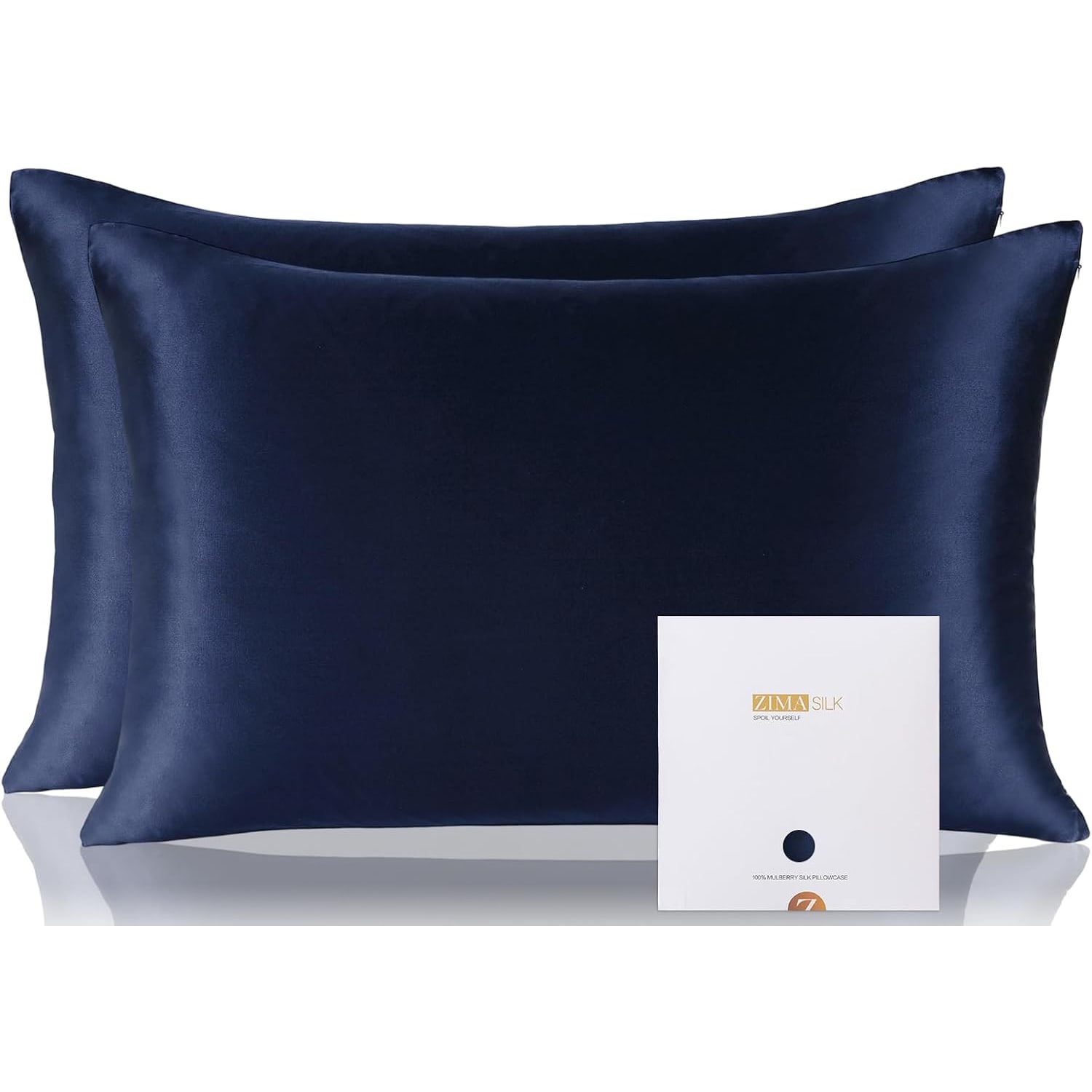
This is a pair of queen sized pillowcases, 75 cm by 50 cm, made from 100% mulberry silk graded 6A, woven at 19 momme with a 600 thread count, silk on both sides, closed with a hidden zip, in solid navy. Care is hand wash only.
Nineteen momme is the sensible middle weight for bedding. Double-sided silk means you can flip the pillow. A hidden zip keeps the pillow in and the hardware out of your way. And two cases means one stays on the bed while the other dries, which is the practical reason a 2 pack beats a single almost every time.