
The complete guide
The Small Silk Square Buyer's Guide
The gap between dressed and finished
Most of us own clothes that fit and colours that work, and still look slightly unfinished in photos. The usual culprit is an empty neckline. A plain crew neck, an open shirt collar, a bare V under a jacket: all perfectly fine, all a bit flat. Adding a necklace helps, but jewellery is a commitment and it clinks against laptops and seatbelts.
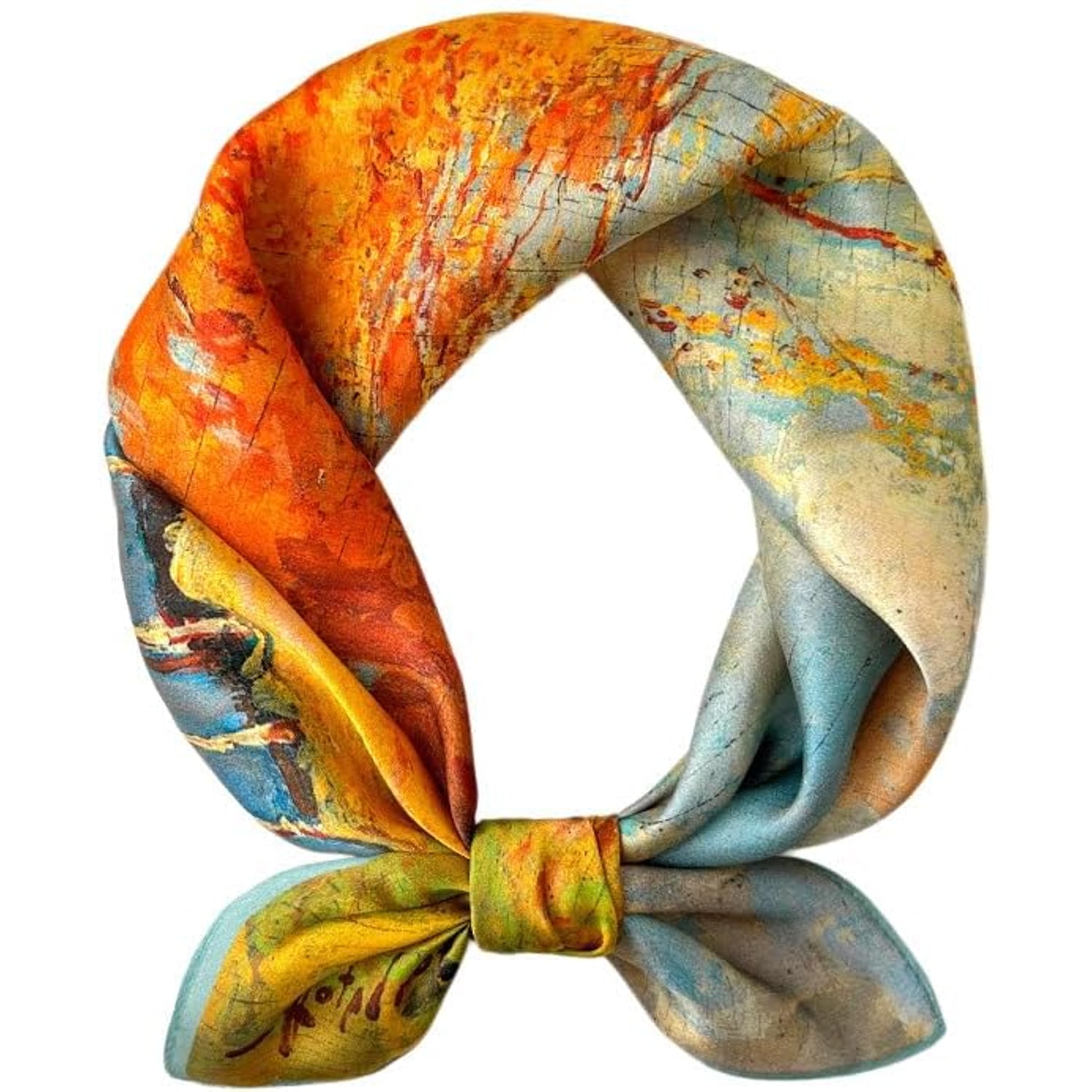
A small silk square solves the same problem for less fuss. Fold it, wrap it, knot it, done. It adds colour exactly where the eye already goes, and because silk drapes instead of standing up stiffly, it looks like a choice rather than a costume. That is the entire argument for a neckerchief, and it has held up since the 1920s.
The 53 x 53 cm square is the size that does this best. Bigger squares (the 90 cm format) are lovely but need managing. They bunch under a collar, they need a larger knot, and on a smaller frame they read as a shawl. A 53 cm square folds down to a strip about two fingers wide and sits flat. You can wear it under a blazer, over a t-shirt, or with nothing but a tank top in summer, and it never looks like it is wearing you.
Why mulberry silk, specifically
Not all silk is the same thing. Mulberry silk comes from silkworms fed only on mulberry leaves, raised in controlled conditions, and the cocoons they spin unwind into long, continuous filaments. Other silks, like tussah or wild silk, come from cocoons that have been broken, so the fibres are shorter and the yarn has a rougher, more textured surface.
Those long filaments matter for a neck scarf in two practical ways. First, the surface is smoother, so the fabric slides over itself and over your skin instead of catching. That is why a silk knot stays comfortable through a whole workday while a cotton one starts to feel like a tourniquet. Second, long filaments produce that characteristic liquid drape. The scarf follows the line of your neck instead of sticking out at angles.
Mulberry silk also breathes. The fibre is a protein, structurally closer to hair than to a plastic like polyester, and it moves moisture rather than trapping it. A polyester scarf at the neck in a warm room gets clammy within an hour. Silk does not, which is why the best lightweight silk scarf options tend to outlast every synthetic one in the drawer.
Reading the print
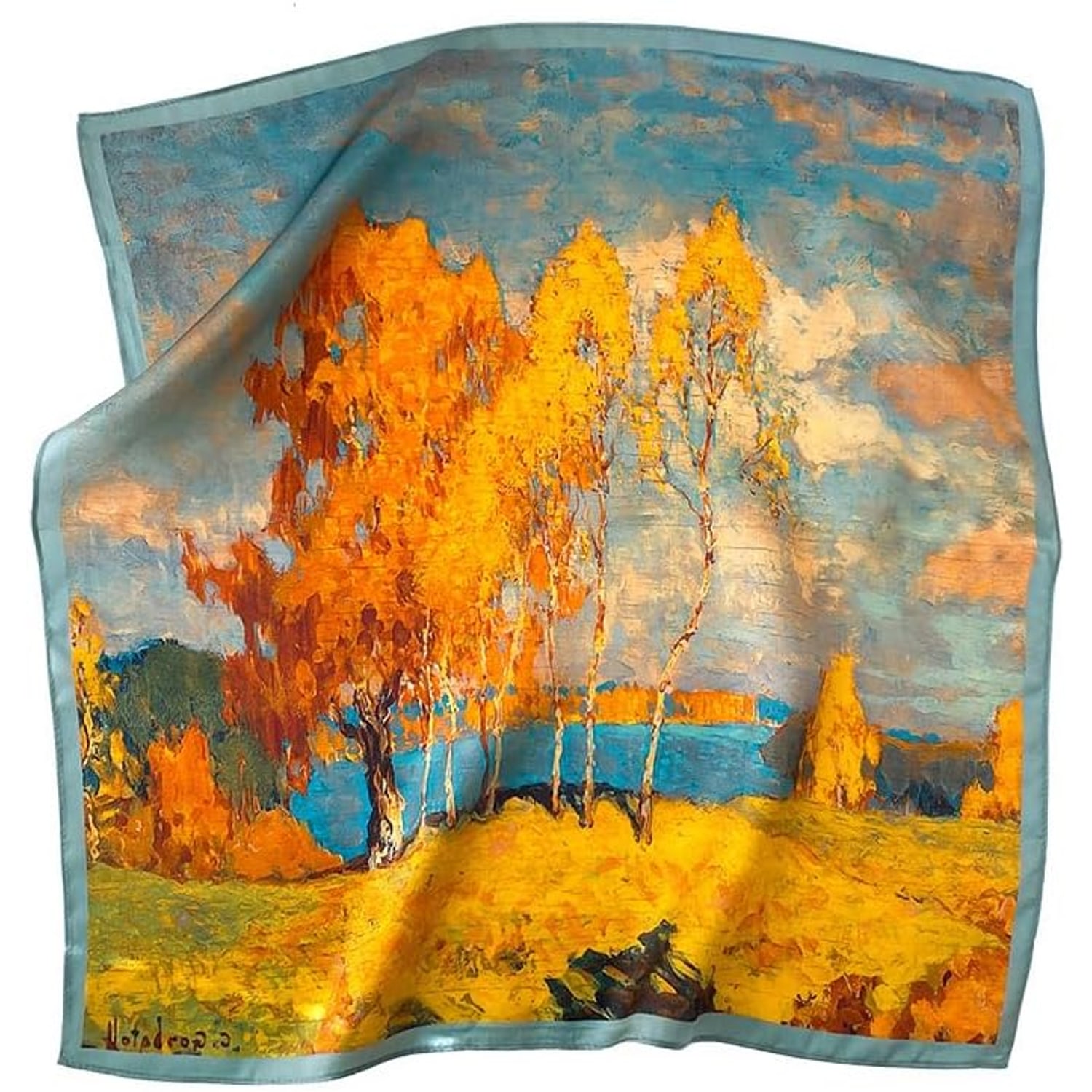
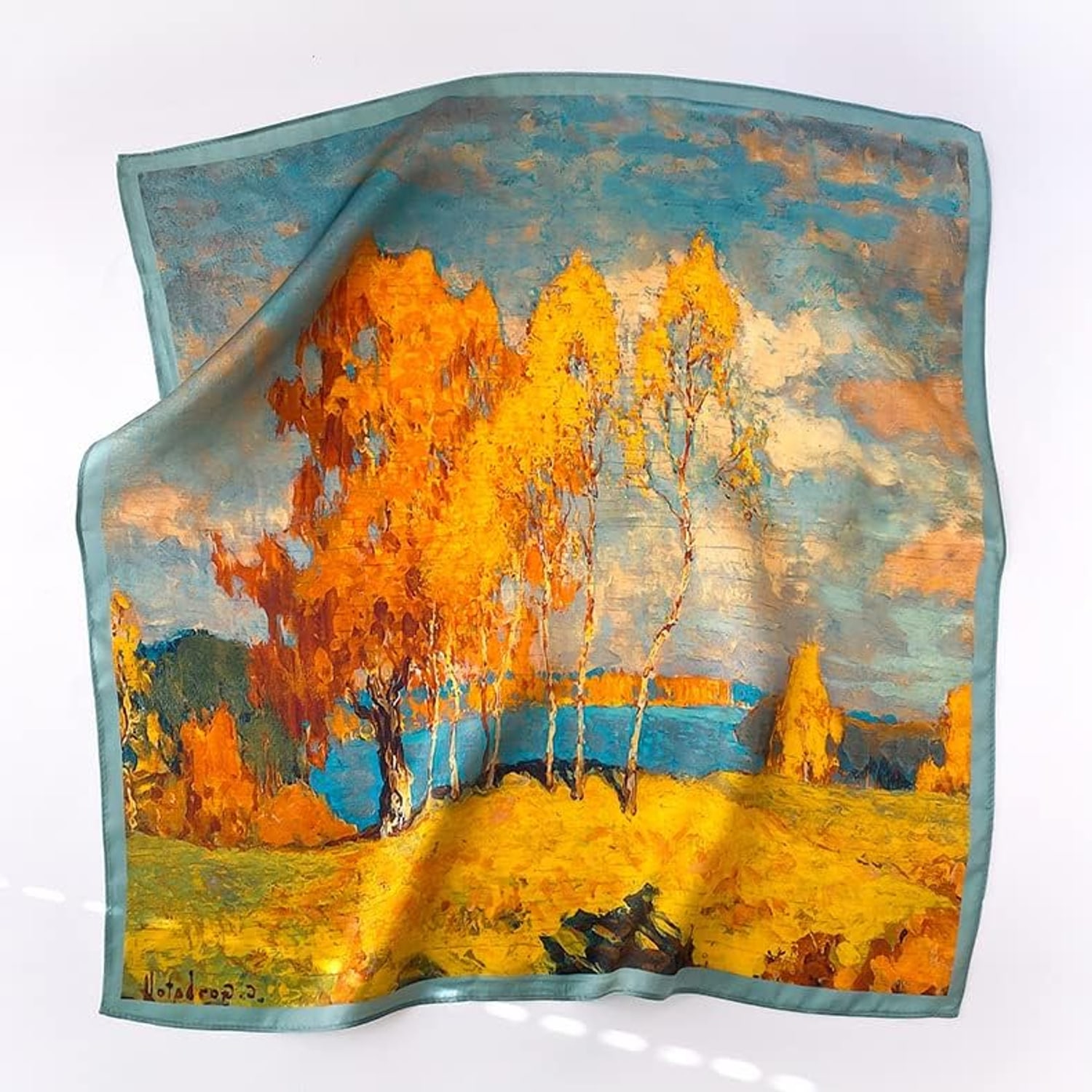
This scarf is digitally printed on one side. Worth understanding what that means before you compare it to anything else.
Digital printing sprays dye directly onto the silk from a file, the way an inkjet printer works on paper. The advantage is detail. Fine lines, gradients and complex patterns come out crisp because there is no screen registration to go wrong. Colour range is wider too. Traditional screen printing is beautiful but each colour is a separate screen, which limits how many shades a design can carry.
Single-sided printing means the back of the square is the quieter face of the fabric. This is normal and it is how most printed silk scarves are made. In practice it barely matters, because almost every knot folds the scarf so only the printed face shows. When you tie a bias strip, the folded edge hides the reverse entirely. If a flash of the back does show at the knot, it reads as a softer tonal version of the front rather than a blank.
One habit worth picking up: before you tie, decide which part of the pattern you want at the throat. A printed square is not uniform, and placing a bolder section at the front changes the whole look from the same piece of silk.
Who this suits
If you wear a lot of plain tops, this is the fastest upgrade available. One scarf covers five outfits.
If you travel, a small square earns its space. It weighs almost nothing, folds into a pocket, and doubles as a hair tie on a windy ferry or a cover for your shoulders in a church or temple. People who pack light often rate it among the best travel silk scarf choices for exactly that reason.
If you are growing out a fringe, dealing with second-day hair or just want a bit of polish on a gym run, the 53 cm size is the right scale for a ponytail wrap or a headband. It holds a knot without a long tail flapping.
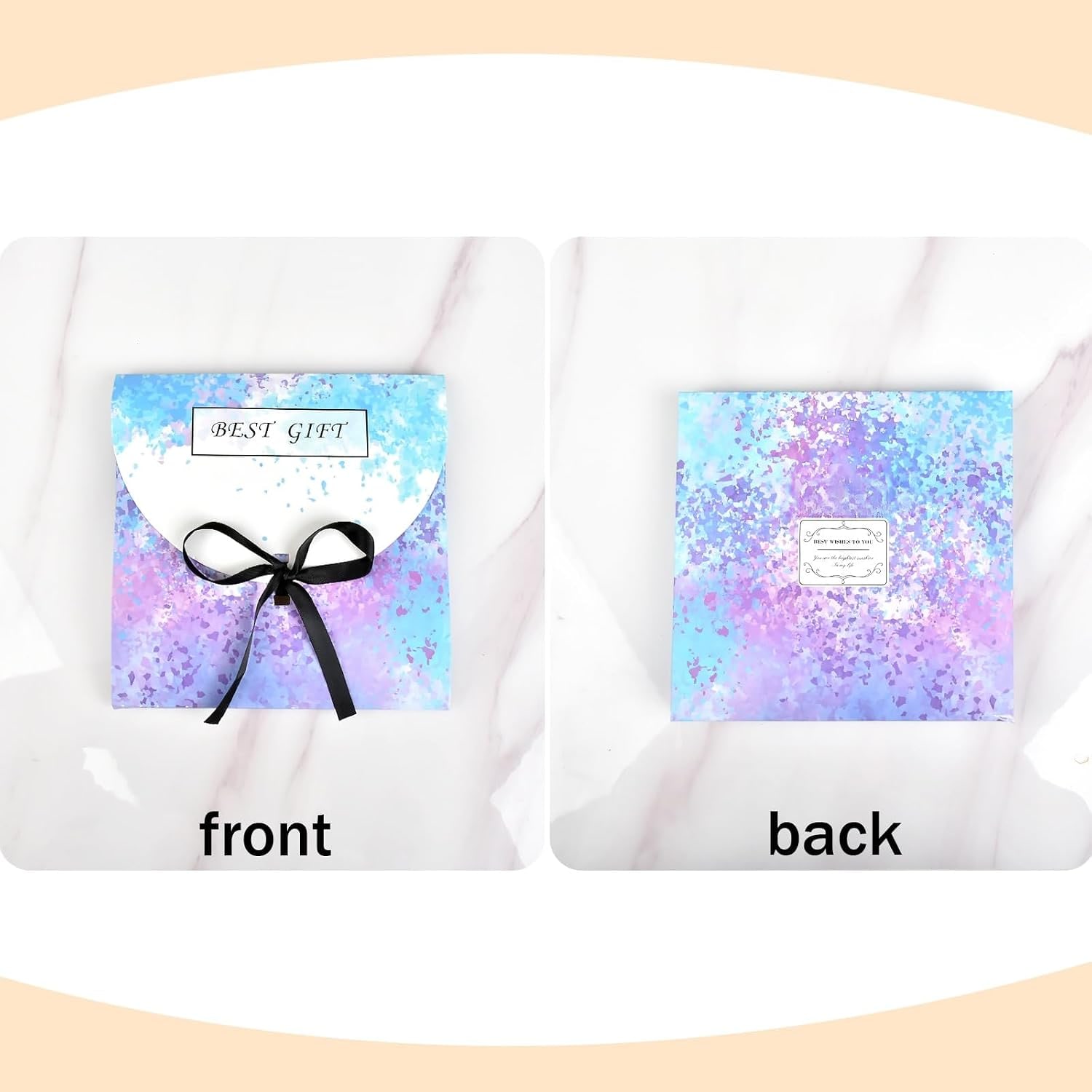
If you are buying a gift and you are not sure of the size, taste or fit of the person, a scarf sidesteps all three problems. There is no small or large. It works on a 25-year-old and a 70-year-old. That makes it one of the safer silk scarf gift calls.
If you are a man looking at this, the small square is the original men's neckerchief format. Worn open-necked under a shirt with a compact knot, it looks considered rather than theatrical.
How to choose, and what to ignore
Three things actually matter when buying a small silk square. Fibre content, size and print quality.
Fibre content first. 100% pure silk feels different from a silk blend or a satin-weave polyester, and it will feel different for years. Satin polyester looks shiny in photos and goes limp after a season. If a listing says "silky" rather than "silk", that is a different product.
Size second. 53 cm for neck knots, hair and bag ties. 90 cm for shoulder wraps and head coverings. 65 cm sits awkwardly between the two. Choose for how you will wear it, not for the amount of fabric.
Print quality third. Look at how the fine detail resolves in the product photos. Sharp edges and clean colour boundaries are a good sign.
What to ignore: scarf-folding diagrams that show twelve knots. You will use two, maybe three. Learn the bias strip wrap and the simple triangle, and you can handle any situation. Also ignore anyone telling you a silk scarf needs special treatment beyond basic care. It does not.
Looking after it
Silk is tougher than its reputation, but it has rules.
Hand wash alone in cool water, below 30 degrees. Use a gentle detergent, something mild and without enzymes if you can. Swish it, do not scrub. Rinse until the water runs clear. Press the water out between your palms or inside a towel, never wring or twist, because twisting is what breaks the filaments and leaves permanent creases.
Dry it flat or hang it somewhere shaded with air moving. Direct sun fades printed dyes faster than anything else you will do to it. Never put it in a tumble dryer.
Iron on the lowest setting while the scarf is still slightly damp, working on the reverse or under a thin cloth. Keep the iron moving. If it has dried out completely, mist it lightly first rather than cranking up the heat.
The other option is dry cleaning, which this scarf is suited to. If you have worn it with perfume or makeup at the neck, dry cleaning handles oils better than a home wash.
Store it flat or loosely rolled. Hard folds along the same line every time will eventually show as a permanent crease. Keep it away from velcro, rough watch backs and anything with a sharp clasp.
The short version
A 53 x 53 cm square of 100% pure mulberry silk, digitally printed on one side. It knots at the neck, holds hair, dresses a handbag and takes up no room in a pocket. Hand wash cool or dry clean, iron low, keep it out of the sun and out of the dryer.
It is a small thing that changes how an outfit reads, and silk being silk, it will still be doing that long after most accessories have gone out of rotation.