

The complete guide
How To Choose A Silk Pillowcase (Momme, Size And Closure Explained)
The problem with waking up creased
Most of us sleep on cotton without thinking about it. Cotton is fine. It is also slightly rough at the fibre level, it grips, and it drinks up moisture from whatever touches it. That is why you can wake with lines pressed into your cheek, or with hair that looks like it lost an argument overnight.
Silk behaves differently. The fibres are long and smooth, the surface has far less grip, and skin and hair slide across it rather than catching. That is the whole idea behind a mulberry silk pillowcase. It is not a complicated product. It is one piece of very good fabric doing one job well.
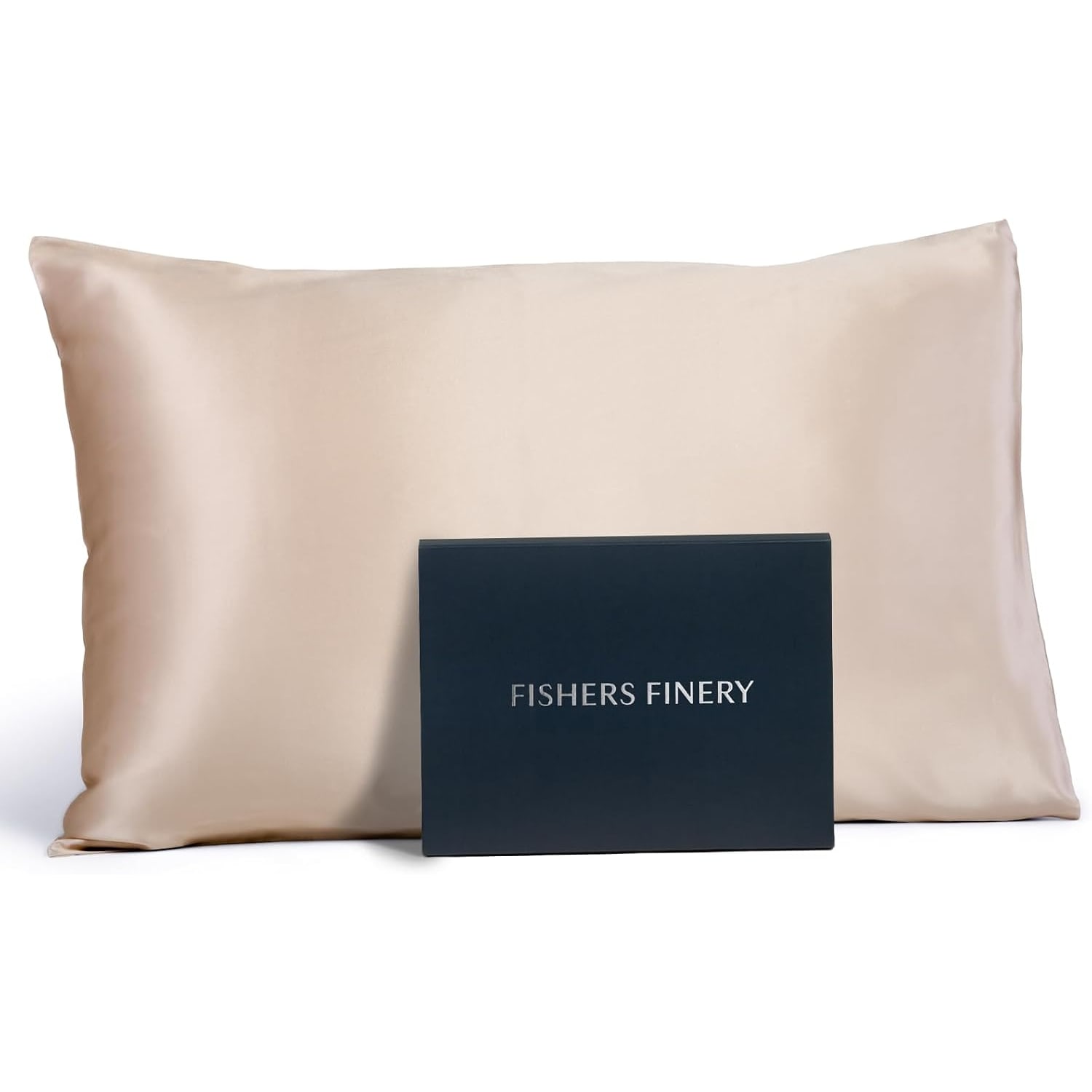
This guide walks through what actually matters when you are choosing one, using this taupe 25 momme pillowcase as the working example.
What momme actually tells you
Momme is the unit used to weigh silk. You will see it written as mm, which confusingly looks like millimetres, but it refers to weight. The higher the number, the denser the fabric.
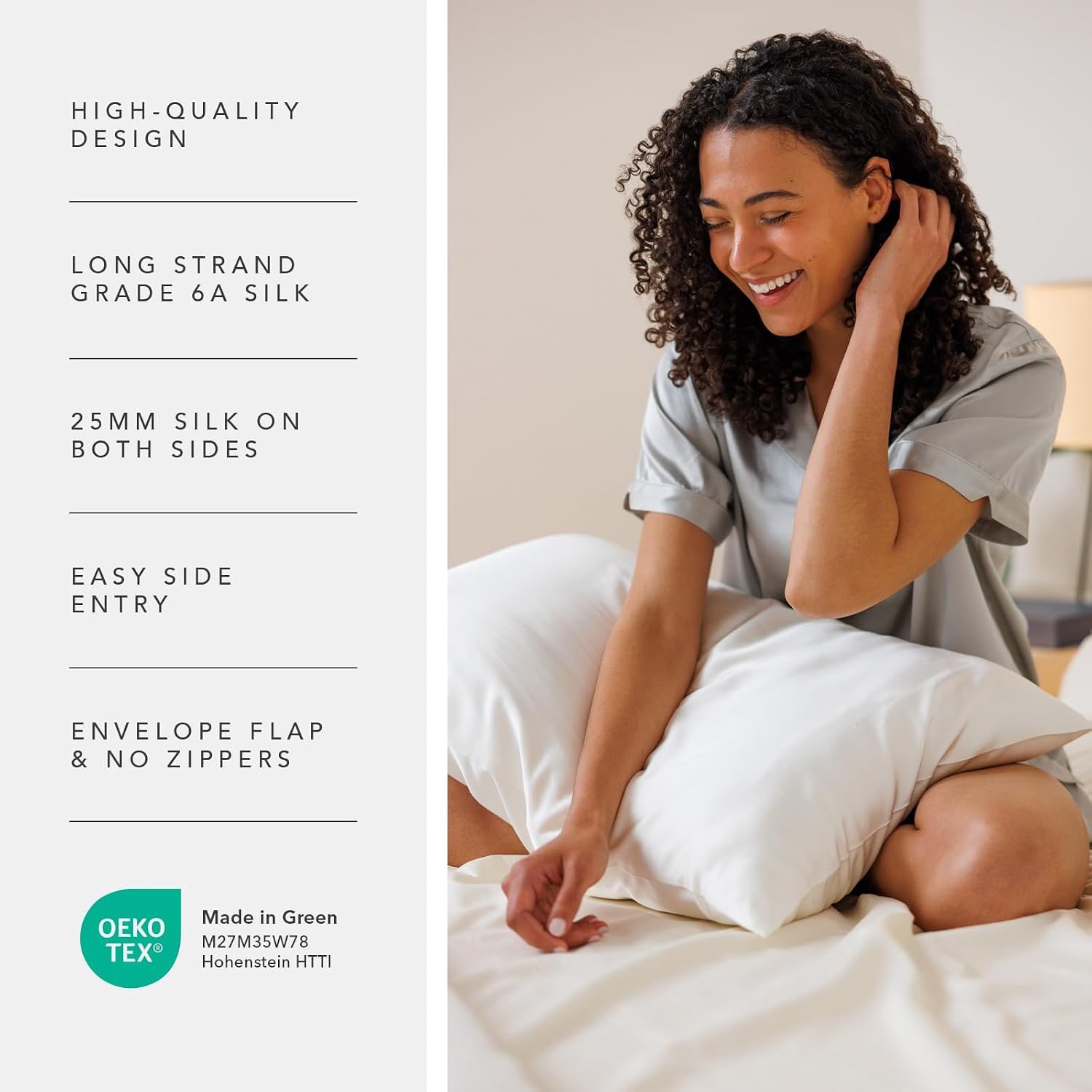
Silk bedding usually runs between 16 and 30 momme. Below about 19, the fabric starts to feel thin and sheer, and it tends not to last as long under regular washing. Around 22 is the common middle ground. At 25 momme, you are in heavyweight territory.
What does that mean when you touch it? More body. The fabric hangs rather than floats. It does not cling to itself when you shake it out, and it sits flat on the pillow instead of rippling. A 25 momme silk pillowcase also feels cooler on first contact, because there is simply more material there to carry heat away from your skin.
The trade-off is cost. More silk per square centimetre means a higher price. If you only ever buy one piece of silk bedding, this is the weight most people end up preferring.
Thread count, and why momme matters more
This pillowcase lists a 700 thread count. That number is worth understanding, because it gets used in marketing more often than it deserves.
Thread count counts threads per square inch. For cotton it is a reasonable rough guide to fineness. For silk it is less useful, because silk threads vary enormously in thickness and a high count can be reached by using many thin threads. You could technically have a high thread count and a thin, flimsy fabric.
So read thread count as a secondary detail. It tells you the weave is fine and closely packed, which contributes to the smooth surface. But when you are comparing two pure silk pillowcases, momme is the number to look at first.
Silk on both sides, or silk on one
Here is a shortcut that some manufacturers take. They put silk on the sleeping face and a cheaper fabric on the reverse. It halves the silk cost and the product still gets sold as a silk pillowcase.
The problem shows up at about two in the morning, when you flip the pillow for a cool spot and land on cotton. The difference is immediately obvious.
This one is silk on both faces. No backing fabric, no compromise side. It also means the pillowcase wears evenly over time instead of one side aging faster than the other.
Closures, and why the envelope wins
There are three common ways to close a pillowcase.
A zip gives the snuggest fit but introduces a hard component near your head. Zips catch hair, they can scratch, and they are the first thing to fail on a pillowcase.
Buttons or ties look decorative but press into your face if you sleep on that end.
An envelope closure uses an internal flap that folds back over the end of the pillow. Nothing hard, nothing to catch, and the outside edges stay clean. This pillowcase uses an envelope closure with a slightly offset side entry, which means the opening sits a little away from the end seam. In practice that helps the pillow stay contained when you move around.
For a product you put your face on for eight hours, simple is better. The envelope closure is the right call.
Getting the size right
Pillow sizing is not standardised as tightly as you would hope, so measure yours.
This pillowcase is cut for a queen pillow at 76.2cm long by 50.8cm wide, which is 20 by 30 inches in the older measurement. If your pillow measures close to that, you are sorted.
If your pillow is noticeably shorter, say a standard at around 66cm, the case will still go on but will be loose at the open end. Some people do not mind the softer, slightly gathered look. Others find it untidy. If your pillow is a king, this case will be too short and will not close properly, so look for a king size silk pillowcase instead.
One more point on fit. Heavier silk holds its shape better than lightweight silk, so a 25 momme case sits more neatly on a slightly undersized pillow than a thin one would.
Choosing the colour
Taupe is a warm grey with a brown base. It belongs to the family of colours that work almost anywhere, which is the practical reason it sells well.
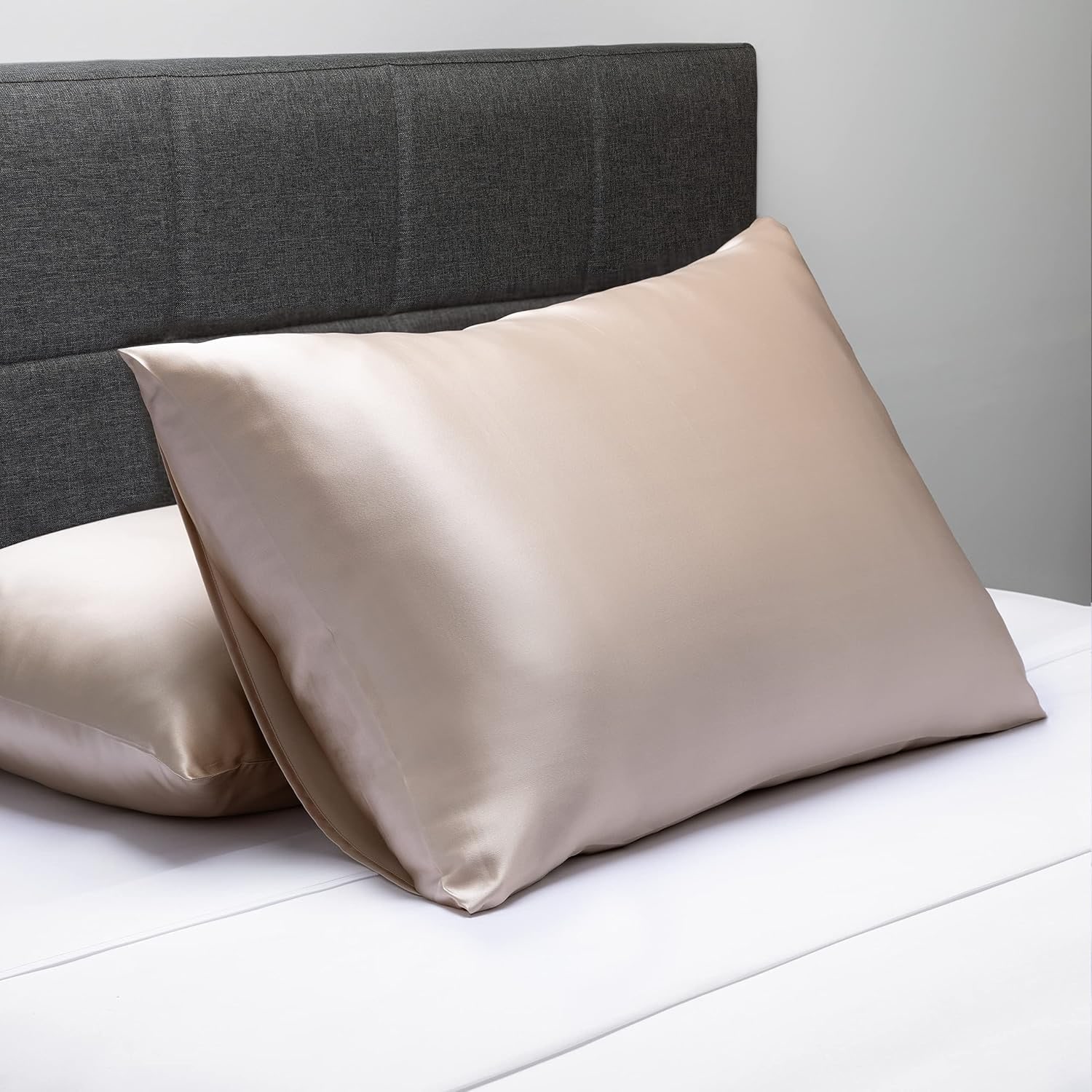
On silk, neutrals do something interesting. Because the fibre reflects light along its length, a flat colour picks up subtle shifts across the surface as the fabric moves. Taupe in morning light reads warmer and softer. Under a lamp in the evening it goes deeper and quieter.
It pairs comfortably with white sheets, cream linen, oatmeal throws and natural timber. If your bedroom leans cool and grey, taupe will add warmth as a contrast rather than blending in, which can be exactly what a cool room needs.
Looking after it
Silk is less fragile than its reputation suggests, but it does have rules.
The care options listed for this pillowcase are dry clean, hand wash, or machine wash on a gentle cycle. Hand washing in cool water with a mild detergent is the kindest approach and takes about five minutes. If you want to machine wash, put it in a mesh laundry bag, choose the delicate cycle, and keep the water cool.
Three things to avoid. Bleach, which damages the protein fibre. Fabric softener, which coats the surface and takes away the smoothness you paid for. Hot water and tumble drying, which cause shrinkage and dull the finish.
To dry, lay it flat on a towel, reshape it, and keep it out of direct sun. Sunlight fades silk faster than most fabrics. If it needs pressing, use the lowest iron setting on the reverse while the fabric is slightly damp. Most of the time it settles itself once it is back on the pillow.
Wash every one to two weeks, more often if you use rich night creams or heavy hair products.
Two of them, or one
A single pillowcase is plenty if you are testing the idea or only you sleep on silk. Pairs make sense on a shared queen bed, both because it looks balanced and because the second person will almost certainly want one once they have tried yours.
This listing is for one pillowcase, so order two if you need the pair.
The short version
Momme is the number that matters, and 25 is a heavyweight. Check that silk runs on both sides, not just the top. An envelope closure keeps hardware away from your face. Measure your pillow before you choose a size. Wash cool, dry flat, skip the softener.
This taupe queen pillowcase ticks those boxes. It is 100% mulberry silk at 25 momme, 700 thread count, silk on both faces, with an offset envelope closure and a size cut for a 76.2cm by 50.8cm queen pillow. If that matches your bed, it is a straightforward choice.