


The complete guide
How to Choose a Silk Pillowcase, A Plain Buyer's Guide
The problem with the pillowcase you already own
Most of us never think about pillowcases. They come in a set with the sheets, they go on the bed, and they stay there until wash day. That works fine until you notice something. You wake up with creases pressed into one cheek. Your hair, which looked fine when you went to bed, has decided to go in four directions. Or the fabric feels warm and slightly damp by two in the morning, and you flip the pillow for the hundredth time.
Cotton is a good fibre. It is also a slightly grabby one. Run your palm across a cotton pillowcase and you can feel it catch. Multiply that small catch by the dozens of times you turn your head overnight, every night, and you start to see where the creases and the tangles come from.
A silk pillowcase changes that one variable. The surface is smoother, so your face and hair move across it rather than dragging against it. That is the whole idea. It is not complicated, and it does not require you to change anything else about your bed.
What momme actually tells you
If you shop for silk bedding for more than ten minutes, you will run into the word momme. It is pronounced "moh-mee" and it is a weight measurement, a traditional Japanese unit used for silk the same way GSM is used for other fabrics.
Here is the short version. Silk bedding generally runs from about 16 momme up to around 30. Below 19 the fabric starts to feel thin, more like a lining than a pillowcase, and it wears out faster because there is simply less fibre there. Above 25 it gets heavier, stiffer and noticeably more expensive, which is lovely if that is what you want but is more than most people need.
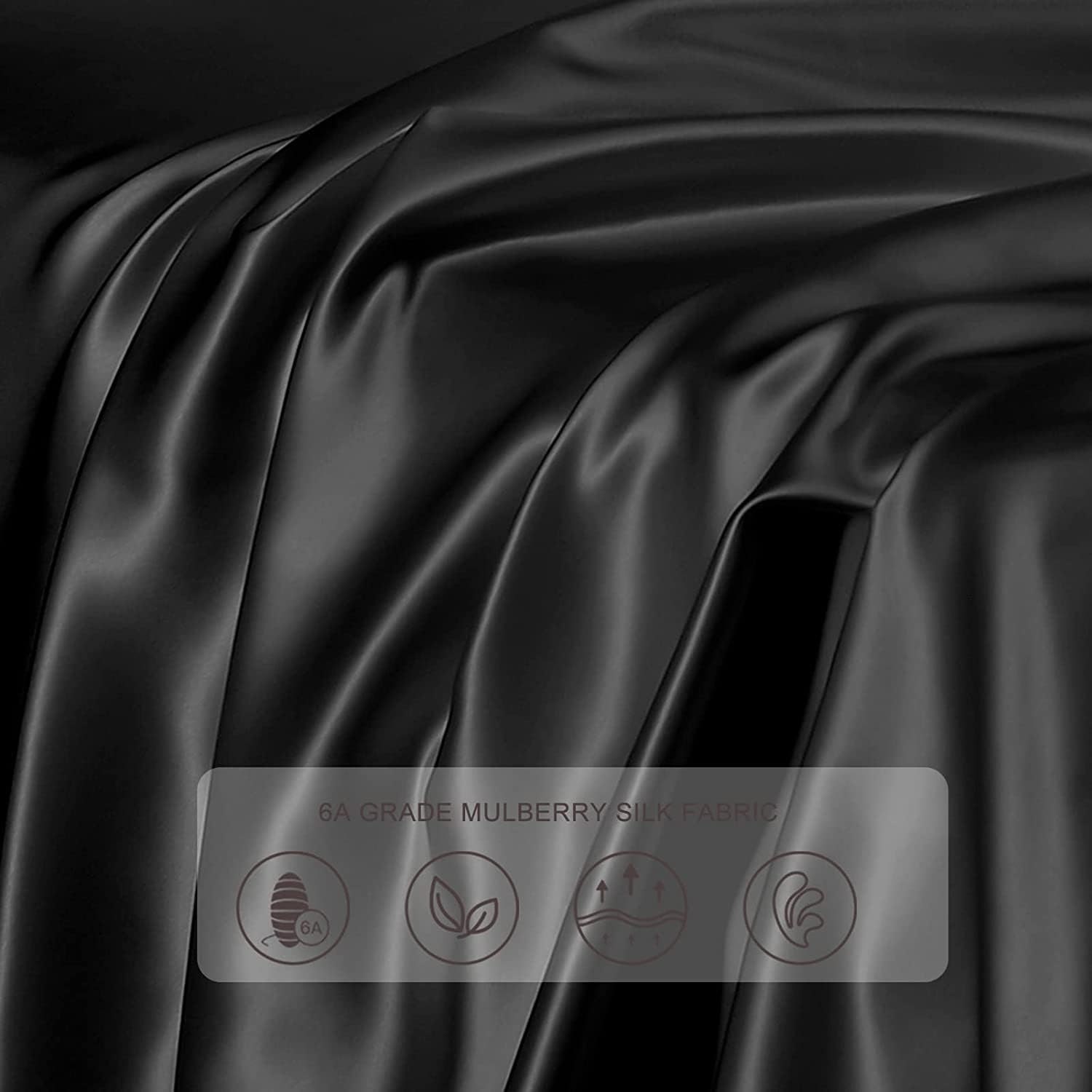
Twenty-two momme is the number that keeps coming up because it sits in the comfortable middle. The fabric has enough weight to feel like a real textile in your hands. It drapes over a pillow properly rather than clinging to it. And it stands up to regular washing without going limp. This particular case is 22 momme with a 600 thread count weave, which together describe a dense, substantial silk.
Thread count on silk is less useful than it is on cotton, honestly. Silk filaments are extremely fine, so you can hit a high number without the fabric being especially heavy. That is why momme is the figure to compare between products. If a listing gives you a thread count but no momme at all, that is worth noticing.
Mulberry silk and why it is specified
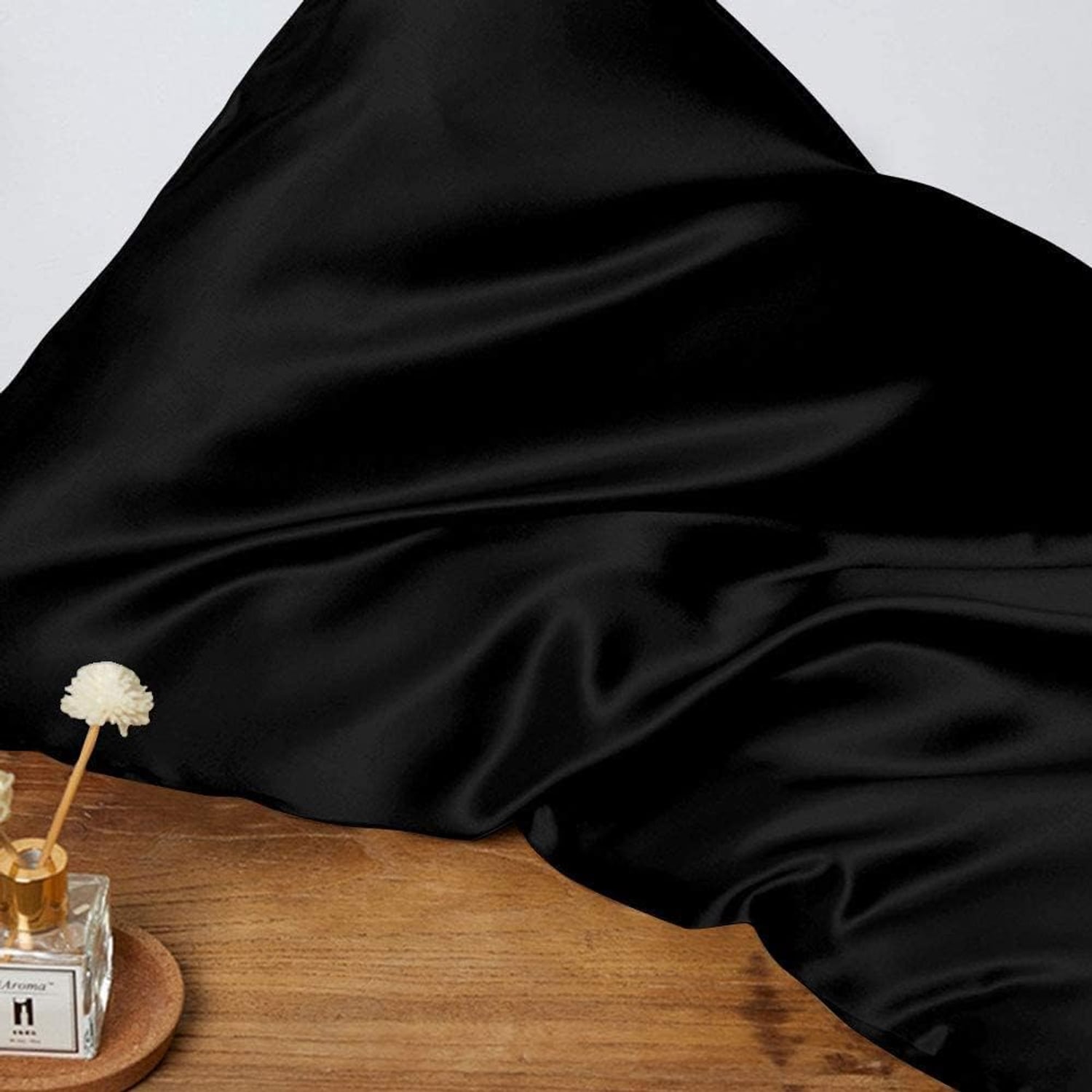
Mulberry silk comes from silkworms raised on a mulberry leaf diet in controlled conditions. The result is a long, continuous filament rather than short broken fibres. Long filaments make a smoother, more even fabric with that distinctive soft shine.
Other silks exist. Wild or tussah silk comes from moths feeding on various leaves and produces shorter, coarser fibres with a more textured surface. It has its uses, but not usually for something you press your face into for eight hours.
Be a bit careful with the word satin. Satin is a weave structure, not a material. Polyester satin can look glossy and slippery on a screen, and it is far cheaper. It also does not breathe the way a natural fibre does, so it can feel warm and clammy by the small hours. If you want silk, check the listing says silk in the material field, not just satin in the title.
Getting the size right
This is where more returns come from than anything else. Pillow sizing is not standardised as neatly as you would hope, and names vary between countries.
This case is a standard size, 20" x 26", or 66 cm by 50.8 cm. That matches the standard bed pillows most New Zealand retailers sell. But some brands make a slightly plumper standard pillow, and a few European-influenced ranges use quite different proportions.
Take two minutes before you order. Lay your pillow flat, measure the long side and the short side, and compare. You want the case to be roughly the same size or a touch larger, never smaller. A case that is too tight stretches the silk at the seams, and silk seams do not love being stretched. A case that is a little loose is fine and actually drapes nicely.
Zip, envelope or neither
Pillowcases close in a few different ways and people have strong opinions.
An envelope closure is a flap of fabric that folds over the open end. Simple, no hardware, nothing to break. The downside is that pillows work their way out. You put it on neatly, and by morning the pillow has shifted and you are sleeping partly on bare pillow.
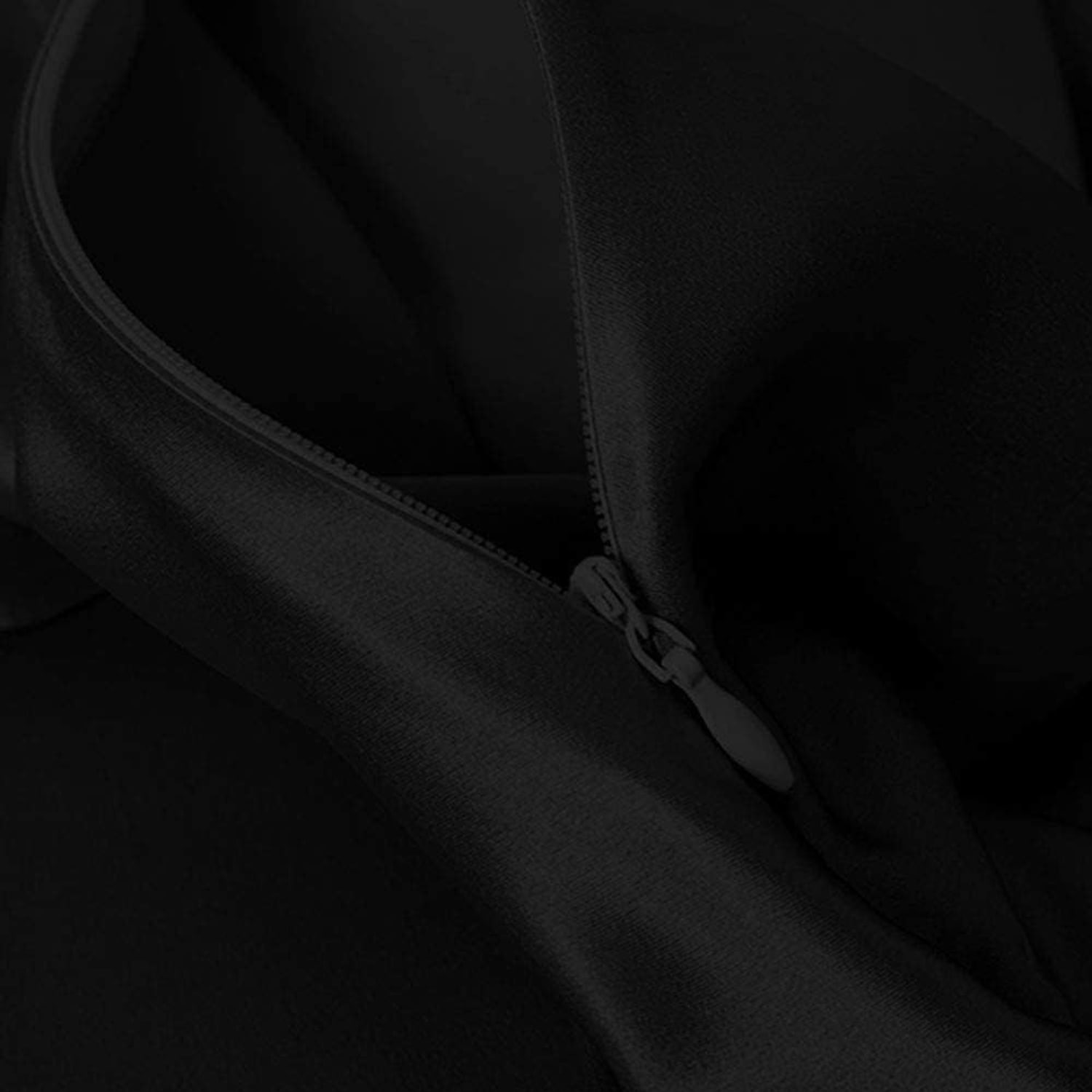
A zip, which is what this case uses, solves that. The pillow goes in, the zip closes, and nothing moves. It is also considerably quicker to strip at wash time, which matters more than you would think when you are changing a bed in a hurry. The zip here is concealed, meaning it sits under a fold of fabric rather than exposed on the surface. You are unlikely to feel it unless you sleep right on the edge.
The one thing to watch with any zip is keeping it away from other laundry. A mesh wash bag handles that completely.
Why black is a smart choice
Colour on bedding is personal, but black deserves more credit than it usually gets.
Night cream, serum, a bit of hair oil, the ordinary residue of a face on a pillow. All of it shows on white and ivory within a couple of weeks, and once it does you find yourself washing out of embarrassment rather than need. Black simply does not display those marks. The case looks the same on day one and day twelve.
It is also easy to live with. Black works with white sheets, grey sheets, navy, linen in any natural shade. You are not committing to a colour scheme. And it reads as deliberate rather than accidental, which is a nice thing for something sitting at the top of your bed.
The practical note is that dark dyes reward careful washing. Cool water, gentle detergent, no bleach, and dry out of direct sun. Follow that and the colour holds.
Looking after it
Silk has a reputation for being fussy. It is not, really, it just does not like heat or harsh chemicals.
Wash it in cool water. A machine is fine on a gentle or delicates cycle, with the case tucked inside a mesh bag so it does not get caught on anything. Hand washing is gentler still if you have the five minutes, and it is genuinely easy since a pillowcase is small.
Use a mild detergent intended for wool or delicates. Skip bleach entirely, skip anything with optical brighteners, and leave the fabric softener out. Silk does not need softening and the residue dulls the surface over time.
Never tumble dry. Lay the case flat on a towel or hang it somewhere shaded and airy. Silk dries fast, often within a couple of hours. If it comes out creased, a cool iron on the reverse side while the fabric is slightly damp sorts it out, though most creases drop as soon as the case is back on the pillow.
Buying two is the single best thing you can do for longevity. One on the bed, one in the wash, and neither gets the hard wear that comes from constant use.
The short version
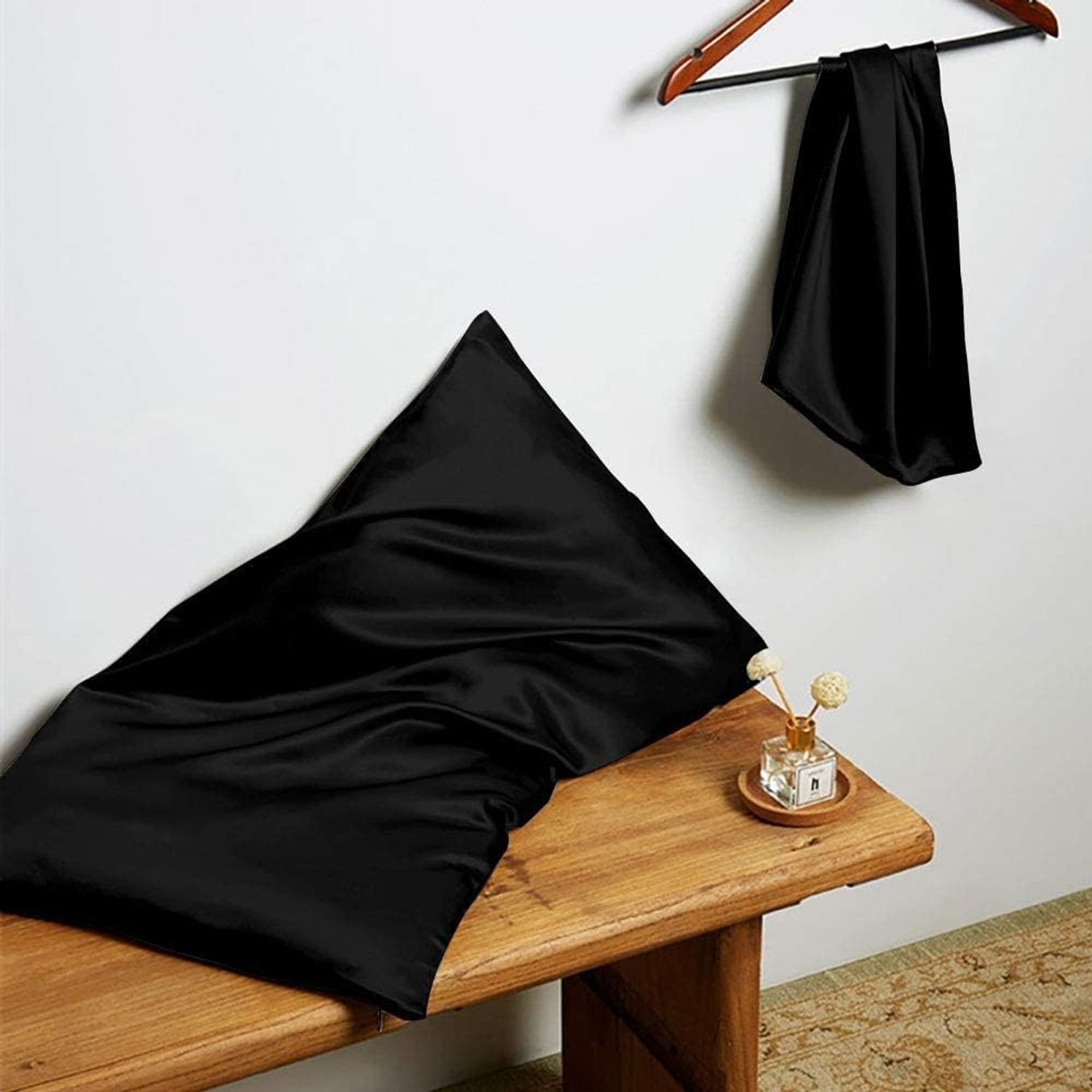
A silk pillowcase is a small change with a noticeable feel. This one is 100% mulberry silk at 22 momme, a weight that gives you real substance without the price jump of heavier grades. The standard size of 66 cm by 50.8 cm fits most standard pillows, but measure yours first. The concealed zip keeps the pillow where it belongs and makes washing painless. And black is the colour that still looks good a month in.
Wash it cool, dry it flat, keep it out of the sun. Do that and it will be part of your bed for a long time.