
The complete guide
How to Choose a King Silk Pillowcase, A Practical Buyer's Guide
The problem with the pillowcase you already own
Most people never think about their pillowcase. It is the last thing you buy and the first thing you forget. Then you notice a few things. Hair that was fine when you went to bed has twisted into a knot by morning. There are creases pressed into one cheek that take an hour to fade. The cotton case feels warm and slightly sticky by two in the morning, so you flip the pillow and start again.
None of this is dramatic. It is just friction and heat, two things a woven cotton surface does not handle especially well. Cotton fibres are short and the weave has texture, so anything soft that moves across it gets caught and dragged. Your hair does. Your skin does. Multiply that by seven or eight hours a night and you start to see why people switch.
A silk pillowcase changes the surface. That is the whole idea. Silk filaments are long, continuous and smooth, so things slide instead of catching. It is not magic, it is just a different fibre doing what it naturally does.
What momme actually tells you
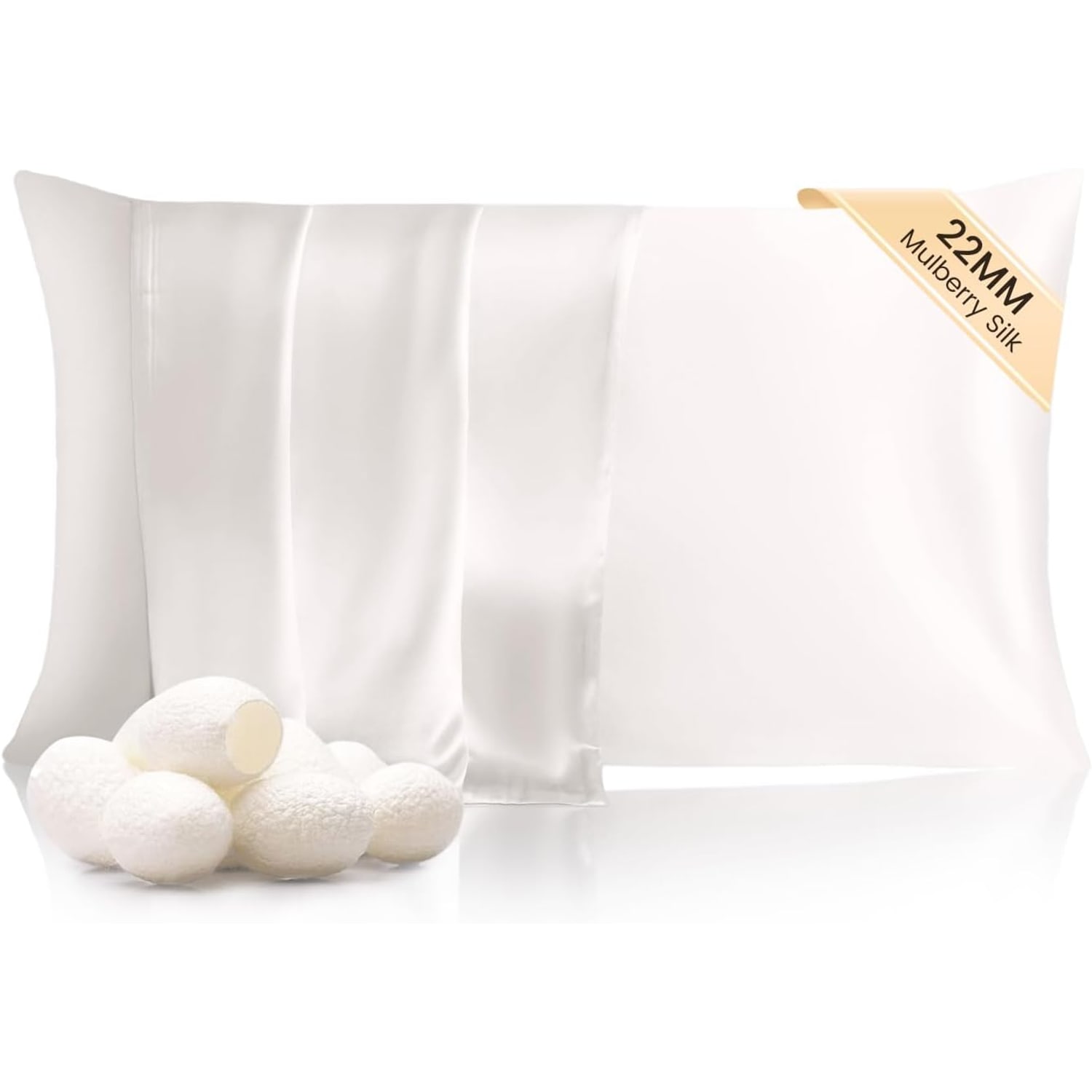
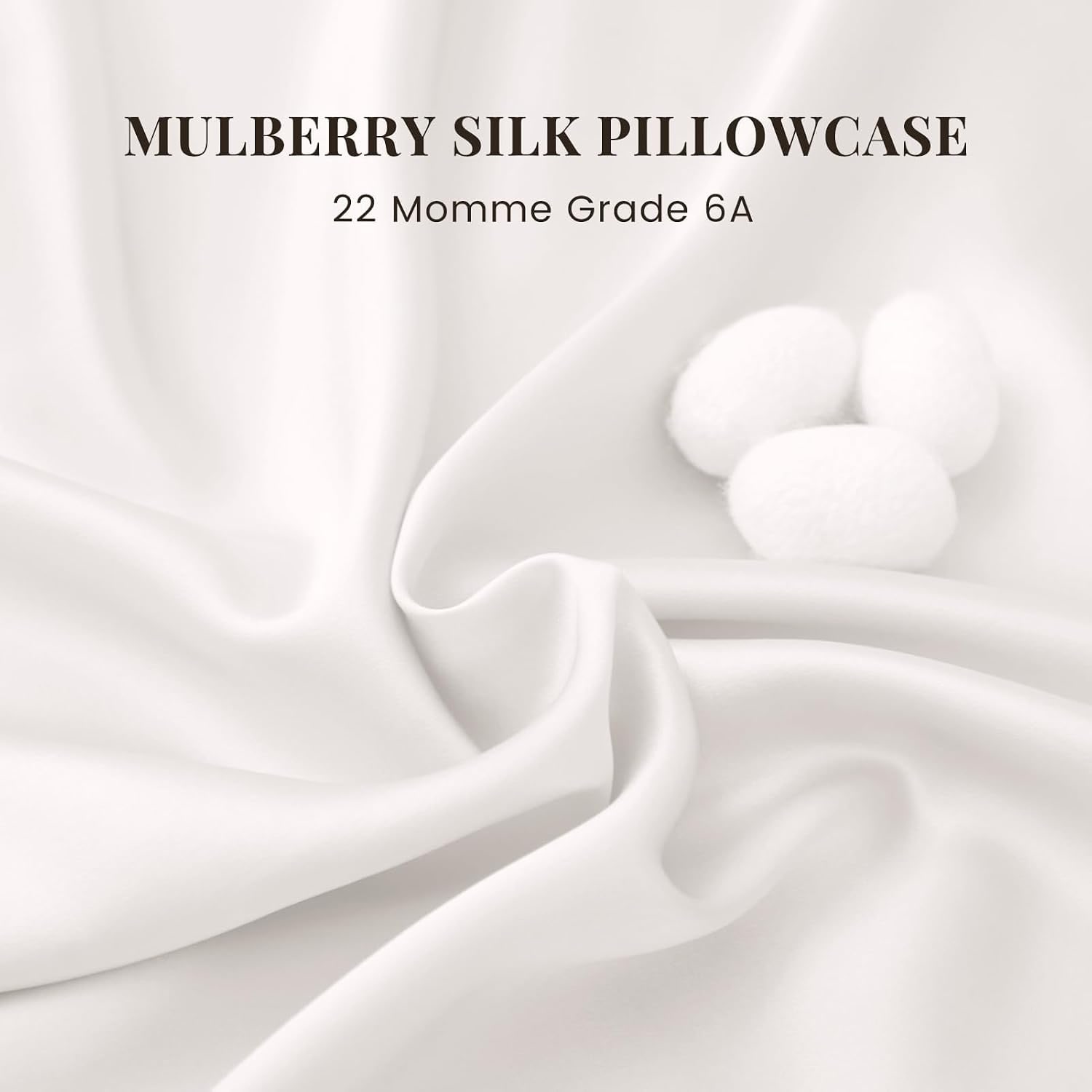
Walk into silk bedding and you will immediately hit the word momme. It gets used like a quality score, which it is not. Momme is a weight measure, specific to silk, and it tells you how heavy the fabric is for a given area. Higher momme means more silk in the cloth.
For pillowcases, the useful range runs roughly from 16 up to 25. Below 16 the fabric starts to feel insubstantial, and it will show the colour of the pillow underneath. Above 25 it gets dense and expensive, and the extra weight does not add much for something you sleep on.
This case is 22 momme, which lands in the middle of the useful range. The fabric has real body. It drapes over a pillow and falls into a smooth sheet rather than clinging to the shape underneath. You feel the difference the first time you handle it. A thin silk feels slippery and almost insubstantial. A 22 momme silk feels like fabric.
The listing also gives a 600 thread count. With cotton, thread count is the headline number. With silk, momme is the more honest guide, because silk filaments are so fine that thread count figures can climb without the fabric actually getting any better. If you only remember one number, remember 22.
Getting the size right
This is where more orders go wrong than anywhere else. Pillow sizes are not standardised across countries, and the words sound similar enough to trip you up.
A king pillow is the long one. This case is cut to 91.4 cm by 50.8 cm, which is the metric version of 20 by 36 inches. If your pillow measures somewhere close to 90 cm end to end, this is the case you want.
If your pillow is around 66 cm long, that is a standard. Around 76 cm is a queen. Either of those inside a king case will leave loose fabric bunching at one end, which looks untidy and creates exactly the ridges and creases you were trying to avoid.
So before you order, pull the case off your current pillow and measure the pillow itself with a tape. Thirty seconds, and it saves a return. Note that pillow fill matters too. A very thick, firm king pillow fills the case completely and the silk sits tight. A softer, flatter one leaves a bit of slack, which is fine and actually helps the fabric drape.
Why the closure matters more than you think
Pillowcase closures come in three main types. Open end, envelope flap, and zip.
Open end is the cheapest and the worst for a long pillow. The pillow works its way out while you sleep and you wake up with bare pillow against your face. Envelope flaps are better, but on a king length pillow the flap often is not deep enough to hold things in place.
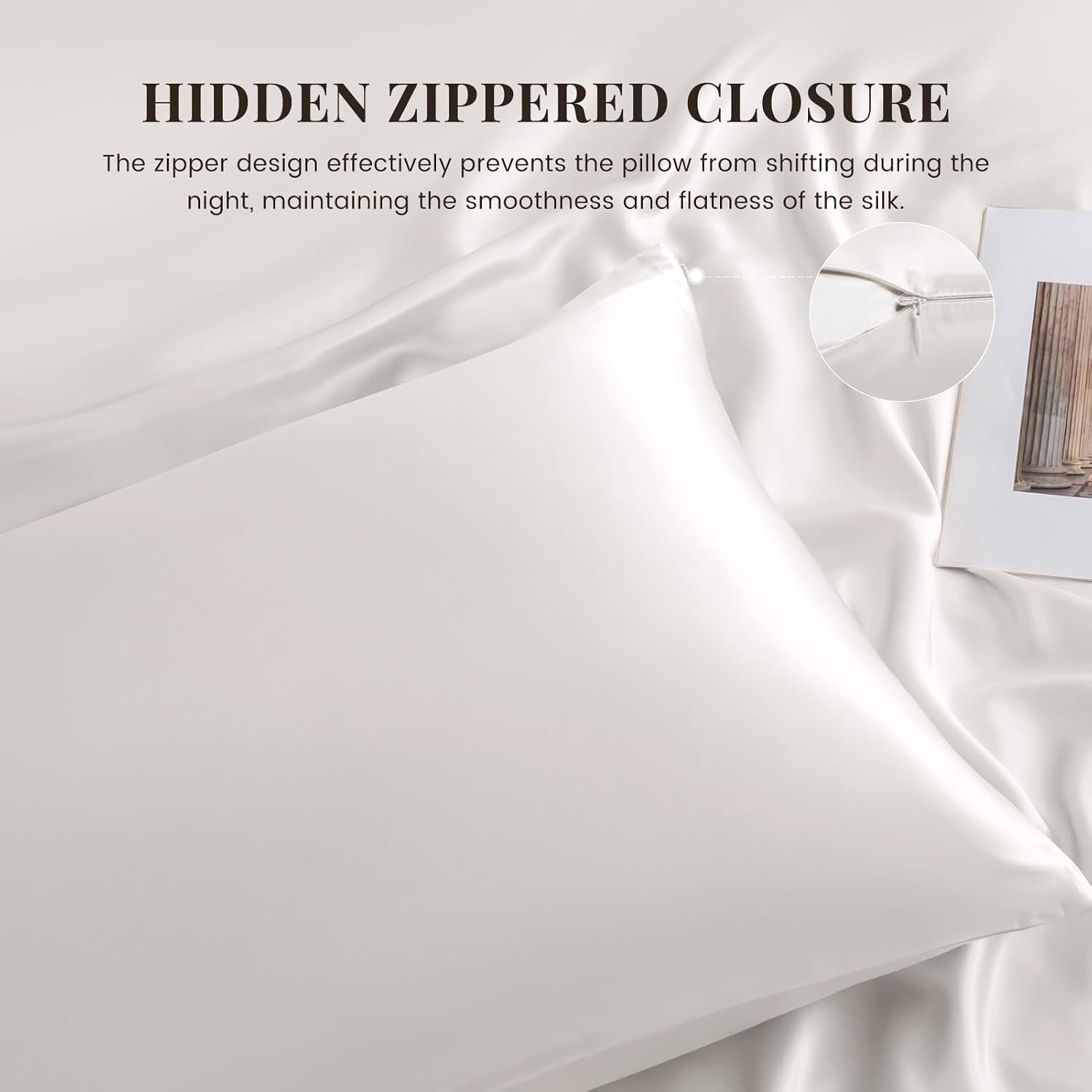
A zip closes the case properly. The pillow stays where you put it. This one uses a concealed zip, which means the zip tape is hidden inside the seam rather than sitting exposed along the edge. Two benefits there. It looks cleaner on a made bed, and there is no hard plastic rubbing against the fabric.
Practically, the zip also speeds up laundry. Unzip, slide the pillow out, wash, slide it back in. Anyone who has fought a long pillow into an envelope case will appreciate that.
Who a silk pillowcase actually suits
Someone with long hair gets the most obvious benefit, because hair length is what gets caught and wound. If you have ever untangled a knot at the nape of your neck in the morning, you already know the problem.
People who sleep warm often like silk too. It is a breathable natural fibre and tends to feel cool to the touch when you first lie down. Whether it keeps you cool all night depends on your room, your duvet and how you sleep, so treat that as a nice property rather than a promise.
It also suits anyone who just wants their bed to feel a bit better without redoing the whole room. A silk pillowcase is the cheapest upgrade in bedding by some distance. You are changing the one surface your face is actually touching.
Who should think twice? If you are rough on your laundry and never read a care label, silk will frustrate you. It needs cool water and a gentle cycle. That is not difficult, but it is not optional either.
Looking after it
Silk is tougher than its reputation suggests, but it has rules.
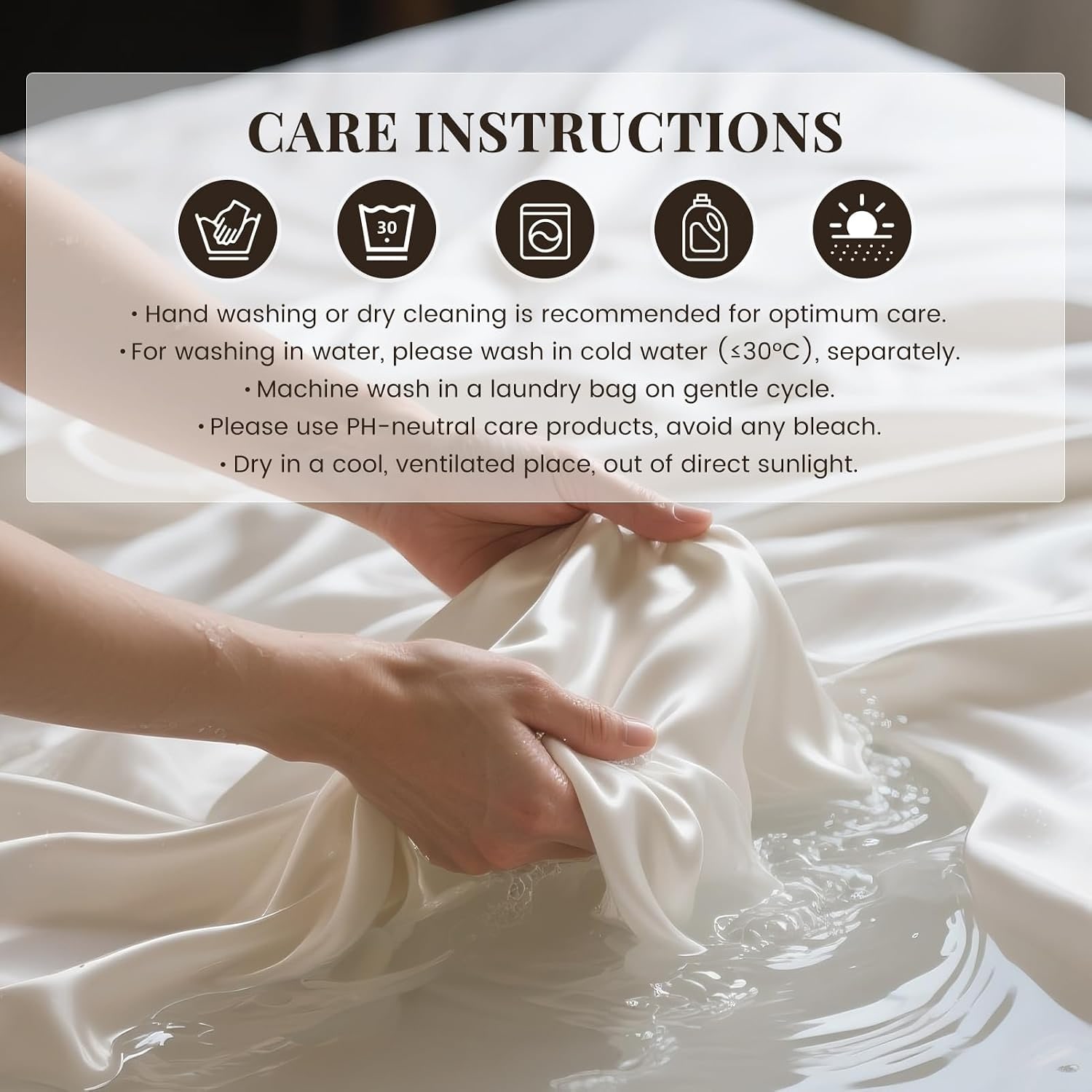
Wash in cool water. Hot water is the main thing that damages silk, both the fibre and any dye. Use a mild liquid detergent, preferably one made for delicates. Avoid bleach entirely, and skip fabric softener, which coats the fibres and takes the shine off over time.
If you machine wash, use a gentle or delicate cycle and put the case inside a mesh laundry bag. The bag stops the silk tangling with zips and buttons on other garments. Wash it with similar light items rather than throwing it in with towels and denim.
Drying matters as much as washing. Do not tumble dry. Lay the case flat on a dry towel, or hang it in the shade out of direct sun. Direct sunlight fades and weakens silk. It usually dries in a few hours because the fabric is thin.
If you want it crisp, iron on the lowest heat setting with the case turned inside out, preferably while it is still a little damp. A held steamer works well too. Dry cleaning is a fine alternative if you would rather not handle it yourself.
Wash weekly, more often if you use hair oils or heavy moisturisers. Buying two cases and alternating them is the easiest way to keep up without constant laundry.
Buying one versus buying two
If you share a king bed, two is the sensible order. A single silk pillowcase next to a cotton one looks slightly odd, and the person without it will notice within a week.
If you are the only one who wants it, one is plenty. Many people start with a single case to see whether they like sleeping on silk, then add a second. Having the pair also means you can wash one and keep using the other, which makes the care routine far less of a chore.
White is the easy choice when you are buying a gift or are not sure what the bedroom looks like. It sits with everything. It also shows you when it needs washing, which is quietly useful.
The short version
Measure your pillow first. If it is around 90 cm long, you want this king size at 91.4 by 50.8 cm.
22 momme is a sensible weight for a pillowcase. Substantial enough to drape well, not so heavy it feels stiff.
The concealed zip keeps the pillow in and the edges tidy, which matters more on a long pillow than a short one.
Wash cool, use a mesh bag, dry flat and away from the sun. Do that and a silk pillowcase lasts a long time.
And if it arrives and it is not right, check it before you wash it, then get in touch within 14 days.