

The complete guide
How to Choose a Brushed Mulberry Silk Scarf
The problem with most winter scarves
There is a gap in almost everyone's wardrobe between a thin summer scarf and a thick wool one. The thin one looks right but does nothing once the wind picks up. The thick one works, but it fills the gap between your coat collar and your chin, rides up over your mouth, and leaves fluff on a dark jacket.
What most people actually want on a cold day is something that adds warmth at the neck without adding volume. That is the job a brushed mulberry silk scarf does well. It is thin enough to tuck inside a coat and still close the lapels properly, and the brushed surface gives it enough insulation to matter on a frosty morning.
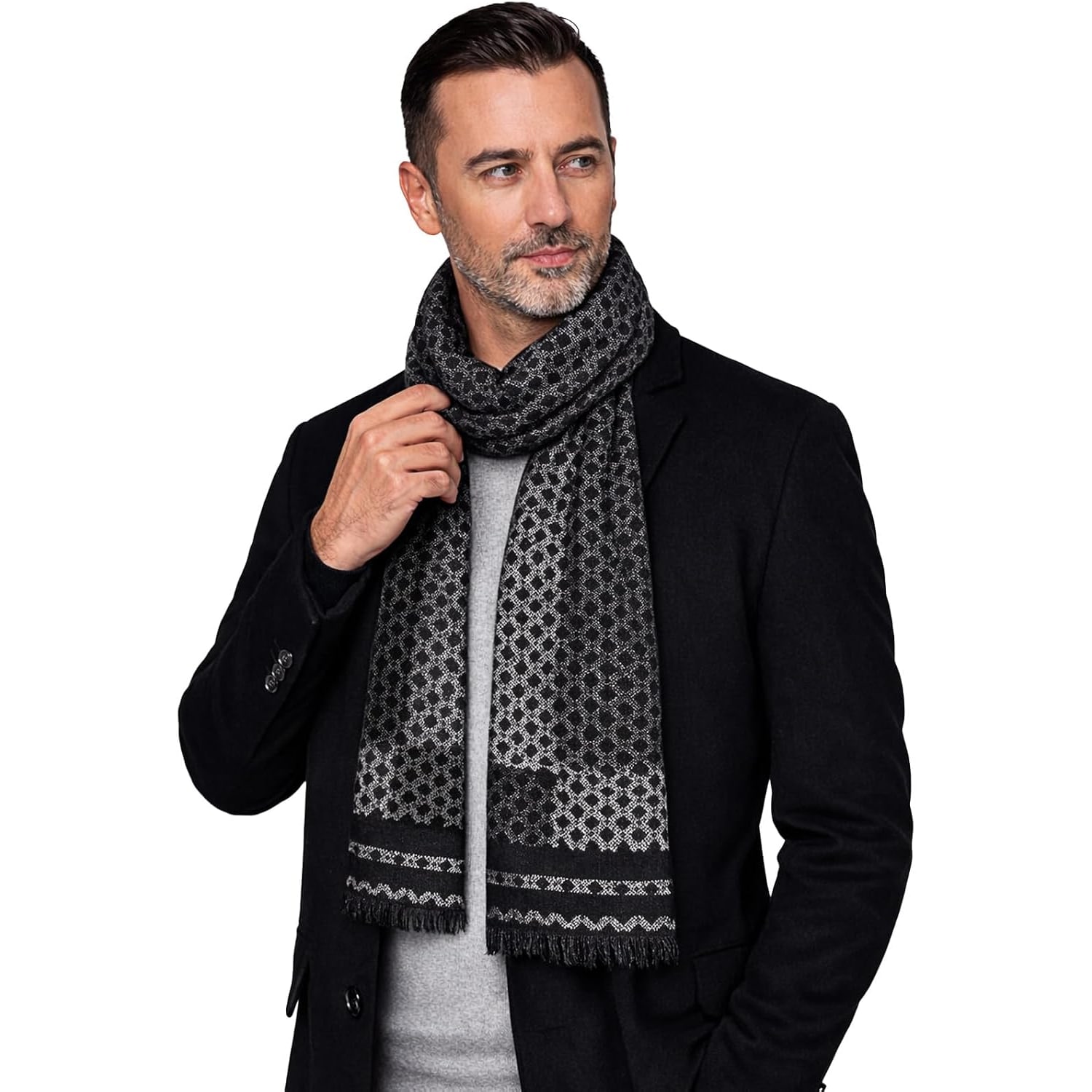
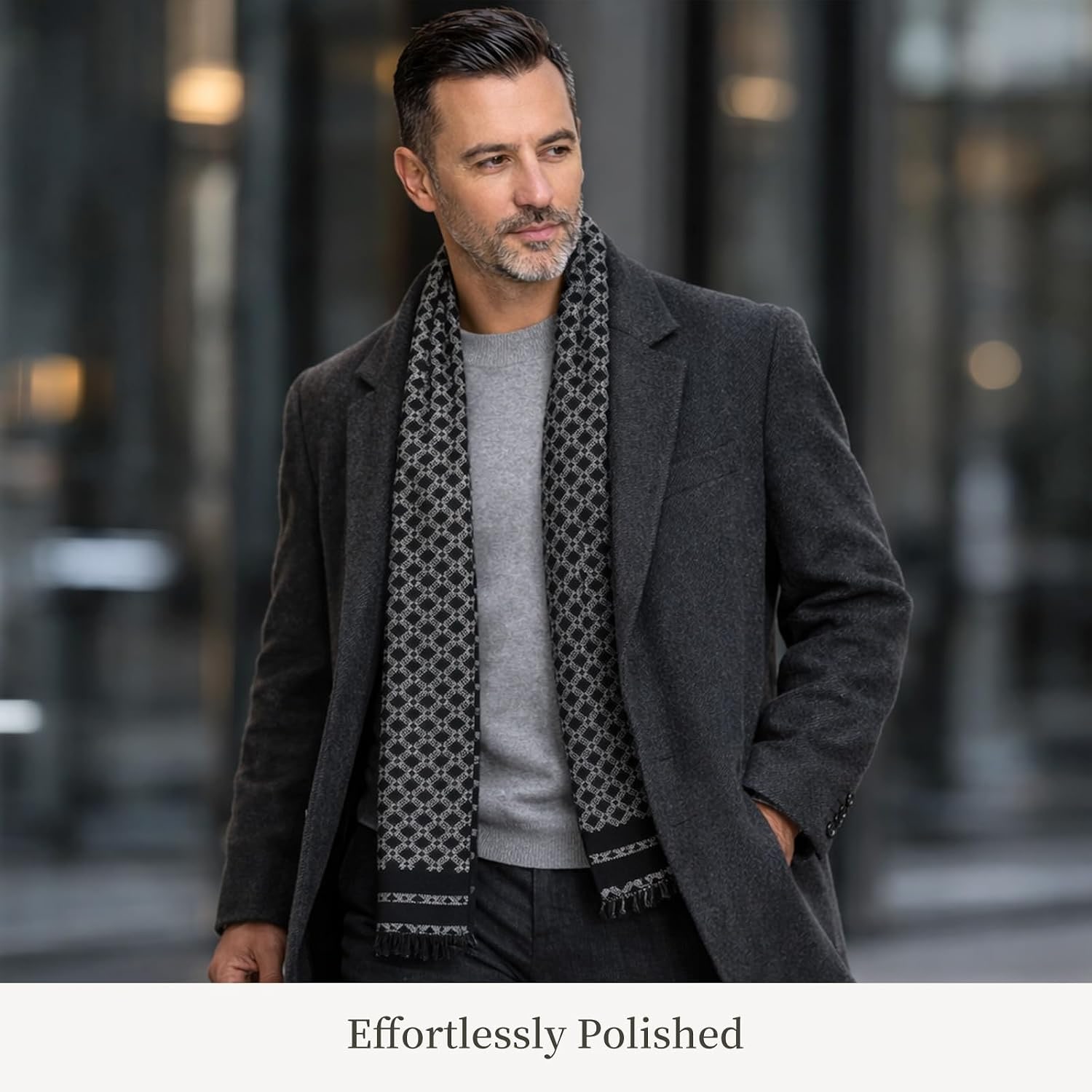
The grey and black geometric pattern here helps with the other half of the problem, which is that a scarf you have to think about is a scarf you do not wear. Neutral, woven geometry goes with nearly everything already hanging in your wardrobe.
How brushed silk works
Silk starts as a long, smooth filament. That is why ordinary silk feels cool and slippery and why it reflects light the way it does. Woven flat, it drapes beautifully but traps very little warm air.
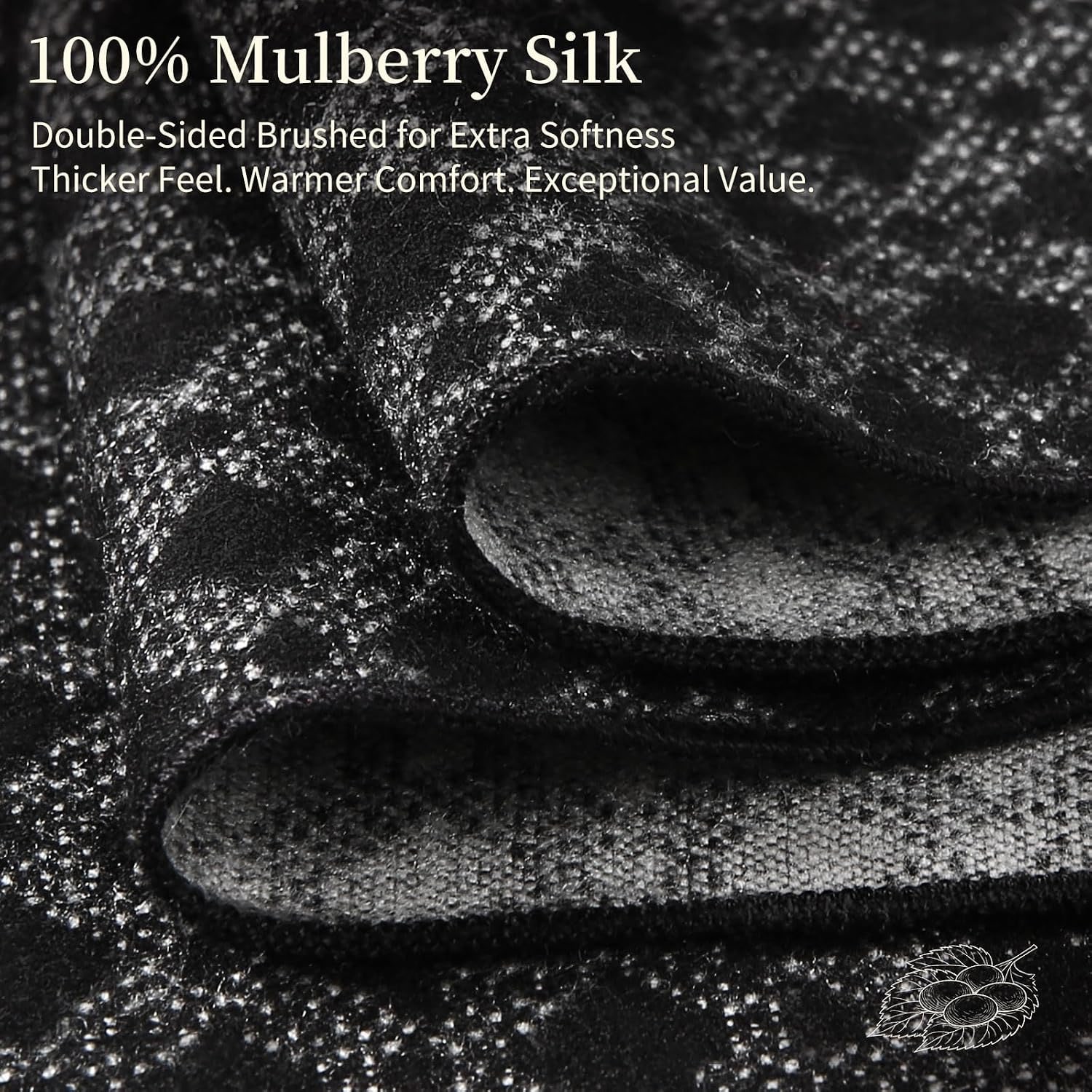
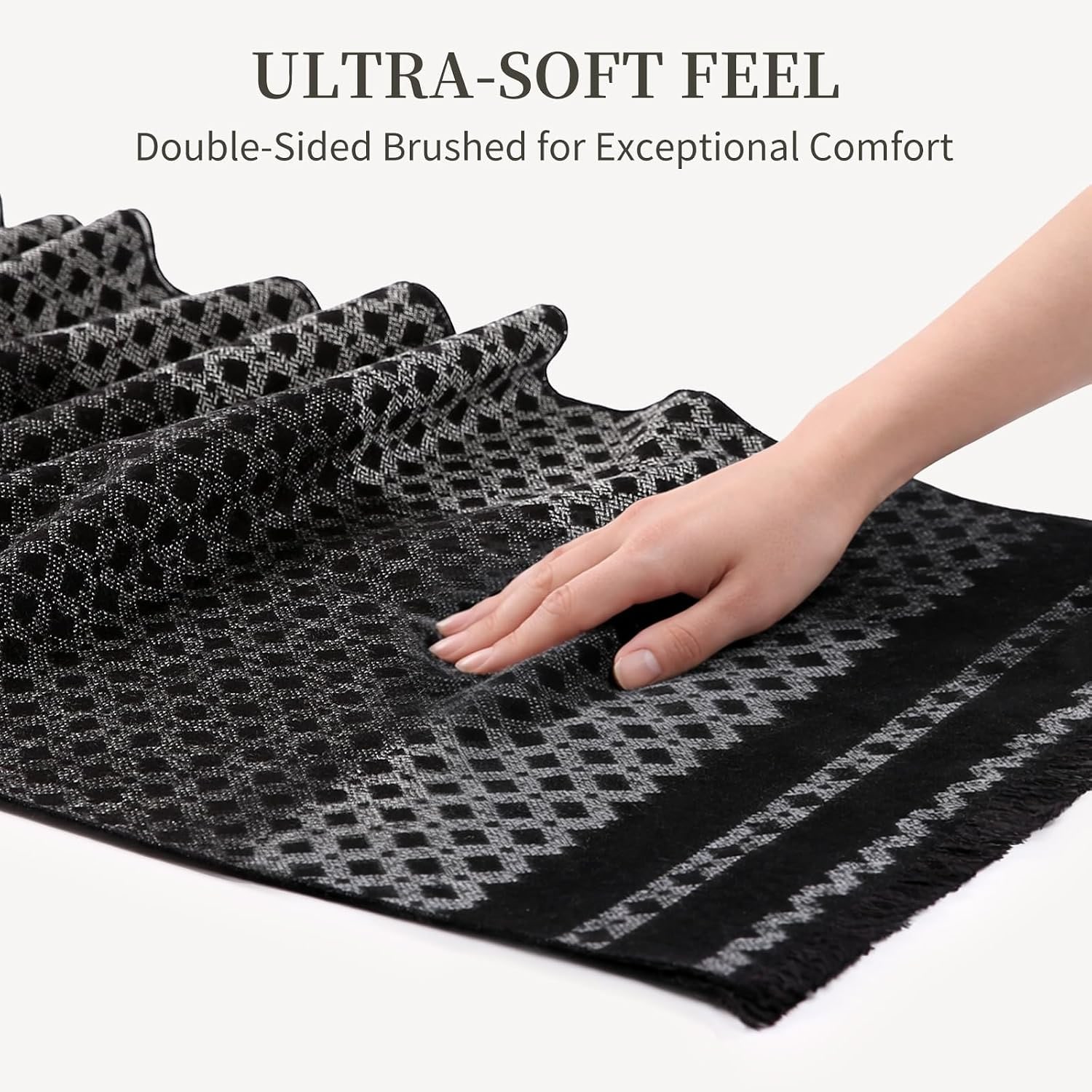
Brushing changes that. After the fabric is woven, the surface is passed over fine brushes that lift the ends of the fibres slightly. The result is a softer, more matte hand and a surface that holds a thin layer of still air against your skin. Still air is what actually keeps you warm. Every insulating fabric, from down to fleece to wool, works on the same principle.
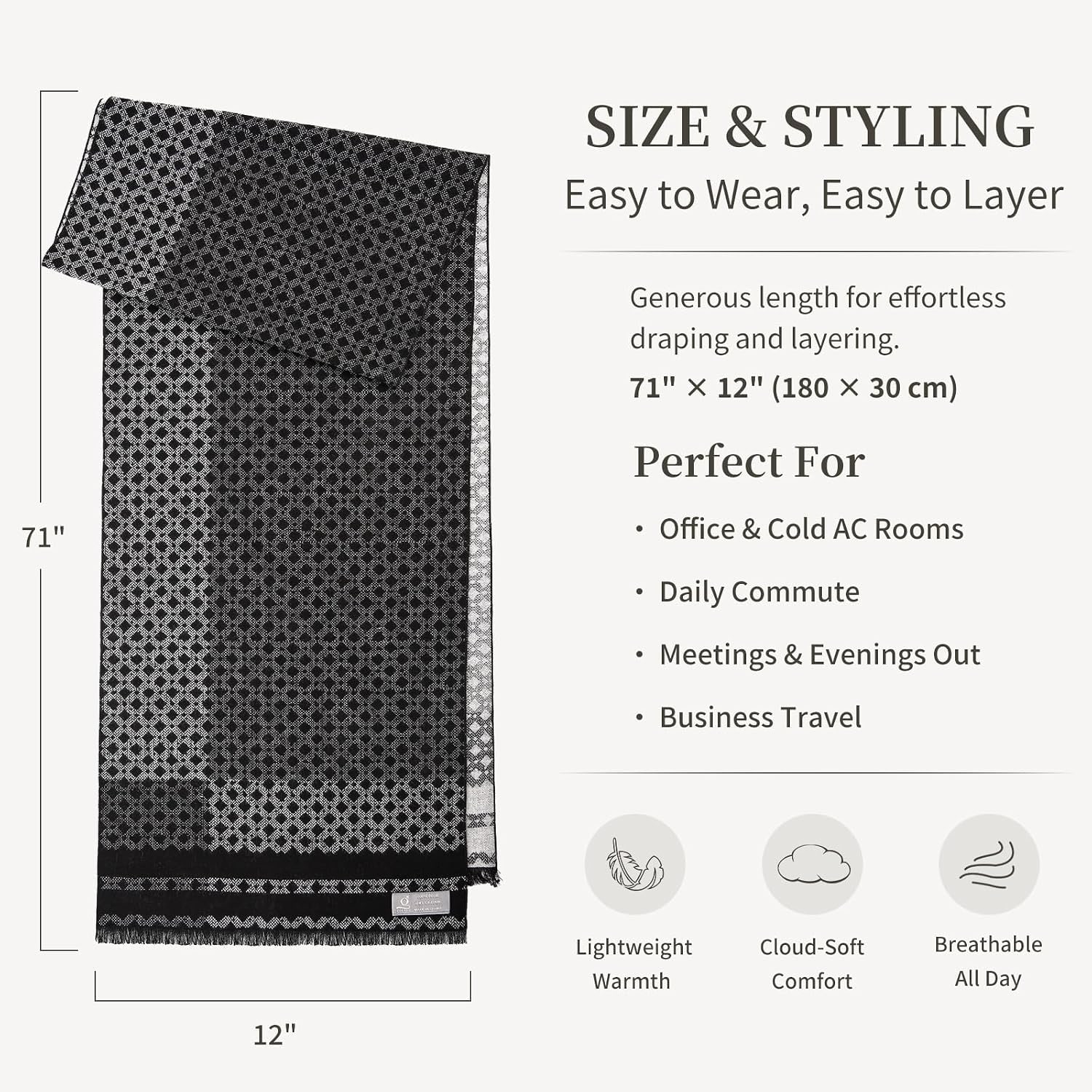
What brushing does not do is add thickness. The fabric is still silk and still thin, so it folds flat, tucks under a collar and does not create a bulge at the throat. That is the trade-off that makes it worth the price for a lot of people: you give up some of the raw warmth of wool and get back ease of wear.
It is worth knowing that silk also slides. Where wool grips a jumper and pulls at the knit, silk travels over it. You notice this most when you are putting a coat on or taking it off in a hurry. The scarf stays tied and the knit underneath stays flat.
Who this scarf suits
It suits anyone whose cold weather happens in short bursts. If your day is a walk to the car, an hour in a cool office, a dash across a car park and an evening out, you do not need alpine insulation. You need something that takes the edge off and then stops being in the way.
It suits people who wear fine knits and good shirts, because silk is the least abrasive thing you can put over them. It suits frequent travellers, because it folds into nothing and comes back out of a bag looking fine. And it suits people who have given up on scarves because wool irritates their neck.
It is a reasonable pick for the best silk scarf for travel exactly because of that packability. Airport terminals and long-haul cabins run cold, and a scarf that lives in a laptop bag without taking up space is more useful than one that only comes out in July.
Where it suits less well is deep, sustained cold. If you stand outside for an hour in a southerly, you want wool or a layered wool and silk combination. There is no shame in owning both.
Reading the pattern
A woven geometric design behaves differently to a printed one. In a print, the colour sits on the surface, so the pattern is sharp, flat and consistent on both faces in different intensities. In a weave, the pattern is made by the structure of the cloth itself, so it catches light at different angles and reads as texture from across a room.
That matters practically. Woven patterns hold their definition as the fabric ages, because there is no surface layer to wear away. They also tend to look quieter, which is usually what you want from a daily scarf. A loud print is fun twice and then feels repetitive.
Grey and black is close to the most flexible pairing available. It sits against navy, charcoal, camel, denim and black without clashing, and it provides contrast against cream and white without shouting. If you are building a small wardrobe where each piece has to work hard, a neutral geometric is the sensible choice over a colour you will eventually tire of.
How to choose between silk, wool and cashmere
Three honest comparisons.
Wool is the warmest for the money and the most forgiving of rough treatment. It is also the bulkiest, the most likely to pill, and the most likely to feel prickly against bare skin.
Cashmere is warm and soft but expensive, and fine cashmere pills faster than people expect. It also needs careful washing, so it is not the low-maintenance option some assume.
Brushed silk is the lightest of the three, the smoothest against the skin and the least likely to pill because the fibre is a long filament rather than a short staple. It needs hand washing. It gives up some insulation in exchange for being easy to wear and easy to pack.
If you already own a serious winter scarf, brushed silk is the useful second one. If you own nothing, it still covers most ordinary cold days.
Looking after it
Hand wash only. That is the stated care for this scarf and it is not a suggestion you can quietly skip. A washing machine, even on a delicate cycle, agitates enough to flatten a brushed surface and leave it looking tired.
The method is quick. Fill a basin with cool water, add a small amount of detergent made for delicates, and move the scarf through the water gently for a minute or two. Do not rub, scrub or twist. Rinse in clean cool water until it runs clear.
To dry, lay the scarf flat on a dry towel and roll the towel up to press the water out. Then unroll and leave it flat somewhere warm but out of direct sun. Hanging it wet can stretch one end and leave the scarf uneven.
If it needs pressing, use the lowest iron setting with a cotton cloth between the iron and the silk. Most of the time a short hang in a steamy bathroom is enough to drop creases out.
Between seasons, store it clean, flat or loosely rolled, in a drawer or a breathable pouch. Clean matters because invisible traces of food, perfume or skin oil can oxidise and show up as marks months later.
Delivery and getting it wrong
Orders are sent by tracked courier from Australian warehouses, and most arrive within 5 to 10 working days. Delivery is free NZ-wide on orders over NZ$175. Returns are open for 14 days from delivery as long as the scarf is unused and unwashed, so if the pattern is not what you pictured on screen, you have time to decide.
If you are buying it as a gift and you are not sure, the neutral colourway is your friend. It removes most of the guesswork about someone else's taste, and a scarf does not need a size.
The short version
A brushed mulberry silk scarf gives you light, real warmth at the neck without the bulk of wool. The silk slides over collars and knitwear instead of catching. The grey and black geometric weave is quiet enough to wear daily and holds its definition because it is built into the cloth rather than printed on top.
Hand wash it in cool water, dry it flat, keep it out of the sun, and it will stay soft for years. Buy it if you want a scarf you will actually reach for on an ordinary cold morning. Buy wool instead if your cold weather lasts all day and involves standing still outside.