
The complete guide
How to Choose a Mulberry Silk Pillowcase, A Practical Buyer's Guide
The small annoyance nobody talks about
Most people do not go looking for a silk pillowcase. They end up looking because of something small and repetitive. Hair that is knotted at the back every morning. A pillowcase that feels warm and slightly rough by two in the morning. Creases pressed into one side of your face that take an hour to settle. None of these are serious problems. They are just there, every single day, and after a while you start wondering whether the surface you spend eight hours pressed against might be part of it.
Cotton is a woven fabric made of short fibres twisted together. Under a microscope it looks like rope. Silk is a long, continuous filament, and woven tightly it produces a surface with almost nothing for hair to catch on. That is the whole mechanical difference, and it is the reason silk pillowcases exist as a category at all.
This guide walks through what the numbers on a silk pillowcase listing mean, how to pick the right one, and how to look after it so it lasts.
What momme actually tells you
If you have shopped for silk at all, you have seen the word momme. It is a weight measurement, pronounced roughly like "mummy", and it comes from the Japanese silk trade. It tells you how heavy a given area of the fabric is.
Thin silk for scarves sits around 12 to 16 momme. Heavy silk used for upholstery can climb past 30. Bedding almost always lands somewhere between 19 and 25, and 22 momme has become the figure most buyers settle on. It is dense enough to feel like a proper piece of fabric in your hands, dense enough to survive a weekly wash cycle for years, and light enough that it still drapes rather than sitting flat and board-like.
This pillowcase is 22 momme. If you are comparing the best 22 momme silk pillowcase options against cheaper listings, the momme figure is the first number to check, and anything much below 19 is worth a second look before you commit.
Thread count, and why it is secondary
Thread count gets more attention than it deserves on silk, mostly because shoppers are used to it from cotton sheets. It counts how many threads are packed into a square inch of fabric. This one is woven at 600.
A higher count on silk generally means a finer, smoother face. But a thin silk can still have a high thread count, which is why momme matters more for durability. Read the two together. A 22 momme fabric at 600 threads is a dense, fine weave, and that combination is what gives the surface its even, almost liquid feel when you run a hand over it.
Both sides, or just one
Here is where a lot of cheap pillowcases cut corners. They use silk on the face you sleep on and a synthetic blend on the reverse, then describe the product as a silk pillowcase without lying outright. It works, until you flip the pillow at 3am and land on polyester.
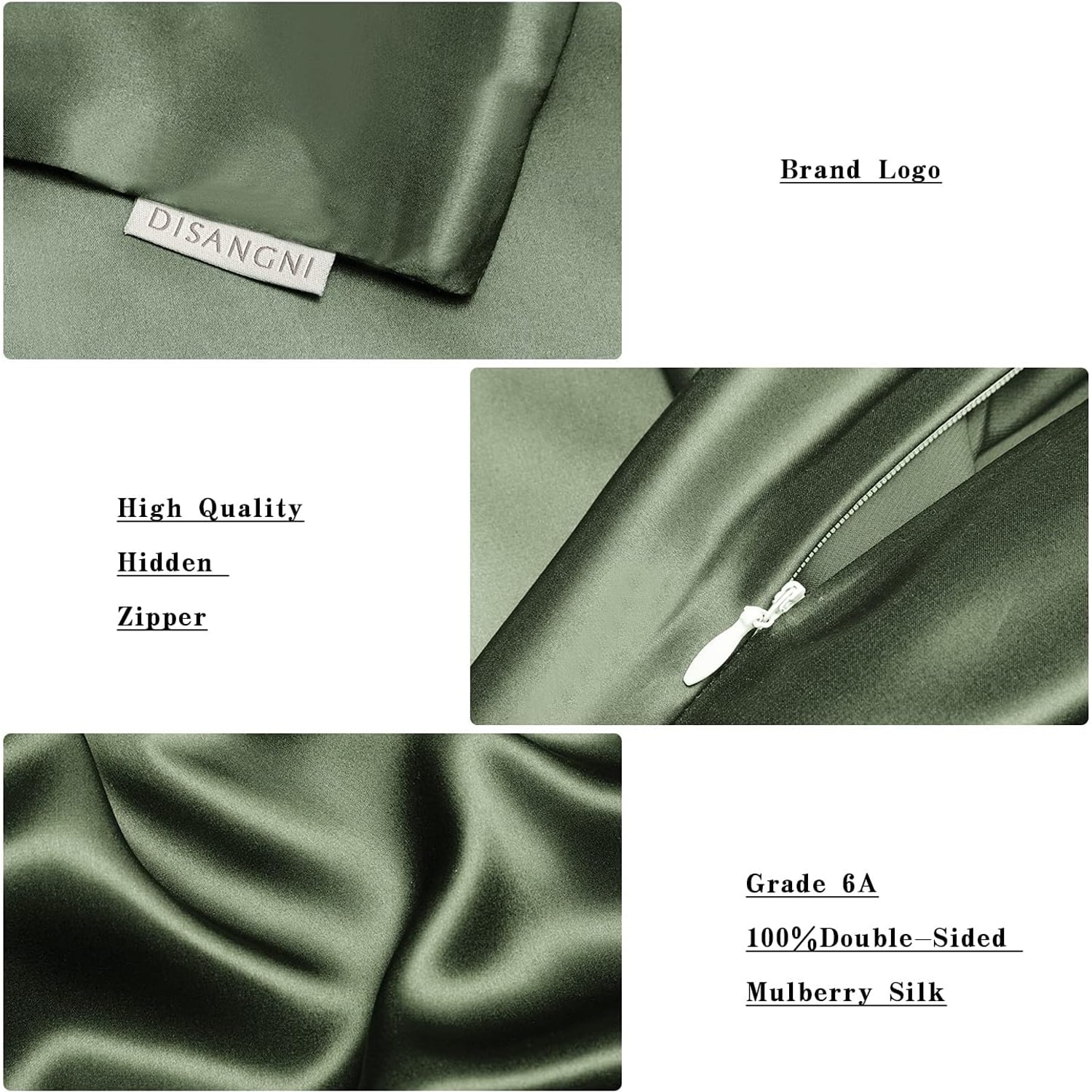
This one is 100% mulberry silk on both sides. That is worth paying attention to when you compare listings, because the price difference between a single sided and a double sided pillowcase can be smaller than you expect, and the experience is noticeably different.
Mulberry silk, for what it is worth, simply refers to silk produced by silkworms fed on mulberry leaves. It is the standard for bedding because the filaments are long, uniform and pale, which makes for an even weave and clean dyeing.
Closure, the detail that decides whether you keep using it
Pillowcases close in one of three ways. An open end, an envelope flap, or a zipper.
Open ends are the cheapest and the worst. The pillow works its way out overnight and you spend a minute every morning stuffing it back in. Envelope flaps are better, but the overlapping fabric bunches up under the surface and you can feel the ridge.
A zipper solves both. This pillowcase uses one invisible zipper, set into the seam so it does not sit under your head. The pillow stays enclosed all night, and on a made bed the case lies flat with no visible opening. If you are weighing up the best silk pillowcase with zipper against a cheaper flap design, this is the difference you will notice from night one.
Getting the size right
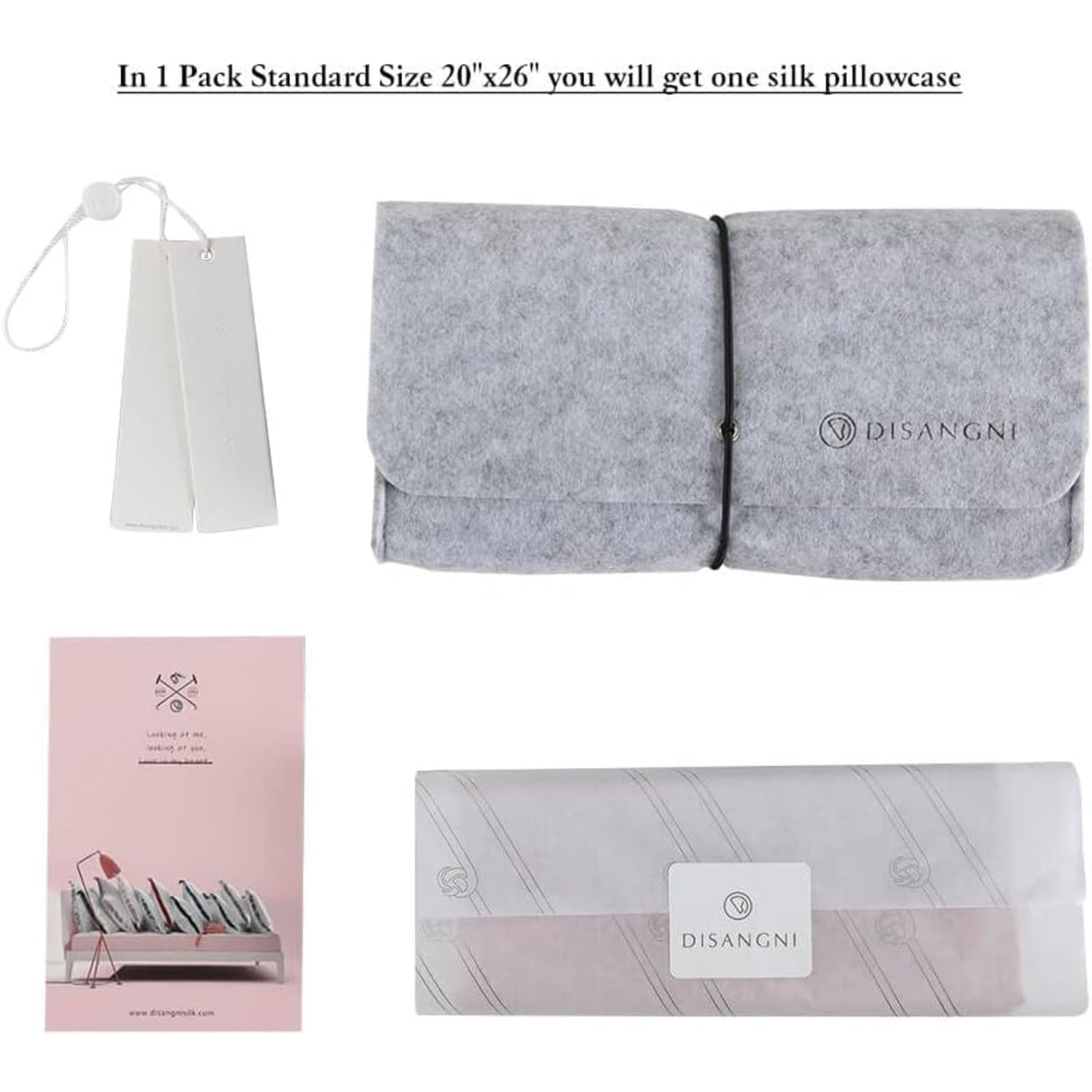
The size here is standard, listed as 20 by 26 inches, which is 66 cm by 51 cm.
Standard is the most common pillow size in New Zealand bedrooms, so for most people this is simply the right one. Problems come up when households have a mix of sizes, or when someone has bought king pillows for a king bed and forgotten. Pull the current case off your pillow and measure the pillow itself, flat, across its longest edge. If it comes in close to 66 cm you are fine.
A pillowcase should be a little generous rather than tight. Silk stretched hard over an overfull pillow puts strain on the seams and the zipper, and it is the fastest way to wear out an otherwise good piece of fabric.
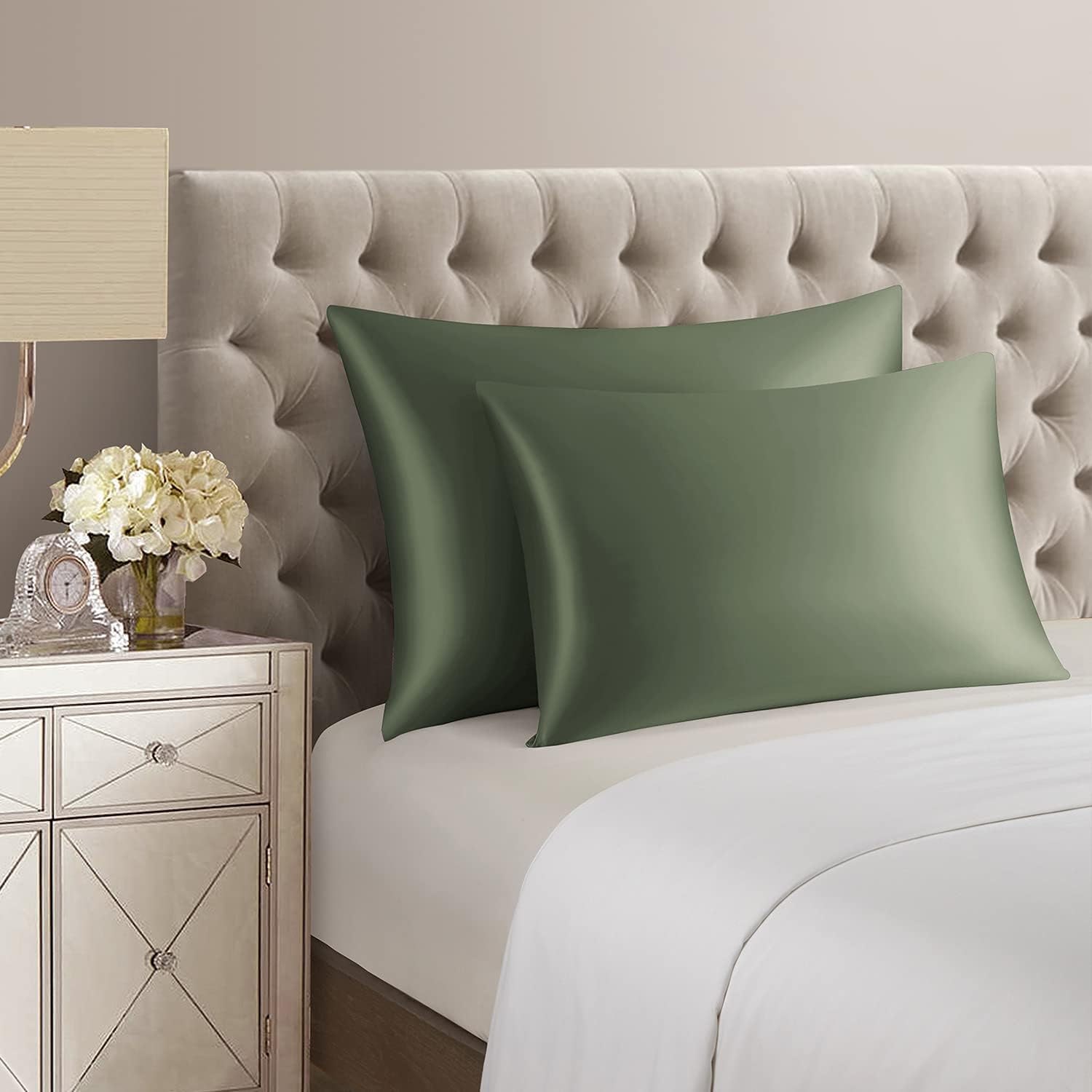
Remember too that this listing is one pillowcase. For a double, queen or king bed you will want two.
Colour and how it sits in a room
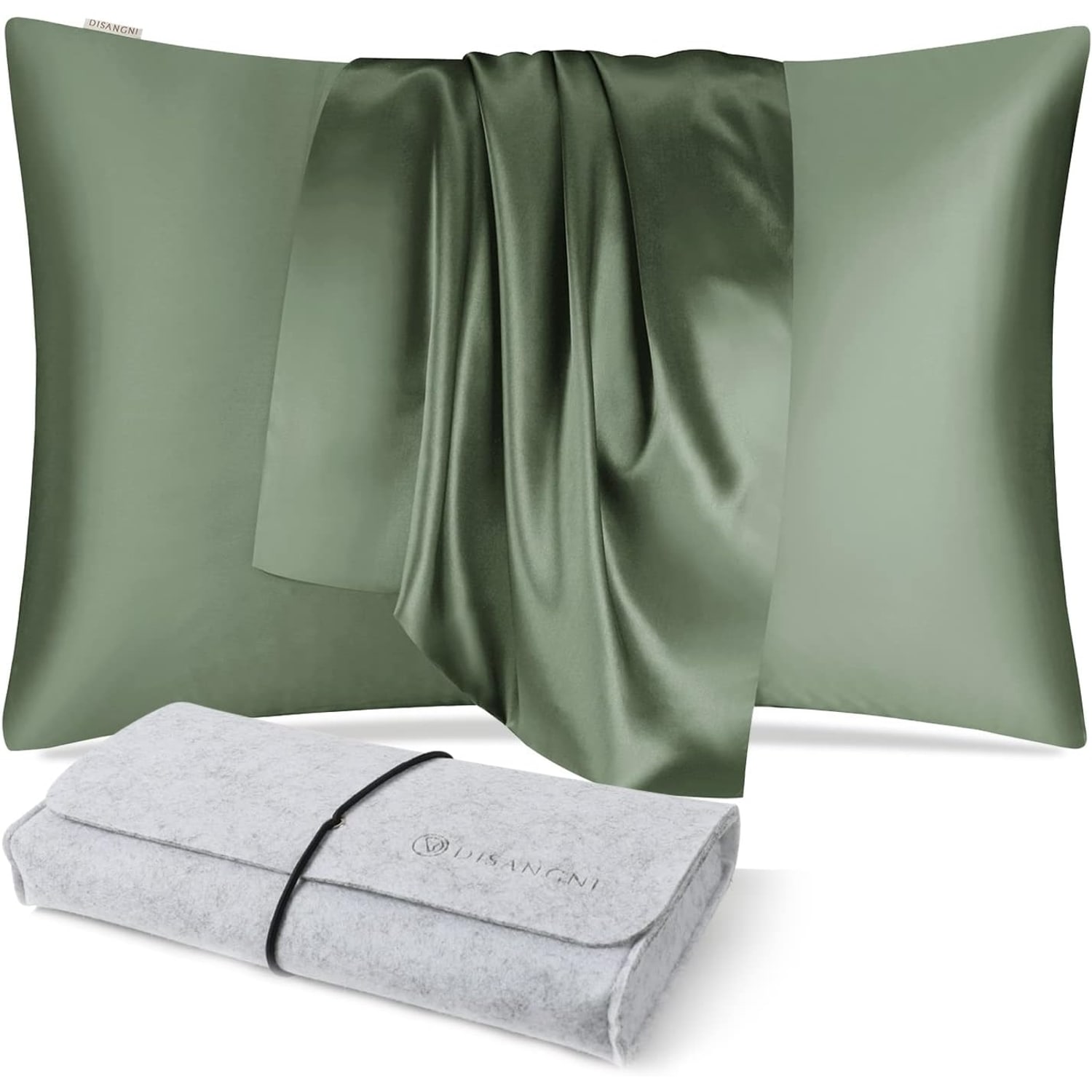
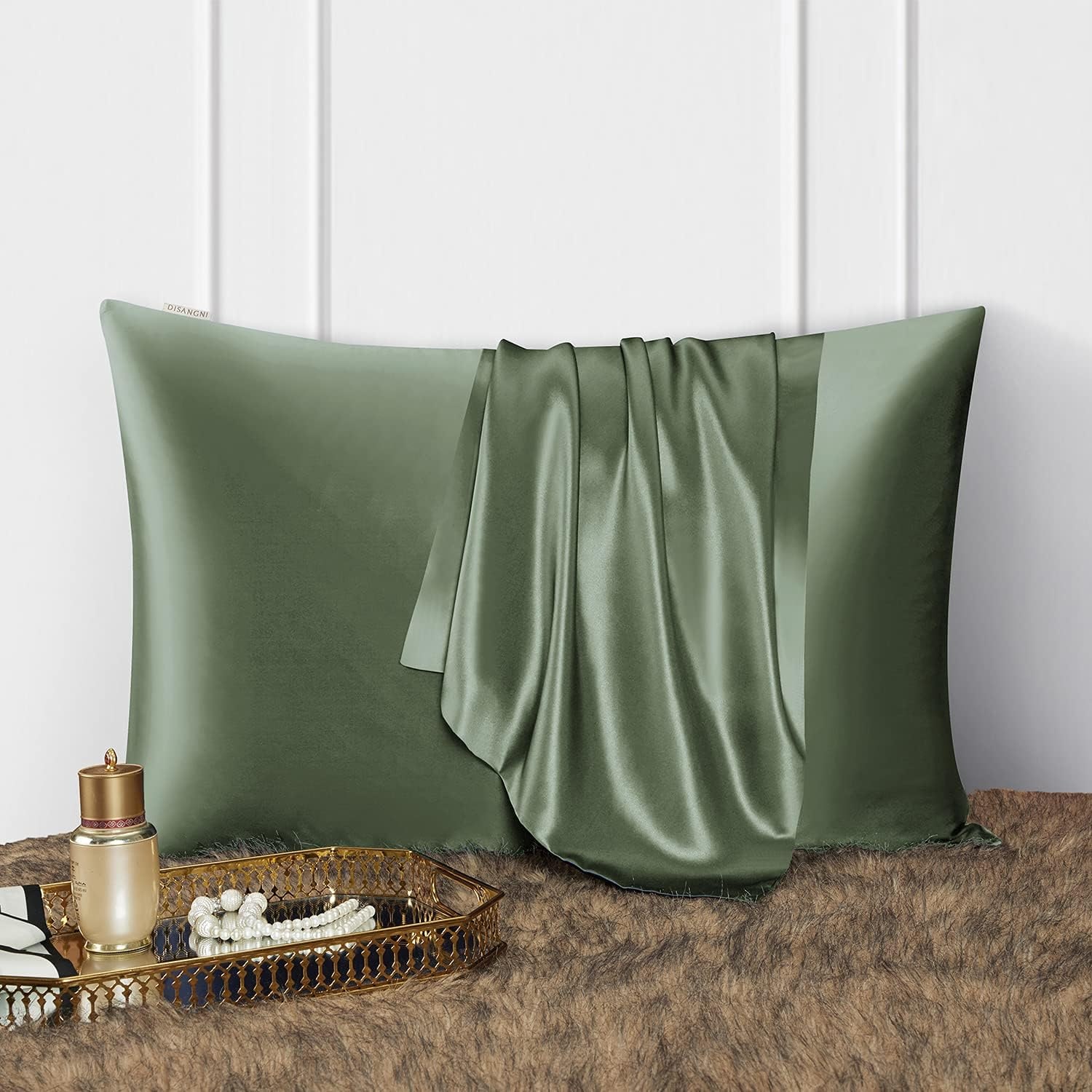
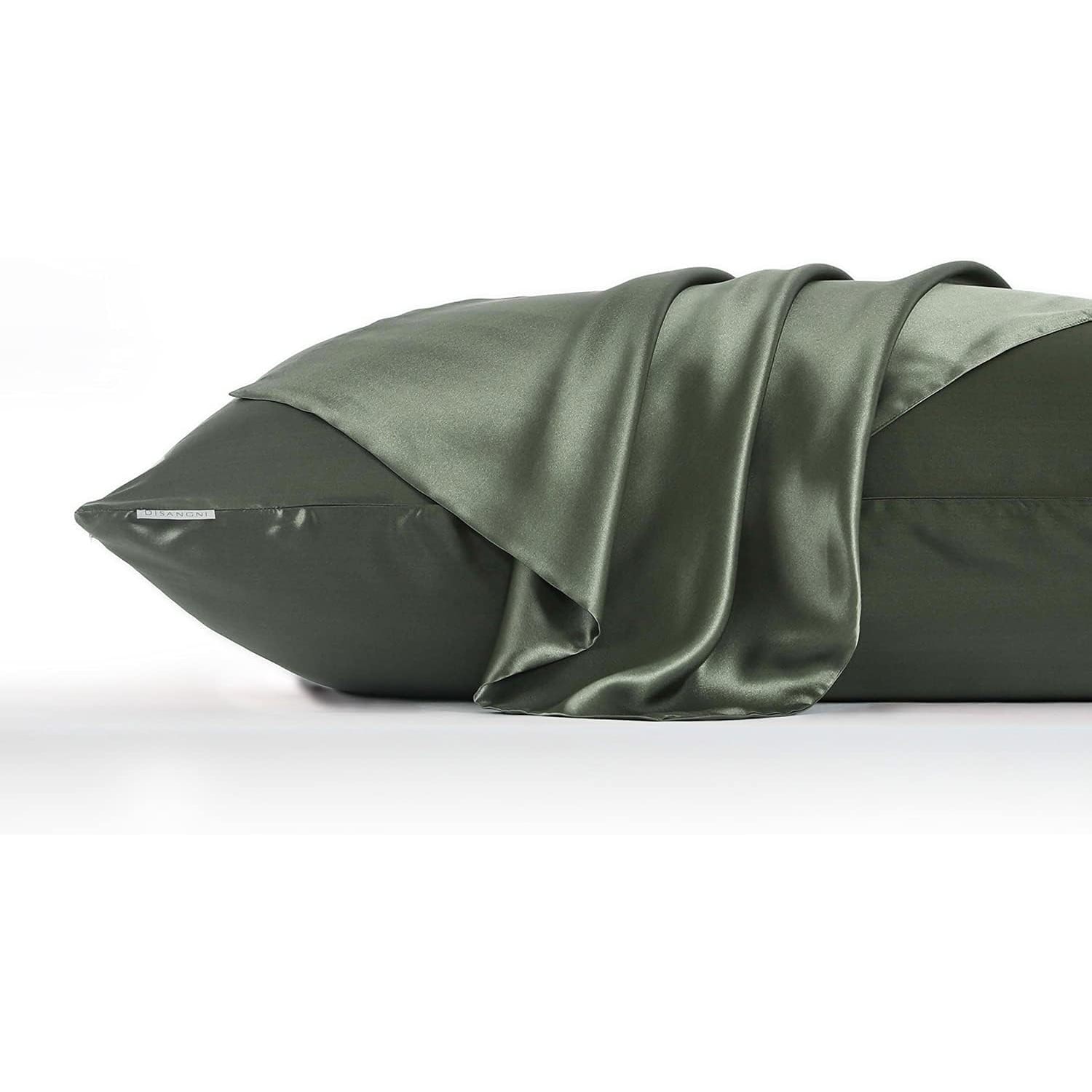
The colour here is a plain solid green with no pattern. Solid colours are easier to live with than prints, because they do not compete with whatever else is on the bed. Green in particular sits well against white linen, natural timber and most neutral walls.
Silk takes dye differently from cotton. It holds colour with a slight sheen, so the same shade reads a little richer and changes as light moves across the bed during the day. If you are matching to existing bedding, expect it to look marginally deeper than a cotton equivalent in the same colour family.
Looking after it
Silk is a protein fibre. It is structurally much closer to your own hair than to a cotton plant, and it wants roughly the same treatment.
The care instruction for this pillowcase is hand wash only, at a maximum of 30 degrees. The method is simple. Soak the pillowcase fully in clean water first. Dissolve a small amount of mild detergent into the water separately, never pouring it straight onto the fabric. Swirl it gently for a few minutes, rinse until the water runs clear, then press the water out without wringing or twisting.
Dry it flat or over a line, away from direct sun. Strong sunlight fades dyed fabric over time, and heat is hard on silk fibres. Skip the tumble dryer.
Two other rules. Wash it alone or with similar colours, and never use bleach. And if something gets spilled on it, wash it that day rather than leaving the mark to set.
This sounds like more work than it is. Once you have done it twice it takes about five minutes, and having a second pillowcase in rotation means you are never caught without one.
Who this suits
People with long hair, people who find cotton too warm, and people who have simply decided they would like their bed to feel a bit nicer. It also makes a reliable gift, because standard sizing removes most of the guesswork and plain green suits nearly any bedroom.
It is less suited to anyone who wants to throw bedding in a hot machine wash and forget about it. That is a fair preference, and if that is you, a cotton sateen case will serve you better.
The short version
Look for silk on both faces, a momme weight around 22, a zipper rather than a flap, and a size that actually matches your pillow. This pillowcase is 100% mulberry silk front and back, 22 momme, woven at 600 threads, closed with an invisible zipper, and cut to 66 cm by 51 cm in a solid green.
Hand wash it cool, dry it out of the sun, and it will stay smooth for years. Order two if you want a matched pair, and measure your pillow first if you have any doubt about the size.