

The complete guide
How to Choose a Silk Pillowcase, A Practical Buyer's Guide
The problem with the pillowcase you already own
Most of us never think about pillowcases. They come with the sheet set, they go on the bed, and that is the end of the decision. Then one morning you notice your hair looks like it has been through a hedge, or there is a crease pressed into your cheek that takes an hour to fade, and you start wondering whether the fabric has something to do with it.
It does, a little. Woven cotton has texture. Look at it closely and you see short fibres crossing each other, with tiny raised points across the whole surface. When you move your head at night, and the average person shifts position dozens of times, hair and skin drag across all those tiny points. Silk is built differently. The filament is long, smooth and round, so the surface has far less texture to catch on. Things slide instead of snagging.
That is the whole mechanism. No treatment, no coating, nothing applied to the fabric. It is just what the fibre is.
What momme actually tells you
Silk bedding is sold by momme weight, usually written as a number followed by mm. It measures how much a given area of fabric weighs, which in practice tells you how densely the silk has been woven.
Low momme silk, around 12 or 13, is thin. It feels lovely for a week and then starts looking tired, because there is simply not much fabric there to withstand washing. At the other end, 25 momme and above is heavy, luxurious and expensive, and honestly more than most people need for a pillowcase that gets washed weekly.
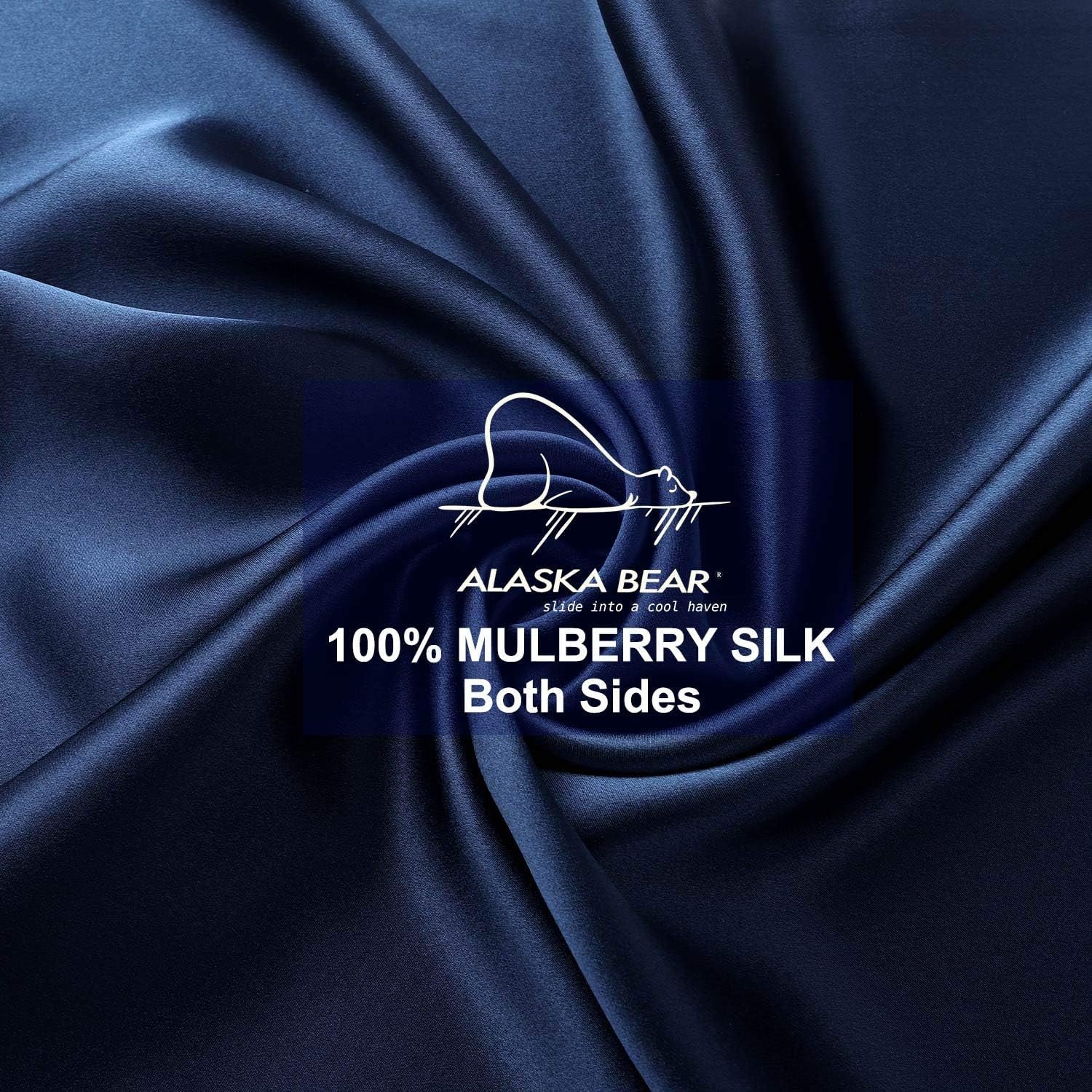
Nineteen momme is the sweet spot, which is why so much silk bedding lands there. It has real body in your hand. It holds its shape. It survives a weekly wash without thinning out. This case is a 19 momme silk pillowcase in a 600 thread count weave, which describes a fabric that is dense and smooth without being stiff.
Grade 6A, which you will also see quoted, refers to the raw silk filament itself. It is the top grading for length and consistency of the fibre. Longer filament means fewer joins in the yarn and a more even surface.
Why the closure matters more than you expect
There are two ways a pillowcase closes. An envelope flap, which is a folded-over pocket at one end, or a zip.
Envelope flaps are cheaper to manufacture and they look tidy on the shelf. They work perfectly well for people who sleep still. If you move around, though, the pillow slowly works its way toward the open end and by morning a corner is sticking out. Anyone who has woken up with their face half on bare pillow knows the feeling.
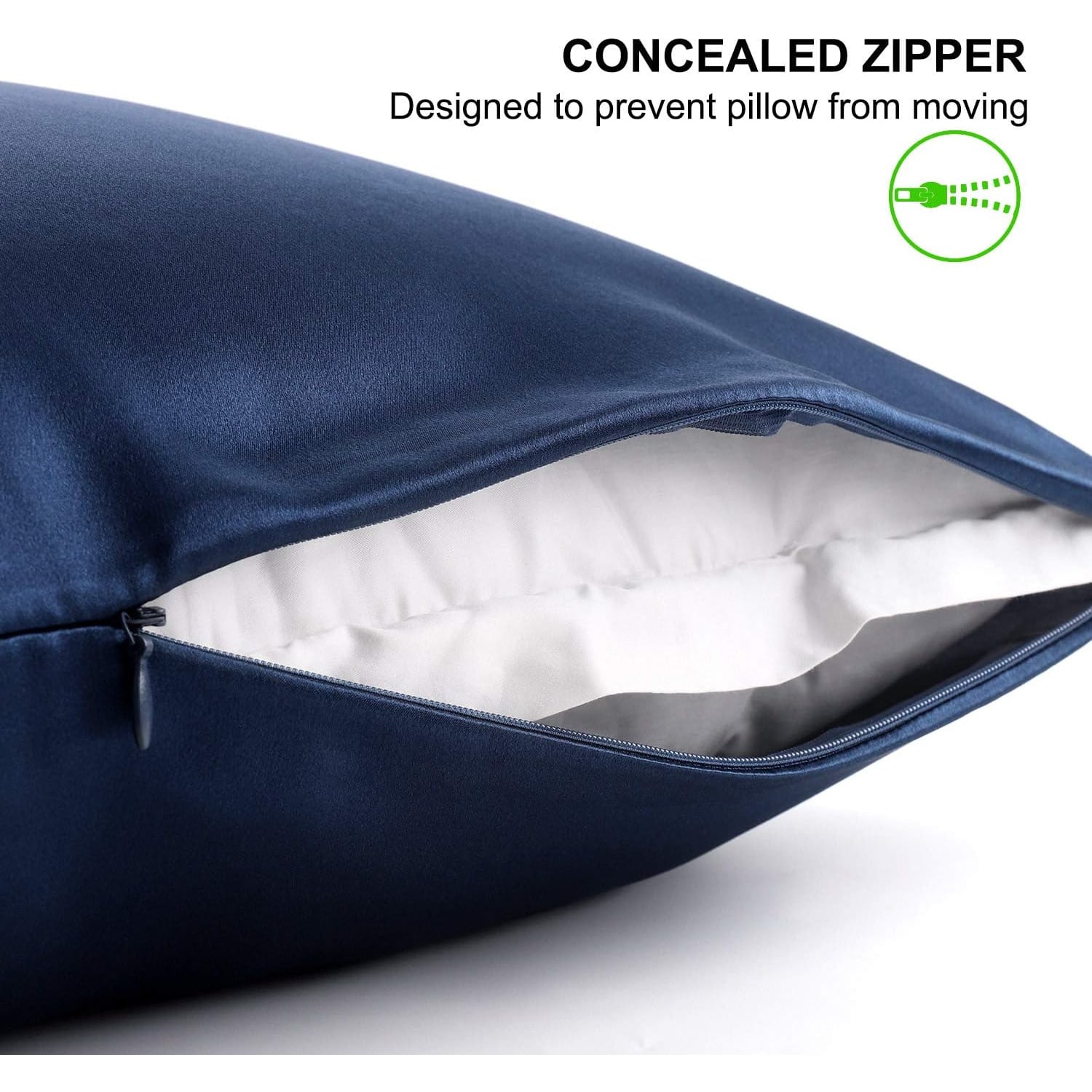
A zip solves it. This case uses a hidden zip, meaning the zip tape and pull sit tucked behind a fold of fabric rather than sitting exposed along the edge. You get the security of a closed case without hardware on show. The interior edges are also stitched over, which is a small construction detail that makes a real difference over time, because unfinished seams inside a silk case are where fraying starts.
People searching for the best silk pillowcase with zip are usually doing it because they have already tried the envelope kind and found it wanting.
Getting the size right
This is a queen pillowcase, 76.2 cm long by 50.8 cm wide. In inches that is 20 by 30.
New Zealand pillow sizing is reasonably consistent, and standard and queen bed pillows both sit close to these numbers. Most people can order a queen case without measuring anything. But there are exceptions worth knowing about.
European square pillows are a different shape entirely and will not fit. King pillows are longer and will leave the case straining. Contoured memory foam pillows are often thicker than a traditional fibre pillow, and while the length may be fine, the extra depth can make the case feel tight. If you own anything unusual, take a tape measure to it before you order. It takes thirty seconds and saves a return.
A slightly snug fit is normal and preferable. A case that is too big looks loose and bunches under your head.
Why navy, and when a dark case makes sense
Colour choice in bedding is mostly taste, but dark silk has a few practical points in its favour.
Night creams, serums and hair oils leave marks on pale fabric. They wash out, but between washes a cream pillowcase can look grubby in a way a navy one simply does not. If you use product on your face or hair before bed, a darker case is more forgiving day to day.
Navy also sits comfortably with almost any bedding scheme. Against white sheets it reads as a crisp contrast. Against grey or charcoal it blends into a layered, quiet look. Against linen or oatmeal it adds depth without clashing. Those hunting for the best navy silk pillowcase are often doing it because the pale shades in their wardrobe have started looking tired.
The sheen on dark silk is worth mentioning too. It is soft rather than glossy, more like a muted glow under lamplight than a shiny surface.
Living with silk, the care part
Silk has a reputation for being fussy. It is not really, it just has a few rules, and once you know them the whole thing becomes routine.
Wash cool. Hot water is the main thing that damages silk filament. Hand washing in a basin with a mild detergent made for delicates is the gentlest method, and it takes about five minutes. If that sounds like too much, a cold gentle machine cycle with the case zipped up inside a mesh laundry bag works fine.
Skip the fabric softener. It coats the fibre and dulls the surface, which defeats the point. Skip bleach and oxygen brighteners too, since both attack protein fibres.
Do not wring it out. Press the water out between your palms or roll it in a towel. Then line dry in the shade. Direct sun fades colour and weakens fibre over time, and a dark navy will show fading before a pale shade would.
If you want it smooth, iron on the lowest setting from the reverse side while the fabric is still a bit damp. Most of the time you will not need to, because silk dried flat comes out looking fine on its own.
Weekly washing suits most people. More often if you use heavy products at night.
Who this suits
Someone who wants a single quality case rather than a full bedding overhaul. Someone whose hair is prone to tangling or frizz overnight. Someone who has tried an envelope-style case and got fed up with the pillow sliding out. Someone buying a gift and needing something that looks considered without requiring size guesswork.
It also travels well. At 109 grams it packs down to nothing, and a lot of people keep one in their suitcase permanently.
The short version
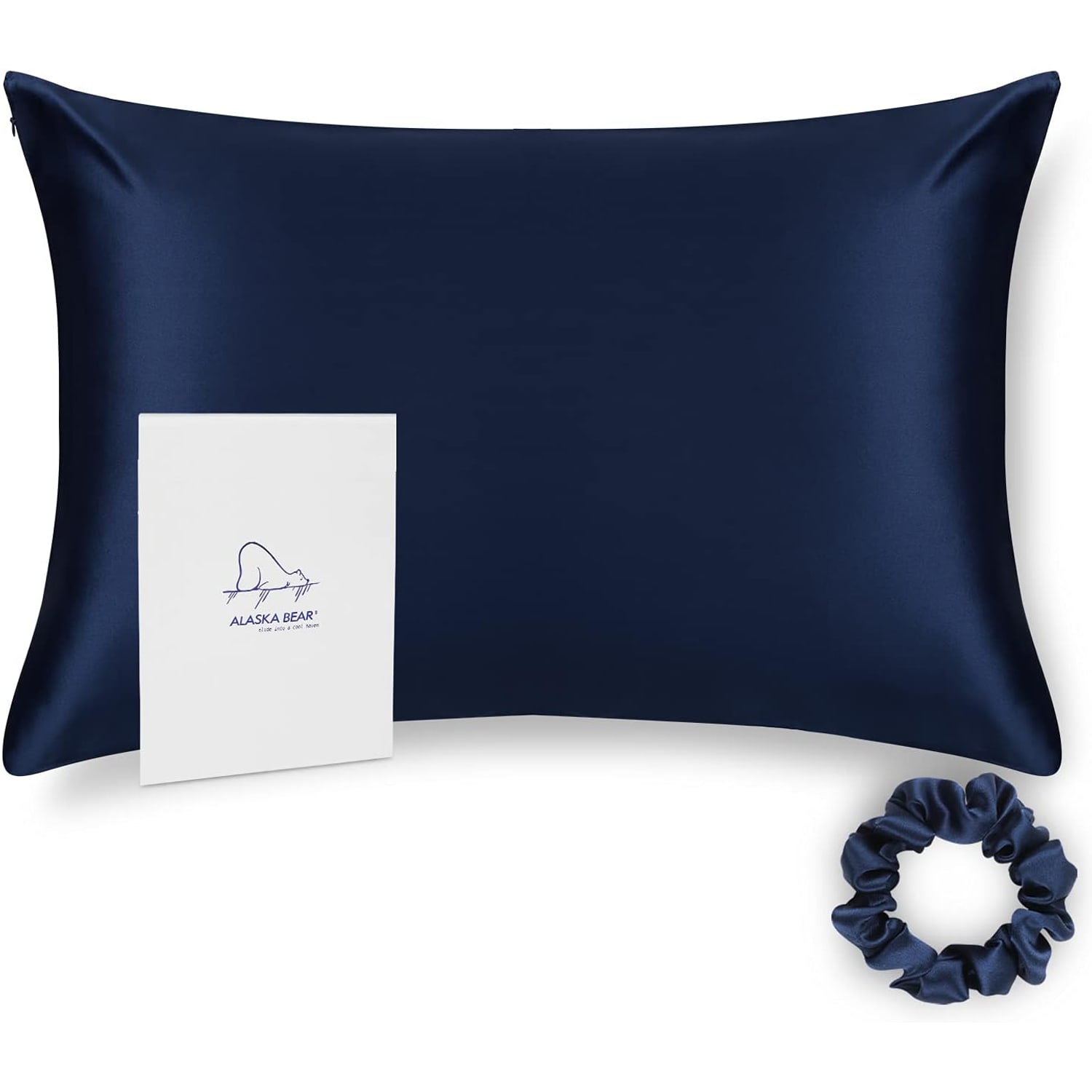
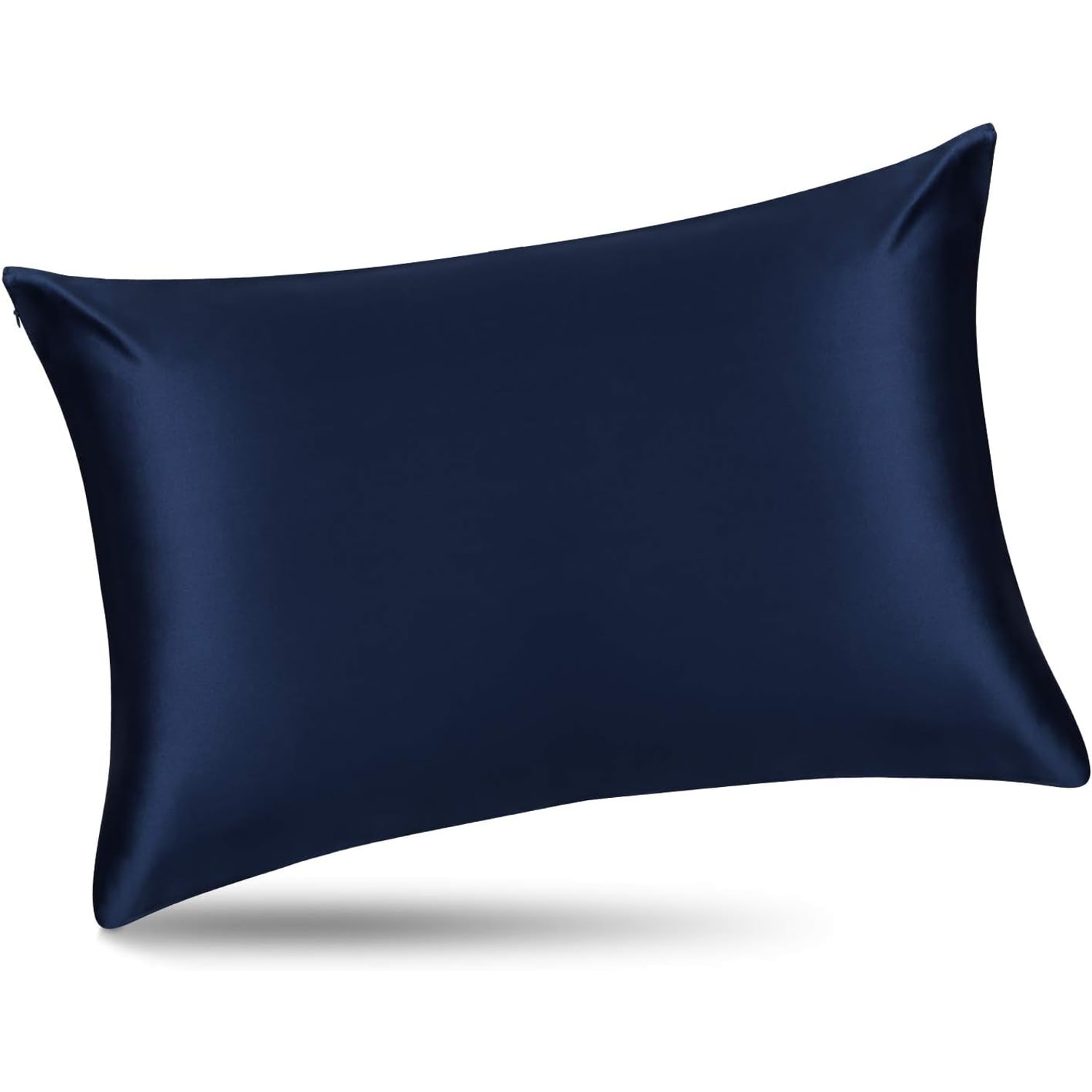
This is a queen size case, 76.2 by 50.8 cm, in solid navy blue. The fabric is real 19 momme Grade 6A pure mulberry silk at 600 thread count, silk on both sides. It closes with a hidden zip and the interior edges are stitched over.
Measure your pillow if you own anything other than a standard or queen. Wash it cool and gently, keep it out of the dryer and away from direct sun, and it will keep its look for a long time.
If you are weighing up the best mulberry silk pillowcase NZ options and want something straightforward that gets used every night rather than saved for guests, this is the sort of case that earns its place.