
The complete guide
How to Choose a Mulberry Silk Pillowcase in New Zealand
The small annoyance that sends people shopping for silk
Nobody buys a silk pillowcase for the first time out of nowhere. Usually there is a trigger. You catch your reflection at breakfast and there is a crease running down one cheek that takes an hour to settle. Or you have grown your hair out and every morning starts with ten minutes of untangling. Or you have just bought good sheets and the old cotton pillowcase suddenly looks tired next to them.
Cotton is a fine fabric, but it grips. The surface has tiny fibres that catch on hair and drag against skin as you turn through the night. Silk is the opposite. It is smooth, it is light, and things slide across it. That is the whole pitch, and it is an honest one. We are not going to tell you a pillowcase will change your skin or your hair, because that is not a claim anyone can make from a fabric spec. What we can tell you is what the fabric is and how it behaves.
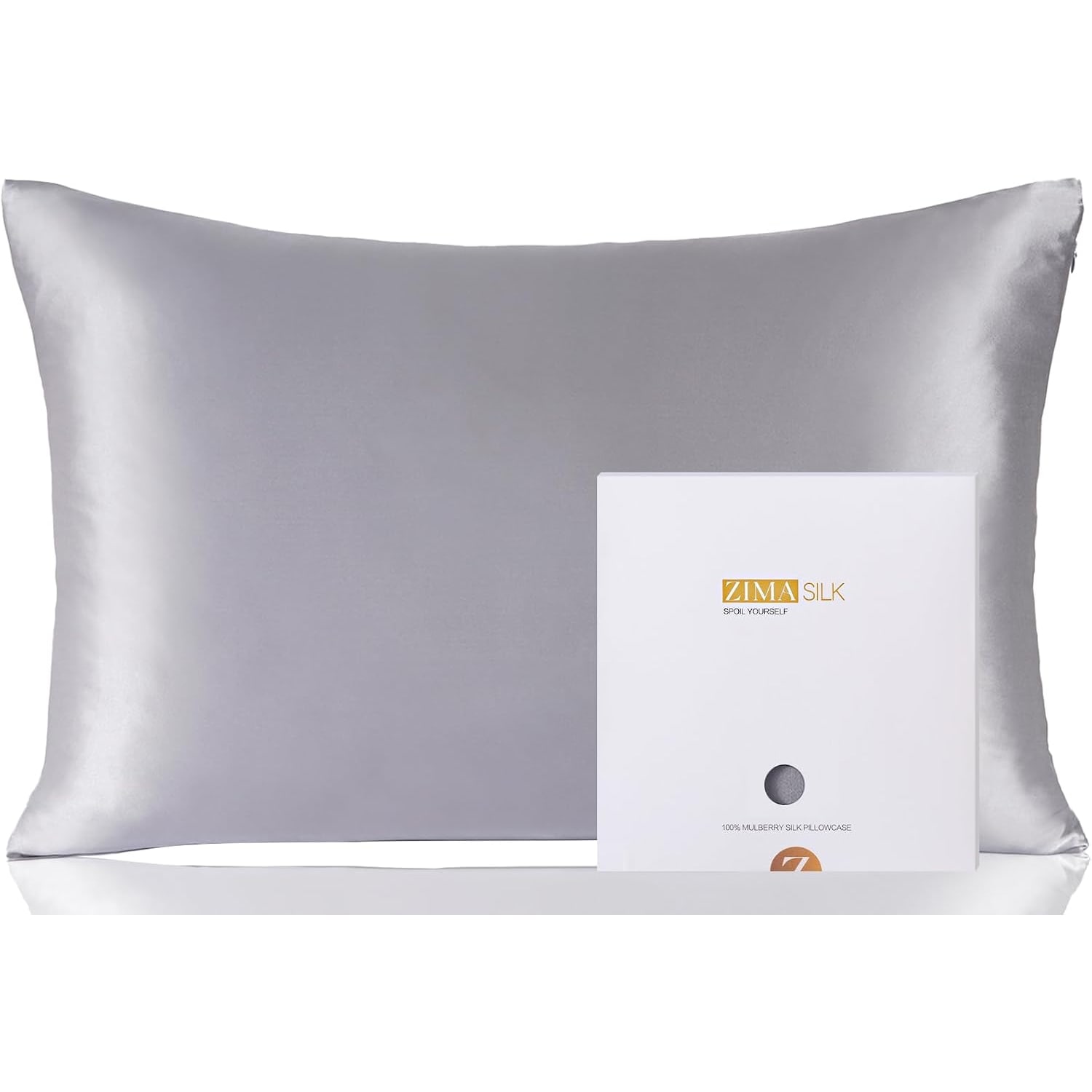
This particular case is iron grey, 19 momme mulberry silk on both sides, woven at 600 thread count, cut to 75 by 50 centimetres with a hidden zip. The rest of this guide explains what each of those numbers actually means when the thing is on your bed.
Momme, and why 19 is the number you keep seeing
Momme is the old Japanese weight measure that the silk trade still uses. Think of it as the silk version of GSM. A higher momme means more silk per square metre, which means a denser, heavier, longer-lasting fabric.
Silk bedding generally runs from about 16 momme at the light end up to 25 or so at the heavy end. Sixteen is thin. It feels lovely in the shop but it wears faster and it can go slightly transparent. Twenty-five is lush but costs considerably more and some people find it too dense to drape well over a soft pillow.
Nineteen sits right in the middle, which is exactly why the best 19 momme silk pillowcase options dominate the market. There is enough weight to hold shape, enough body to survive regular washing, and enough give that the fabric still falls softly around the pillow instead of standing up stiffly. If you are buying your first silk pillowcase and you do not want to overthink it, 19 momme is the sensible default.
Grade 6A and thread count
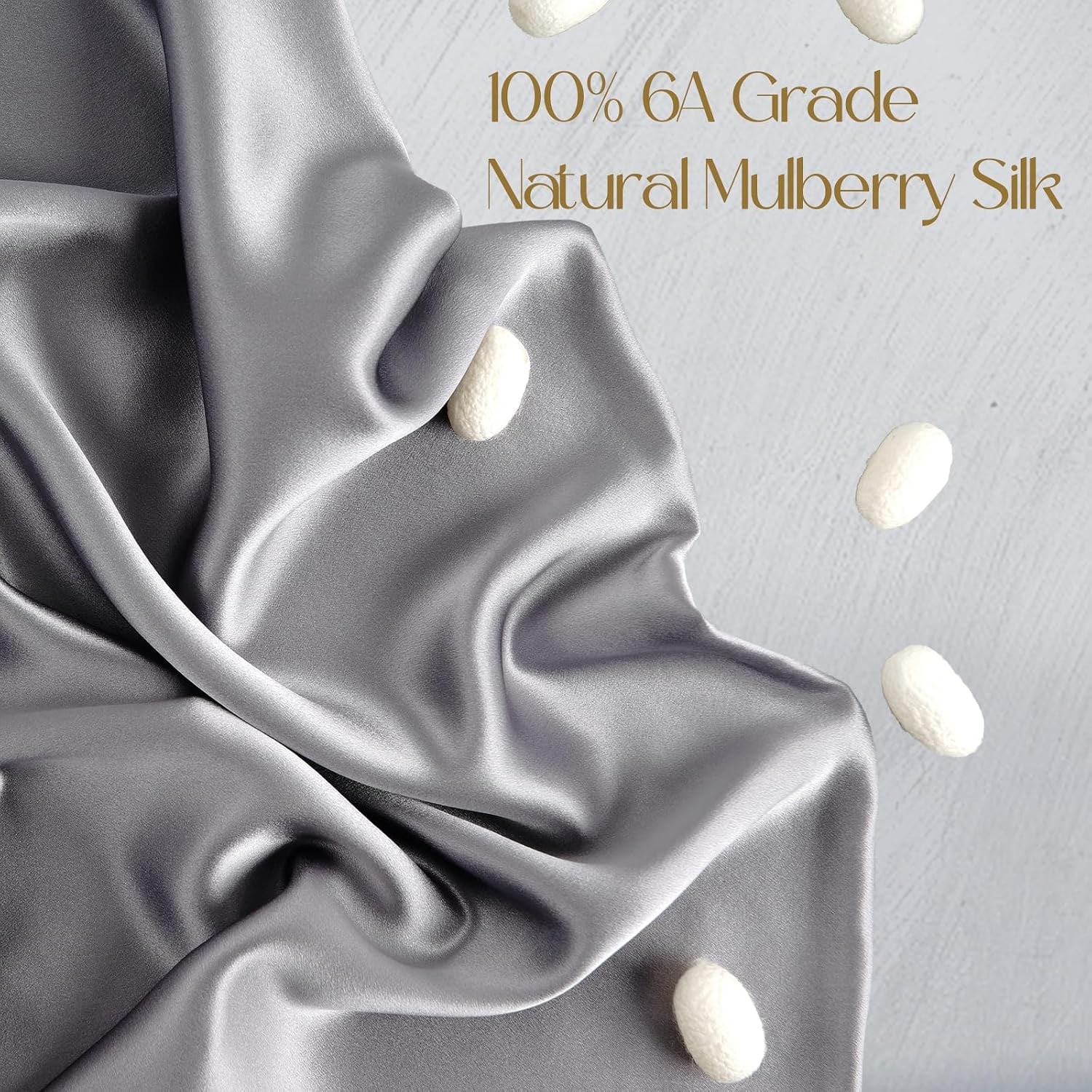
You will see Grade 6A on most quality silk listings, including this one. The grading system scores raw silk on filament length, evenness and cleanliness, and 6A sits at the top of the scale. Long, uniform filaments produce a smoother surface with fewer slubs or weak spots. It is a raw material grade, not a finished-product guarantee, but it tells you the maker started with good thread.
Thread count is listed here at 600. With silk, thread count works a little differently than it does with cotton, because silk filaments are finer. A 600 count silk weave is close and tight, which contributes to the smooth hand feel. Read momme and thread count together rather than chasing one in isolation. A high thread count on a very light silk still gives you a thin fabric.
Double-sided silk versus the cheap shortcut
Here is the thing to actually check before you buy any silk pillowcase. Is the silk on both sides?
A surprising number of budget cases use silk on the front and a cheaper cotton or polyester blend on the back. It cuts the cost significantly and the listing photo looks identical. The problem shows up at two in the morning when you flip your pillow and land on a completely different fabric.
This case is double-sided mulberry silk. Both faces are the same material, so it does not matter which way the pillow lands. It also means the case wears evenly instead of one face ageing faster than the other. If you are comparing a 100 percent mulberry silk pillowcase against something cheaper, this is usually where the price difference lives.
Closure, and why the zip matters
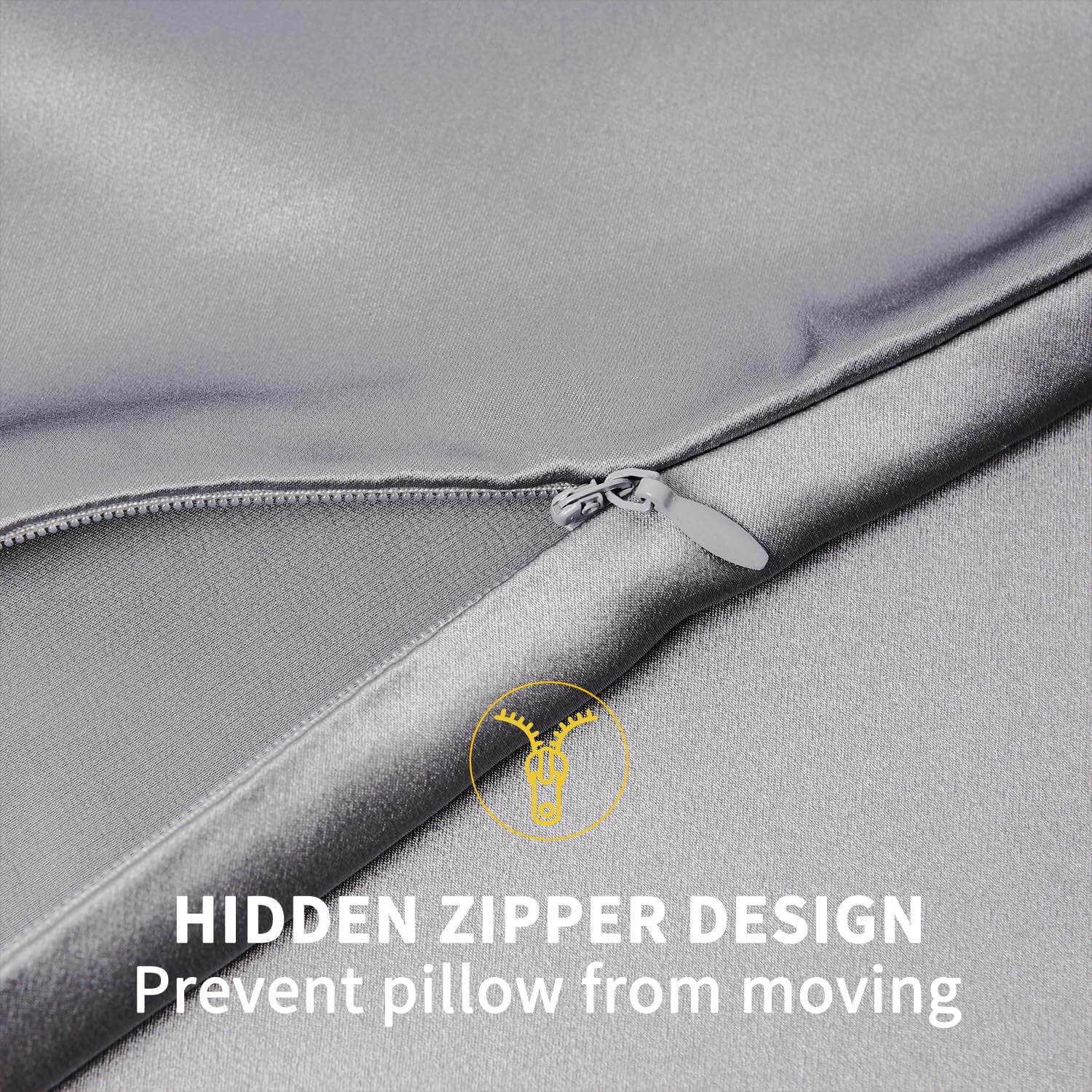
Silk pillowcases come with one of three closures. Open-ended cases are the cheapest and the pillow drifts out. Envelope flaps are tidy but the pillow still works loose if you move a lot. A zip holds everything in place.
This one has a hidden zipper, which means the zip tape sits tucked inside a seam rather than running visibly down the edge. Two practical benefits. First, nothing scratchy sits near your face. Second, the made bed looks clean. A hidden zipper silk pillowcase is slightly more work to manufacture, which is why you do not see it on every listing.
When you put the case on, feed the pillow in corner first and ease the fabric along rather than forcing it. Silk is strong along its length but seams do not love being yanked.
Getting the size right
The size here is given two ways, Queen 20 by 30 inches and 75 by 50 centimetres. Those are the same measurement in different units, and 75 x 50 cm is the standard queen pillow dimension used across New Zealand.
Before ordering, lay your pillow flat and measure it edge to edge in both directions. If it comes out close to 75 by 50, you are set. If your pillow is a deep-profile or memory foam type that is noticeably thicker, the case will fit but snugly, and you will have less of the loose drape that makes silk look good on a bed.
Standard pillows, which are shorter, will swim inside a queen case. That is not a disaster, plenty of people prefer a slightly loose fit, but the extra fabric will bunch at one end.
The colour question
Iron grey is a deliberate middle ground. It is darker than the pale greys that show every mark and lighter than charcoal, which can look heavy in a small bedroom. On a bed it reads as a calm neutral.
Practically, grey is forgiving. It does not telegraph the faint marks that white silk picks up from moisturiser or hair oil, and it does not clash with anything. White sheets, oatmeal linen, navy duvets, a plain timber bedhead, grey sits comfortably against all of them. If you are buying a luxury pillowcase NZ-side and want it to last through a redecorate or two, a neutral is the smart bet.
Looking after it
This is the part people underestimate, so be honest with yourself about it. The care instruction is hand wash only. No machine cycle, no dryer.
In practice that means a basin of cool water, a capful of gentle detergent made for delicates or wool, a few minutes of light swishing, and a thorough rinse. Do not wring it out. Lay it on a towel, roll the towel up, and press. Then dry flat or hang it in the shade. Direct sun fades silk and heat weakens the fibres.
Wash every week or two under normal use. If you use rich night creams or leave-in hair products, wash more often, because those residues are what dull the surface over time. Skip bleach and skip fabric softener entirely.
A tip worth taking. Buy two. Hand washing means a drying day, and having a second case means you are never stuck putting the old cotton one back on.
The short version
This is a queen-size pillowcase in 19 momme Grade 6A mulberry silk, silk on both faces, woven at 600 thread count, measuring 75 by 50 centimetres, in a solid iron grey with a hidden zip. One case per pack, 0.1 kg, hand wash only.
If you want something that feels noticeably smoother than cotton, sits quietly in almost any bedroom, and holds up to regular use, the numbers here are the ones most people end up choosing. Measure your pillow, decide whether you can live with hand washing, and if both answers work, this is an easy yes.