
The complete guide
How to Choose a Silk Eye Mask That Actually Stays On
The real reason you keep waking up early
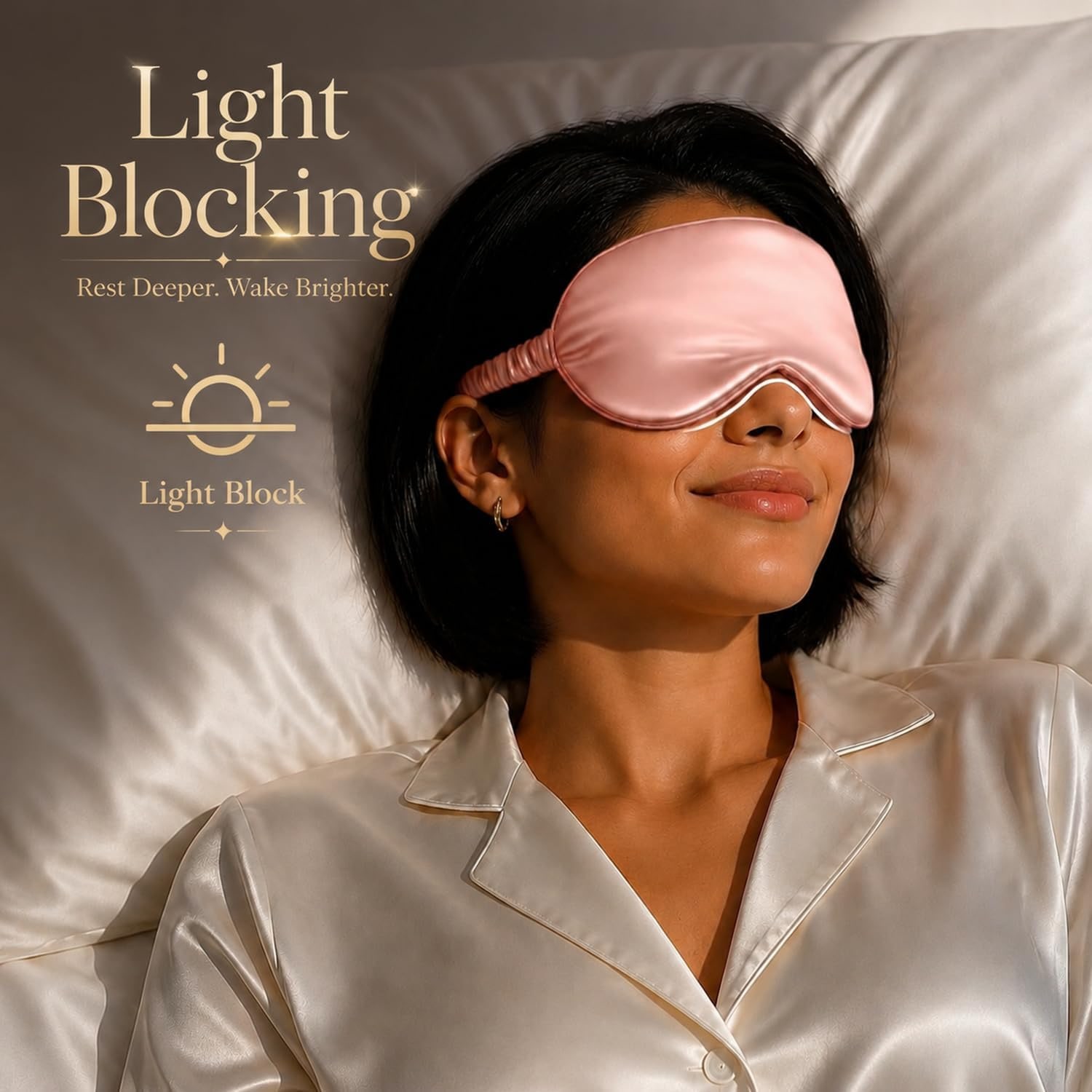
Most people blame noise. In practice, light is the bigger culprit, and it is the one you have the least control over. Sunrise in a New Zealand summer can arrive before five in the morning. A street lamp outside the window never switches off. A partner on a different schedule turns a lamp on at six. On a plane, the cabin crew flood the whole cabin with light halfway through the night because it suits their service timetable, not your sleep.
Blackout curtains help at home, but they are expensive, they only work in one room, and they do nothing on a bus, a plane or a spare bed at your in-laws. An eye mask solves the problem at your face instead of at the window. It travels with you, it costs a fraction of the price, and it works the same way in every room you ever sleep in.
The catch is that a bad mask is worse than no mask. Too tight and it presses on your eyelids until you take it off. Too loose and it slides onto your forehead at two in the morning. Too rough and it pulls at your hair every time you roll over. The job is to find one that you forget you are wearing.
What momme actually tells you
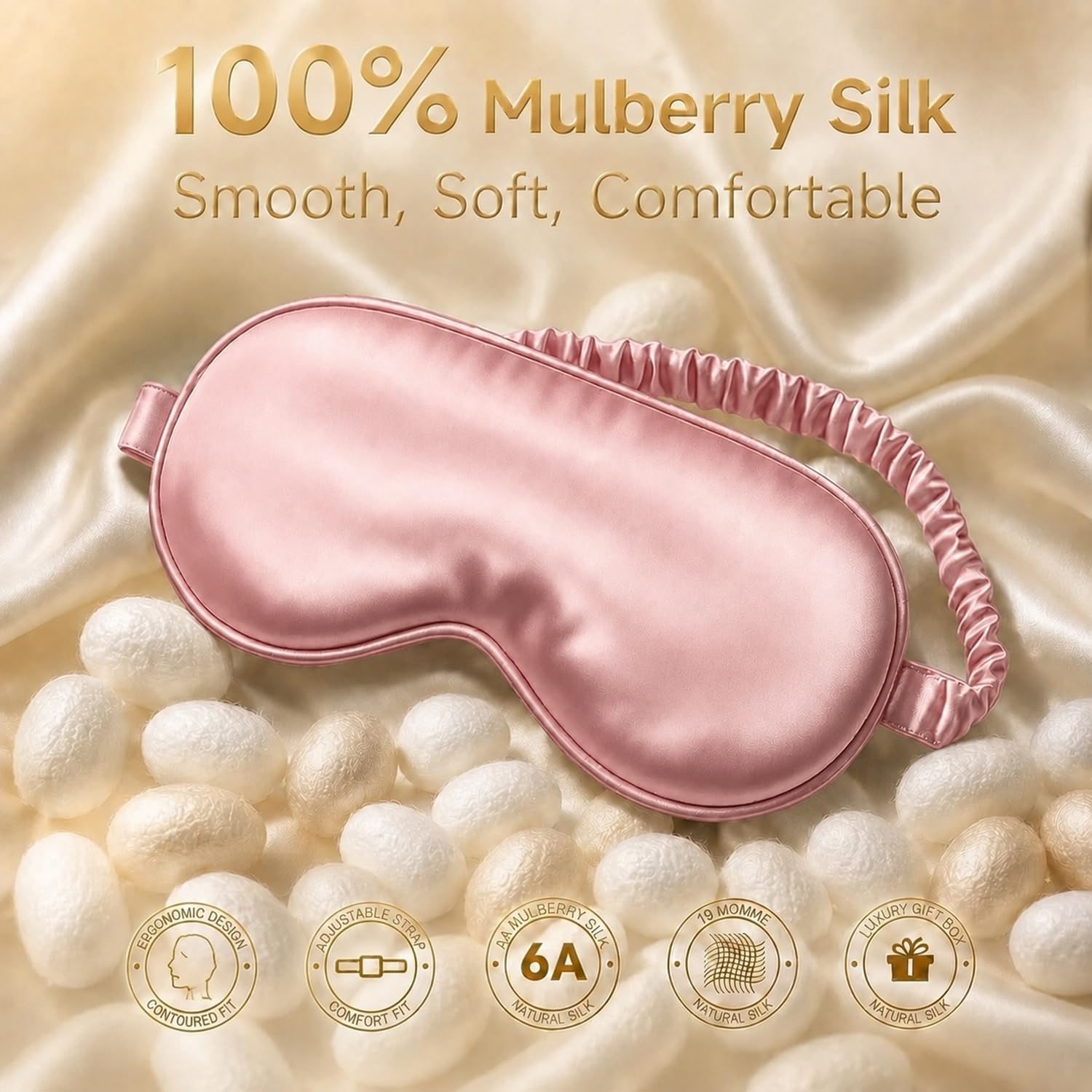
Silk is sold by momme, which is a weight measure rather than a thread count. It describes how much a set area of the fabric weighs, so a higher momme means a denser, heavier, more substantial cloth. Lightweight silk scarves often sit around 12 momme. Bedding silk is usually somewhere between 19 and 25.
This mask is 19 momme on both faces. That matters for two reasons. The first is substance. A 19 momme fabric has enough body to sit properly against the contours of your face, rather than collapsing like a thin handkerchief. The second is honesty about construction. A lot of cheap masks put a small panel of silk on the outside where you can see it and back it with polyester where it touches your skin. Both sides here are the same silk, so the face against your skin is the one described on the label.
What momme does not tell you is how well a mask blocks light. That comes down to the cut, the fit and whether the fabric is opaque. Momme is about the cloth, not the design, and both parts need to be right.
Fit is the part people get wrong
Think about what a mask has to do for seven or eight hours. It has to stay in place while you roll from your back to your side. It has to apply even pressure across your face without digging in anywhere. It has to not catch your hair every time your head moves on the pillow.
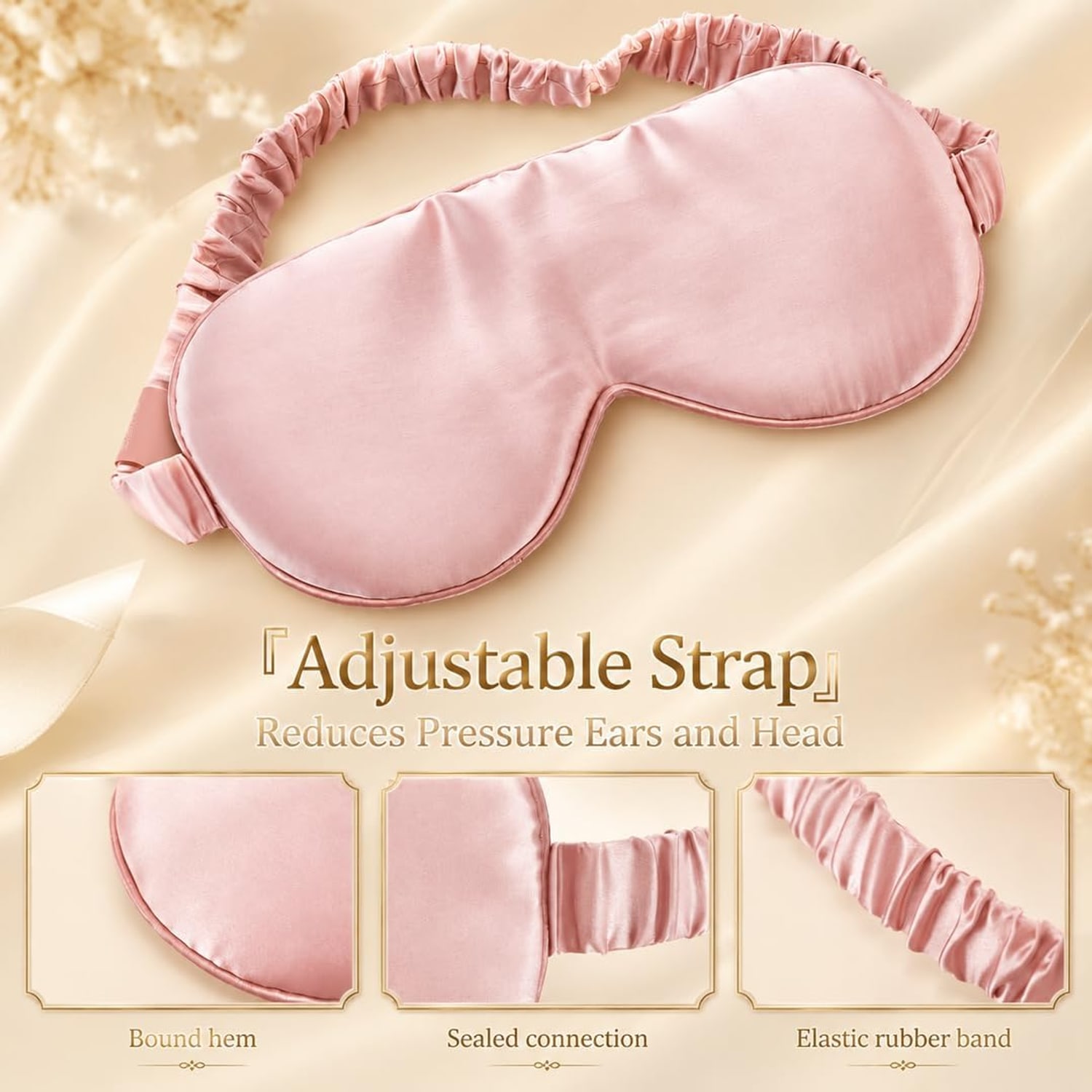
An adjustable closure is the single most useful feature here. Fixed elastic is a lottery. If your head happens to match the designer's assumption, it is fine. If it does not, the mask is either a headache or a slipper. With an adjustable strap you set the tension once, on the first night, and then leave it. You want it just firm enough that the mask does not shift when you turn over, and no firmer.
The strap on this mask is designed to slide over hair rather than snag it. If you have long hair, the usual trick still applies. Lift the hair clear, settle the mask on your face first, then pull the strap down behind your head and let the hair fall back. That takes two seconds and saves a lot of tugging.
Flat masks versus contoured masks
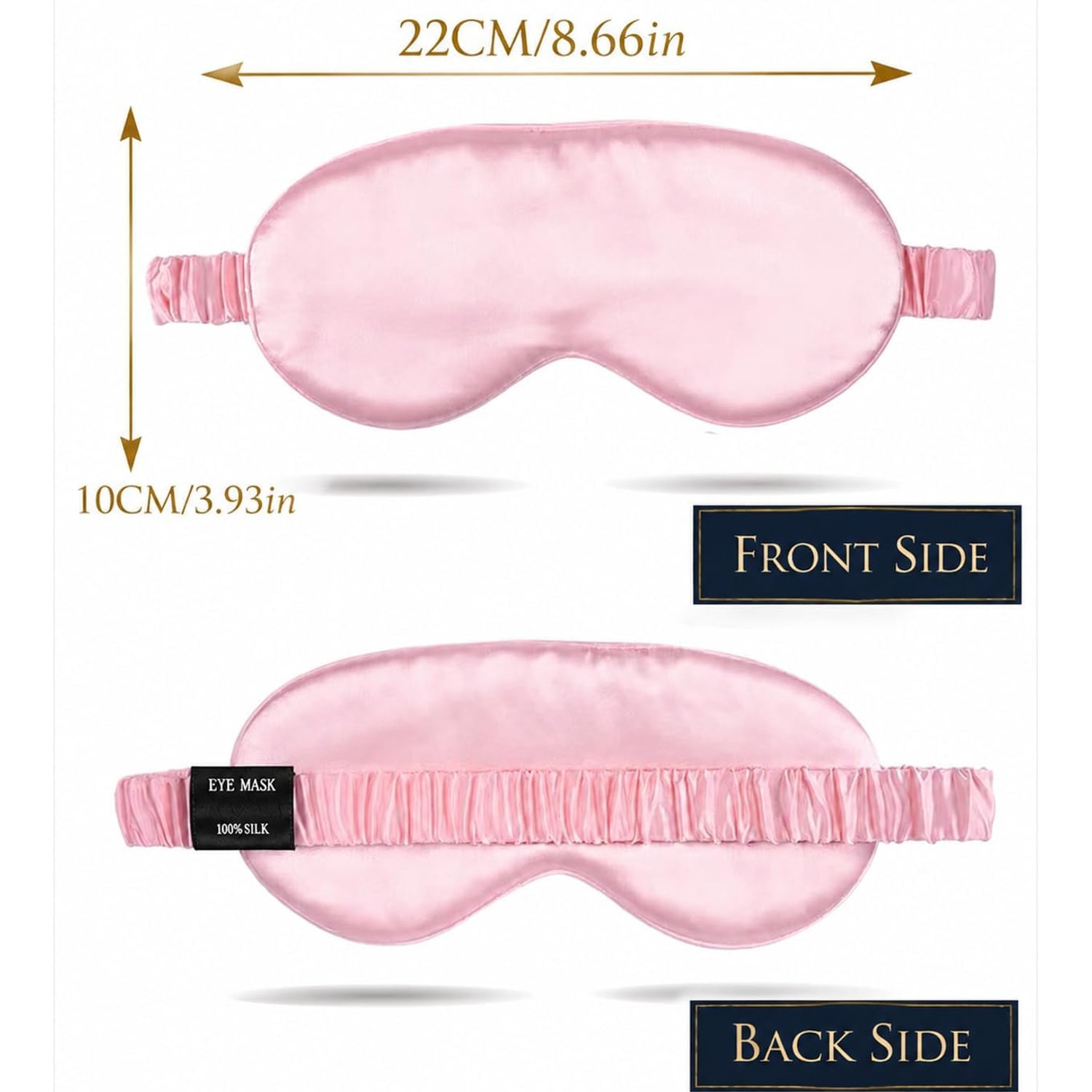
There are two schools of design. Contoured masks have moulded cups that arch over the eye sockets so nothing touches your eyelids. Flat masks, like this one, sit against the face in a single soft layer.
Contoured masks suit back sleepers and people who wear eye makeup to bed. They are bulkier, they take up more room in a bag, and they can create an odd pressure ring around the eye socket if the shape does not match your face.
Flat silk masks suit side sleepers and anyone who moves around at night. There is nothing rigid to press into the pillow, so there is no hard edge between your cheek and the mattress. They also fold down to nothing, which matters if the mask lives permanently in a carry-on. For most people searching for the best silk eye mask for travel, a flat mask wins on packability alone.
Who this suits
Early risers who do not want to be early risers. If your bedroom faces east and you are awake at the first hint of light, a mask buys you the extra hour.
Shift workers. Sleeping through the day is the hardest version of this problem, because the light is relentless and the household is awake. Covering your eyes is usually more practical than trying to black out a whole room with foil and curtains.
Travellers. Long haul flights, bus trips, hostels, hotels with gappy curtains and a smoke alarm LED that could guide ships. A 110 gram mask in your bag covers all of it.
New parents and anyone catching sleep in snatches. When your sleep window is ninety minutes, you cannot afford twenty of them spent waiting for your eyes to settle.
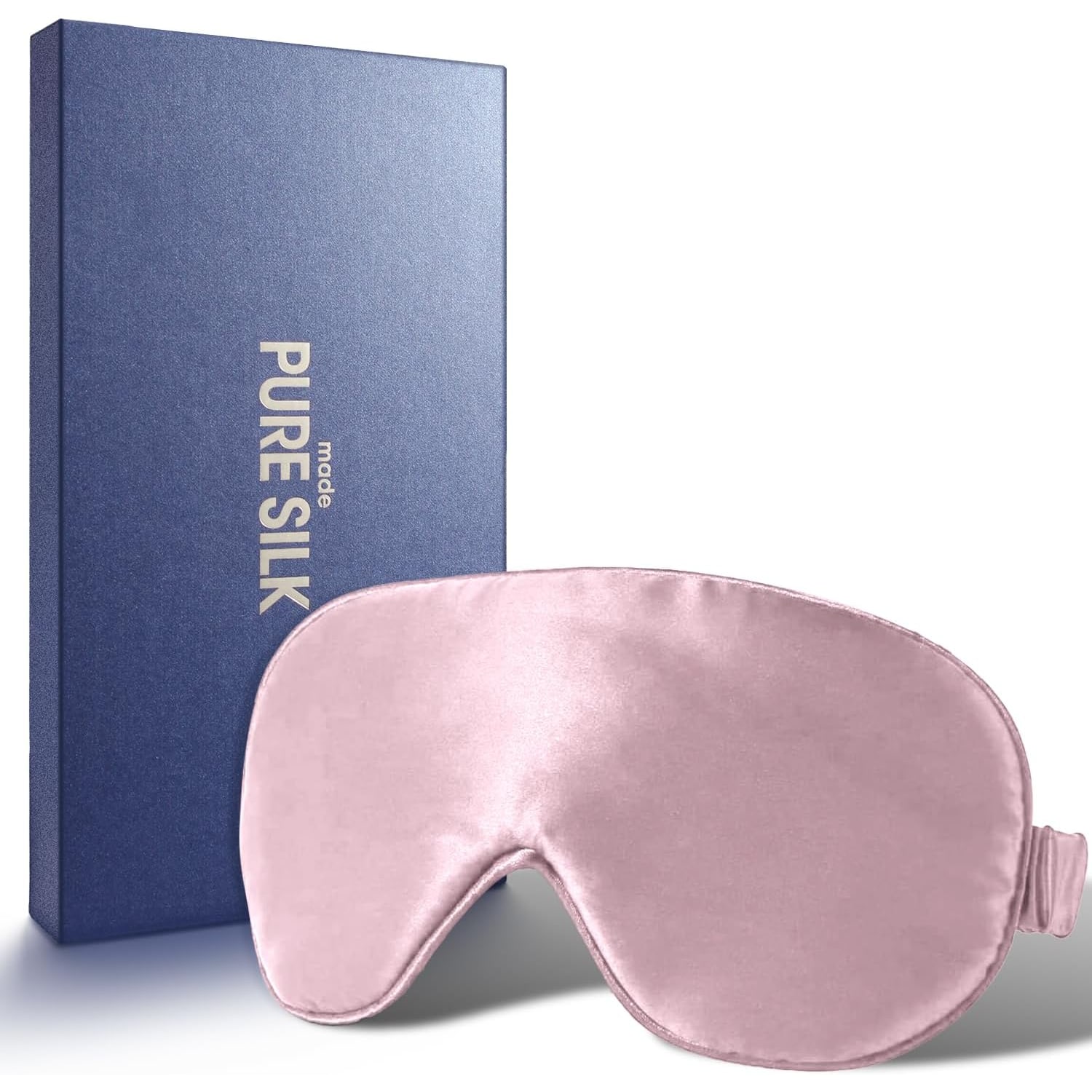
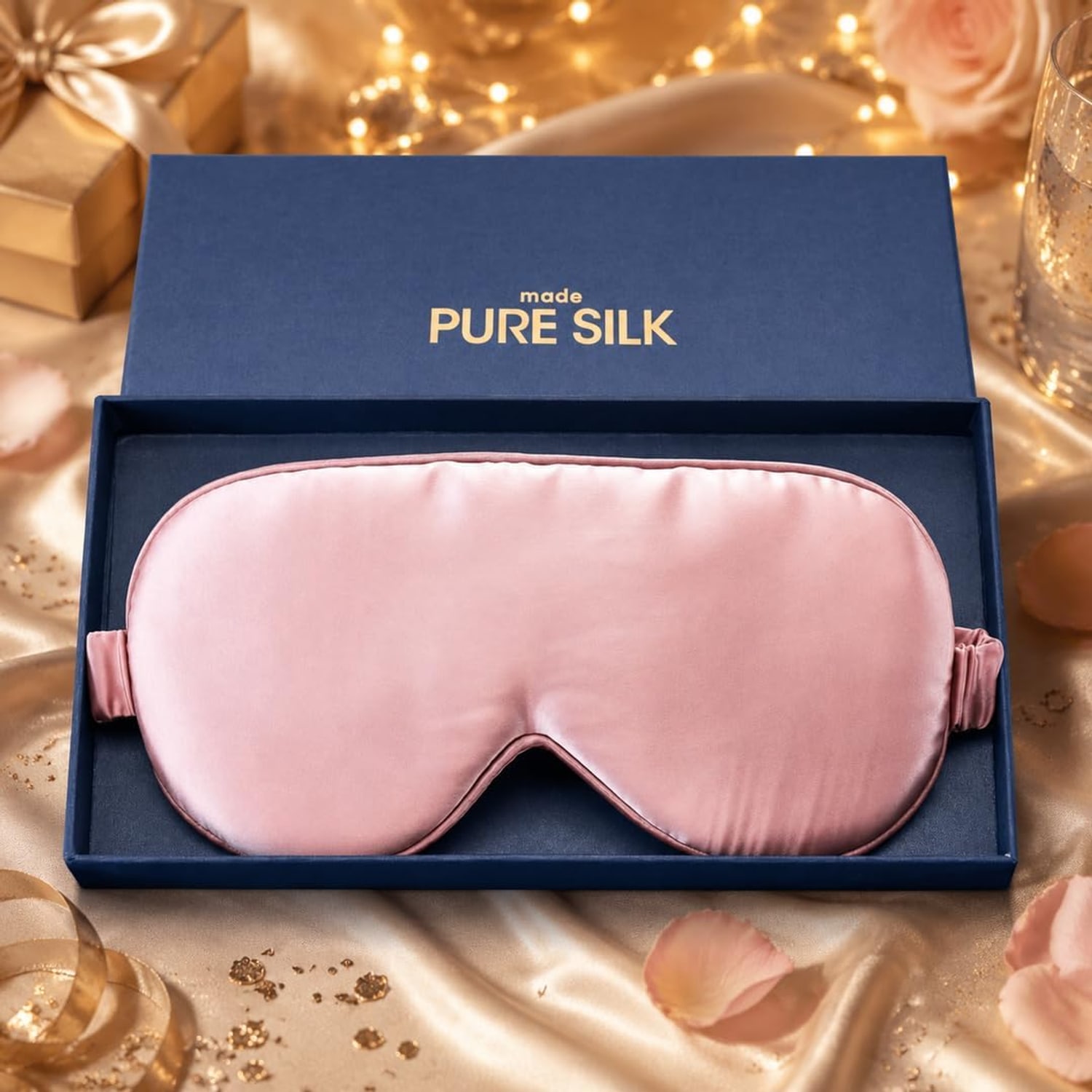
It also works as a gift for someone who has mentioned any of the above. It comes in its own box, so the wrapping is done for you.
Looking after it
Silk is a natural protein fibre and it behaves a bit like hair. It does not like heat, harsh detergent or being wrung out.
Hand wash only, in cool water, with a mild detergent made for delicates. Swirl it rather than scrubbing it. Rinse until the water runs clear. Lay the mask on a towel, roll the towel up and press to get the water out, then unroll, reshape the mask and let it dry flat somewhere out of direct sun. Heat and sunlight are what make silk go dull and brittle, so avoid the clothesline on a hot day and avoid the dryer entirely.
How often? Every week or two for nightly use is sensible, and more often if you sleep in skincare or makeup. Letting the mask air out during the day instead of stuffing it straight back in a drawer makes a noticeable difference to how often it needs washing.
If you travel with it, keep it in its box or a small pouch rather than loose in a bag where it collects grit and gets caught in zips.
Small things that make a difference
Put the mask on before you need it, not after you have been lying awake for twenty minutes. Part of the point is the habit. Your brain learns that mask on means sleep now, and that association does some of the work for you.
If light is leaking in at the bottom near your nose, try sliding the mask slightly higher on your face and tightening the strap a notch. Most leaks come from the mask sitting too low rather than from the mask being too small.
Keep a second one if you travel a lot. Owning one mask that lives in your suitcase and one that lives on your bedside table removes the only real failure mode, which is forgetting to pack it.
The short version
Light wakes you up earlier than you want, and a mask is the cheapest, most portable fix there is. Look for real silk on both sides, a reasonable momme weight so the fabric has some substance, and an adjustable strap so the fit is yours rather than a guess. This one is 19 momme mulberry silk front and back, pink, flat rather than contoured, with an adjustable closure, and it ships in a gift box at 110 grams.
Hand wash it in cool water, dry it flat, keep it out of the sun, and it will stay soft. If it turns out not to be right, it can come back within 14 days of delivery as long as it is unused and unwashed.