
The complete guide
How to Choose a Silk Bonnet That Actually Stays On
The problem nobody thinks about until morning
You go to bed with your hair looking fine. Eight hours later it is flat on one side, puffed up on the other, with a tangle at the nape that takes five minutes to work out. Nothing dramatic happened. You just moved around on a pillow.
That movement is the whole story. Every time you turn your head, your hair drags across the pillowcase. Cotton has a surface that catches, and it pulls moisture out of the hair as well. Repeat that a few hundred times a night, night after night, and you get frizz, knots, and a hairstyle that never quite survives until morning.
A silk bonnet fixes the mechanics rather than the symptoms. It puts a smooth layer between your hair and everything else, and it keeps the hair contained so it is not being dragged in four directions while you sleep.
What double-layered mulberry silk actually means
A lot of bonnets on the market use silk or a silk-feel fabric for the lining, then something cheaper for the outside. That is not automatically bad, but it does mean only one of the two surfaces is smooth. The outside still rubs against the pillow.
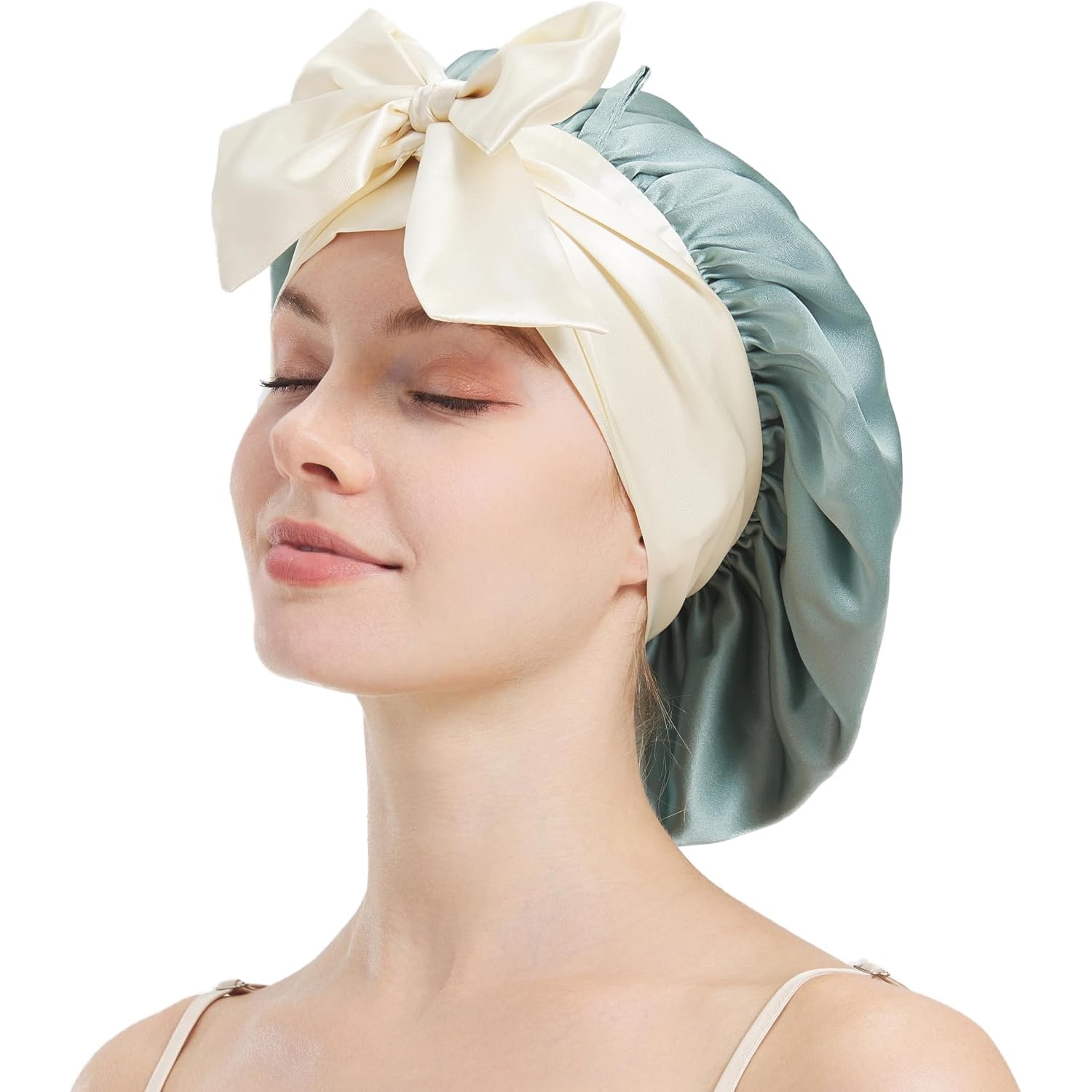
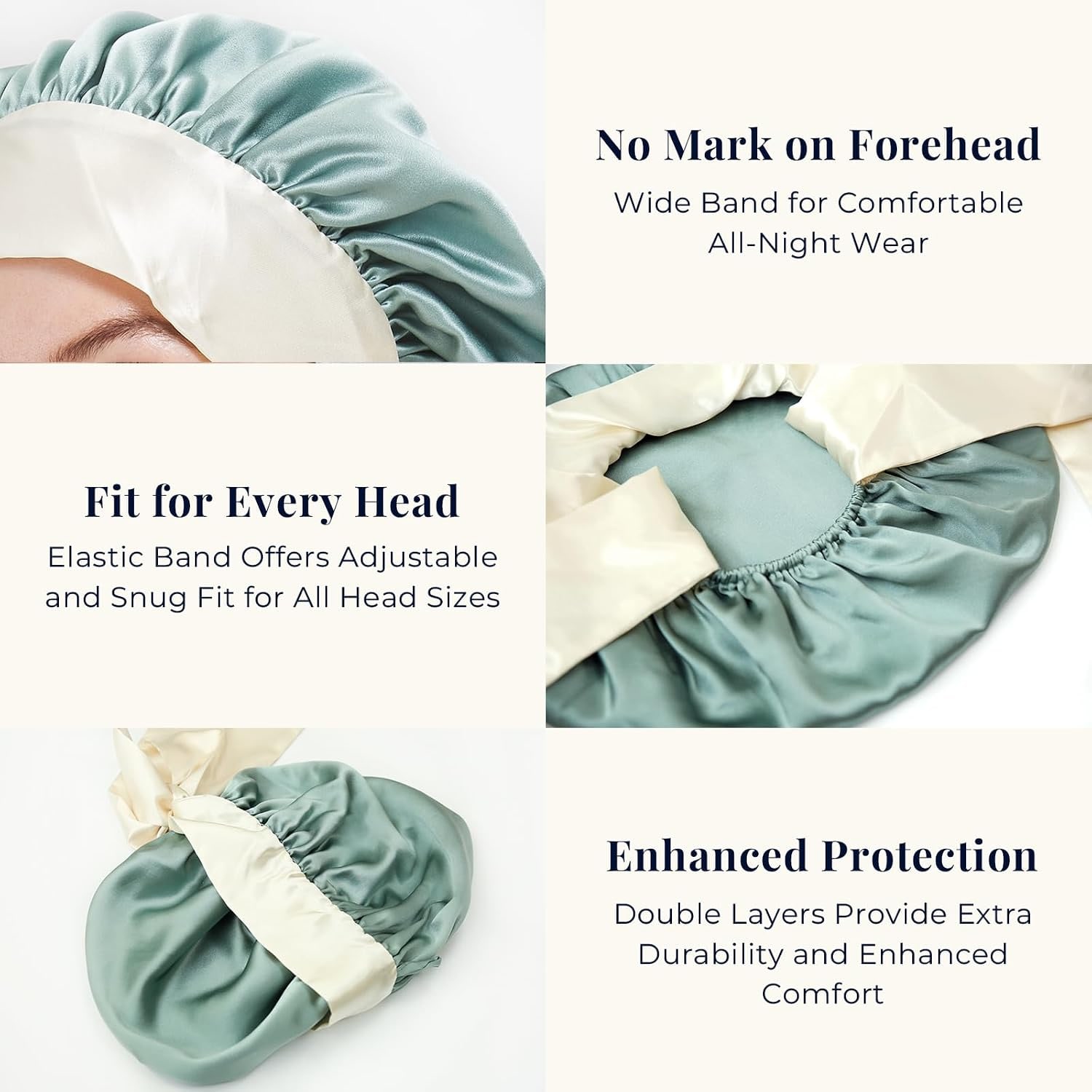
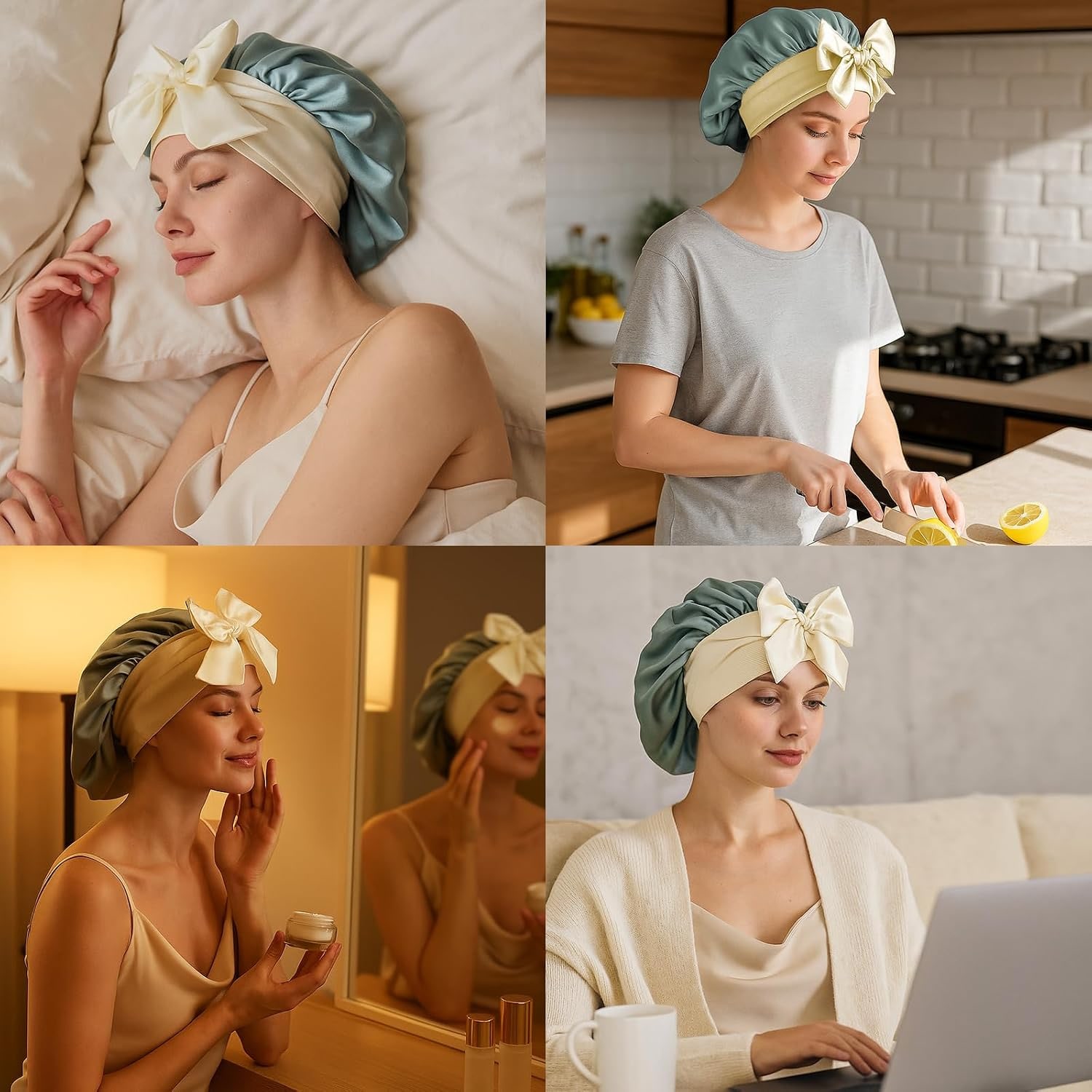
This bonnet uses mulberry silk for both the inner and outer layer. Your hair touches silk and the pillow touches silk. Friction is reduced on both sides rather than just one, and the cap holds its shape a little better because there are two layers of the same fabric working together.
Mulberry silk is the standard grade used for bedding and hair accessories. It comes from silkworms raised on mulberry leaves, which produces long, even fibres and a consistently smooth finish. It is smoother than cotton and smoother than most synthetics, and that is really the whole mechanism at work. Hair slides instead of catching.
Why the ties matter more than you would guess
Most bonnets use a wide elastic band. It is cheap to make and it works, right up until it does not. Elastic loses its stretch after a few dozen washes. It also applies the same pressure to every head regardless of size, which is great if your head happens to be average and annoying if it is not.
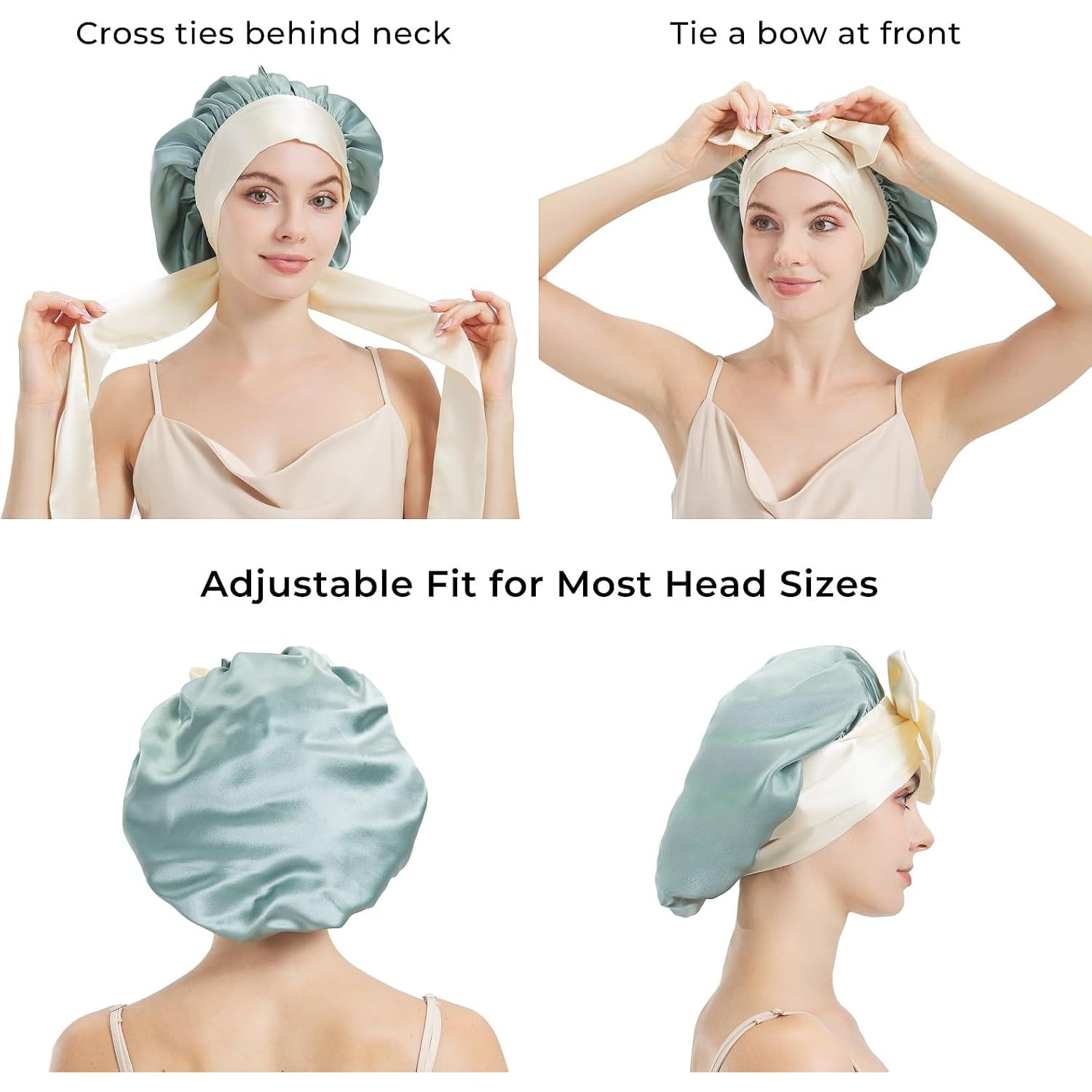
Ties give you control. You set the tension where you want it, and you reset it every night depending on how much hair you have tucked in. If you have just washed and your hair is at full volume, loosen off. If you are a restless sleeper and you want it locked down, pull it tighter.
There is a second benefit around the hairline. Those fine baby hairs at the front and the edges take the brunt of a tight elastic band. A tie sits where you place it and applies even pressure rather than squeezing. For anyone who has woken up with a red line across the forehead, this is the difference that makes the best silk bonnet with ties worth the small amount of extra fuss at bedtime.
Getting the size right
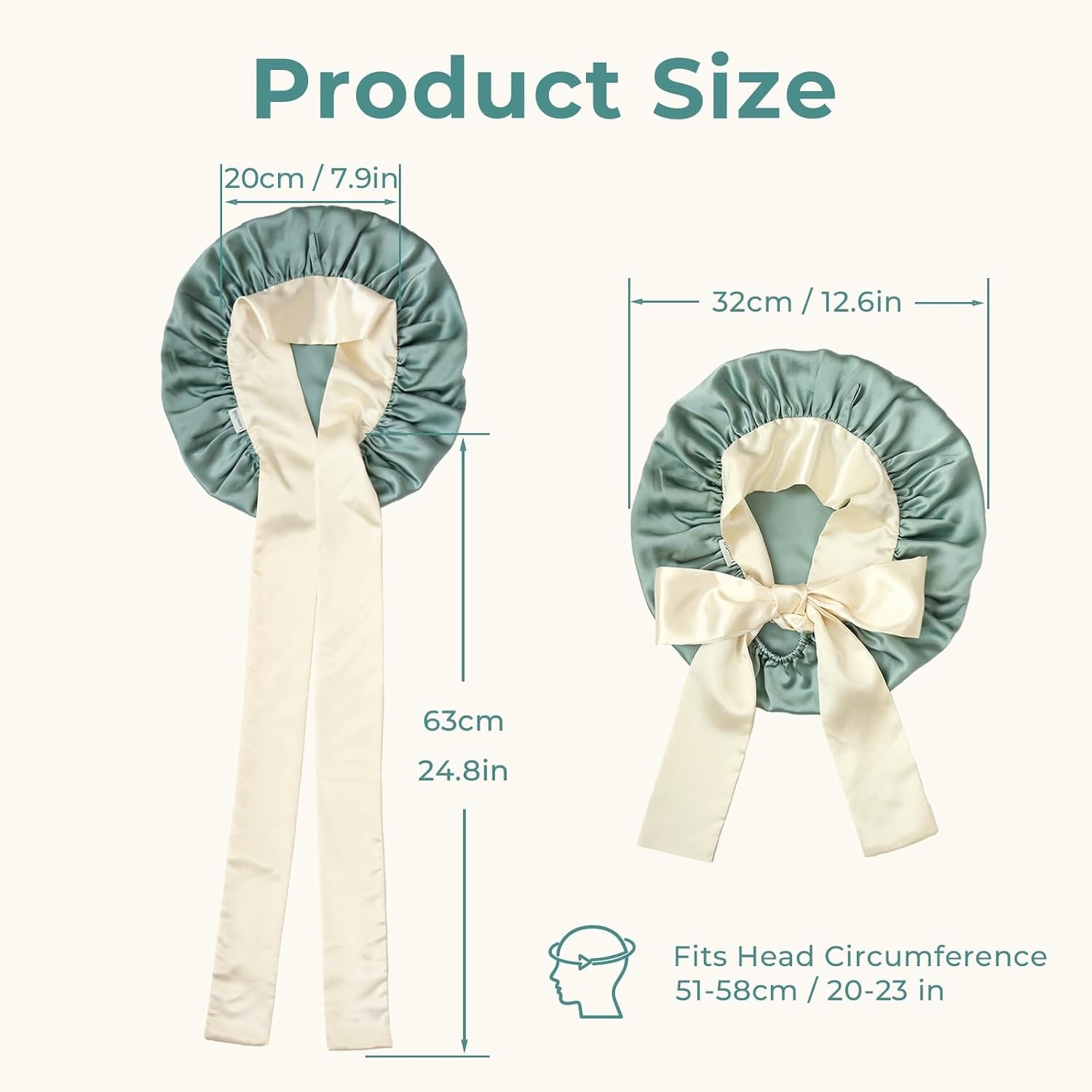
This bonnet is made for head measurements of roughly 51 to 58 cm, or about 20 to 23 inches. That range covers most adults.
To measure, take a soft tape and run it around your head just above the ears, across the middle of the forehead and around the back. Keep it level. If the number lands inside that range, you are sorted. If you are at the very top of the range and you have a lot of hair, consider how much volume you need to fit underneath, because the hair takes up space too.
Head size is the measurement that matters, not hair length. Long hair can be coiled or loosely gathered before you put the bonnet on. Volume is the thing that eats capacity, which is why someone with thick, shoulder-length curls may fill a bonnet more than someone with waist-length straight hair.
Who it suits
Curly and coily hair gets the most obvious benefit, because those textures are more prone to friction damage and they lose definition fastest overnight. A bonnet keeps the curl pattern contained so you are not rebuilding it from scratch each morning.
Braids, twists and locs also do well under a bonnet, mainly because it stops the style fuzzing up at the edges and extends how long it looks fresh. Protective styles take time to install, so anything that adds days to their life is worth doing.
Straight and wavy hair is often left out of the conversation, which is a shame. Long straight hair tangles badly at the nape, and coloured hair of any texture benefits from less rubbing. People who have just had a blow-dry or a keratin treatment often use the best silk sleep cap they can find simply to buy themselves an extra day between washes.
And then there is the daytime crowd. Plenty of people buy a bonnet for sleeping and end up wearing it while doing skincare, washing dishes, or lounging about on a Sunday. It keeps hair off the face without clips digging in.
How to put it on properly
Start at the back. Place the bonnet over the back of your head, then pull it forward over the hairline so your hair is pushed gently up and in rather than dragged down. If you yank it on front to back, you squash everything flat and undo the point of wearing it.
For curls, loosely pile the hair on top of the head first. Some people use a satin scrunchie to hold a loose pineapple before the bonnet goes on. For long straight hair, a loose coil at the crown works better than leaving it down the back where it will slide out.
Then set the ties. Snug enough that it stays put when you shake your head, loose enough that you cannot feel it pressing. If you wake up with a mark, you tied it too tight.
Caring for it
Hand wash only. Cool water, a mild detergent made for delicates, and a gentle swirl is all it needs. Do not scrub it, do not wring it out, and do not put it through a machine cycle even on delicate, because the agitation stresses the tie seams.
Press the water out by rolling the bonnet in a towel, then reshape it and lay it flat to dry. Keep it out of direct sun and away from radiators. Heat is what dulls silk and shortens its life.
How often depends on your products. If you use oils or heavy leave-in creams, wash it weekly. If you go to bed with dry, product-free hair, every two weeks is fine. Many people end up buying a second one so there is always a clean bonnet ready, which is also why the best silk bonnet gift tends to be well received by someone who already owns one.
If it needs pressing, use a low iron with a cloth between the iron and the fabric.
The short version
A tie silk bonnet is a small thing that solves a specific problem. Hair gets roughed up at night because it drags against the pillow, and silk is smoother than cotton, so there is less dragging.
This one uses mulberry silk on both layers, so the smooth surface faces your hair and your pillow. The ties let you set the fit instead of accepting whatever an elastic band decides. It fits head sizes of 51 to 58 cm and works across curly, coily, braided, wavy and straight hair.
Wash it by hand, dry it flat, and it becomes part of the routine without you thinking about it. If you are not sure about the fit, measure your head first and get in touch. We would rather help you get it right the first time.