

The complete guide
How to Choose a Silk Pillowcase, Momme, Size, Closures and Care
The small annoyance that silk fixes
Most people do not think much about what their face spends eight hours pressed against. Then they notice the crease lines that take an hour to fade in the morning, or the tangle at the back of the head that was not there the night before, or the way a cotton case feels slightly warm and dry after a few hours. None of this is dramatic. It is just a low-level friction that you put up with because you assume that is how beds work.
Silk changes the surface. Cotton fibres are short and have a faint texture to them, so skin and hair catch as you move. A silk filament is long, round and smooth, and a tightly woven silk fabric gives you a surface that things slide across instead of dragging on. That is the mechanical difference. It is not magic and it is not a treatment, it is just what the fibre does.
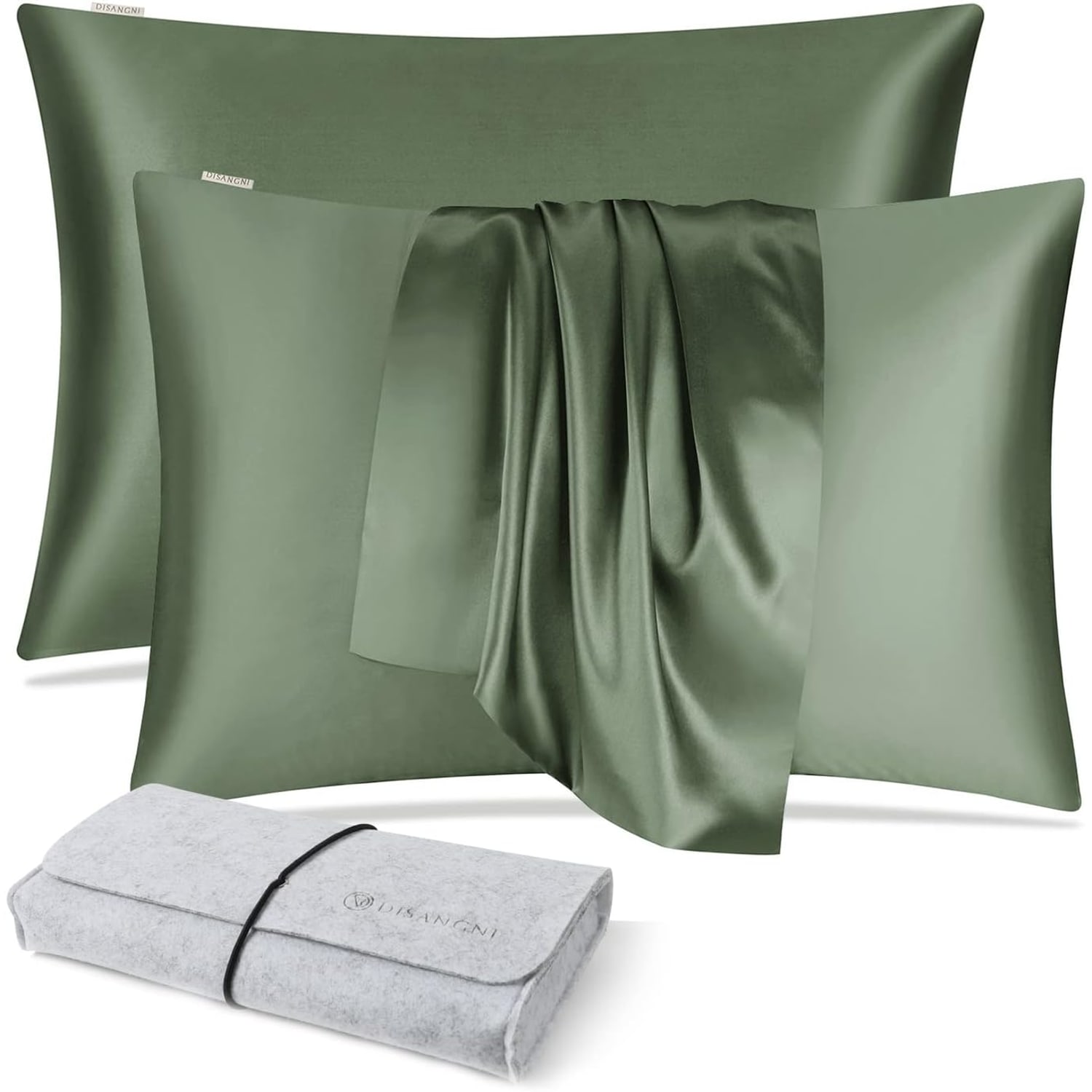
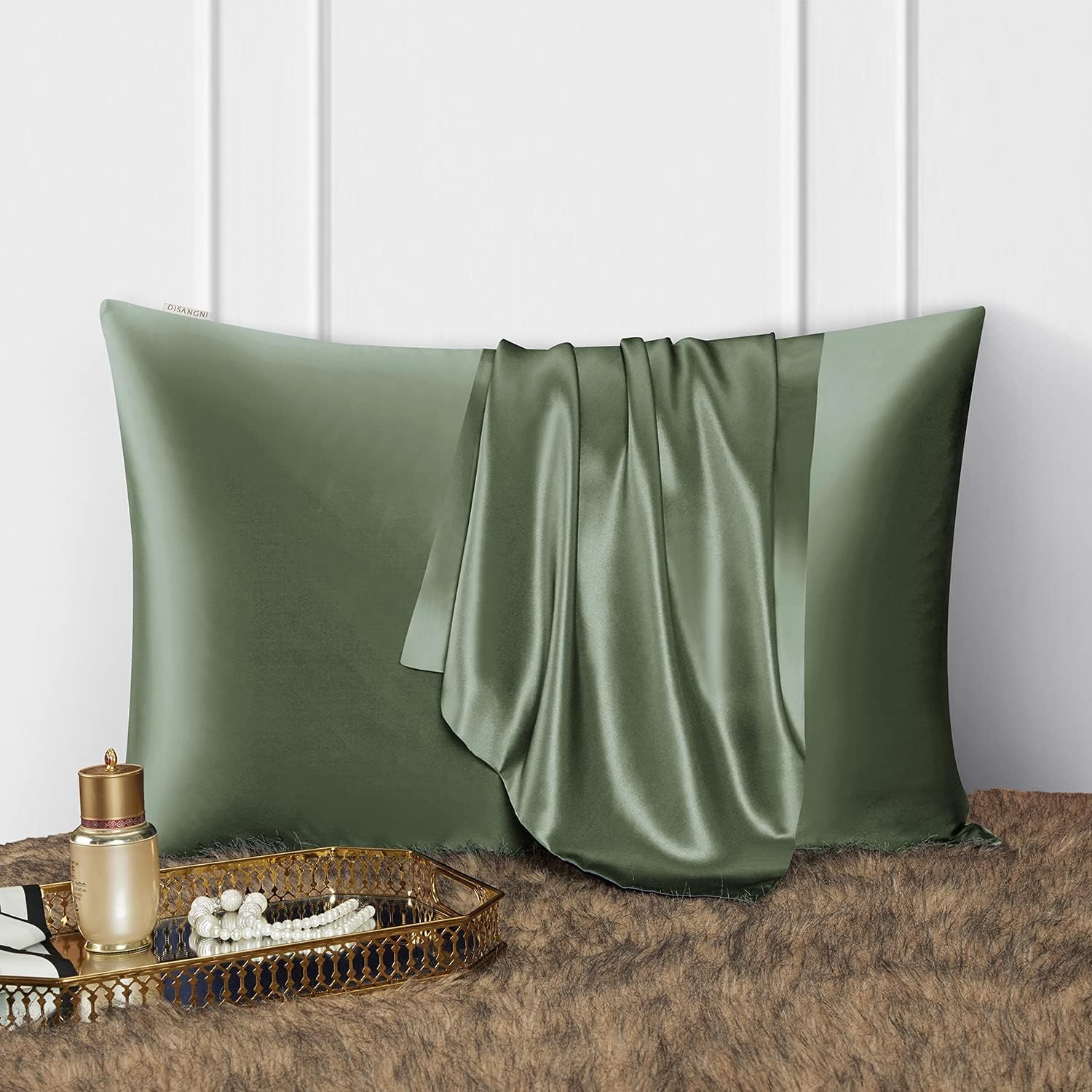
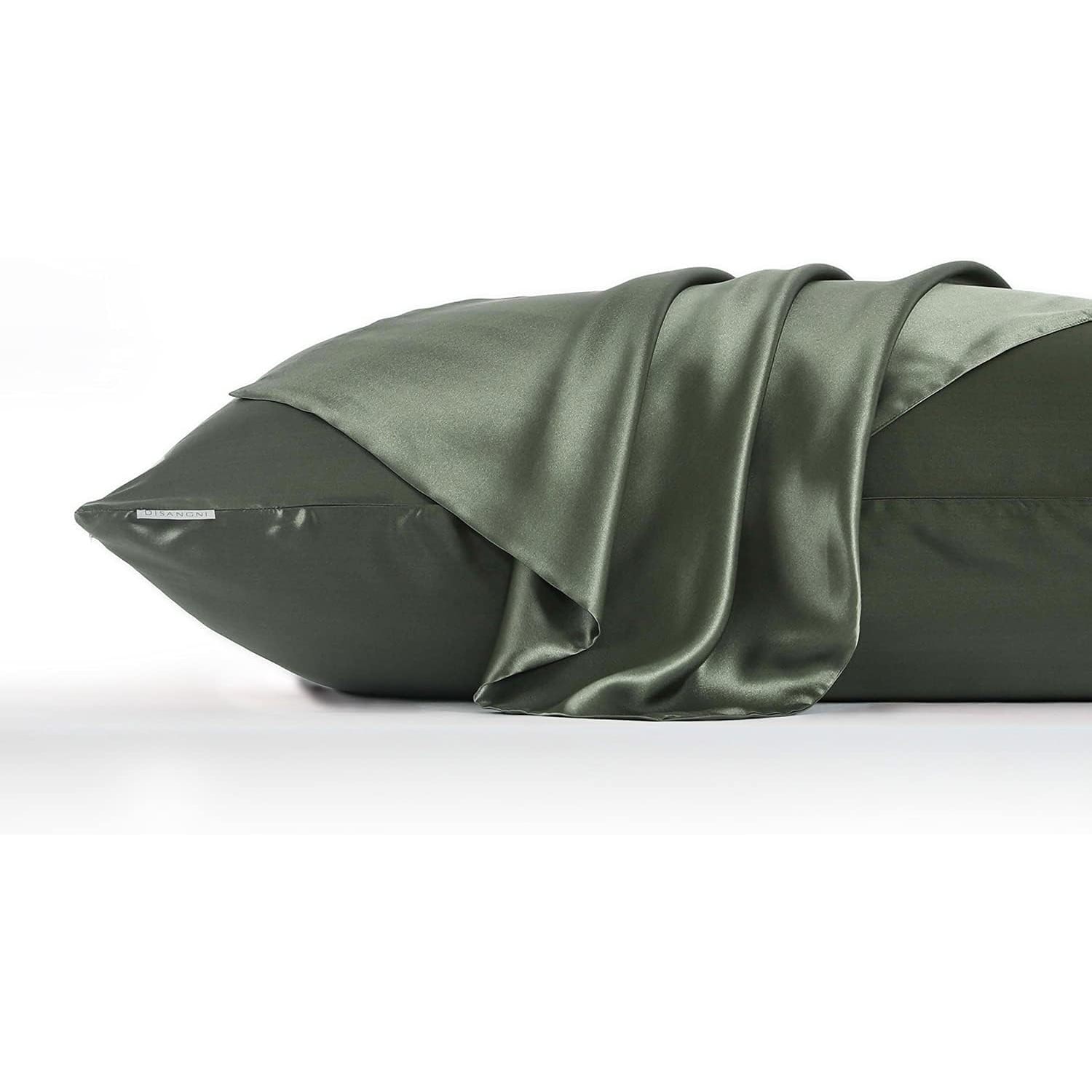
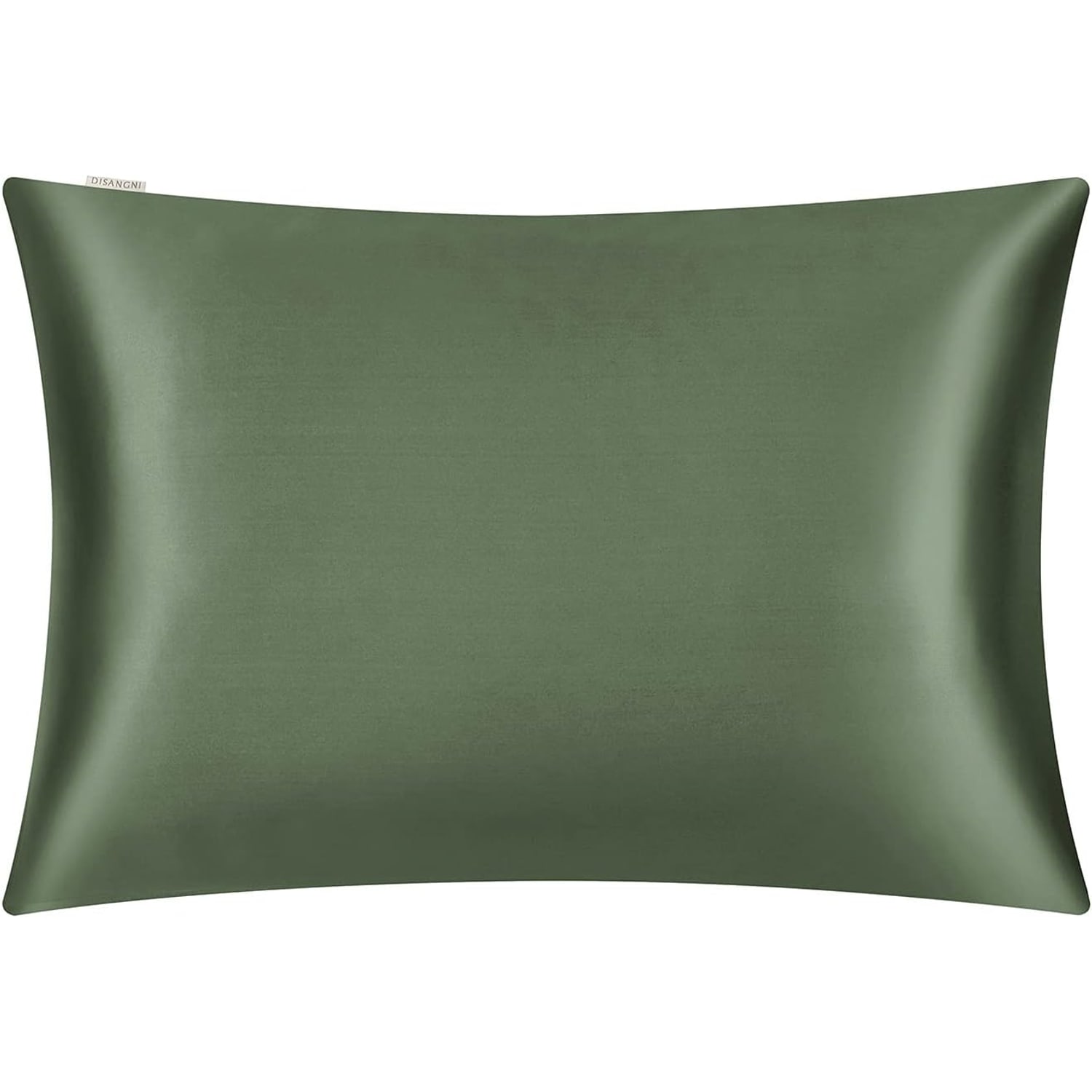
The green silk pillowcases in this two pack are 22 momme mulberry silk on both faces, woven at 600 thread count, sized 66 cm by 50.8 cm for standard pillows, and closed with a concealed zipper. Below is how to read those numbers and work out whether this set is the right one for you.
Momme is the number that matters most
If you only learn one piece of silk vocabulary, make it momme. Thread count gets more attention because people know it from cotton sheets, but momme tells you more about how a silk pillowcase will actually feel and last.
Momme measures weight. Specifically, it is the weight in pounds of a piece of silk 45 inches wide and 100 yards long. You do not need to do that arithmetic. You just need to know that higher momme means a denser, heavier fabric.
Silk bedding usually lands somewhere between 16 and 25 momme. At 16 momme the fabric is light and can feel slightly flimsy, and it shows wear faster. At 19 momme you are into usable territory and a lot of mid-priced cases sit there. At 22 momme, which is what this set uses, the fabric has clear weight in the hand and drapes properly over a pillow instead of clinging to it. Go above 25 and you are paying a lot more for a difference most people cannot feel. That is why anyone shopping for the best mulberry silk pillowcase tends to end up looking at 22 momme first.
Thread count, and why 600 is plenty
Thread count is the number of threads woven into a square inch. In silk it works a bit differently from cotton, because silk filaments are finer, so the numbers run higher for the same perceived density.
Six hundred is a dense, even weave. What you feel is a surface with no obvious texture, just smoothness. Combined with the 22 momme weight, you get a fabric that is both smooth and substantial. One without the other is less satisfying. A high thread count on very light silk still feels thin, and a heavy silk in a loose weave loses some of the glide.
Mulberry silk, and why the source matters
Not all silk comes from the same place. Mulberry silk is produced by silkworms fed only on mulberry leaves in a controlled setting. The diet and the conditions produce long, uniform filaments with very few breaks and an even colour.
Wild or tussah silk, by contrast, comes from moths that eat a mixed diet in the open. The fibre is shorter, less even, and often has a slightly coarser hand and a natural tan tint. It has its own appeal in clothing, but for something your face is on all night, the consistency of mulberry silk is the point.
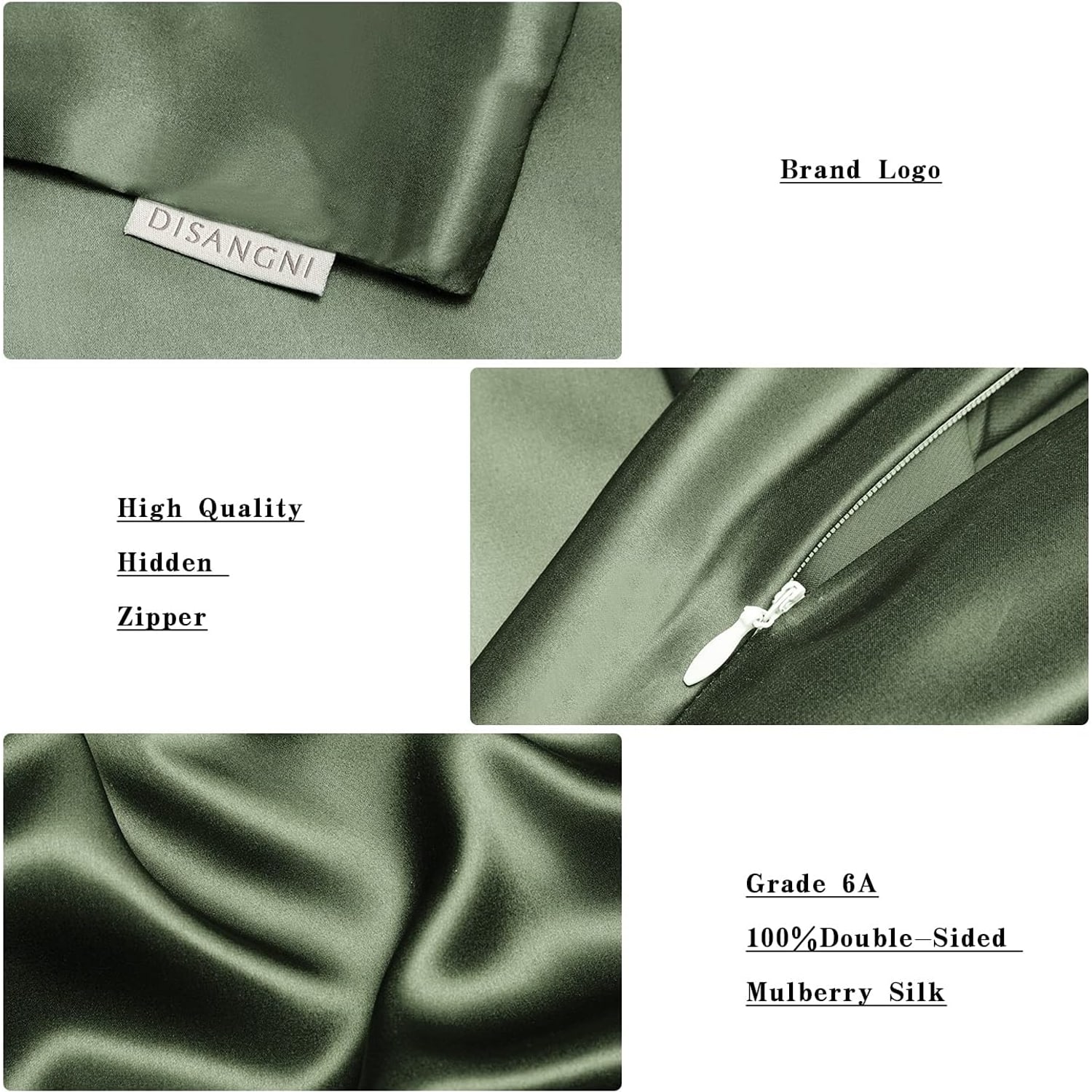
This set is 100% mulberry silk on both faces. Checking for double-sided construction is worth doing whenever you compare the best silk pillowcase options, because a cotton or polyester reverse is a common way to cut the price without cutting the advertised silk content on the front.
Getting the size right
Standard is the most common pillow size in New Zealand homes, and this case is cut for it at 66 cm by 50.8 cm, or 20 by 26 inches.
Before ordering, lay your pillow flat and measure it. If it comes in near 66 by 50 cm, you are sorted. King pillows run considerably longer, usually around 90 cm, and will not go into a standard case. European pillows are square, typically 65 by 65 cm, and also need their own size.
One other thing to consider is loft. A very thick or overstuffed pillow will fill a standard case tightly, which stretches the fabric and puts strain on the seams. If your pillow is unusually deep, the case will still fit, but it will sit snugly rather than loosely. Silk handles this fine when you treat it gently, but it is worth knowing before you order.
Zipper or envelope
Silk pillowcases usually close one of two ways. An envelope closure is a fabric flap that folds over the open end. A zipper runs along one edge and seals the case shut.
This set uses a concealed zipper. The advantage is simple. The pillow stays where it belongs, even if you are a restless sleeper or you like to flip and bunch your pillow. An envelope flap can gradually work loose, and on a firm pillow it sometimes refuses to stay tucked at all.
The word concealed matters too. The zipper sits hidden inside the seam, so you do not see hardware when the bed is made and you do not feel it against your face. If you have ever used a cushion cover with an exposed zip, you will know why that distinction is worth something.
Who this set suits
People with long hair tend to notice the difference first, because hair moving over silk rather than cotton catches less overnight. People who sleep on their side and wake up with pillow creases often try silk next. Anyone who finds cotton cases warm on summer nights may like silk, since it is breathable and feels cool when you first lie down.
The two pack suits a shared bed, obviously, with one case on each side. It also suits one person who wants to run a proper rotation, keeping one on the pillow while the other dries. Since silk is hand wash only, having a spare is the difference between a routine you keep and one you skip.
Green is a solid colour here, no pattern. It sits comfortably with white, cream, grey or natural linen, and it does not compete with a patterned duvet. If your bedroom is already decorated, a solid tone is the safer pick.
Looking after silk
Silk is less delicate than its reputation suggests, but it does ask for a different routine than cotton.
Hand wash in cool water, a maximum of 30 degrees Celsius. Soak the case fully in clean water before you add anything. Dissolve a small amount of mild detergent completely in the water first, because undiluted detergent sitting directly on silk can mark it. Wash the case on its own or with similar colours, and keep bleach well away.
When you rinse, press the water out instead of wringing or twisting. Twisting stresses the fibres and leaves creases that are hard to shift. Dry flat or hang in the shade. Direct sun and tumble dryer heat are the two fastest ways to age silk, so avoid both.
If you need to press it, use a cool iron on the reverse side while the fabric is still slightly damp. And wash the case reasonably soon after it picks up a mark, since stains that sit are harder to lift from silk than from cotton.
The short version
Momme tells you how heavy and durable the silk is, and 22 is the weight most people settle on. A 600 thread count weave gives you a smooth, even surface. Mulberry silk on both sides means no cotton reverse to spoil the effect. Measure your pillow against 66 by 50.8 cm before you order. The concealed zipper keeps everything in place. And wash by hand in cool water, with the detergent dissolved first and no sun or dryer heat afterwards.
Get those few things right and a pair of silk pillowcases will stay good for a long time.