
The complete guide
Choosing a Kids Silk Sleep Mask, A Parent's Buying Guide
The problem with light and small children
Most sleep advice aimed at parents is about routines. Baths, stories, no screens, same time every night. All useful. But a lot of the time the thing that actually wakes a child is simpler than any of that, and it is light.
Children are not small adults when it comes to sleep. They spend more of the night in light sleep stages, and they surface more often. During those brief surfacings, the brain does a quick scan of the room. If the room is dark, the child rolls over and drops back down. If there is a glow under the door, a street light through thin curtains or an early summer dawn at five in the morning, the scan returns something interesting and the child wakes properly.
New Zealand summers make this worse than most parents expect. Light at both ends of the day, long twilight, and blinds in most rental houses that were never designed to block anything. You can spend a few hundred dollars on blackout curtains for one room and then find the problem reappears at the bach, at grandma's house or on the first night of camp.
A sleep mask solves the problem differently. Instead of changing the room, you change what the child's eyes can see. It costs a fraction of blackout curtains, and it goes wherever the child goes.
Why silk, specifically
Walk through the sleep aisle and you will find masks made of foam, polyester, brushed cotton and silk. They are not interchangeable.
Foam masks with moulded cups block light well but they are bulky. On a child, the cups often sit in the wrong place, and side sleepers end up pushing the mask off against the pillow. Polyester is cheap, which is why most hotel masks are made of it, but it does not breathe and it gets warm and slightly clammy over a few hours. Brushed cotton is comfortable at first and then grabs at the skin as it ages and the nap flattens.
Silk is a long, fine, smooth filament. Fabric made from it has very little surface texture, so skin slides over it instead of catching on it. For a strip of fabric that rests on the thinnest skin on the body for eight hours, that matters. Silk also sits cool against the face when it first goes on, which children tend to find calming rather than stimulating.
That is the honest case for silk. It feels better, so it gets worn. A mask that gets taken off at eleven at night is not doing anything.
What makes a kids' mask different
A shrunken adult mask is not a kids' mask. There are three things that separate a good one from a bad one.
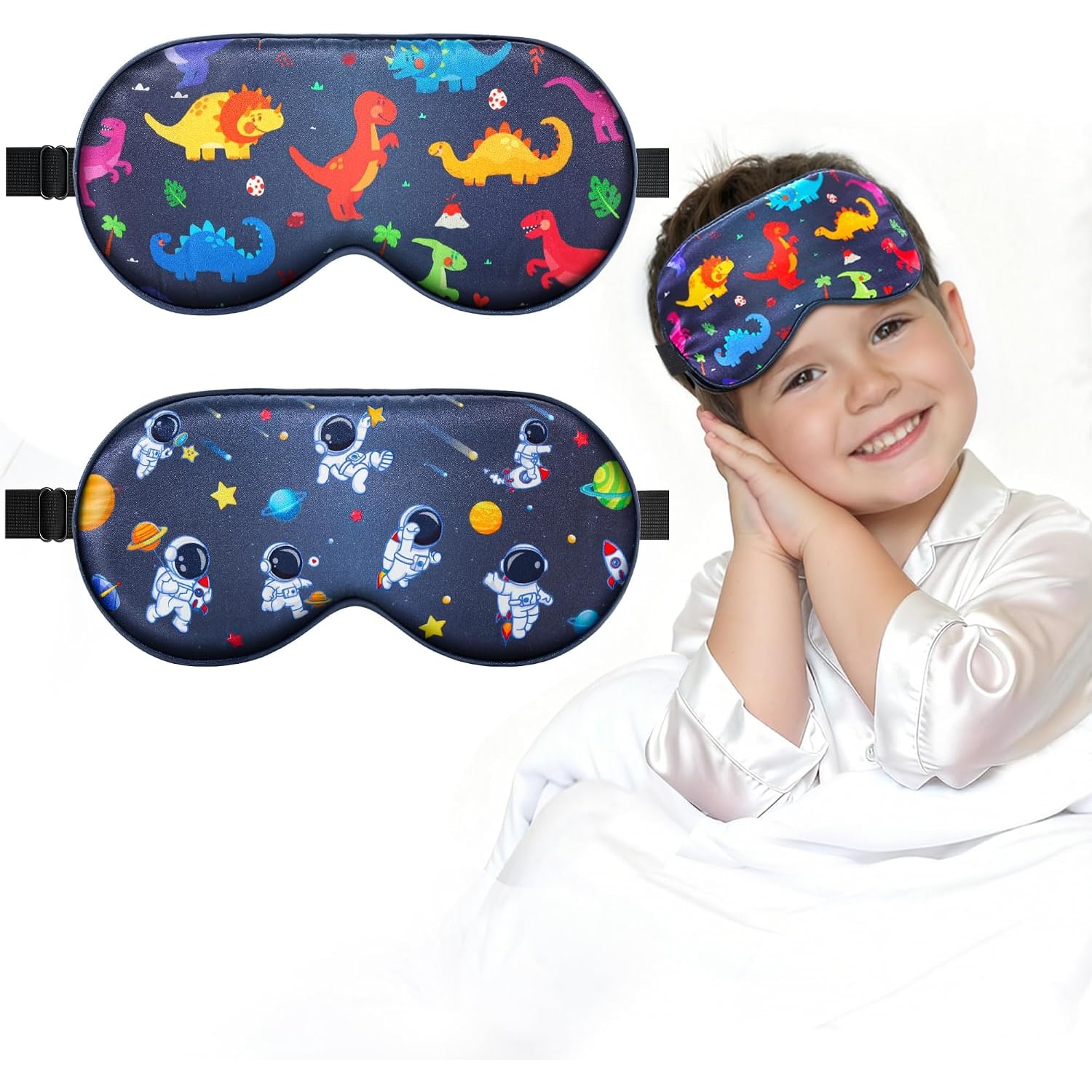
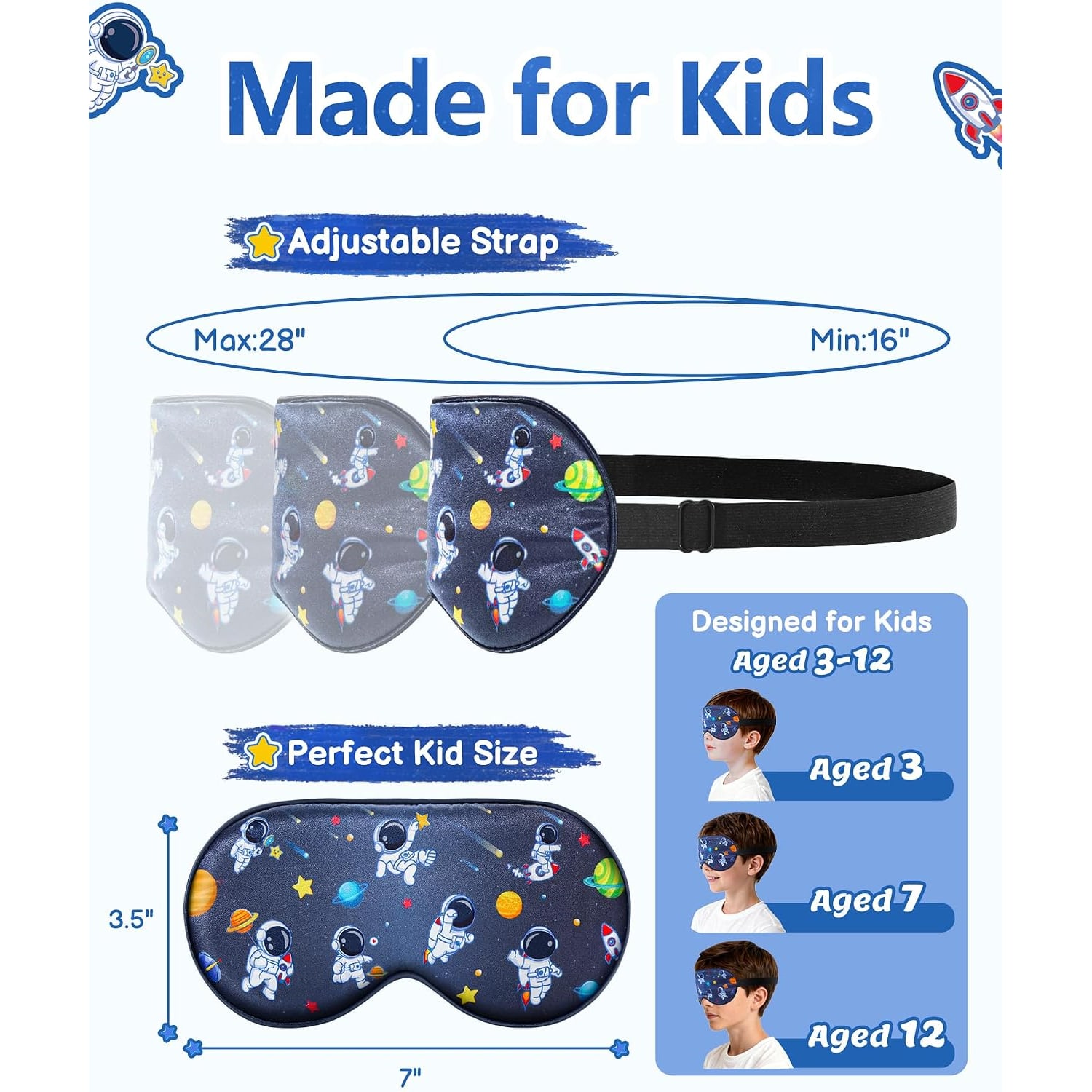
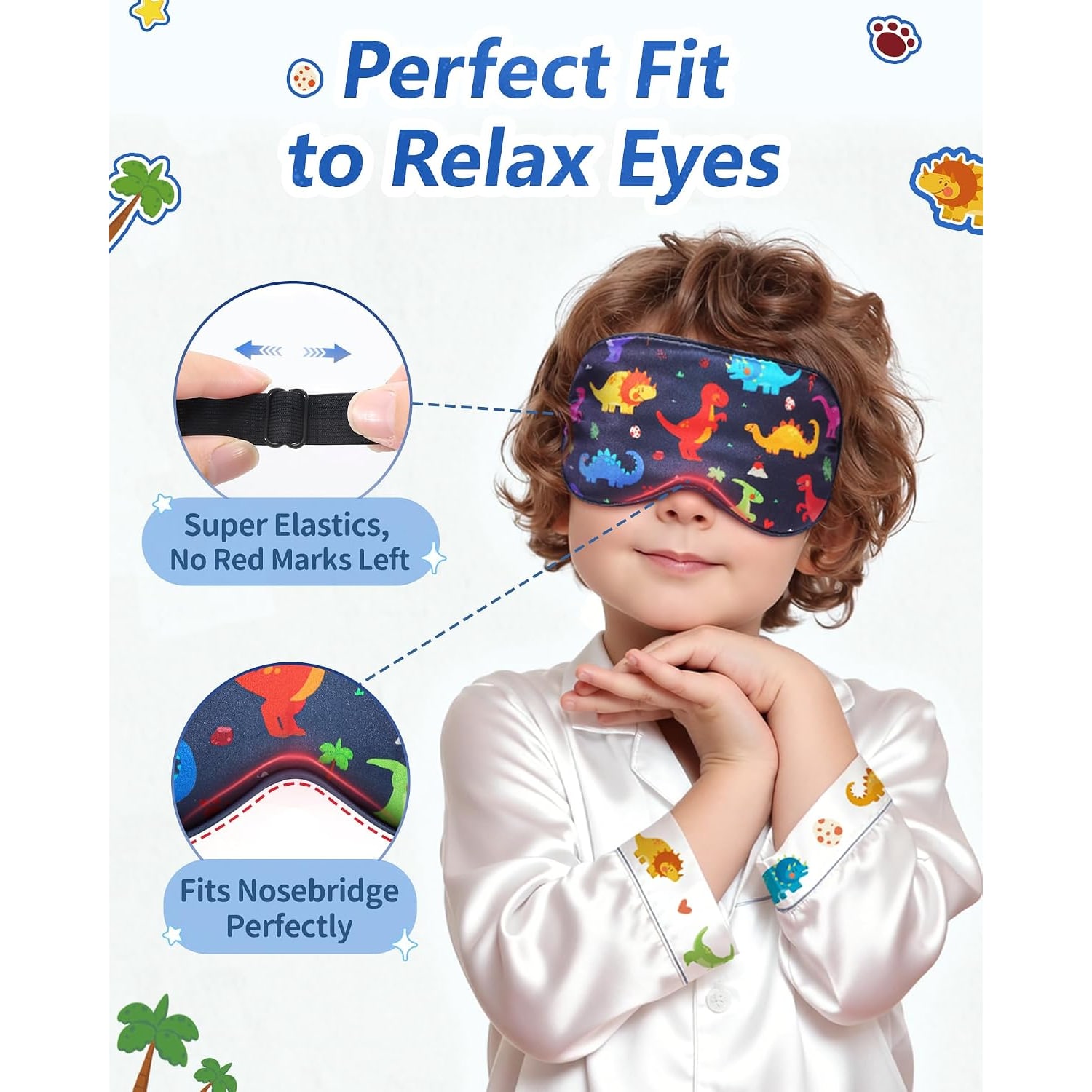
The first is the strap. Children's heads vary enormously between a four year old and a nine year old, and they keep growing. A fixed elastic loop will be wrong for most of them. An adjustable buckle, like the one on this set, lets you set the tension to the head in front of you and then leave it. This is the single most common reason a mask fails in practice. Too loose and it migrates up the forehead within twenty minutes. Too tight and it presses on the temples and gets flung across the room.
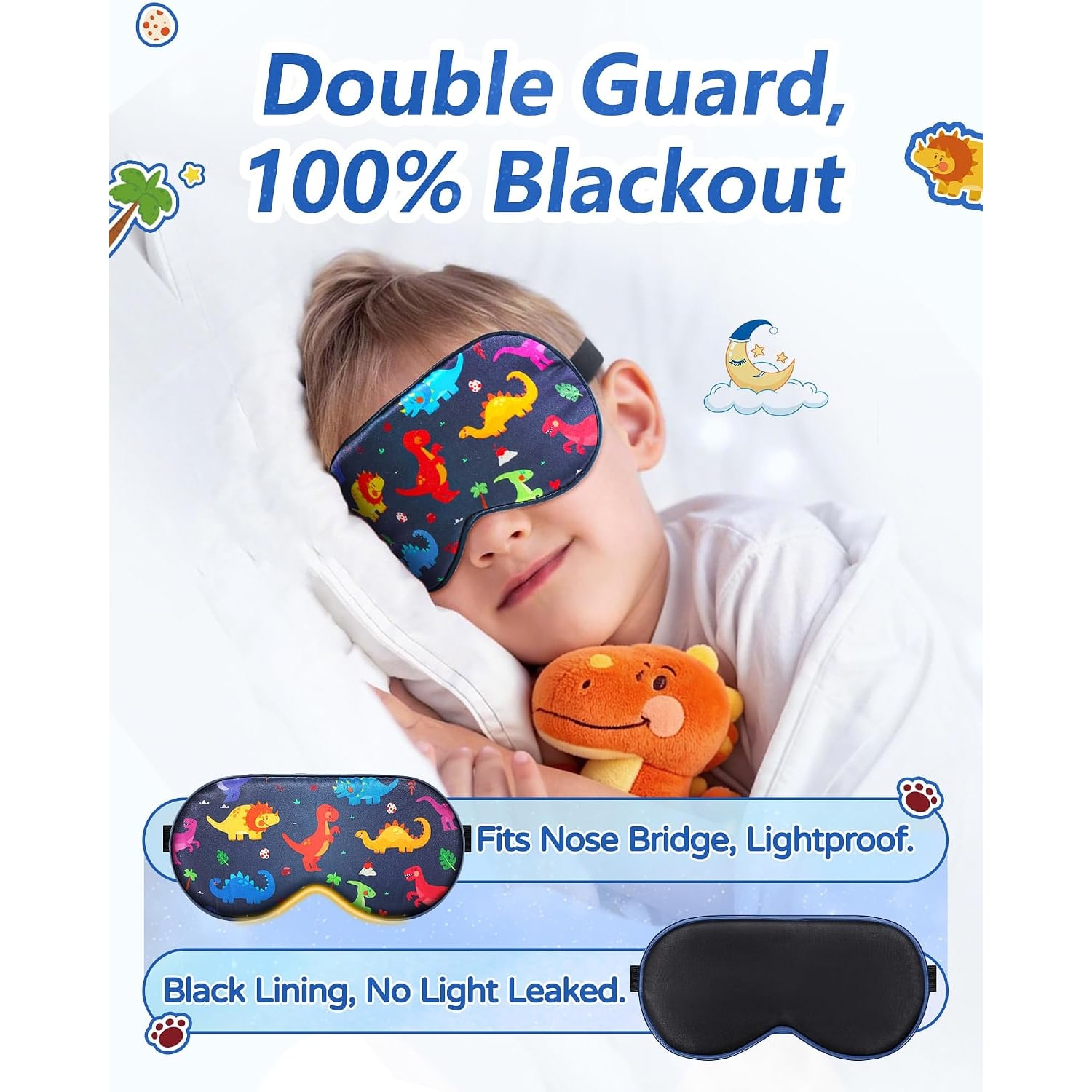
The second is the nose. Light does not mostly come through the fabric, it comes in through the triangular gaps either side of the nose. A mask with a contoured lower edge that follows the nose and brow line closes those gaps. A flat rectangle of fabric does not, no matter how opaque it is.
The third is weight. The pack here weighs 50 grams in total for two masks, so each one is a handful of grams. Children notice weight on their face far more than adults do. The lighter the mask, the faster they stop thinking about it.
Why two masks is the sensible number
A single mask creates a logistics problem. It needs to be at home for bedtime and in the bag for the flight, and it cannot be both. The usual outcome is a forgotten mask and a very long trip.
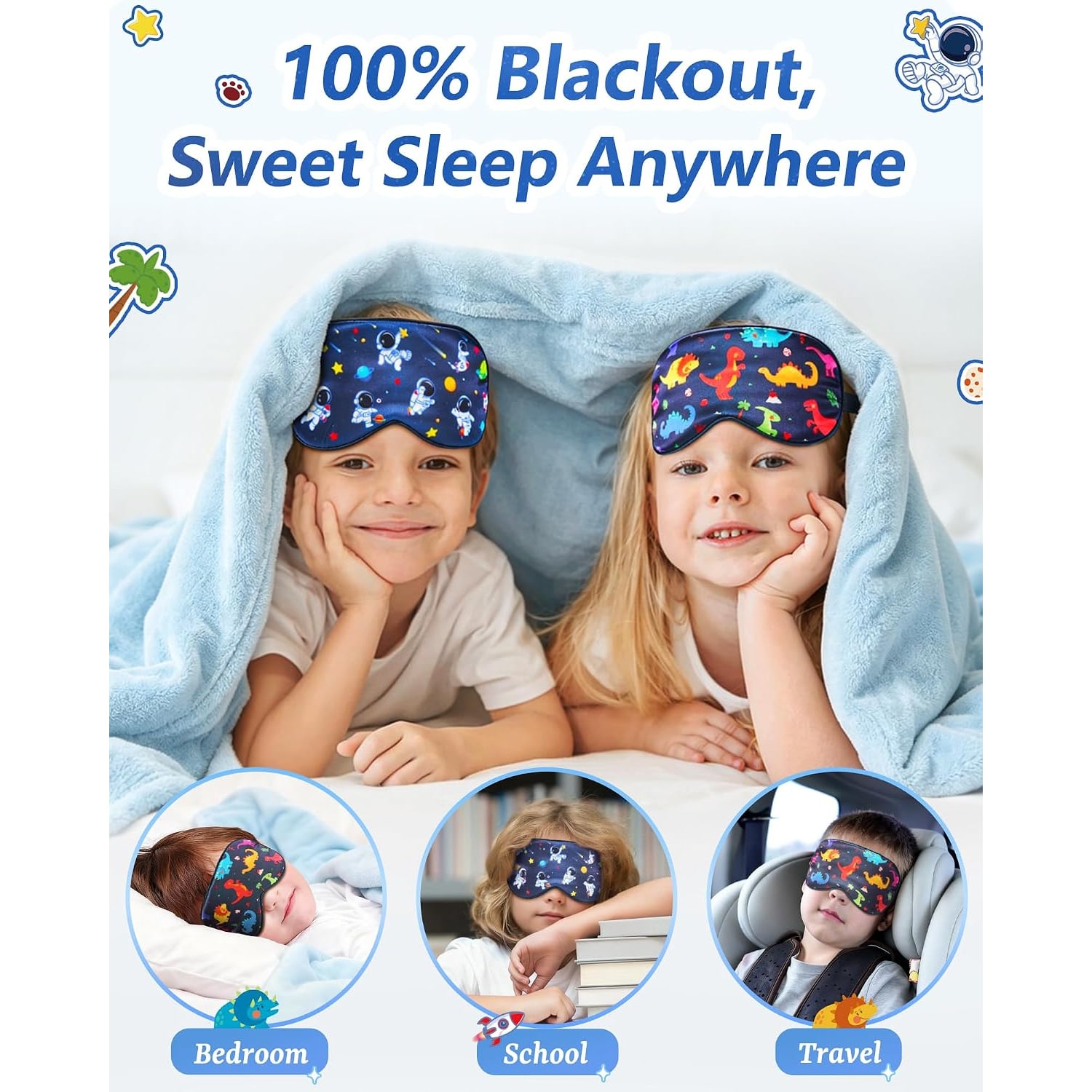
Two masks removes the decision. One lives by the bed and one lives in the travel bag or school bag permanently. When one is drying after a wash, the other covers the gap. If you have two children sharing a room, they each get one, which also saves the nightly argument about ownership.
It is a small thing, but it is the difference between a product that gets used for years and one that disappears into a drawer after a fortnight.
Getting the fit right on the first night
Spend five minutes on this and the mask will work. Skip it and it probably will not.
Put the mask on your child while they are sitting up, not lying down. Adjust the buckle until the mask sits flat against the face with no gap at the nose, then back it off one small notch. You want contact, not pressure. If you can slide two fingers under the strap at the back of the head without the mask lifting, that is about right.
Then have them lie down and roll onto each side. If the mask slides or lifts, tighten slightly. If they say it feels tight on the temples, loosen it. Check the fit again every few months as they grow.
It also helps to introduce the mask before it is needed. Let them wear it for the last ten minutes of a bedtime story, at home, on an ordinary night. By the time you put them on a plane with it, it is familiar rather than strange.
Where a mask earns its keep
At home, the obvious use is summer mornings and street lights. Less obvious is the child who shares a room with a sibling who reads later, or the one who needs to nap in the afternoon with the sun still up.
Travel is where parents become believers. Cabin lights come on for meals at odd hours, the window shades never all stay down, and overnight buses and trains are worse. A flat 50 gram pack costs nothing in luggage terms.
Camping is the other big one. A tent starts glowing around five in the morning in summer, and no amount of fabric on the outside of the tent changes that. A mask is lighter and more reliable than any other option.
Then there is the grandparents' house, the bach, the hotel room with curtains that do not quite meet in the middle, and every holiday house you have ever stayed in. The mask makes all of those rooms the same.
Looking after silk without any fuss
Silk is not fragile, but it does not like heat or harsh chemicals.
Hand wash in cool water with a mild detergent made for delicates. Swirl rather than scrub. Rinse in clean cool water, press the water out in a towel, and lay it flat to dry somewhere shaded with a bit of air movement. Do not wring it, do not bleach it and do not put it in the dryer. Heat damages the fibre and destroys the elastic in the strap.
Wash every week or two with nightly use, more often after a cold. Keep it away from bleach and from detergents with optical brighteners, which are the usual culprits when colour fades. If it needs pressing, use the coolest iron setting on the reverse side and keep the iron away from the strap.
Two masks makes all of this easier, because you are never washing the only one you have.
The short version
Light wakes children more than most parents realise, and a mask is the cheapest, most portable fix available. Silk earns its place because it is smooth and light enough that a child forgets they are wearing it, which is the whole game.
Look for an adjustable strap and a shaped nose edge, because those two features decide whether a mask stays on all night. This set has both, in a pack of two that weighs 50 grams and shapes to a smaller face.
Set the fit on the first night, hand wash it in cool water, and keep one by the bed and one in the bag. That is the entire instruction manual.