
The complete guide
Choosing A Kids Silk Pillowcase, A Parent's Buying Guide
The problem with most kids bedding
Children's pillowcases tend to fall into two camps. There are the fun ones, printed with cartoons and covered in characters, usually made from thin polyester that goes shiny after a few washes and feels warm against the face. Then there are the good quality ones, plain cotton or linen in sensible colours, which children treat with complete indifference.
Parents end up buying both. The fun one goes on the bed because the child insists, and the good one sits in the cupboard.
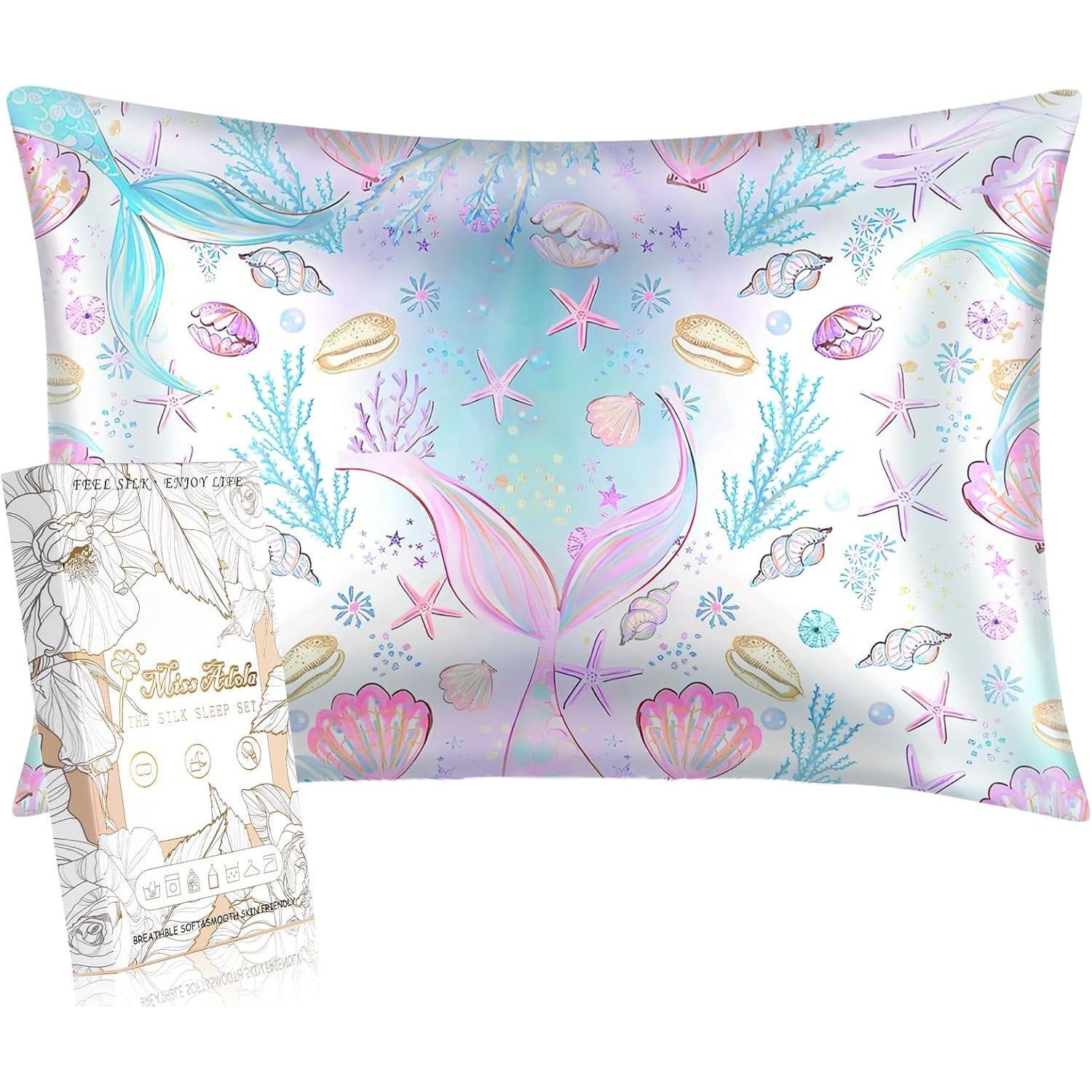
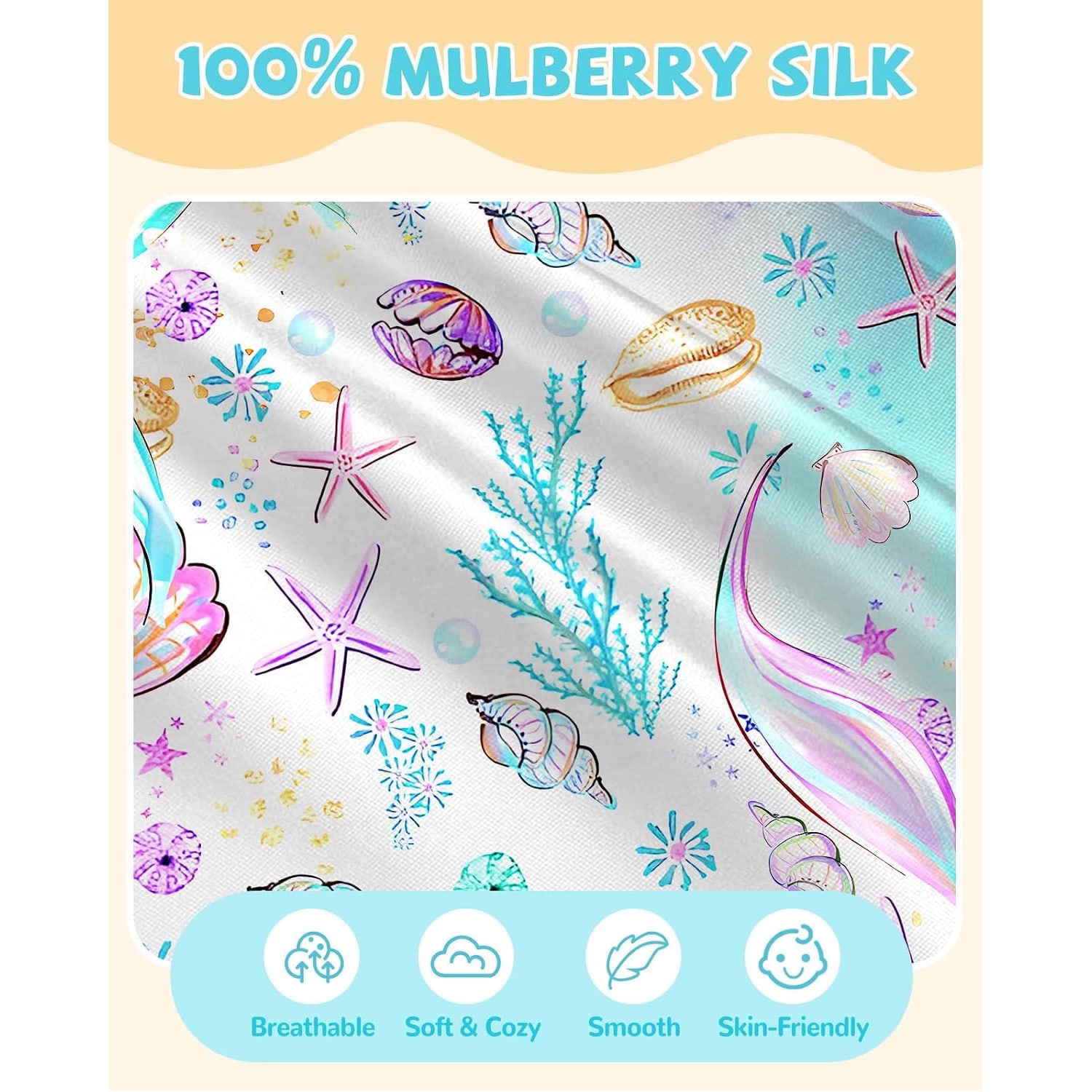
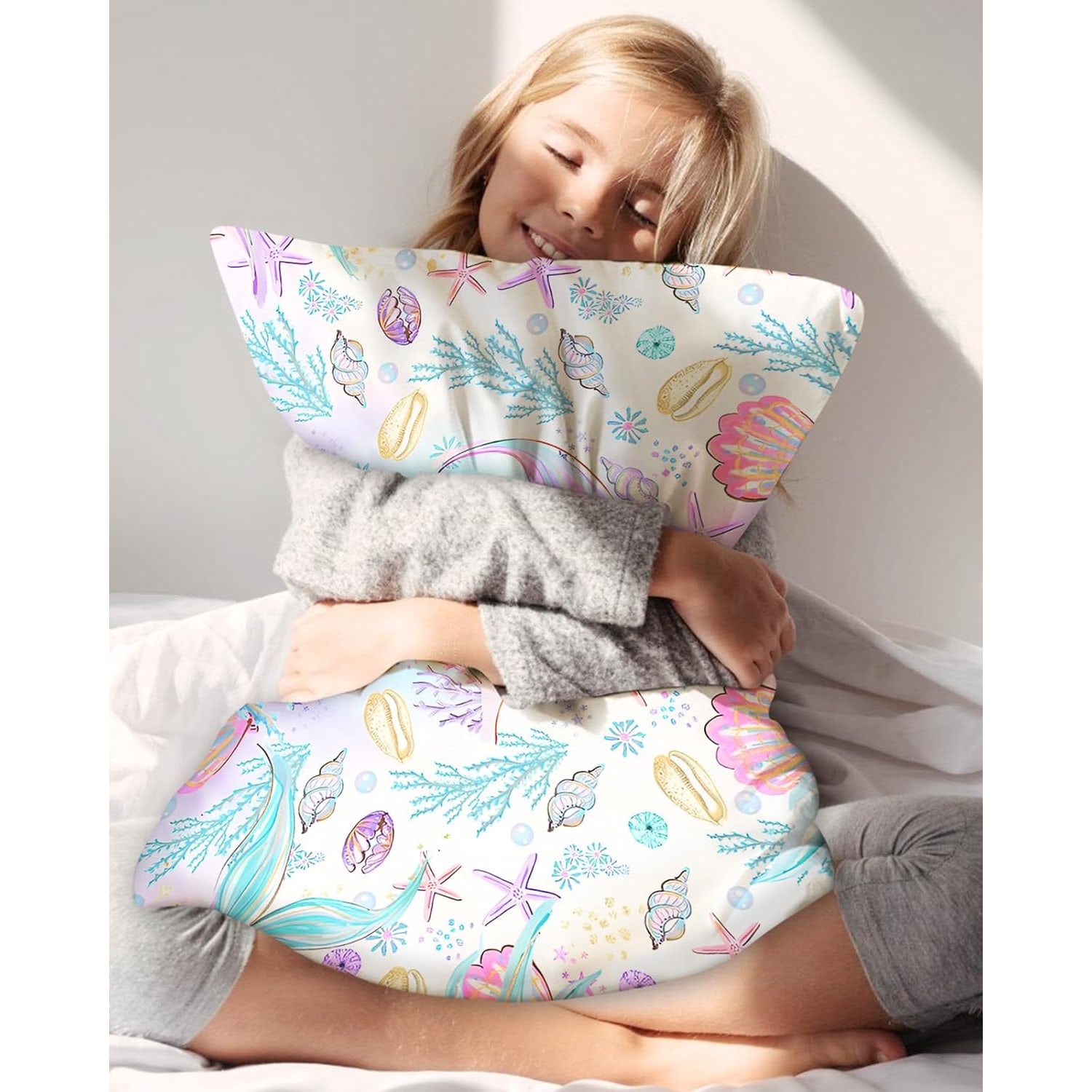
This pillowcase tries to sit in the middle. The print is genuinely a kids print, a cartoon fish tail design that looks like something from a story rather than a hotel. The fabric underneath is mulberry silk at 19 momme, which is the same weight class used in adult silk bedding. So the thing on the bed is both the one the child chose and the one you would have chosen.
What silk actually does on a pillow
Silk is worth understanding properly, because there is a lot of loose talk about it.
The useful fact is friction. Cotton, even nice cotton, is a woven fabric with a textured surface. Hair catches on it. When a child rolls over forty times a night, hair drags across that surface each time. Silk has a far smoother face, so hair and skin slide across it rather than catch. That is a measurable property of the fibre, not a promise about results.
The second useful fact is temperature. Silk feels cool when you first put your cheek on it and does not hold heat the way a thick brushed cotton does. For children who run warm at night, or who kick covers off in January, that cool first contact is often the thing they notice and like.
Beyond that, we will not claim anything. Silk is a smooth, cool, strong natural fibre. That is enough to recommend it without going further.
Reading the momme number
If you shop for silk bedding you will keep seeing momme, written as a number followed by the word. It is the traditional weight measure for silk fabric, and it is the single most useful number on any silk listing.
Bedding silk generally runs from about 16 momme at the light end to 25 at the heavy end. Low momme silk is thinner and cheaper, drapes very fluidly, and does not last as long under regular washing. High momme silk is dense and substantial, costs considerably more, and can feel almost heavy on a pillow.
This case is 19 momme, which sits comfortably in the middle. It has enough weight to sit properly over a pillow without wrinkling into a mess, and enough substance to handle regular use. For a child's bed, where the case will be washed often and treated without much ceremony, mid-weight is the sensible pick. People looking for the best 19 momme silk pillowcase are usually looking for exactly this balance of durability and feel.
Size, and why it matters more than you think
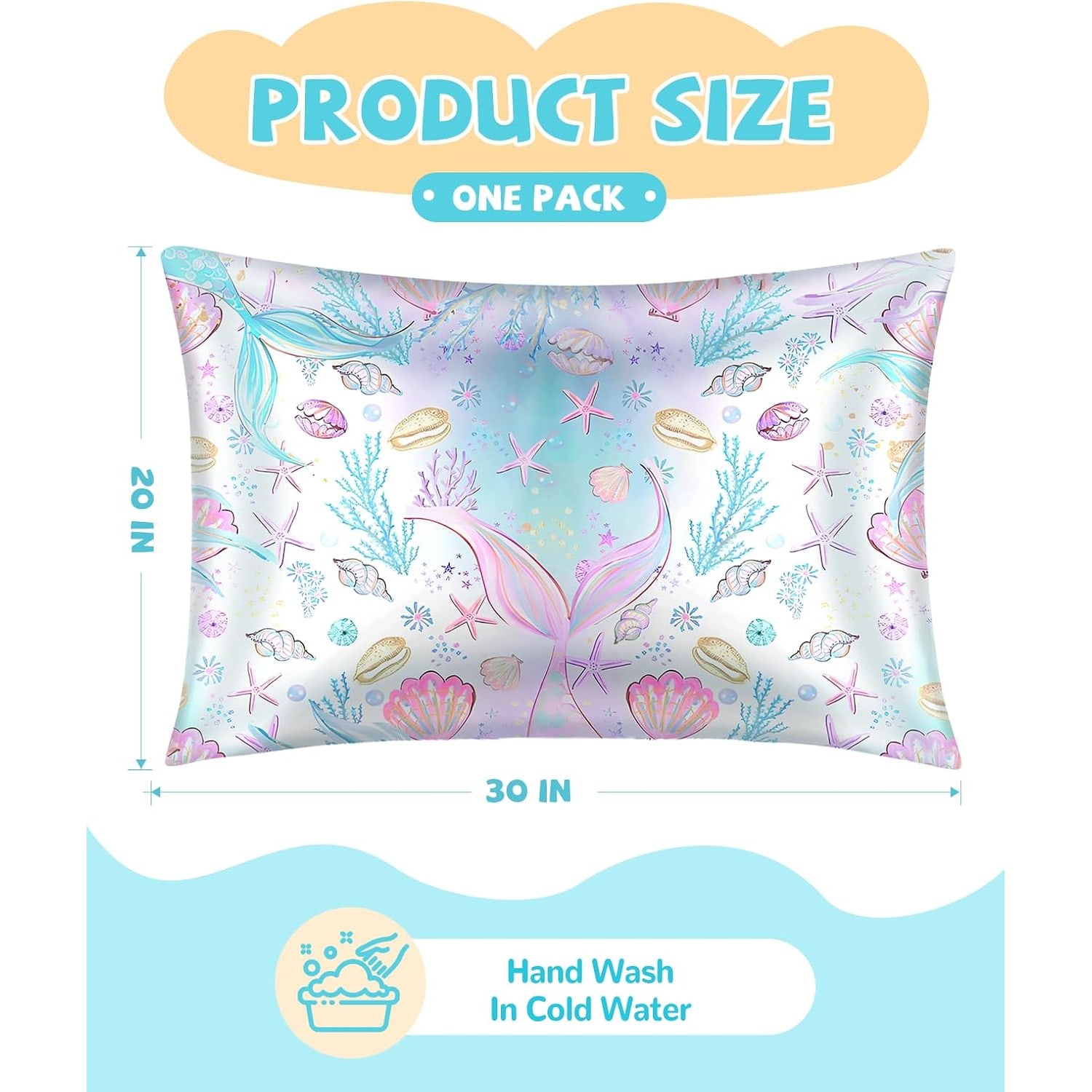
The pillowcase is queen size, 76.2 cm long by 50.8 cm wide. That is the standard queen pillow measurement and the size most New Zealand households already have on the bed.
Before you order anything, pull the pillow out of its current case, lay it flat, and measure it. Pillow sizing is not as consistent as it should be, and a case that is too small will strain at the seams while one that is far too large will bunch in folds under the head. Neither is comfortable.
If your child is still in a cot or a toddler bed with a small pillow, a queen case is not the right fit. Wait until they move up to a standard or queen pillow.
The zip, a small detail that matters
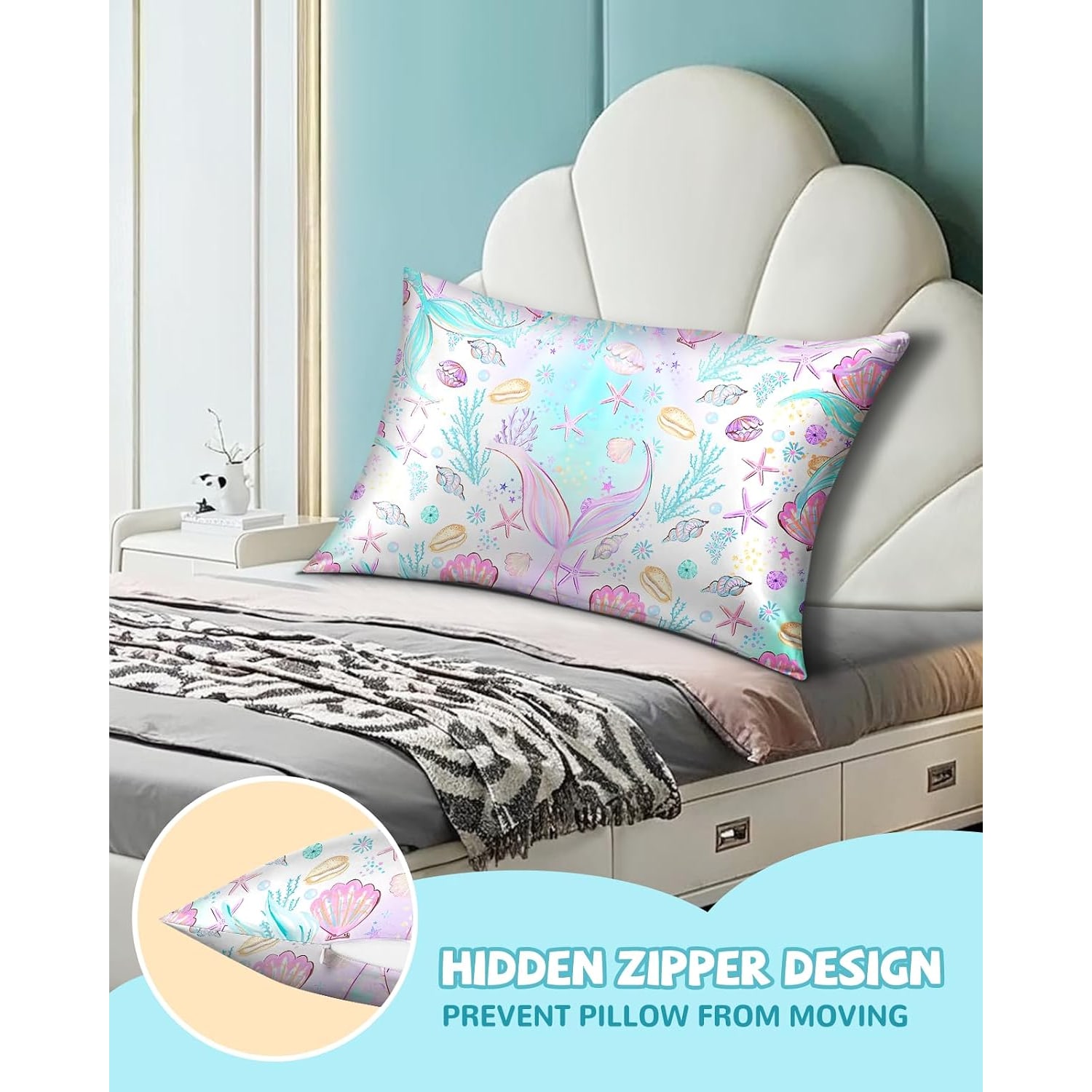
Pillowcases close in one of three ways. Open ended cases are cheapest and let the pillow wander out. Envelope flap cases tuck the pillow behind a fold, which works until someone kicks the pillow hard enough to pop the corner out. Zipped cases enclose the pillow completely.
This one uses a hidden side zipper, set into the seam so it does not show from the front and does not sit near the sleeping surface. For a child's bed, this is the right choice. Children move constantly, and an enclosed pillow stays dressed all night. It also makes the case suitable as a cover over a feather pillow, since nothing can work its way out through an open end.
When you put the case on, feed the pillow in corner first, work it into the far corners, then close the zip slowly. Forcing a zip over bunched fabric is how zips break.
Looking after silk without any fuss
Here is where people get nervous, and they should not. Silk care is simple, it is just different from cotton care.
The rule for this case is hand wash only. Fill a basin with cold water, add a small amount of detergent made for silk or delicates, and swish the case through for a couple of minutes. Do not scrub, do not wring, do not leave it soaking for an hour. Rinse in clean cold water until the water runs clear.
To dry, lay the case flat on a dry towel, roll the towel up like a sausage and press. That pulls most of the water out without stressing the fibres. Then dry flat or hang in the shade. Direct sun is the enemy of both silk and printed colour.
Never use bleach. Never use hot water. Never put it in the dryer. If it needs pressing, use the lowest silk setting on the iron, work on the reverse side, and go while the fabric is still faintly damp.
Two things to keep away from it are rough velcro and sharp fingernails. Silk is strong along its length but it will snag. If a thread does pull, resist the urge to snip it. Push it back through from the inside with a blunt needle and the weave closes up again.
Many parents find owning two cases makes life easier, since hand washed silk takes longer to dry than a cotton case out of the machine. One on the bed, one in the cupboard.
Who this suits
This works well for school age children and teenagers who sleep on a queen pillow and who have an opinion about what their bedroom looks like. The cartoon print appeals to that age group without being babyish, and because it is printed on both sides, flipping the pillow is never a problem.
It also works as a gift. It arrives bagged and flat, weighs 100 g, and the packaged size is small enough to post or tuck into a larger present. For birthdays and Christmas, a good silk pillowcase is one of the few gifts that gets used every single night.
It is less suitable if you want something you can throw in the machine with the sheets every week. Hand wash only is a real instruction, not a suggestion, and if nobody in the house will follow it, a cotton case will serve you better.
How to compare your options
When you look at silk pillowcases side by side, there are only a handful of things worth checking.
Check the momme weight and make sure it is stated. If a listing will not tell you, that usually means it is low. Check the stated size in centimetres and match it to your own pillow. Check the closure, since a zip holds better than a flap. Check the care instruction so you know what you are committing to. And look at whether the print runs on both faces, which matters more on a child's pillow than an adult's.
Price alone is a poor guide. Very cheap silk is usually low momme or a blend, and very expensive silk often reflects a brand rather than the fabric.
The short version
This is a single queen size mulberry silk pillowcase, 76.2 by 50.8 cm, made at 19 momme with a cartoon fish tail print on both sides and a hidden side zip. It weighs 100 g and arrives bagged. Care is hand wash only, cold water, dried flat out of the sun.
If you want a kids silk pillowcase that a child will actually keep on the bed, and you are happy to hand wash it, this covers both sides of the deal. Measure the pillow, order it, and expect it in 5 to 10 working days by tracked courier.