
The complete guide
How to Choose and Wear a Small Square Silk Neck Scarf
The problem with most accessories
Most accessories ask something of you. Jewellery needs matching. A statement necklace needs a neckline that works with it. A big wrap needs a cool day and somewhere to put it when the room heats up. And a plain shirt stays a plain shirt because nothing in the drawer feels worth the effort on a Tuesday morning.
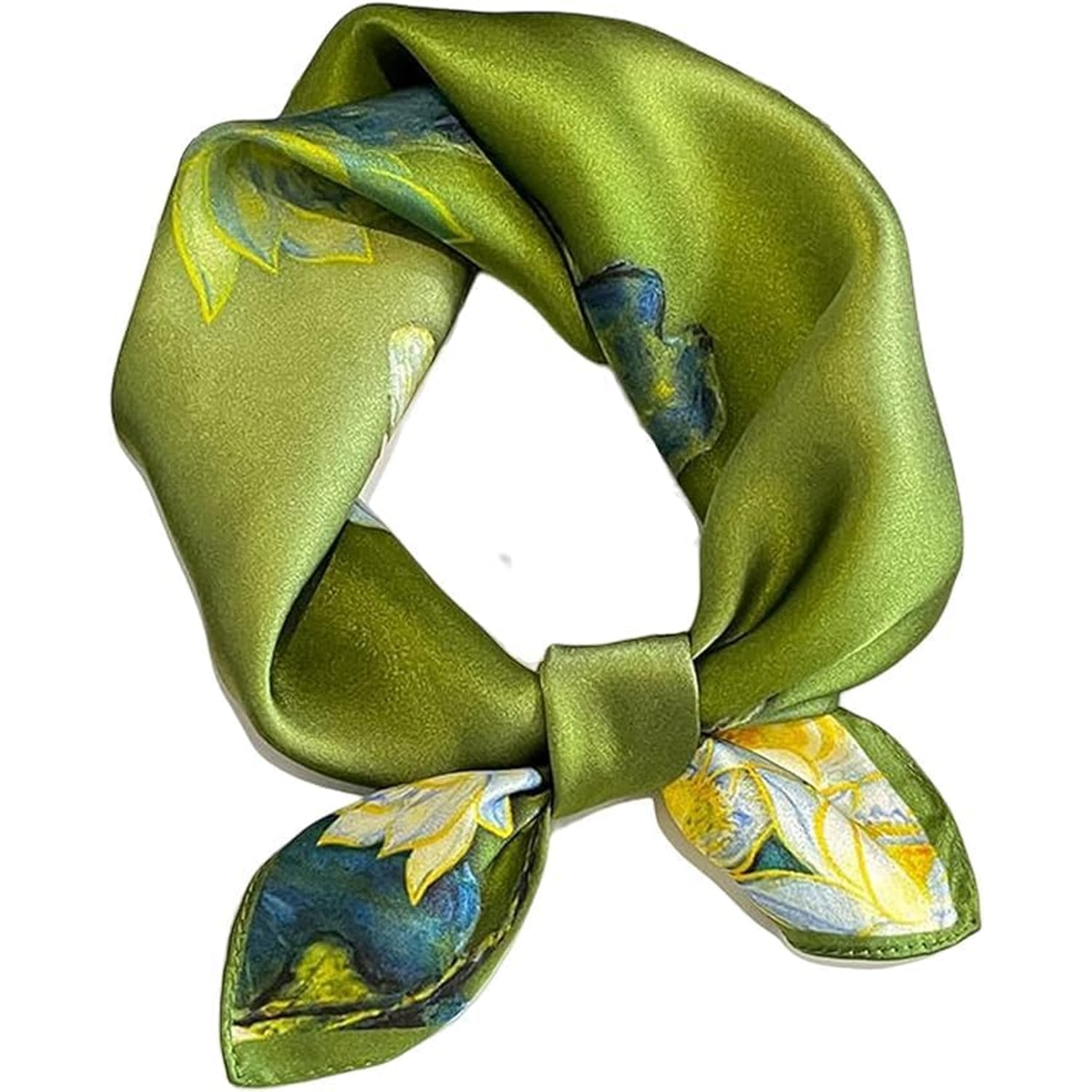
A small square silk scarf is the opposite. It is light, it folds to nothing, and it takes a few seconds to tie. It also does the one thing most accessories cannot: it brings colour up near your face, where people actually look. That is why the same shape keeps turning up on flight crews, hotel staff and anyone who has to look put together on repeat.
What mulberry silk actually is
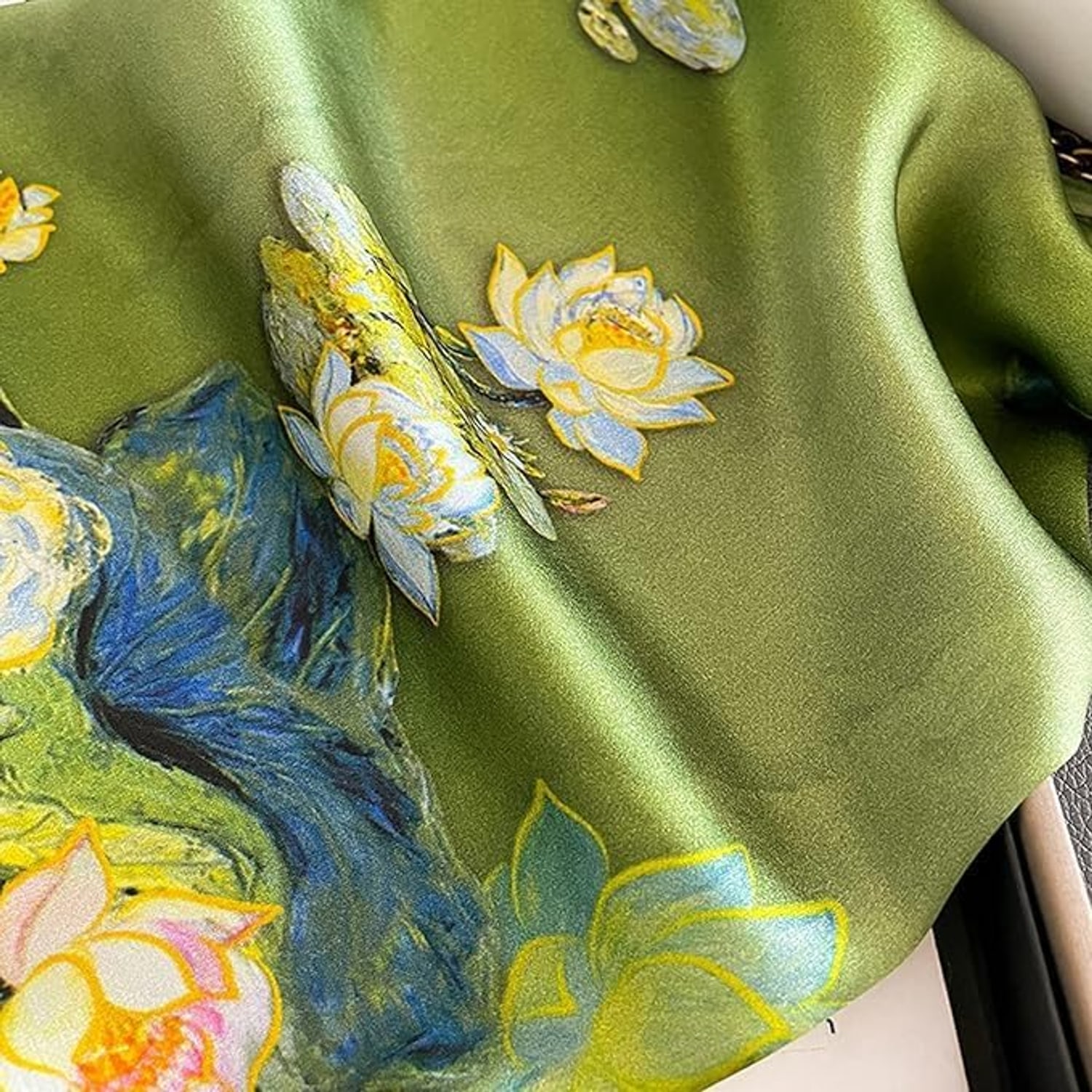
Mulberry silk comes from silkworms raised on a diet of mulberry leaves. The result is a long, even filament rather than the shorter, coarser fibres you get from wild silk. Long filaments mean a smooth surface, an even sheen and a fabric that moves like liquid instead of holding a shape.
Two things follow from that. First, the fabric drapes. A mulberry silk scarf will fall into a soft fold instead of poking out at odd angles, which matters a lot when the scarf sits right under your chin. Second, silk breathes. It is a natural protein fibre, closer in behaviour to wool or hair than to a plastic-based fabric, so it does not trap heat against your skin. That is the reason a silk scarf works in January and again in July.
One more practical note: hair and skin slide over silk with less friction than over cotton. If you have ever had a cotton bandana catch at the back of your neck or tug at a ponytail, you will notice the difference immediately.
Why small, and why square
Scarves come in a few standard shapes, and the shape decides what the scarf can do.
A large square, around 90cm, is the classic drape. It is beautiful, but it needs folding, planning and a bit of confidence. An oblong is a wrap. It goes around the neck twice and hangs down, which is lovely in winter and awkward under a jacket.
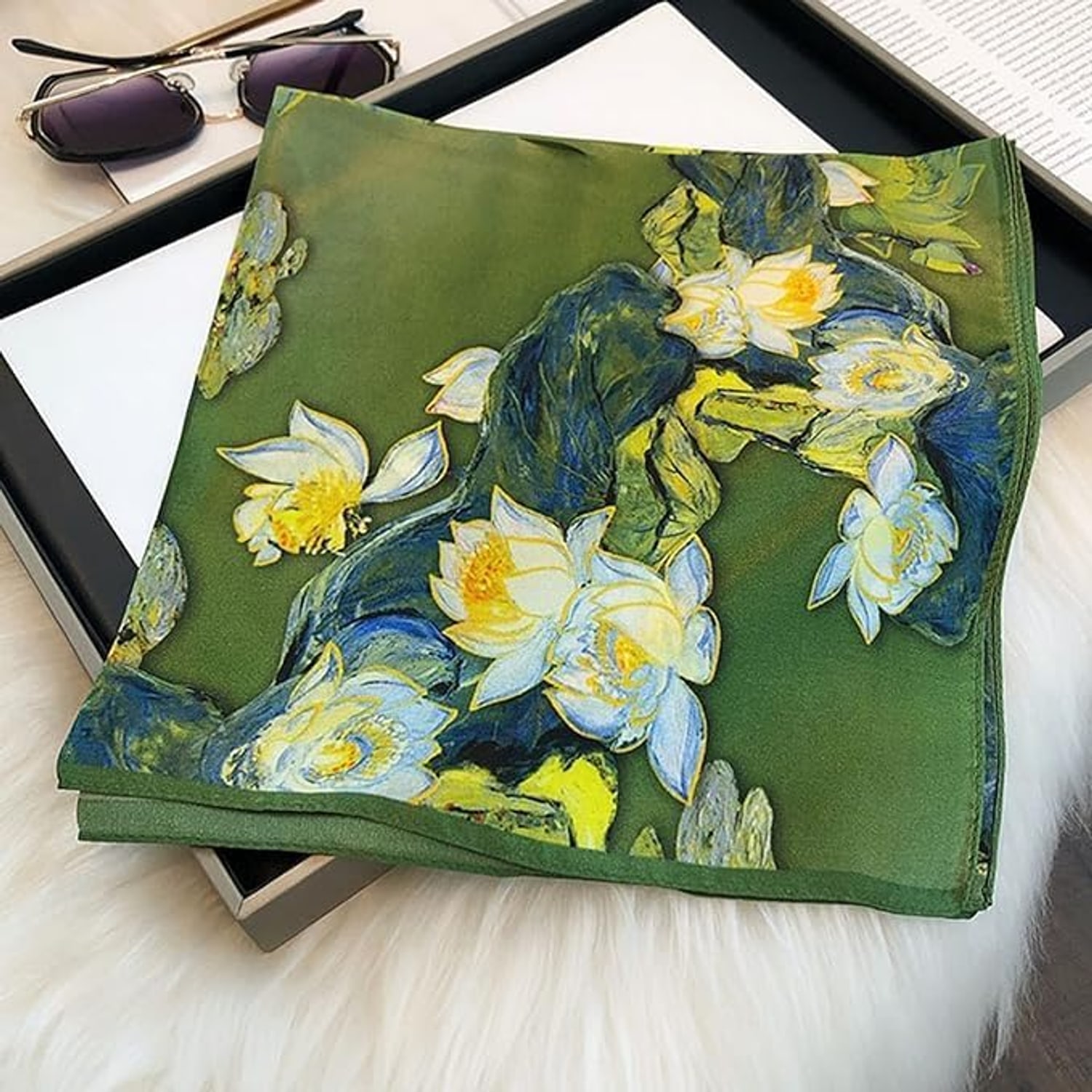
A small square sits between the two. Folded on the diagonal it becomes a band that is easy to knot and easy to position. It fits under a shirt collar without bulking up, which is the main reason it has survived as a uniform accessory for so long. It also means one scarf does several jobs, because a band that fits around a neck also fits around a ponytail, a wrist, or the handle of a bag.
If you are new to scarves, start here. The small square is the one you will actually wear.
Ways to wear it
The simplest knot is worth learning properly, because it covers most occasions.
Fold the square in half on the diagonal to make a triangle. Then roll or fold the long edge up towards the point until you have a band of the width you want. Place the middle of the band at the front of your throat, cross the ends behind your neck, bring them back to the front and tie a single or double knot slightly off centre. Off centre reads as relaxed. Dead centre reads as a uniform, which is fine if that is what you want.
From there:
Slide the folded band through a ponytail and knot it over the hair elastic. Let the ends hang or tuck them under. A silk ponytail scarf is a quick fix on a windy day and stops hair whipping across your face.
Use it as a headband. Run the band under your hair at the nape, bring the ends up and knot them on top or at one side. Adjust the width by folding more or less before you tie.
Tie it to a bag. Loop it around the base of a handle and knot it twice so the tails hang free. On a plain black or tan bag it does more work than a keyring ever will.
Thread it through belt loops in place of a thin belt, or knot it around a wrist. Neither takes practice.
Choosing colour and pattern
Since the scarf sits near your face, the colour near your skin matters more than the pattern as a whole. Hold it up under your chin in daylight before deciding whether it works. Warm skin tones tend to look good with warm reds, corals, golds and olive. Cooler tones tend to suit blues, berry shades, grey and true white.
For a first scarf, a print with two or three colours is the most useful. One of those colours should be something already in your wardrobe, so the scarf has an obvious job. Busy multi-colour prints are fun but harder to place.
If you are buying for a uniform or a workplace, check the dress code first. Some employers specify colour families, and a scarf that breaks the rule is a scarf that stays in the drawer.
Caring for silk
Silk has a reputation for being delicate. It is not fragile, but it does want a different routine to a cotton tee.
Hand wash in cool water, below 30C, with a neutral detergent. Swish rather than scrub. Do not use bleach and do not wring the scarf out, because twisting damp silk is the fastest way to distort the weave. Press the water out between your palms, roll the scarf in a clean towel to blot the rest, then lay it flat to dry out of direct sunlight. Sun fades dye.
If you prefer, dry cleaning is fine and is the easier option for a printed scarf you want to keep looking sharp.
Iron on low, ideally while the silk is still slightly damp, and iron on the reverse side or under a thin cloth. Too much heat leaves a shiny patch that does not come out.
The real risk to a silk scarf is not dirt, it is snagging. Rings with claw settings, rough nails, zips, velcro and watch bands all catch the weave. Take off jewellery before you tie, and store the scarf folded or loosely rolled in a drawer rather than hanging on a hook. Keep it away from perfume, cosmetics and desiccant packets.
You also do not need to wash it after every wear. Air it overnight. Unless it has picked up makeup at the knot or had a long hot day, that is usually enough. Less washing, longer life.
Who it suits
It suits people who want a small lift to an everyday outfit without committing to much. It suits anyone with a uniform that allows neckwear. It suits travellers, because it weighs almost nothing and does three jobs in a carry-on. It suits people who find knitted scarves too hot and jewellery too fiddly.
It is also one of the easier gifts to buy. There is no size to guess, no fit to worry about, and the age range it works for is wide. A silk scarf gift for her is a safe bet when you know the person's colours but not much else about their wardrobe.
What it is not: a winter warmer. If you want something to stand between you and a cold southerly, buy wool and keep the silk for the finishing touch.
The short version
A small square mulberry silk neck scarf is a low-effort, high-return accessory. The silk breathes, so it works across the seasons. The small square shape knots easily and fits under a collar. One scarf covers your neck, your hair, your wrist and your handbag.
Learn one knot. Wash it by hand in cool water. Keep it away from sharp jewellery. That is genuinely all there is to it, and it will keep looking good for years.