
The complete guide
How To Choose And Wear A 70cm Square Silk Scarf
The gap a scarf fills
There is a specific kind of wardrobe frustration that has nothing to do with owning too few clothes. You put on a shirt and trousers that fit, the shoes are right, and the whole thing still looks like you got dressed in a hurry. The problem is almost always at the collar. There is nothing happening between your chin and your chest, so the eye has nowhere to land.
A square silk scarf solves that in about fifteen seconds. It adds colour and movement exactly where the outfit is empty, and unlike a necklace it does not need to match anything metal you own. That is the honest reason silk scarves keep coming back decade after decade. They are not nostalgia. They are a fast fix for a very common problem.
Why 70cm is the size most people actually use
Silk scarves come in a spread of sizes, and the number matters more than it looks. A 50cm square is small. It knots tight at the throat and works on a bag handle, but it runs out of fabric the moment you want to drape it. A 90cm or 110cm square is a different animal, closer to a shawl, with enough body to wear over the shoulders.
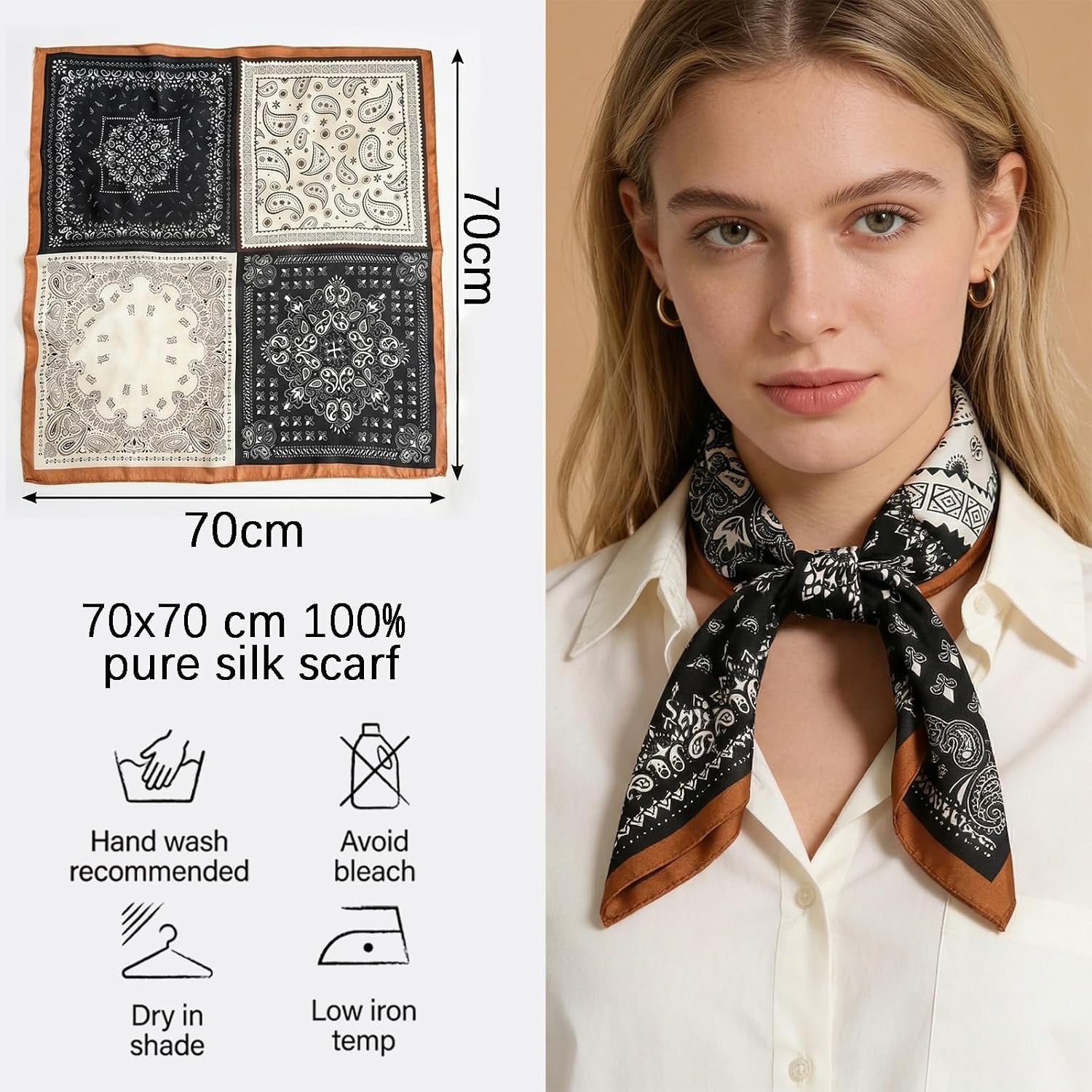
The 70 x 70 cm square sits in between and that is the whole point. It has enough fabric to fold into a proper triangle, roll into a long band, or loop twice around the neck, without so much bulk that a knot turns into a lump. If you only ever own one square scarf, this is the size that gives you the most ways to wear it.
Expect a small amount of variation. Hemmed silk squares are finished by hand or near enough, so a centimetre or two either way is normal and not a fault.
What the square shape lets you do
People sometimes assume a square is less versatile than a long rectangle. It is the other way round. A long scarf mostly does long-scarf things. A square turns into several shapes depending on how you fold it.
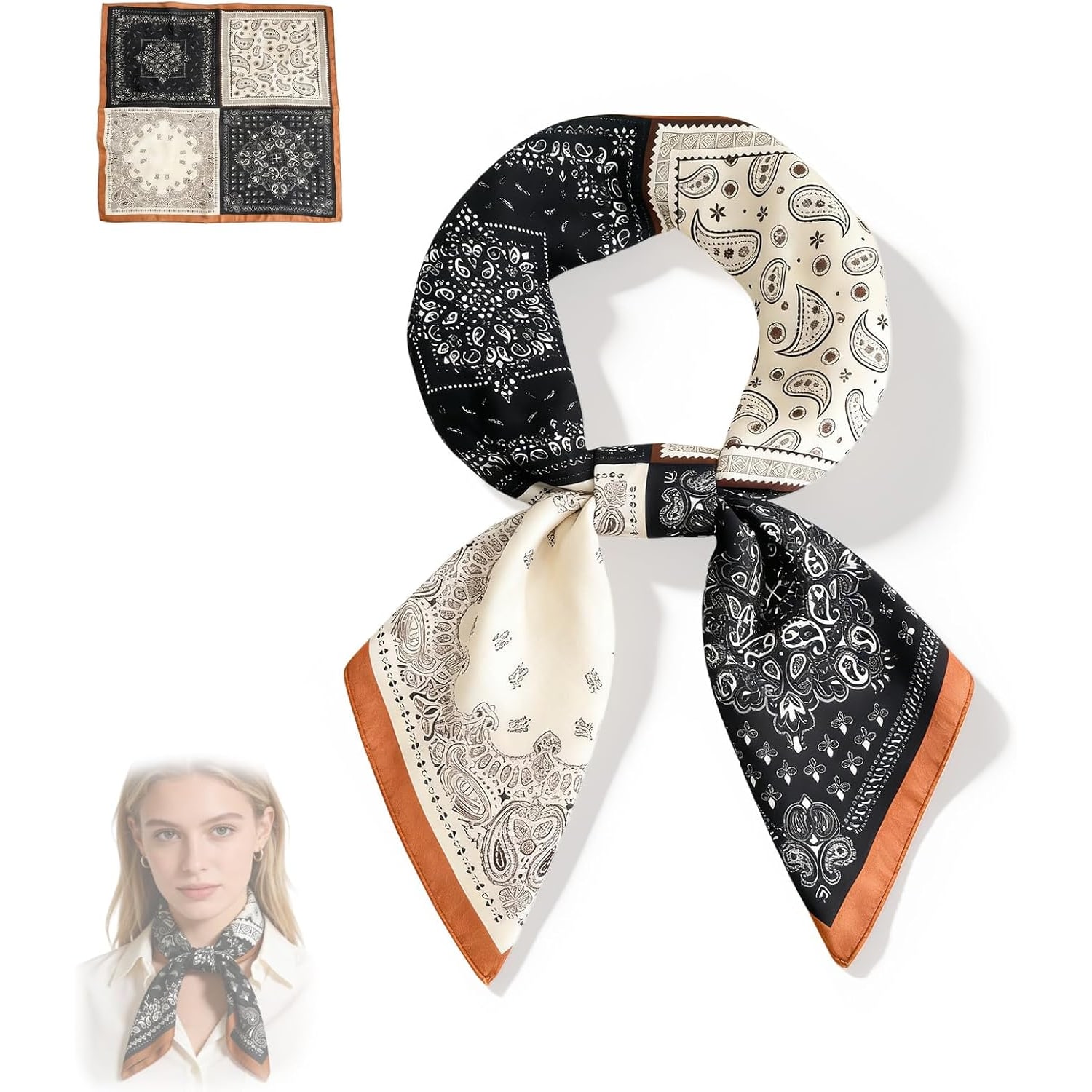
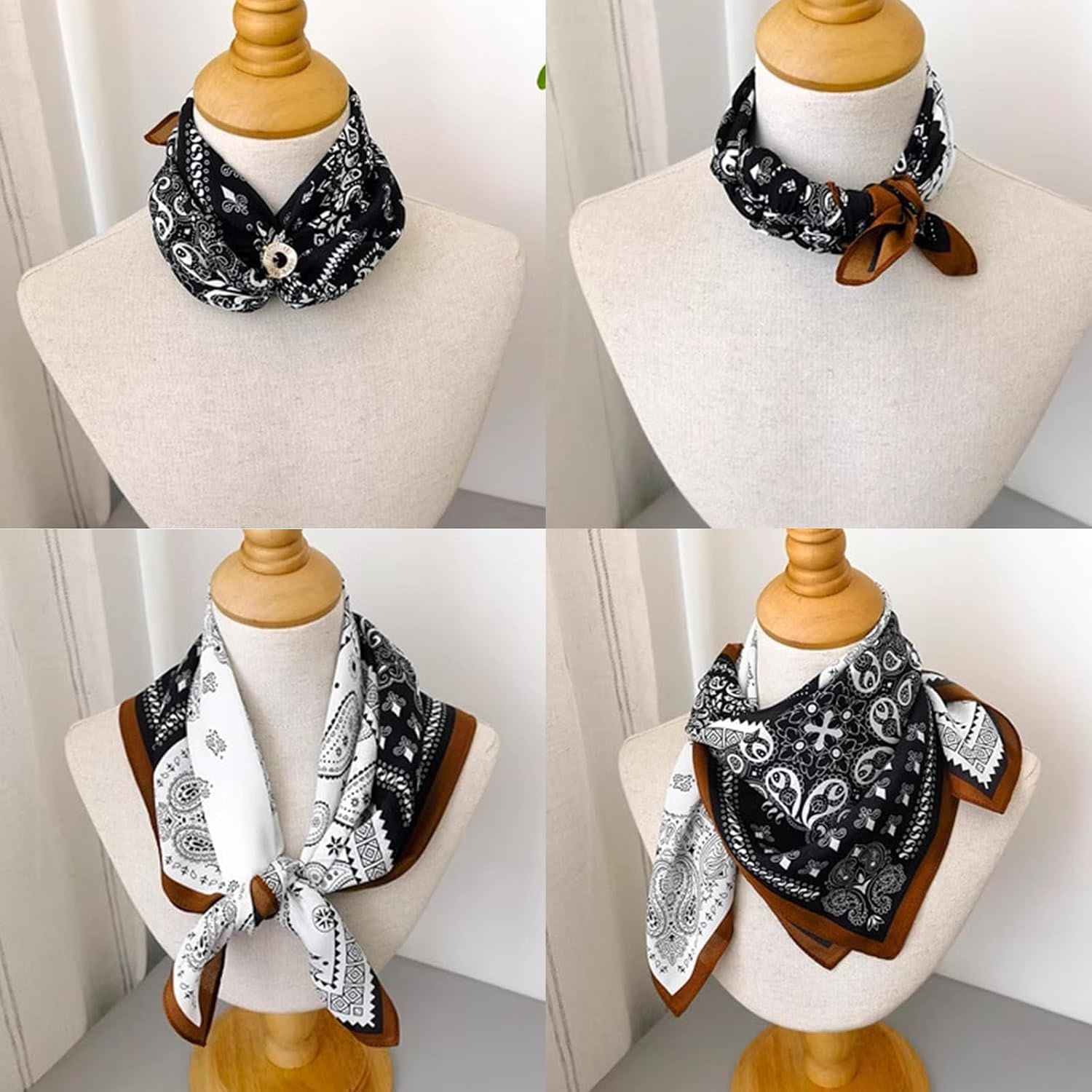
Fold it corner to corner and you have a triangle. Worn with the point down the front and the ends knotted behind, that is the classic bandana look. Worn with the point at the back and the ends knotted at the front, it reads more retro.
Roll it along the diagonal into a narrow band and you get something closer to a neckerchief. Tie it snug under the chin for a tidy, finished look, or leave it loose and slightly off centre if you want it casual.
Fold it into quarters and you have a flat square that tucks neatly under a shirt collar or inside a blazer. That is the most office-friendly version and the one people reach for when they want the best silk scarf for work.
Then there are the non-neck uses. Tied around a ponytail, knotted as a headband, looped through a bag handle, or wrapped around the strap of a camera or a tote. A silk bag scarf is probably the single easiest way to make a plain bag look considered.
How silk behaves differently
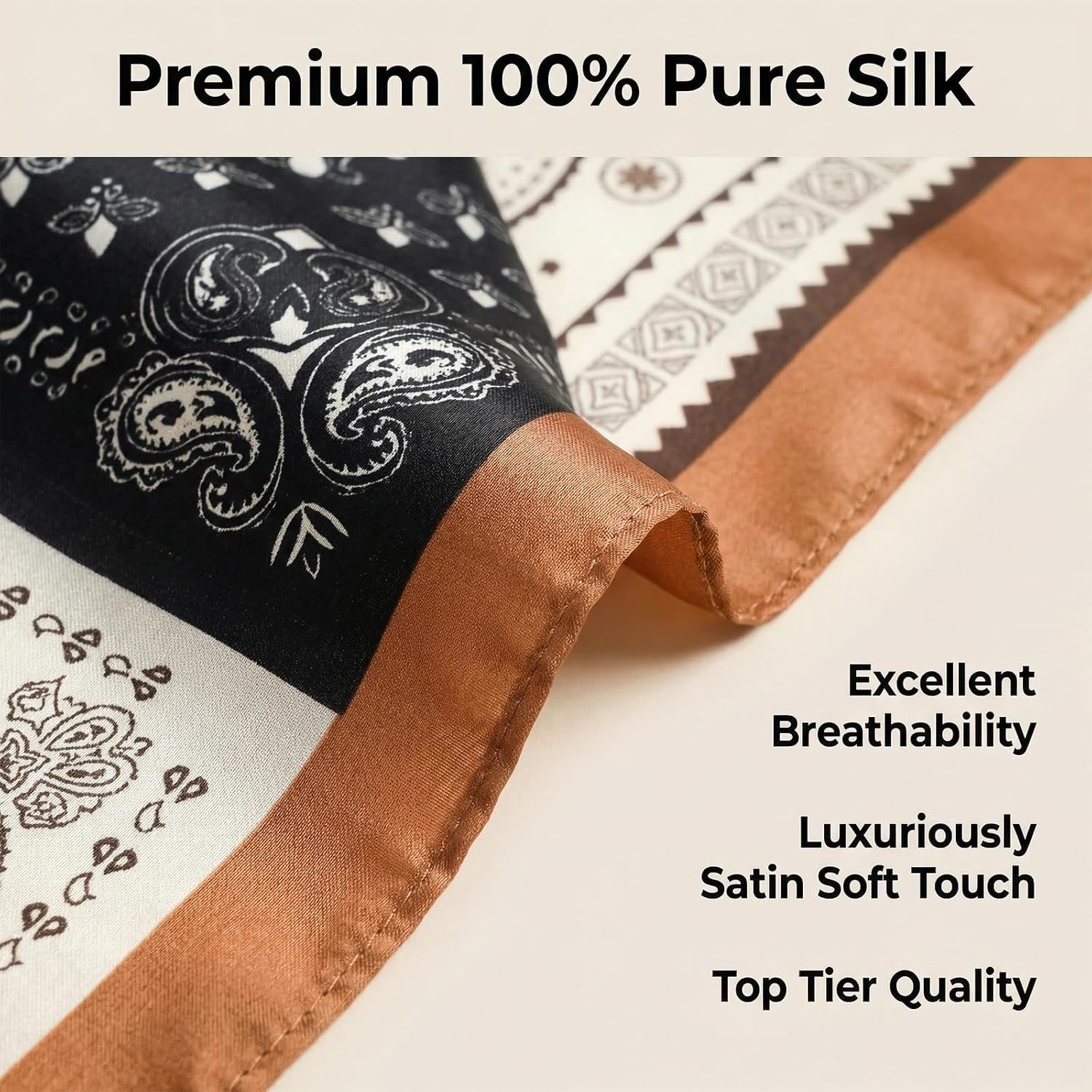
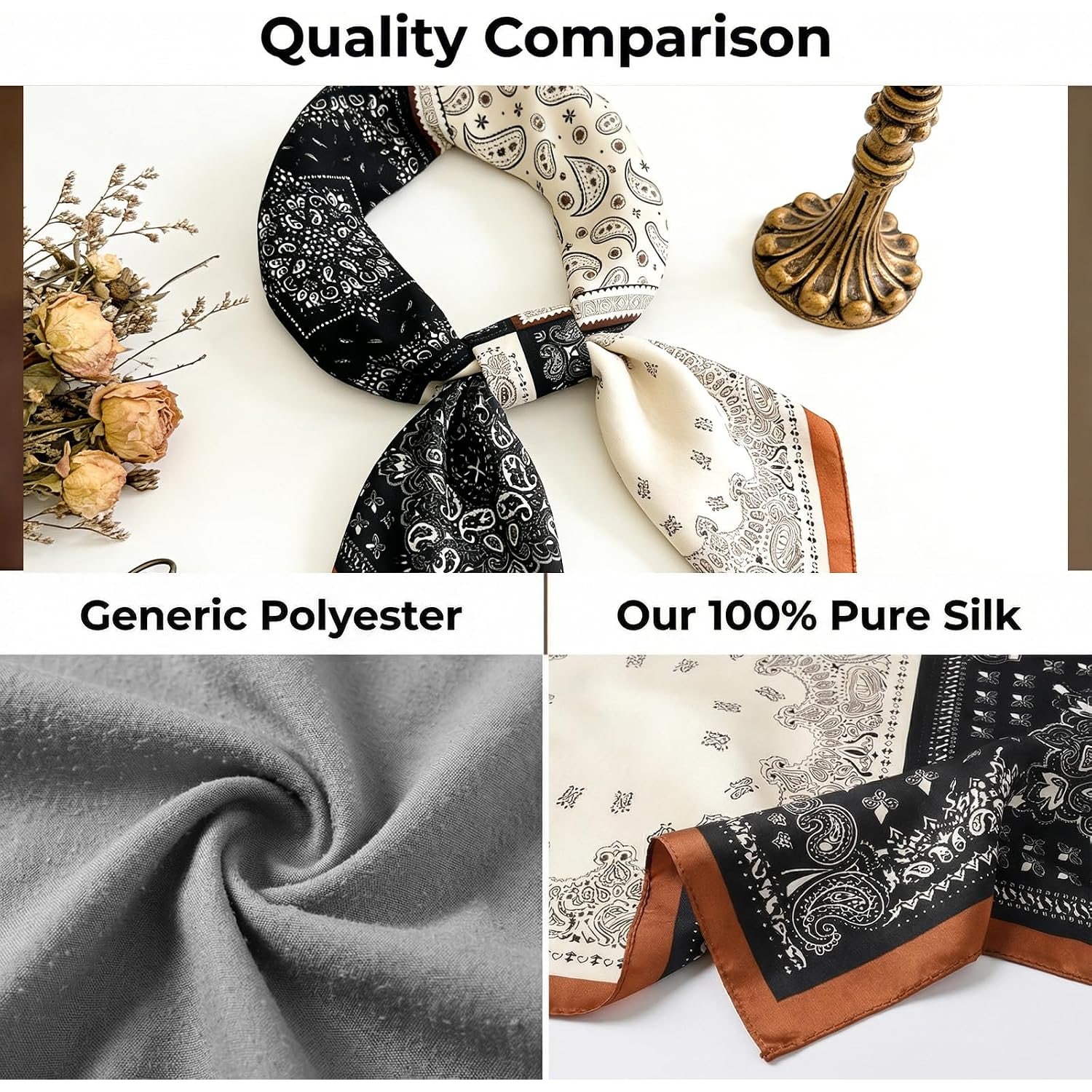
Silk is not just a nicer fabric by reputation. It handles differently in a way you notice the first time you tie it. The surface is smooth, so the fabric slides over itself and a knot can be nudged into place instead of fought with. It holds a soft shape rather than springing back flat like polyester or creasing hard like linen.
That smoothness is also why silk is popular for hair. Hair moves over silk with less friction than over cotton, so a band or wrap tends to sit without dragging. We will not go further than that, because the only honest claim is a physical one about the surface of the fabric.
Weight matters too. This scarf is a lightweight piece, which means it drapes and knots easily and does not add warmth. That makes it good across three seasons and particularly good in warm weather, where a heavier scarf would just be uncomfortable.
Reading a printed design
The design here is printed on one side. That is standard for printed silk and it is worth understanding rather than worrying about. The face carries the full colour and the reverse carries a softer, paler version of the same pattern.
In use, this barely shows. Once a scarf is knotted or folded, you see the printed face on the parts that are visible and the softer reverse on the inside of a fold, which usually reads as a deliberate tonal edge. If you want a scarf where both faces are identical you are looking at a woven jacquard, which is a different and generally heavier product.
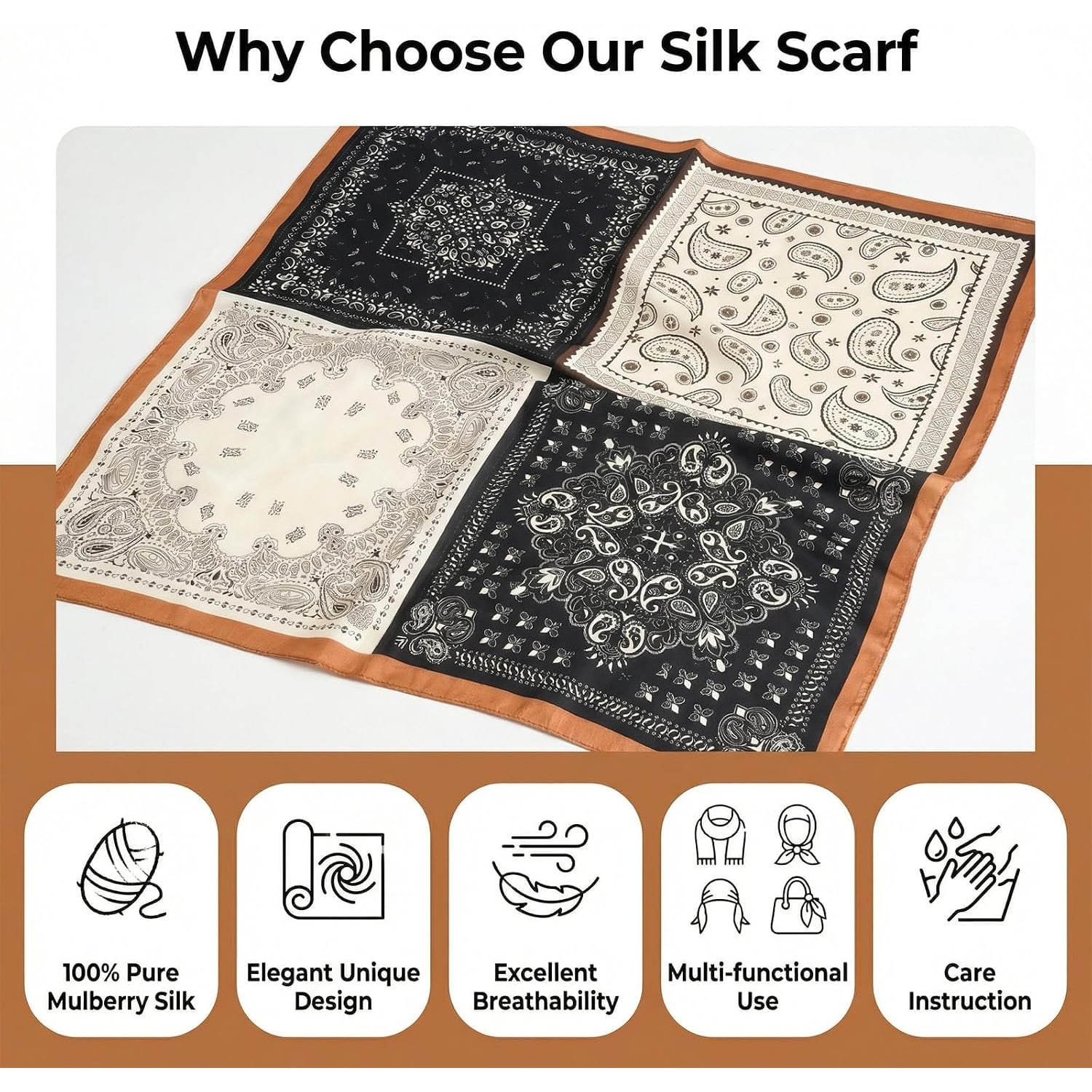
When choosing a print, think about the clothes you already own rather than the scarf in isolation. A print that shares one colour with your most-worn coat or your usual work shirts will get used constantly. A print that shares nothing with anything will sit in a drawer. That is the real test for the best printed silk scarf, not how striking it looks on its own.
Who it suits
This is about as broad an accessory as exists. A square silk scarf has no size, no fit issue, and no age signal built into it. The way you tie it sets the tone entirely.
It works for someone who wears a lot of plain black and wants one point of colour. It works for someone who travels and needs an accessory that packs into nothing. It works for someone who wants to change the feel of the same five work outfits across a week. And it works as a gift, because you do not need to know anyone's measurements.
The one person it does not suit is someone looking for warmth. This is a styling piece, not a winter scarf. If you want something to keep the wind off, buy wool and keep the silk for the collar underneath.
Caring for it properly
Silk care sounds fussier than it is. The rules are short.
Hand wash only, on its own, in cool water below 30 degrees Celsius with a mild detergent. Do not put it in the machine, because the agitation stresses the rolled hem and the weave. Do not bleach it, and be careful with stain removers, which can lift printed colour unevenly.
When you take it out of the water, press it rather than wring it. Lay it on a towel, roll the towel up, and squeeze. Then dry it flat or hang it in the shade with air moving. Direct sun is the main enemy of printed colour, closely followed by radiators and clothes dryers.
Iron on low if it needs it, ideally while slightly damp, with a thin cloth between the iron and the silk if your iron runs hot. Dry cleaning is fine if you would rather hand it over.
For storage, roll it loosely or drape it over a padded hanger. Hard folds in the same place for months will eventually set a crease line. Keep it away from velcro, rough jewellery clasps, and anything with a hook.
If you do catch a thread, resist the urge to cut it. Ease it back through from the reverse side with a blunt needle or your fingernail and the weave usually closes up.
The short version
A 70 x 70 cm square silk scarf is the most useful size in the category, because it folds into a triangle, rolls into a band, or sits flat under a collar without bulk. The print on this one is single sided, which is normal and barely visible once tied. It is light, so it suits warm weather and three-season wear rather than cold.
Care is cool hand washing, flat drying out of the sun, and a low iron. Do that and it stays good for years. Pick a print that shares a colour with clothes you already wear often, and it will leave the drawer far more than you expect.