


The complete guide
The Honest Buyer's Guide to Silk Pillowcases
The problem with waking up rumpled
You go to bed with your hair reasonably tidy. You wake up with it pressed flat on one side and knotted on the other, and a crease running down your cheek that takes half the morning to fade. Nothing dramatic, just a mildly annoying start to the day.
Most of that comes down to friction. A cotton pillowcase, even an expensive one, is made from short fibres that sit slightly rough against each other. Every time you turn over in the night, your hair and face drag across that surface. Multiply that by seven or eight hours and a few hundred small movements, and the result is the tangle and the crease.
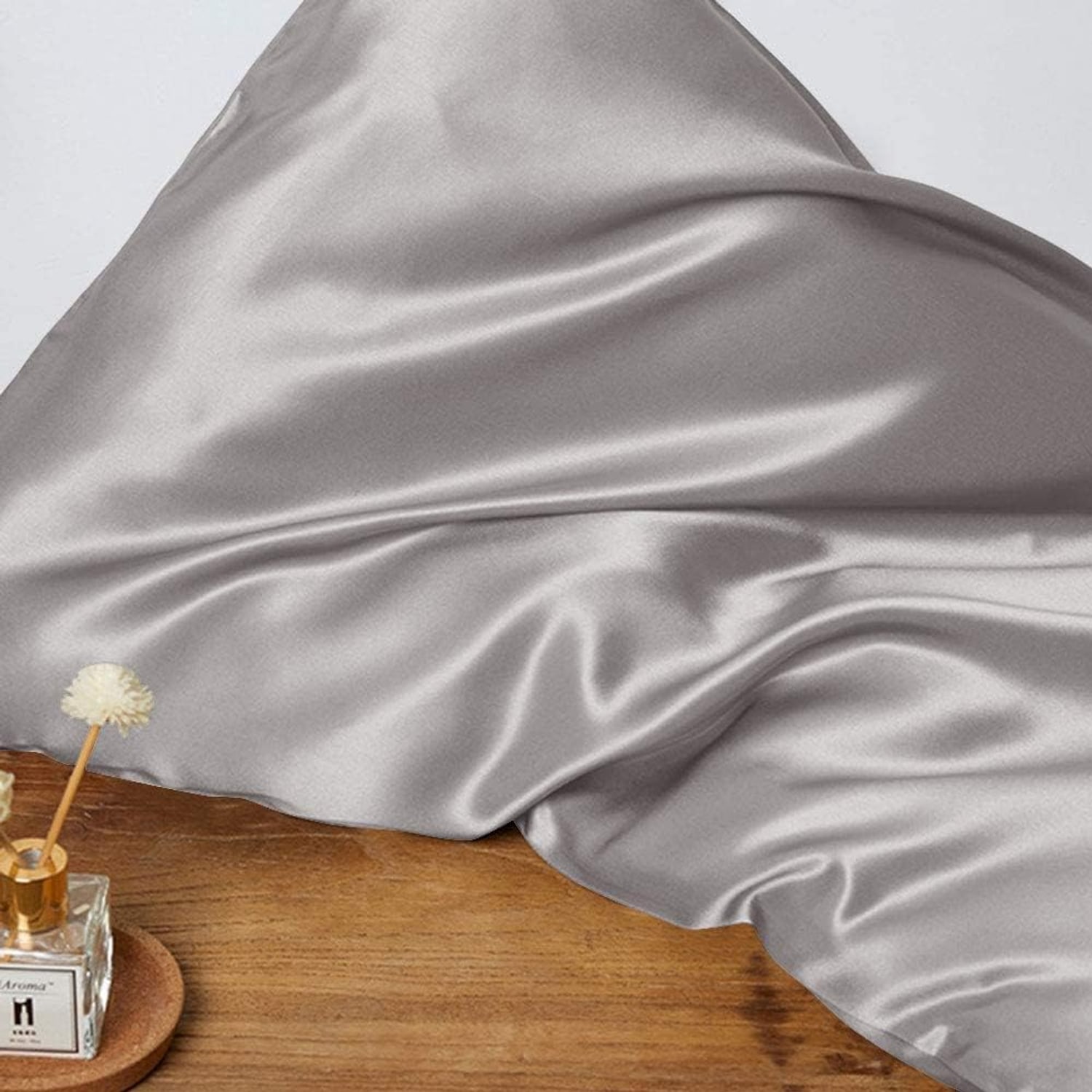
Silk is a different kind of fibre entirely. It comes off the cocoon as one continuous filament, sometimes hundreds of metres long, so the woven surface is far smoother than anything made from staple fibres. Hair slides. Skin slides. That is the whole mechanism, and it is why a pure silk pillowcase has stayed popular long after most bedroom trends have come and gone.
What momme actually tells you
If you have shopped for silk before you will have run into the word momme, usually written as a number followed by "mm". It is a weight measure, and it is the single most useful figure on a silk product listing.
Momme describes how much a set area of the fabric weighs. A higher number means more silk packed into the same space, which means a denser, heavier, longer-lasting cloth. Silk sold for bedding typically runs from about 16 momme at the light end through to 25 momme at the heavy end.
This pillowcase is 22 momme. That puts it comfortably in the upper half of the range. In practical terms, 22 momme silk has enough weight to drape properly over a pillow instead of clinging to it, and it holds up to regular washing better than the thinner grades. A 16 momme pillowcase is still silk, but it can feel papery and it tends to show wear sooner at the seams and corners.
Thread count gets quoted too, and this one lists 600. Thread count is a familiar number because of cotton sheets, but for silk it is secondary. Two pillowcases can share a thread count and feel completely different if their momme weights are far apart. Check momme first, treat thread count as supporting information.
Why the closure matters more than you think
It is easy to skim past the closure type when you are comparing silk pillowcases. Then you sleep on an envelope-back one for a week and you understand.
An envelope closure is a flap of fabric that folds over the open end. It is cheap to make and it works fine if your pillow is a snug fit. If it is not, the pillow gradually shuffles its way towards the opening, and at some point in the night your face lands on the bare pillow itself rather than the silk.
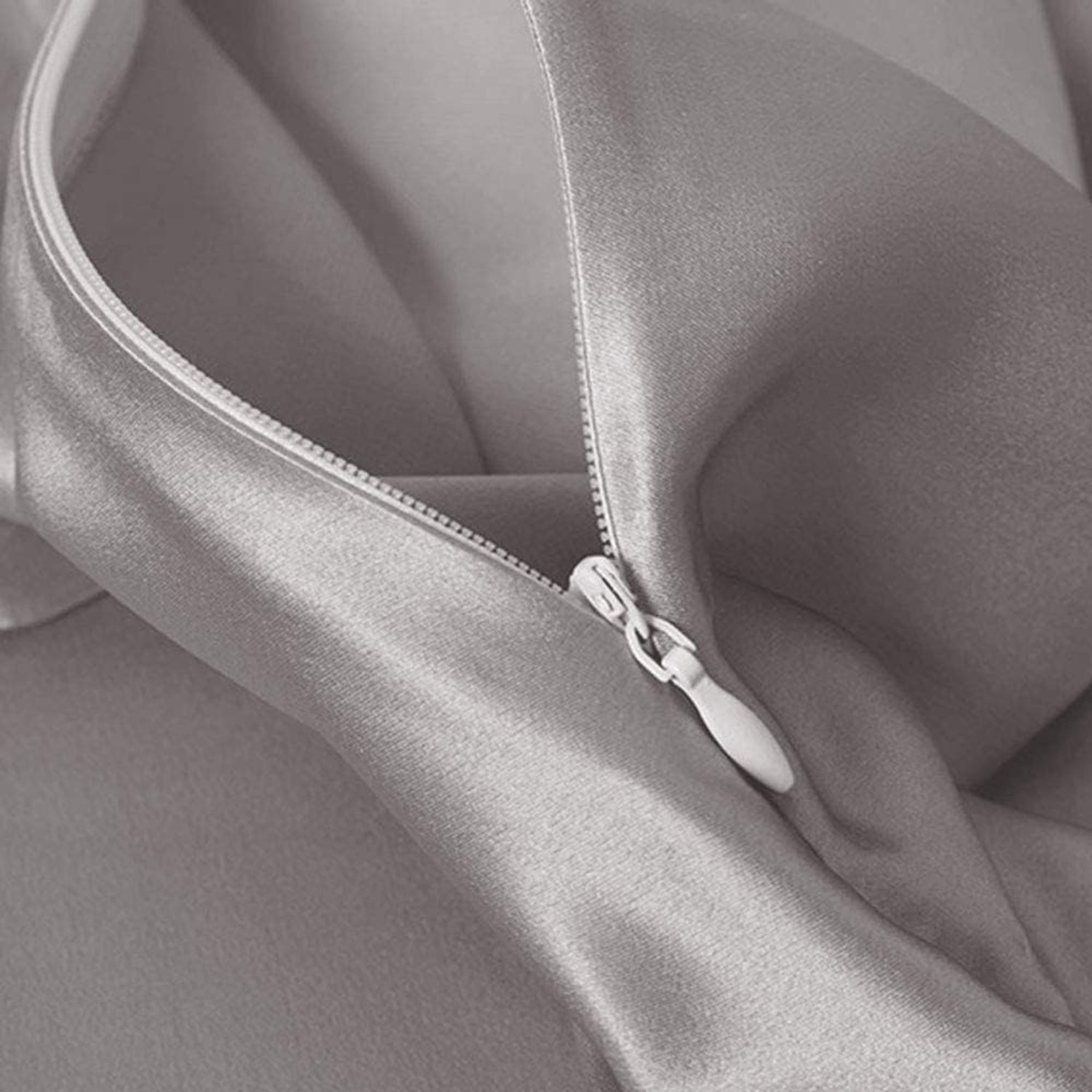
This pillowcase uses a concealed zip. The pillow goes in, the zip closes, and that is the end of it. The zip is hidden inside the seam so the edge stays flat, and there is no visible hardware to spoil the plain finish. It also makes laundry day faster, since you can strip the cover off in a couple of seconds rather than wrestling with a flap.
If you are weighing up a silk pillowcase with zip against an envelope design and the price is similar, the zip is the better buy almost every time.
Getting the size right
This is a queen pillowcase, measuring 76.2 cm by 50.8 cm. In inches that is 20 by 30.
Pillow sizing is not as standardised as you might hope, and the same name can mean slightly different dimensions depending on where the pillow was made. Before ordering, take a tape measure to the pillow you actually plan to use. Measure the long edge and the short edge while the pillow is lying flat and not compressed.
If your pillow is a little smaller than the case, that is fine. You will have a small amount of slack, which some people actually prefer because the fabric drapes more loosely. If your pillow is larger, especially if it is a king at 36 or 40 inches long, this case will not fit and you should look for the matching size instead.
One more thing worth knowing: a very thick or heavily stuffed pillow can stretch a case that is nominally the right length. If your pillow is unusually deep, allow for that when you measure.
Who it suits
People with long hair notice the difference quickly, because long hair has more surface area dragging across the pillow and more opportunity to tangle. Anyone who sleeps warm tends to appreciate silk too, since it breathes rather than trapping heat against your face.
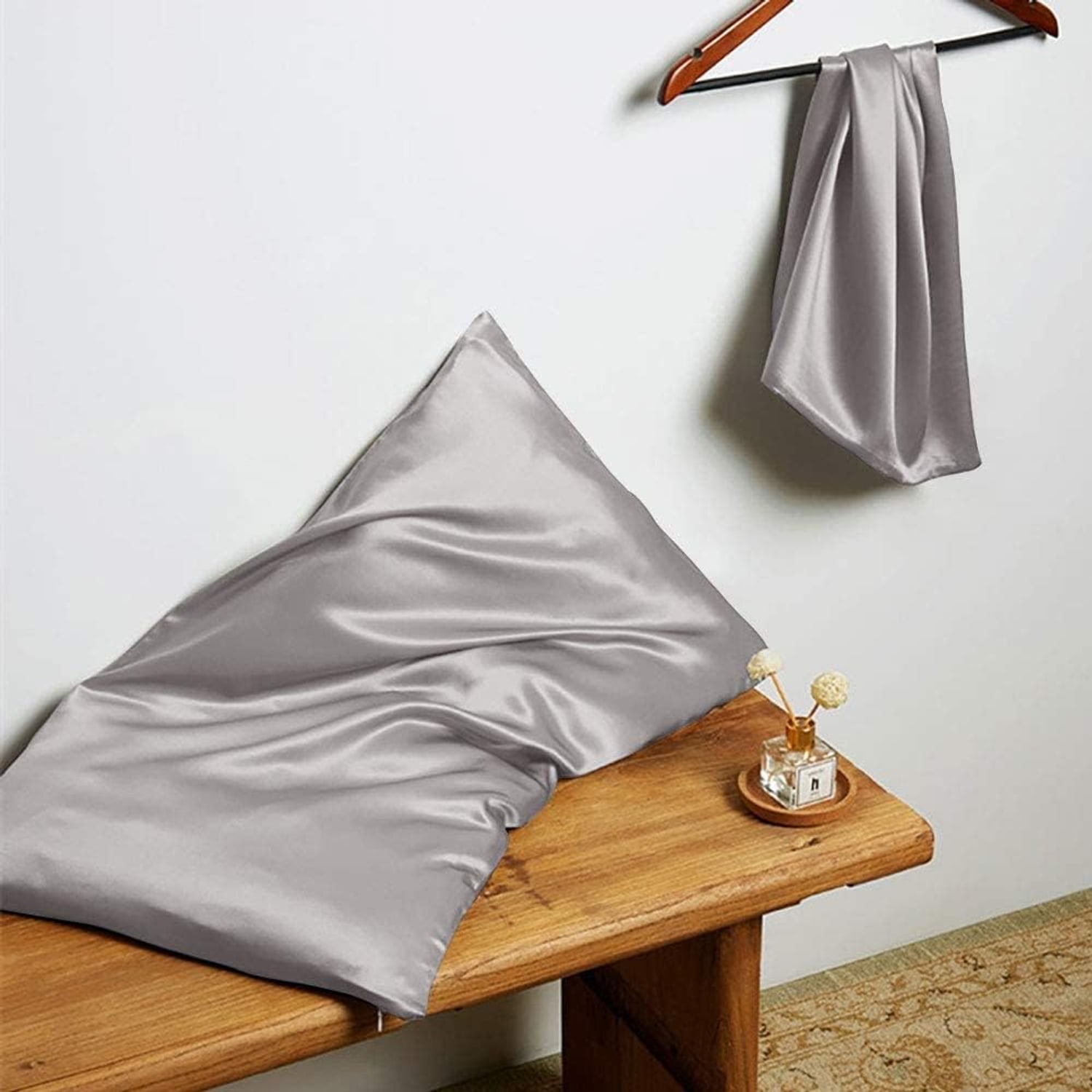
It also suits people who want their bedroom to look tidy without much effort. Grey is an easy neutral. It sits happily with white sheets, charcoal sheets, navy, or natural linen tones, and it does not show the faint shadows that pure white fabric sometimes picks up.
If you are buying for someone else, it is a reliable gift. A mulberry silk pillowcase queen size is the kind of thing most people enjoy but rarely purchase themselves, and the included packing bag means it looks presentable straight out of the parcel.
Looking after it
Silk has a reputation for being fussy. It is not really, it just dislikes three specific things: heat, bleach and harsh enzymes.
Hand washing in cool water is the gentlest option. Fill a basin, add a small amount of detergent made for silk or wool, swirl the pillowcase through for a few minutes, then rinse until the water runs clear. Press the water out between your palms rather than wringing it, because twisting stresses the fibres.
A machine will do the job too. Set it to delicates or a gentle cycle, use cool water, and put the pillowcase inside a mesh laundry bag so it cannot get tangled with zips or buttons on other items. A machine washable silk pillowcase is not a contradiction, you just need to give it the gentle setting.
Skip the dryer. Lay the pillowcase flat on a towel or hang it in the shade, and it will be dry in a few hours. Direct sun is the main cause of colour fading in any dyed fabric, so keep it out of strong light while drying and while storing.
If it needs pressing, use the lowest heat setting, work on the reverse side, and do it while the fabric still holds a little moisture. Most of the time you will not need to iron at all.
Wash it about once a week, in line with the rest of your bedding. If you use rich night creams or leave-in hair products, more often is sensible. Owning two and rotating them makes the whole routine easier and spreads wear across both.
Comparing silk against the alternatives
Polyester satin is the most common substitute. It looks glossy and it costs far less, but it is plastic, and plastic does not breathe. On a warm night you will feel the difference. Satin also tends to lose its sheen faster with washing.
Bamboo viscose sits somewhere in between. It is softer than cotton and reasonably breathable, though it does not have the same slickness as silk and it wrinkles more.
High thread count cotton is lovely to sleep on but it is still a short-staple fibre at heart, with all the friction that implies. If your main reason for shopping is the smoothness, cotton will not get you there no matter how high the number on the packet.
The short version
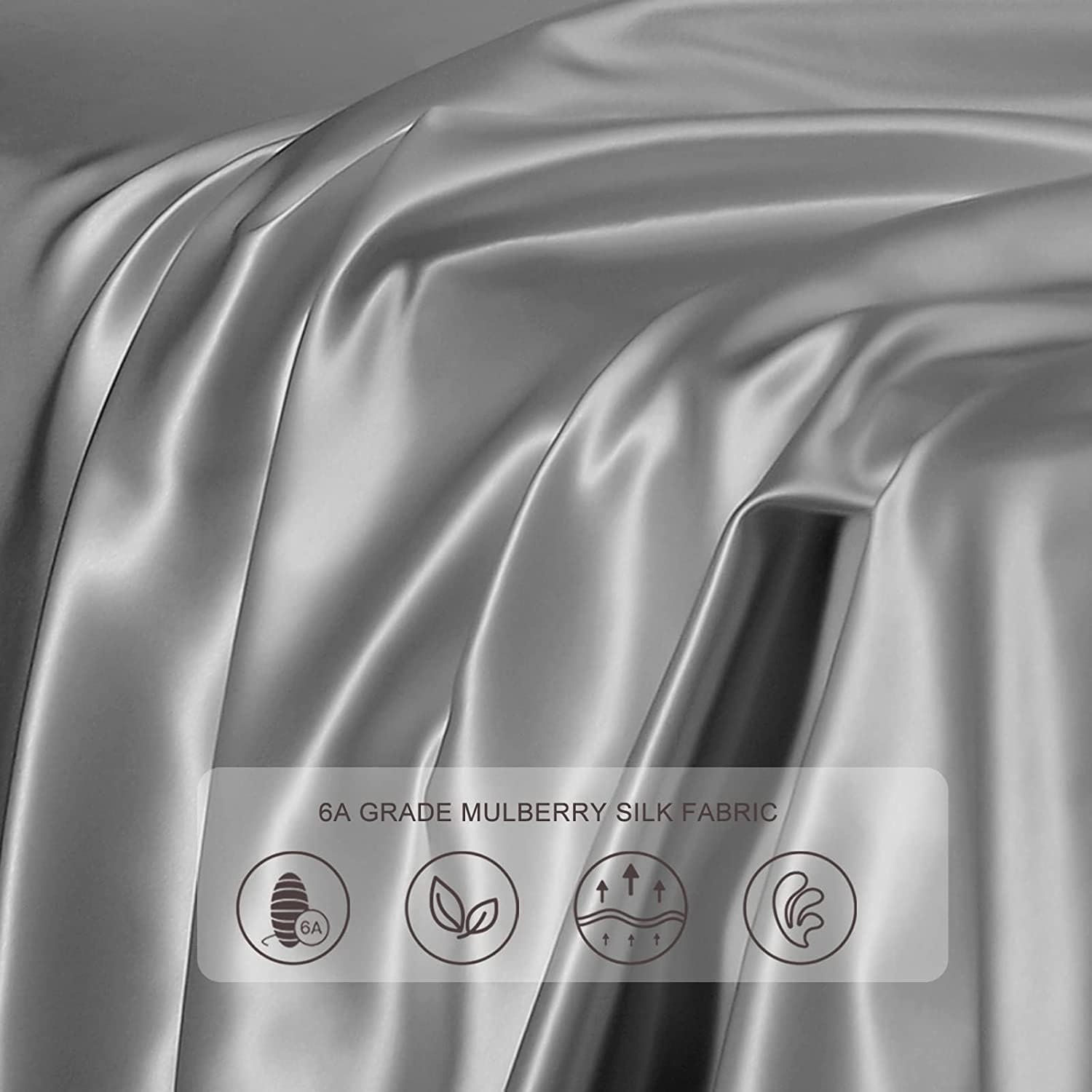
Look at momme before anything else. This one is 22 momme, which is a solid, practical weight that will survive regular washing and still feel substantial after a year.
Check that it is 100% mulberry silk rather than a satin blend. Check the closure, because a zip keeps the pillow where it belongs. Measure your pillow against the 76.2 cm by 50.8 cm queen dimensions. Then wash it cool, dry it flat, and keep it out of the bleach.
Do those few things and you have a pillowcase that quietly makes every night a bit more comfortable, for a long time.